
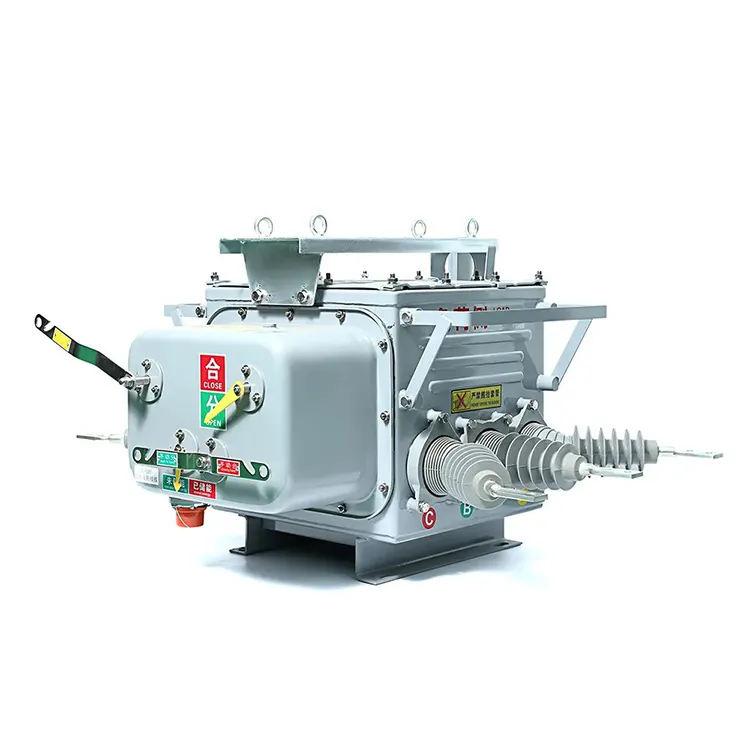


A breaker that trips during a fault has not necessarily identified its cause. It may have responded to high current, earth leakage or a separate protective command. Conversely, a damaged connection can sustain dangerous arcing without drawing enough current to operate an ordinary overcurrent element promptly. These distinctions matter when an engineer investigates a trip or a buyer asks whether a breaker provides “arc protection.” The answer depends on the fault path, the quantity being measured and the protection actually fitted. This article separates short circuits, arc faults and overloads, explains why their currents differ, and outlines the records and inspection questions needed before equipment returns to service. It also distinguishes low-voltage arc-fault detection from medium-voltage feeder protection.
The direct answer to what is a short circuit is an unintended conductive connection between points that should remain at different electrical potentials. Its current is limited by the source and the complete fault-loop impedance. An arc fault involves current through an ionized gap; it may occur across conductors or in series with a load. The categories therefore overlap, rather than forming an absolute either/or choice. Overcurrent protection responds to its measured current and time settings, while dedicated arc-fault functions use additional detection methods. Before selecting protection, confirm the voltage class, fault type, grounding arrangement and complete device specification.
What path does current take during a short circuit?
In normal operation, current passes through the intended load and returns through the designed circuit. A short circuit creates an unintended connection that bypasses all or part of that load. Examples include contact between phases, between a line and neutral, or between a live conductor and an earthed part. The resulting current still needs a complete path back to its source; “going into the ground” is not a complete explanation of every earth fault.
A short circuit is often associated with low impedance and high current, but the actual magnitude is installation-specific. A distant cable fault, a resistive fault path or a particular grounding system can produce a substantially different current from a solid connection at a transformer terminal. Investigation should establish where the fault occurred and how it was supplied before interpreting the trip record.
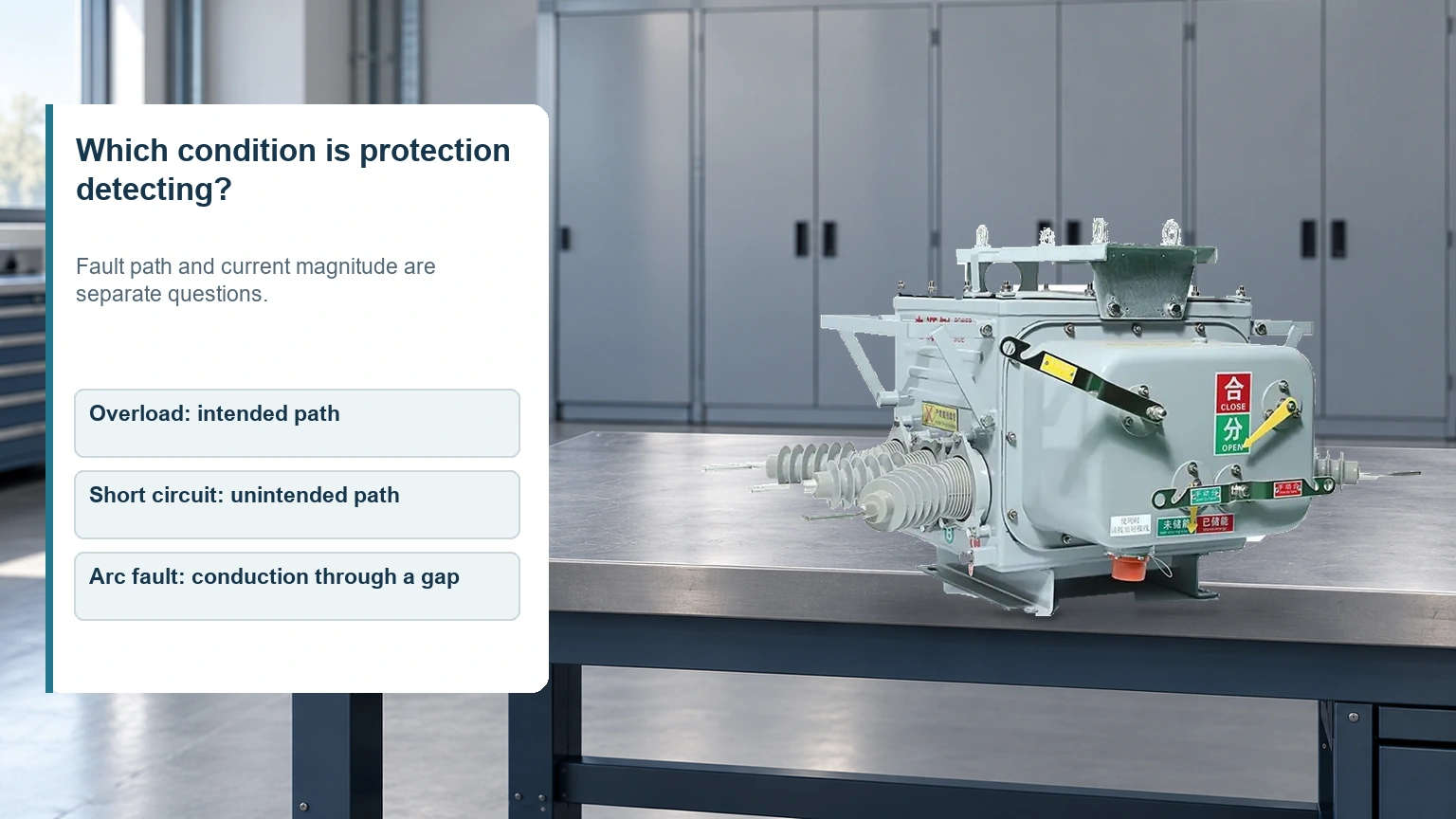
How are a short circuit, an arc fault and an overload different?
An overload uses the intended circuit path but draws more current than the circuit or equipment should carry for the relevant conditions. An arc fault describes the way current crosses a gap. A parallel arc between conductors can be a type of short circuit; a series arc in a damaged conductor can remain limited by the connected load.
| Condition | Current path | Protection question |
|---|---|---|
| Overload | Intended load path | Does current exceed the permitted time-current limit? |
| Solid short circuit | Unintended connection with very low fault impedance | Can protection detect it and the device interrupt the available duty? |
| Parallel arc fault | Arcing path between points at different potentials | Is current high enough for overcurrent operation, or is other detection needed? |
| Series arc fault | Gap within the load current path | Can the fitted protection recognize arcing that is not an overload? |
Schneider Electric’s guide to final-circuit arc faults explains the series and parallel distinction and why some dangerous arcs fall outside ordinary overcurrent or residual-current detection. That discussion concerns low-voltage final circuits. It should not be used as a claim that a medium-voltage vacuum breaker includes an AFDD function.
What determines available short-circuit current?
The supply strength, transformers, conductor impedance and fault location influence the result. Motors or generation can add contributions in applicable systems. The operating arrangement also matters: coupling two sections, changing sources or adding generation can change fault duty without changing the breaker at the location being assessed.
A short-circuit study identifies the prospective currents for defined cases. The engineer then checks the relevant making, breaking and withstand duties, using the applicable equipment standard. It is not enough to compare a familiar ampere rating with the normal load. The article on breaker fault-duty and protection coordination explains why continuous-current rating, interrupting capability and relay settings need separate checks.
| Project change | What to revisit | Why the old selection may need review |
|---|---|---|
| Different transformer or utility source | Source and transformer impedance data | Prospective fault contribution may change |
| Longer or differently sized feeder | Fault-loop impedance and minimum fault cases | Detection sensitivity and clearing time may change |
| Additional source or coupled bus | Contributions and operating modes | Current magnitude and direction may differ |
| Changed relay settings | Pickup, delays and coordination | The equipment may clear the same fault at a different time |
Which protective functions respond to each condition?
Thermal-magnetic low-voltage breakers commonly combine a delayed overload response with a magnetic response to high current. Electronic trip units can provide different adjustable functions. In many medium-voltage installations, current transformers and a protective relay provide detection, while a trip circuit commands the breaker to open. The exact functions depend on the installed equipment, not the word “breaker” on its own.
Schneider Electric’s description of low-voltage breaker characteristics separates overload settings, short-circuit settings and breaking capacity. Earth-fault protection is another function with its own measurement and application limits. A residual-current device detects an imbalance; a line-to-neutral arcing fault without leakage to earth may not create that imbalance.
Dedicated AFDDs or AFCIs recognize characteristics associated with certain dangerous arcs in their specified applications. In switchgear, an internal-arc protection scheme may instead combine optical detection with current supervision and a trip command. These are different architectures. Neither a household arc-fault breaker nor the presence of a vacuum interrupter proves that an industrial assembly has a complete internal-arc mitigation scheme.
Protection also needs a working command path. The explanation of vacuum breaker controls and operating mechanisms helps separate fault detection from the mechanism and control circuit that carry out the opening action.
What should happen after a protective trip?
Keep the trip indication and available event records before resetting equipment. A relay target, waveform record, alarm or trip-unit indication may help distinguish overload, short circuit and earth fault. Loss of that information can make a recurring problem harder to locate. An unmarked handle position alone is rarely enough to establish the cause.
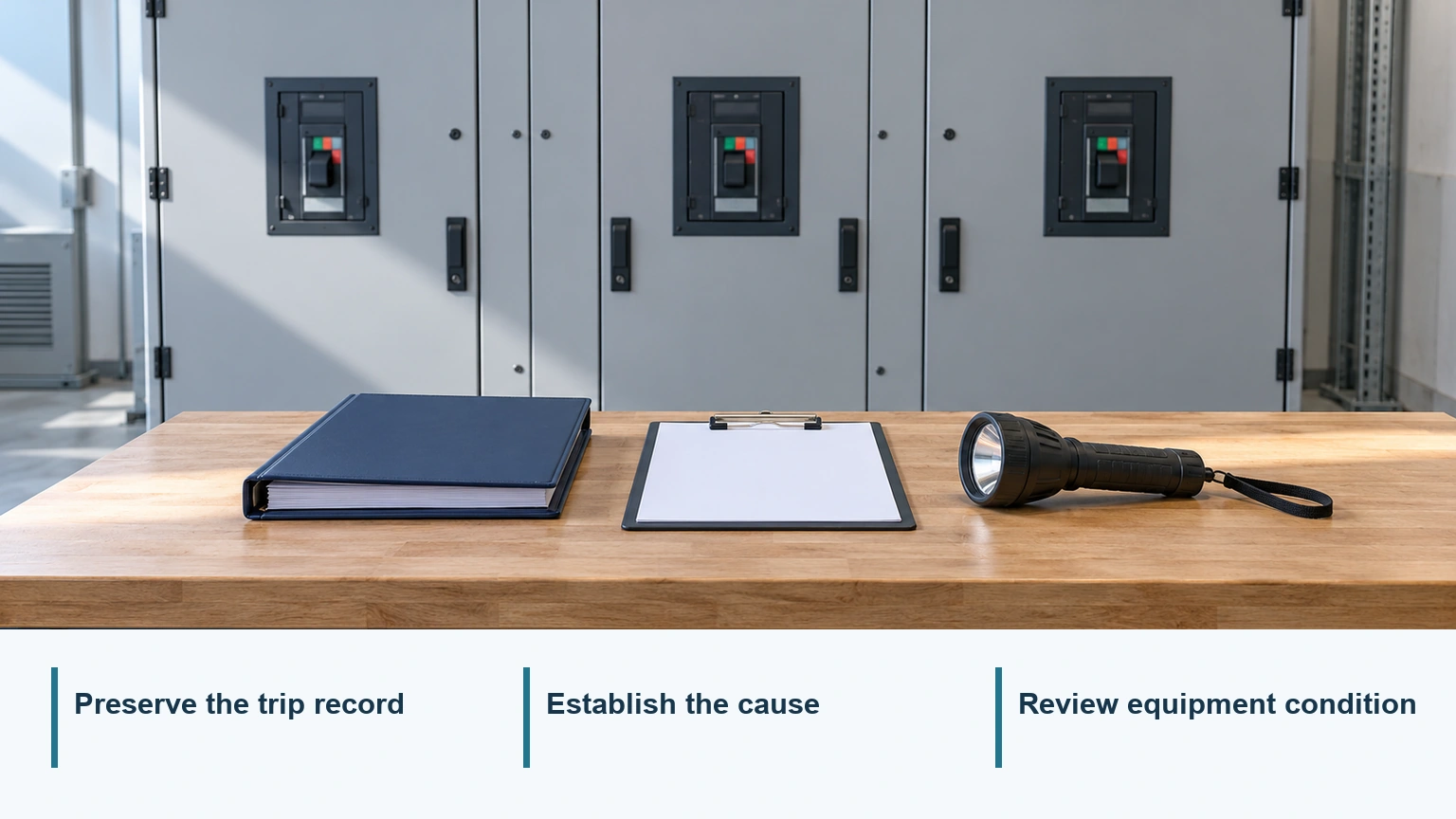
For U.S. workplaces within its scope, OSHA 1910.334(b)(2) prohibits repetitive manual reclosing and requires a determination that the equipment and circuit can be safely energized. Its note provides a limited exception to examination when the design and protective devices establish that the operation resulted from an overload rather than a fault. That is not a general instruction to reset unexplained trips.
Qualified personnel should plan isolation and verification, inspect the affected circuit and equipment as appropriate, and use the manufacturer’s post-fault guidance. Damage to insulation, terminals or an interrupter may require more than a visual check. The guide to vacuum circuit breaker testing provides context for equipment-specific checks. Select the necessary inspection and tests from the identified fault duty and equipment instructions; do not impose a universal test list or assume that a successful reset proves fitness for service.
What else do readers ask about short circuits?
What is a short circuit?
It is an unintended connection between points at different electrical potentials that bypasses the intended load path. Current depends on the source and total impedance of the resulting loop.
What causes a short circuit in electrical equipment?
Possible causes include insulation failure, contamination, conductive foreign objects, mechanical damage and incorrect connections. The actual cause must be established from the affected equipment and available fault evidence.
How is an arc fault different from a short circuit?
An arc fault describes conduction through an ionized gap. A short circuit describes an unintended connection between different potentials. A parallel arc can meet both descriptions; a series arc need not bypass the load.
How does a short circuit differ from an overload?
An overload draws excessive current through the intended path. A short circuit introduces an unintended path. They may operate different protective elements and require different investigation before restoration.
What determines the available short-circuit current?
The connected sources, transformer and conductor impedances, operating arrangement and fault location are central inputs. Applicable contributions from rotating machines or other generation must also be included.
Why might a circuit breaker fail to detect a low-current arc fault?
An ordinary overcurrent element may see current below its pickup or within a slow operating region. It is not automatically designed to recognize the waveform characteristics used by dedicated arc-fault detection.
Which protection functions respond to short circuits?
Depending on the application, instantaneous or time-delayed overcurrent, earth-fault, differential or other engineered functions can command interruption. Selectivity, sensitivity and the breaker’s interrupting duty must all be checked.
What should be inspected after a short-circuit trip?
Review the trip evidence, faulted circuit, insulation, connections and affected equipment using approved procedures and manufacturer instructions. The required work depends on the fault and equipment; repeated resetting is not an investigation.
References
- Schneider Electric: Protection against final-circuit arc faults in conductors and connections, page updated August 2026.
- Schneider Electric: Fundamental characteristics of a circuit-breaker, page updated August 2026.
- OSHA 1910.334: Use of equipment, particularly paragraph (b)(2).
- IEC 62271-100:2021+AMD1:2024: Alternating-current circuit-breakers, applicable to the stated high-voltage AC breaker scope.
Summary
Fault terminology becomes useful when it changes the next engineering decision. Establish the current path first, determine the available fault conditions, and then check whether the fitted protection can detect and clear them. An overload, a solid short circuit and a low-current arc do not justify the same assumptions. Keep detection capability separate from interrupting capacity, and keep both separate from permission to reenergize after a trip. Preserve event evidence and follow the applicable post-fault procedure before restoration. Fuerte’s vacuum circuit breaker range provides equipment options for distribution projects; selection still requires the project’s voltage, fault-duty and control requirements. The protection functions and operating boundaries should be agreed explicitly rather than inferred from a product category name.