
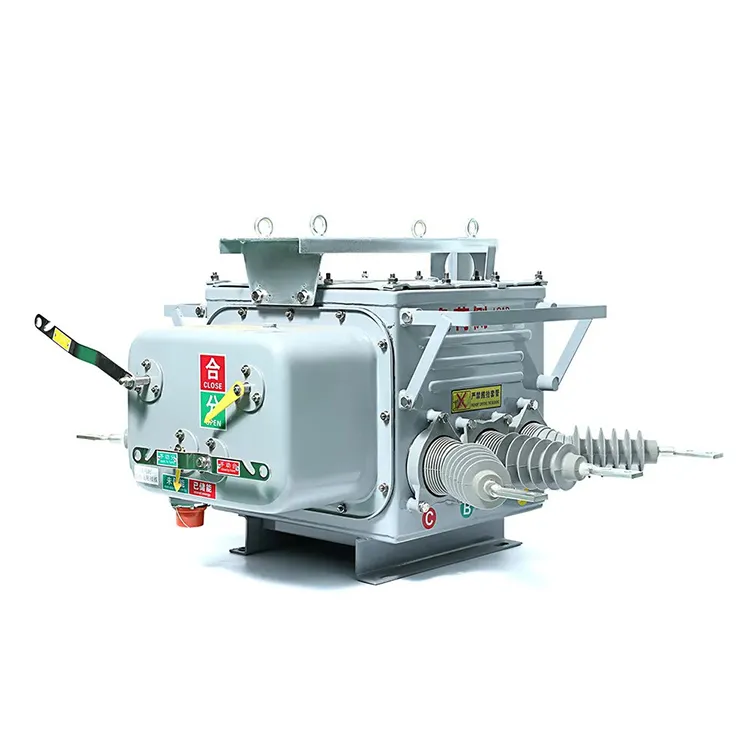
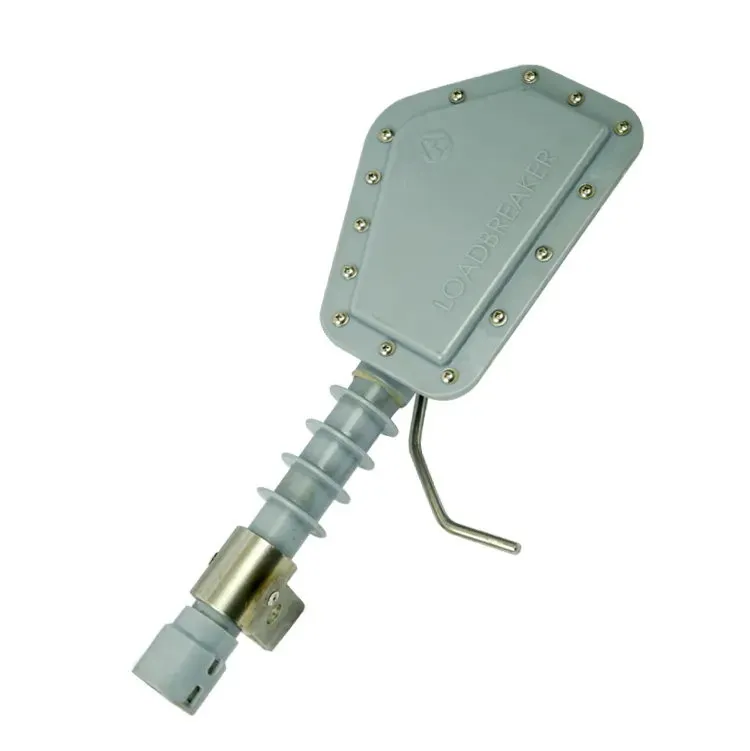


A vacuum circuit breaker may carry a feeder’s normal load comfortably yet be unable to interrupt a fault on that same feeder. The ampere rating describes continuous service. Fault ratings describe what happens when the current rises far above normal, while the relay settings determine how long that condition lasts. These values belong together. Selecting a breaker by voltage and load current alone leaves out the part of its job that matters during a short circuit. The practical question is how to match the breaker to both the network’s fault current and the protection system that will trip it.
For medium voltage vacuum circuit breakers, begin with the short-circuit study at the installation point. Match the voltage and insulation requirements, then compare breaking current, peak making current and short-time withstand. Finally, check the clearing time and any reclosing sequence. IEC 62271-100 is the relevant AC circuit-breaker standard, but the required ratings come from the network and its operating conditions. An ordinary feeder, a generator connection and a capacitor-bank circuit can require different switching capabilities even when their voltage and normal current are similar.
Which VCB ratings describe normal service, and which describe a fault?
Rated normal current is the current the breaker can carry continuously under its stated service conditions. It belongs with the load calculation and the installation environment. It says nothing on its own about the current the breaker can interrupt.
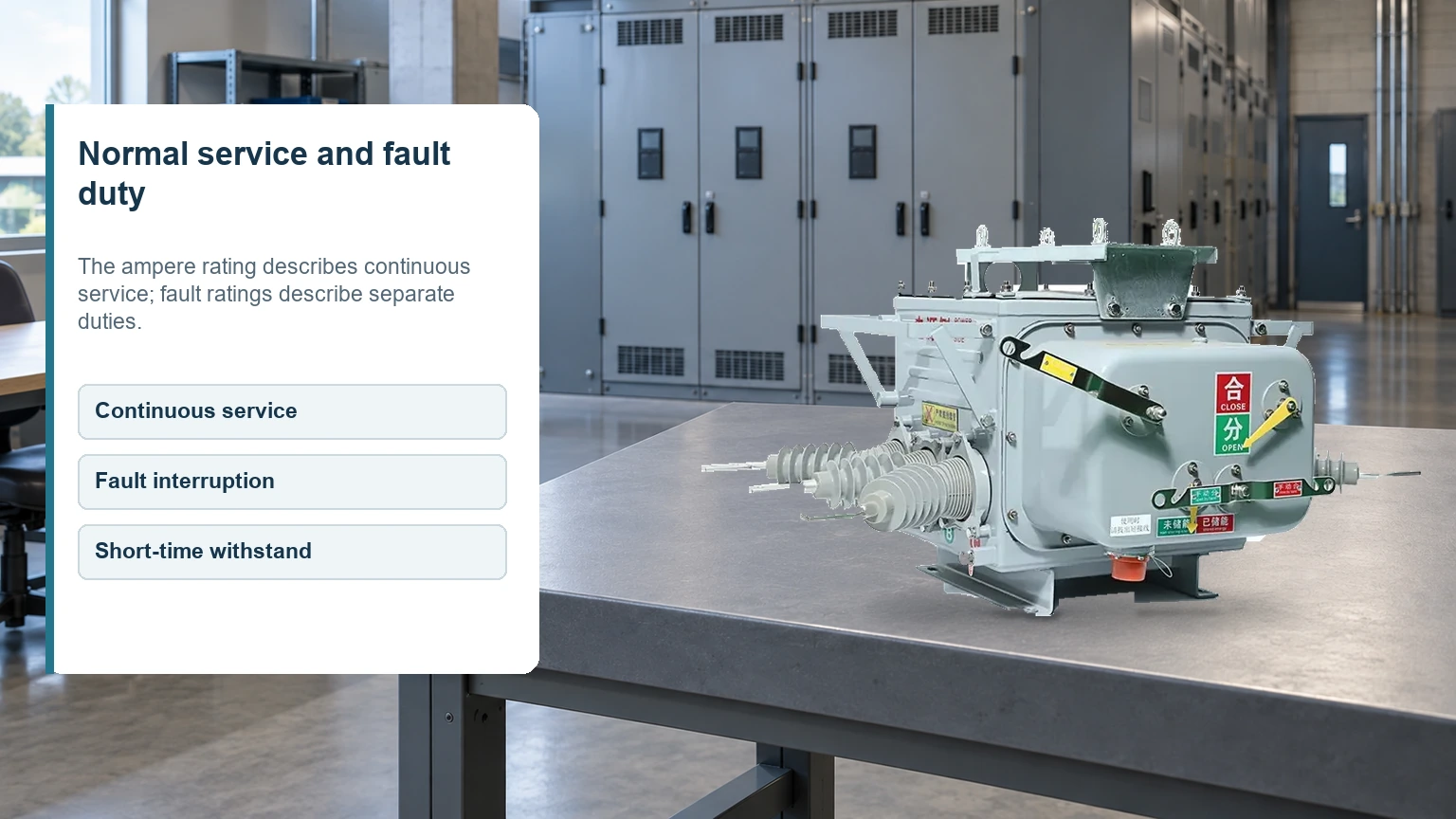
Short-circuit breaking current describes interruption of a fault. Making current describes closing onto one, which can happen when a circuit is re-energised before its fault has been cleared. Short-time withstand describes carrying fault current for a stated duration. Confusing these quantities can lead to comparing an RMS value with a peak value or overlooking the time for which the current must be carried.
| Rating | What it means | What to compare it with |
|---|---|---|
| Rated normal current, A | Continuous load-carrying capability | Expected load and service conditions |
| Breaking current, kA RMS | Capability to interrupt the specified short-circuit duty | Prospective fault current at the breaker |
| Making current, kA peak | Capability to close onto a fault | Calculated peak fault duty |
| Short-time withstand, kA and duration | Capability to carry a fault until it is cleared | Fault current and the relevant clearing time |
| Operating sequence | The opening and reclosing operations the breaker is rated to perform | The protection scheme’s required sequence |
Why must the fault current be calculated at the breaker location?
Fault current depends on the sources feeding that point in the network. A parallel transformer or local generator can change it. A value copied from another busbar, or from a study completed before the network was altered, may no longer describe the duty the breaker will face.
The study should cover the network arrangements that the plant is permitted to operate. Compare the resulting breaking and making duties with the offered breaker ratings. The calculation method’s treatment of asymmetry and time constants matters, so a fixed multiplier between RMS breaking current and peak making current should not be assumed. The guide to VCB breaking-capacity specifications explains these quantities in more detail.
For a balanced three-phase system, Ssc = √3 × U × Isc converts fault current in kA and voltage in kV into fault level in MVA. It is a useful conversion when reports use different units. It does not determine a breaker’s tested interrupting capability.
How do relay settings affect short-time withstand requirements?
A fault does not disappear as soon as the relay detects it. The relay may have an intentional delay, and the breaker then needs time to open and interrupt the current. During that period, the affected equipment continues to carry the fault. This is why a short-time withstand rating needs both a current and a duration.
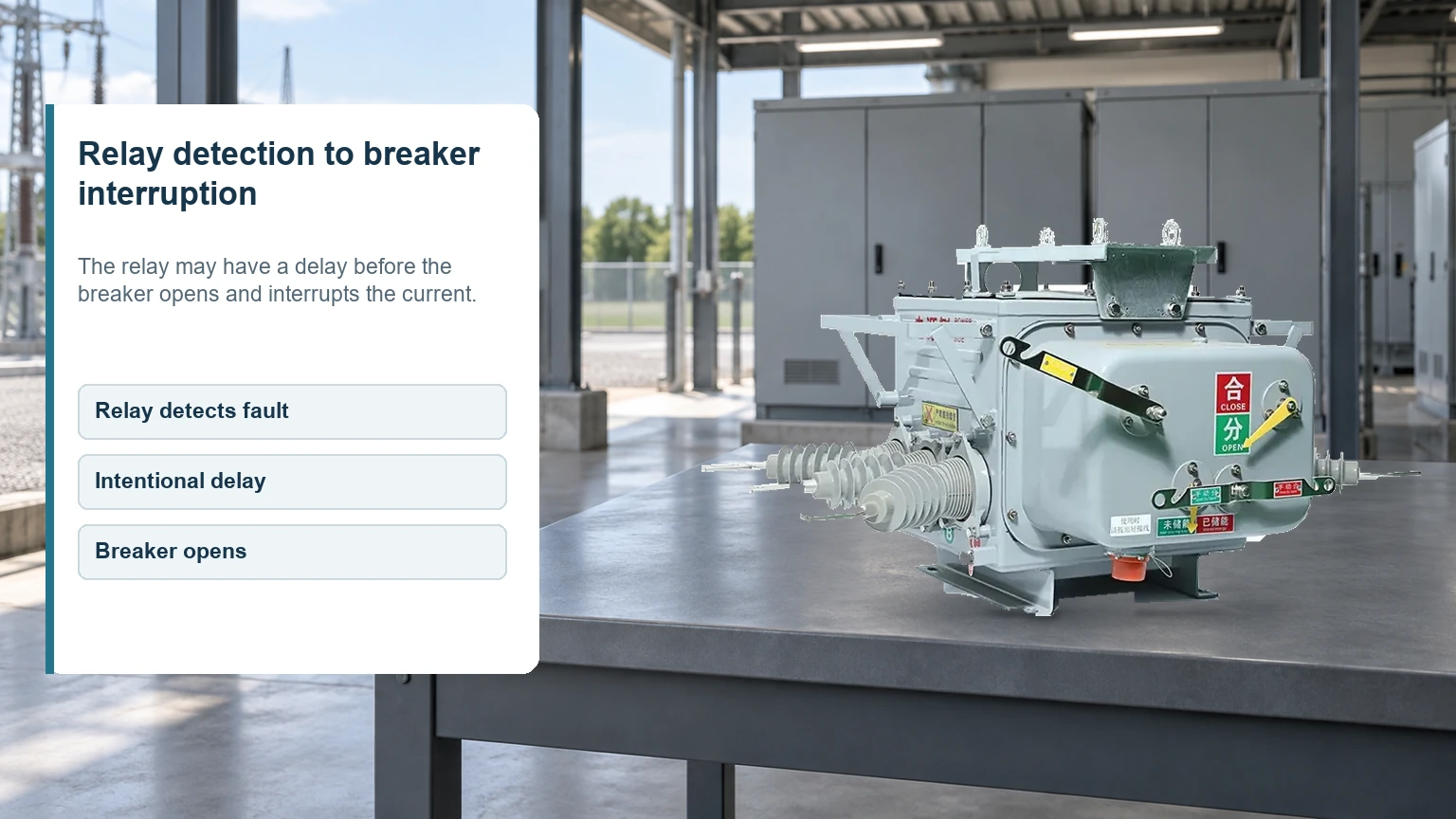
Protection coordination must also consider the relevant backup operation. If the local protection fails to clear the fault, the upstream device may operate later. Compare those clearing times with the equipment’s withstand capability. A longer relay delay cannot be accepted simply because the breaker has enough continuous-current capacity.
The trip also depends on the current transformers, their wiring and the control circuit. CT ratio, accuracy, saturation and polarity can affect the information reaching the relay. Secondary injection checks parts of that chain, but it does not test the primary CT connections or prove that the breaker will interrupt a primary fault. Commissioning needs to cover those separate functions.
How should voltage and insulation ratings be selected?
Use the highest normal system voltage and the required insulation levels, rather than relying on nominal network voltage alone. The specification should identify power-frequency and lightning-impulse withstand requirements and the connections across which they apply. Altitude, pollution and the enclosure arrangement also affect the insulation review.
IEC 62271-100:2021+AMD1:2024 covers three-phase AC circuit-breakers above 1,000 V at 50 Hz and/or 60 Hz. Use the edition specified for the project, alongside the requirements for the surrounding switchgear assembly. A breaker test report and an assembly assessment cover different parts of the installation.
When does a feeder need a more specialised breaker?
The load being switched matters as well as the fault level. ABB’s primary breaker range includes separate products for generator, capacitor-bank and arc-furnace duties. Its generator information discusses delayed current zeros and severe transient recovery voltage. These are reasons to describe the application before choosing a model.
| Circuit or operating condition | What needs closer attention? |
|---|---|
| Transformer or motor circuit | Switching transients and the frequency of operation |
| Capacitor bank | Charging-current interruption and inrush duty |
| Generator connection | Generator-fed faults and recovery voltage |
| Automatic reclosing | Rated operating sequence, mechanism energy and suitability of the circuit for restoration |
| Planned parallel supply | The fault level after the additional source is connected |
What should the final breaker specification contain?
Keep the electrical ratings and protection requirements on the same schedule. Include the fault-study revision, clearing times, operating sequence, control voltages and installation conditions. Then ask the supplier to identify the exact model and any differences from the requested specification.
Fuerte’s ZW20-12/630-20 technical data illustrates why units matter. The listing distinguishes 12 kV rated voltage, 630 A rated current and 20 kA for 3 s short-time withstand. It also contains different breaking-current options. The quotation therefore needs to identify which variant is being supplied, rather than combining every option in the catalogue into one specification.
Frequently asked questions
How do you select a VCB rating?
Start with the system voltage, load and short-circuit study. Add insulation requirements, clearing times, switching duty and site conditions, then compare them with the exact breaker offered.
What is the breaking capacity of a vacuum circuit breaker?
It is the current the breaker is rated to interrupt under specified conditions. The kA value must be read with its voltage rating and test duty.
How do you calculate the breaking capacity of a vacuum circuit breaker?
The network calculation determines the required fault duty. The breaker’s available capability comes from its rated and tested performance. Converting kA to MVA does not establish that capability.
What is the rated voltage of a vacuum circuit breaker?
It is an equipment rating associated with the breaker’s operating and insulation requirements. The correct choice depends on the system’s maximum voltage and specified insulation levels.
What is short-time withstand current?
It is the fault current the equipment can carry for a stated short duration. A current value without its duration leaves out an essential part of the rating.
What are the typical ratings of vacuum circuit breakers?
Common nameplate and schedule items include voltage, normal current, breaking current, making current, short-time withstand and operating sequence. Their values vary by model and application.
References
- IEC 62271-100:2021+AMD1:2024 — Alternating-current circuit-breakers.
- ABB — Primary Vacuum Circuit Breakers, application-specific ratings and duties; reviewed 16 October 2026.
- Tavrida Electric — Vacuum Circuit Breaker: Fundamentals, interruption and actuator principles; reviewed 16 October 2026.
Summary
A suitable VCB must carry the normal load, withstand the fault while protection operates, and interrupt it under the conditions present at that location. Begin with the network study and compare each rating in its own units. Then check clearing times, backup protection and the required switching sequence. If the circuit serves a generator or capacitor bank, include that duty in the application review before selecting a model. Keep the final specification tied to the study so future network changes can be assessed against it. For a Fuerte inquiry, send the rating schedule, protection requirements and installation details through the technical enquiry page.