
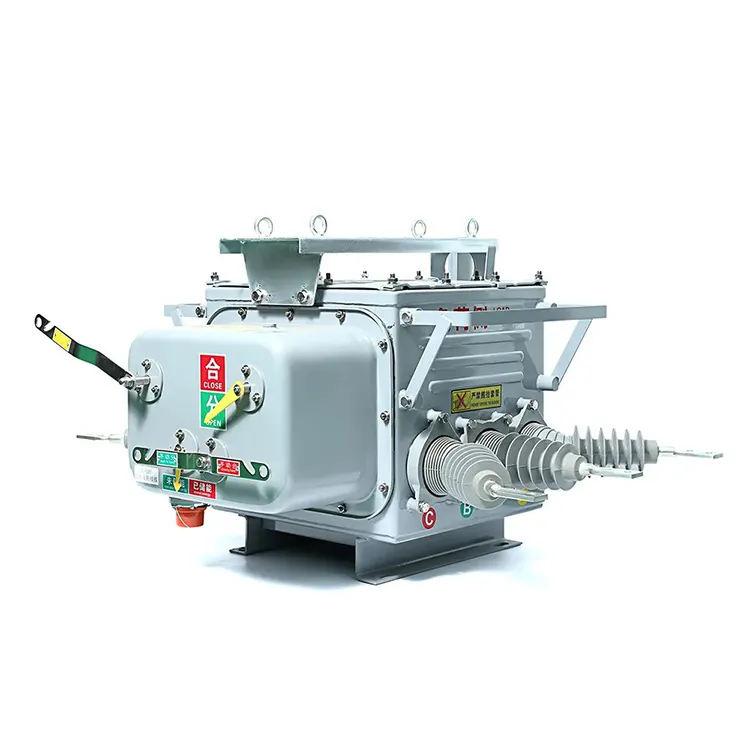
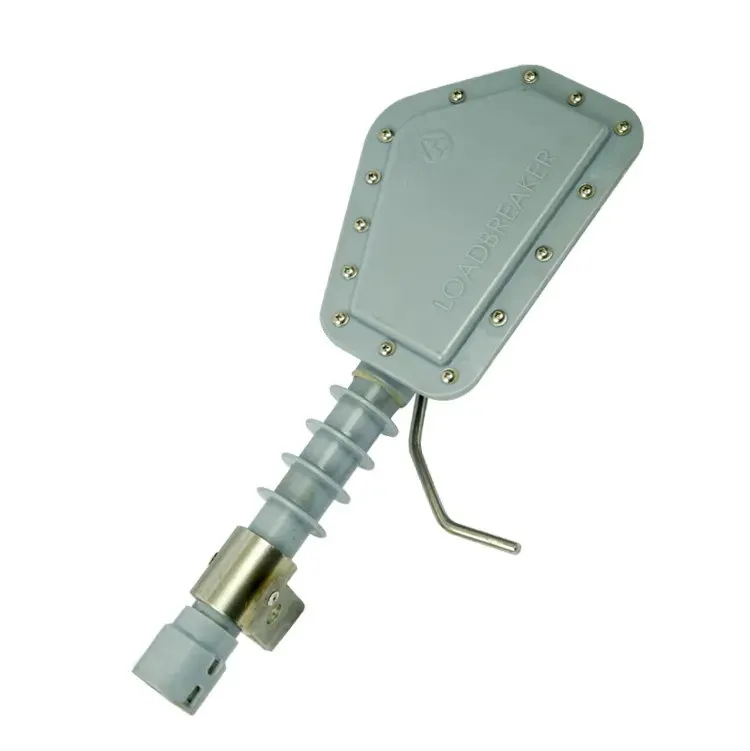


When a vacuum circuit breaker starts operating slowly or needs another repair, the maintenance team faces a practical choice: service it again, refurbish it, or replace it. Age helps explain its history, but does not settle that choice. An older breaker with sound insulation, stable test results and available parts may still be serviceable. A newer one may need replacement if its interrupters are worn or the network’s fault level has outgrown its rating. The useful starting point is to establish what has deteriorated, whether it can be repaired, and whether the breaker still suits the circuit.
There is no universal vacuum circuit breaker lifespan in years. Maintenance makes sense when approved work can restore acceptable condition and the breaker remains correctly rated. Replacement becomes the stronger option when wear limits have been reached, insulation or interrupter condition cannot be restored, critical parts are unavailable, or the present electrical duty exceeds the original capability. Test results, operating records and the manufacturer’s service limits should support the decision. A successful opening operation, by itself, says little about how the breaker will perform during its next fault interruption.
Which signs suggest that routine maintenance is no longer enough?
Look for the cause of the recurring problem. A control-supply fault, a worn mechanism and a deteriorated interrupter require different work. Repeatedly servicing the mechanism will not correct a problem in the insulation, and replacing a coil will not increase the breaker’s fault rating.
Depending on the design, the assessment may include contact wear, travel, operating times, pole synchronism, contact resistance and external insulation condition. Compare results with the limits for that exact breaker. The guide to VCB testing explains what these measurements can reveal.
Previous results make those measurements more useful. A change from the commissioning baseline may warrant investigation even when a single reading is hard to interpret. Keep the test conditions comparable: a resistance change can come from a connection or the measurement setup as well as from the breaker.
A suspected loss of vacuum needs the manufacturer’s prescribed assessment. The interrupter is sealed; routine servicing does not involve refilling it. Tavrida’s description of vacuum interrupter technology explains the role of the vacuum in interruption. Use the specified test procedure rather than choosing an arbitrary high-voltage test.
Why can two breakers with the same operation count have different remaining life?
One breaker may have spent its life opening and closing a normal load. Another may have interrupted several faults. The counter records operations, but does not describe how severe they were. That difference matters when assessing electrical endurance.
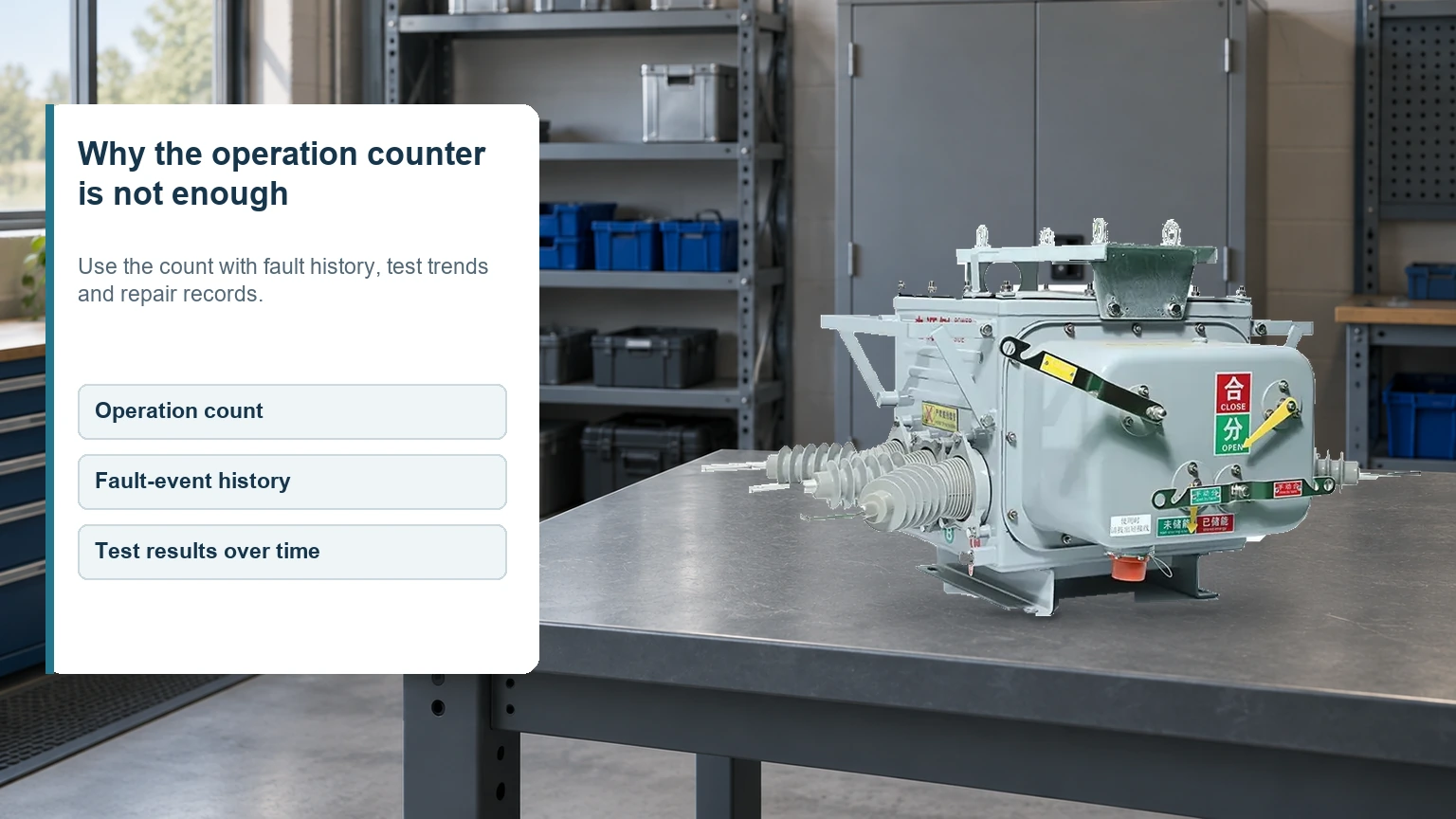
Keep fault-event records alongside the total count. They help the service engineer relate the breaker’s history to the manufacturer’s duty-dependent wear limits. Maintenance records should also show which parts were replaced, so an old counter reading is not mistaken for the age or condition of every component.
| Available information | How it helps the replacement decision |
|---|---|
| Operation count | Shows accumulated mechanism use |
| Fault-event history | Identifies interruptions that may have caused greater contact wear |
| Test results over time | Shows whether measured condition is changing |
| Repair and parts records | Shows what has already been renewed and which recurring problems remain |
| Current fault study | Shows whether the original rating still suits the network |
The wording of an endurance figure deserves attention. Fuerte’s published ZW20-12/630-20 data lists at least 10,000 no-load mechanical operations, with fault-interruption entries stated separately. That number describes no-load mechanism operation; it is not a promise of 10,000 fault interruptions or a fixed number of service years. ABB’s breaker portfolio likewise gives different mechanical-operation figures for different models and duties.
When is refurbishment worth considering?
Breaker refurbishment is worth considering when the defect is understood, approved parts are available and the repaired breaker can be tested against clear acceptance limits. The proposal should say what will actually be done. Mechanism servicing, replacing interrupters and renewing controls are different jobs, with different effects on cost and outage time.
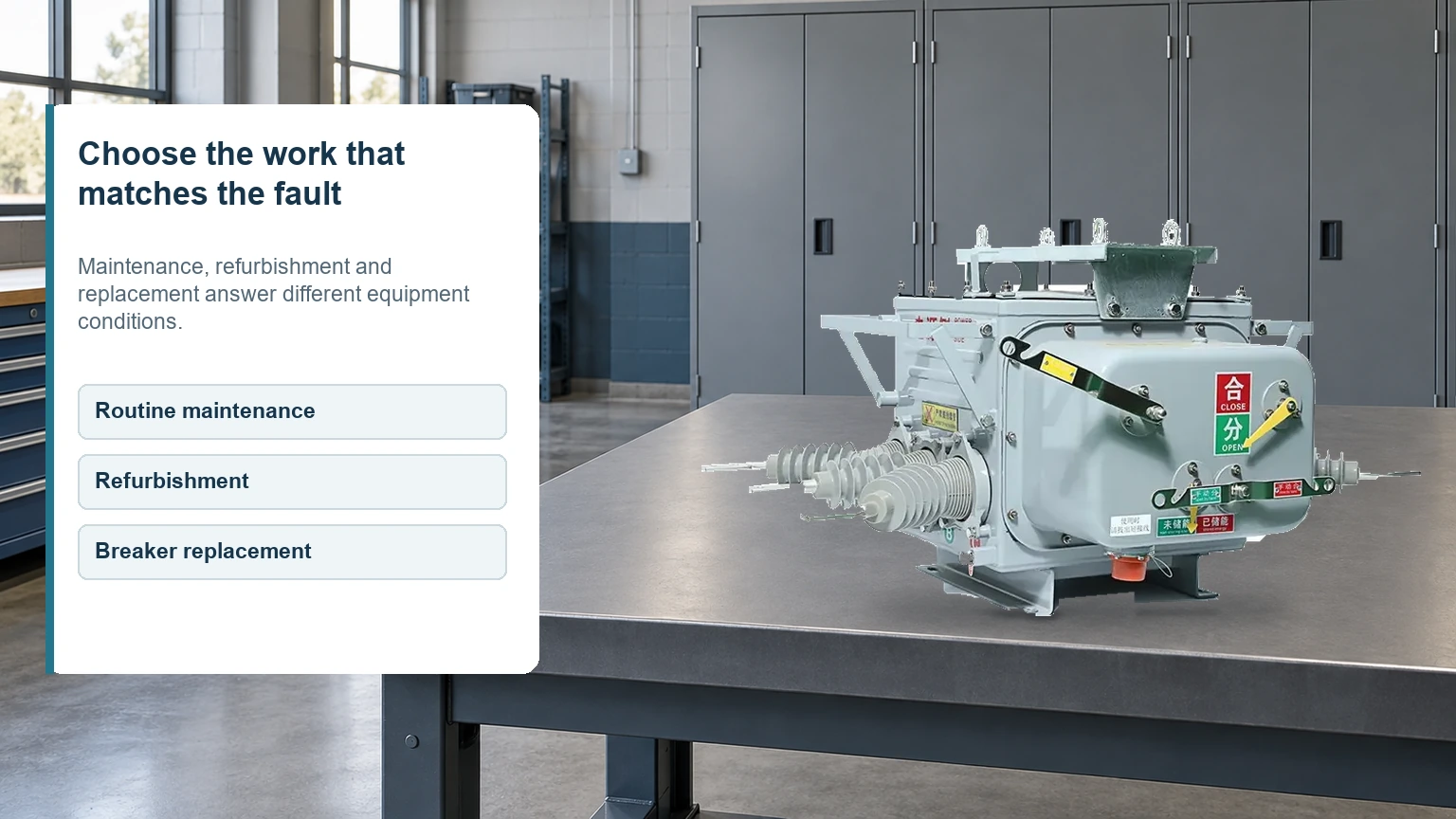
Refurbishment is less attractive when each outage reveals another unsupported component or when the original duty is no longer suitable. Include testing, transport, temporary supply and the risk of another outage in the comparison. The repair price alone does not show what it will cost to return the circuit to dependable service.
| Option | When it is most relevant | Main question before proceeding |
|---|---|---|
| Routine maintenance | Wear remains within service limits and faults can be corrected by normal servicing | What caused the problem, and has servicing corrected it? |
| Refurbishment | Specific components need renewal while the overall design remains suitable | Are parts, procedures and post-work acceptance tests available? |
| Breaker replacement | The breaker cannot be restored or supported economically | Will the replacement work correctly in the existing assembly? |
| Switchgear renewal | Deterioration extends to the enclosure, busbars, insulation or overall protection arrangement | Would changing only the breaker leave the main problem in place? |
What can make replacement necessary even if the breaker still operates?
A network change can do this. Additional sources may raise fault current above the breaker’s capability. Routine maintenance cannot increase that rating. The same concern arises if a new application introduces a switching duty the breaker was not selected to handle.
Parts support can also decide the issue. A repair may be technically possible but impractical if a critical mechanism or control component is no longer obtainable. For a feeder that cannot tolerate a long outage, access to supported spares may carry more weight than the cost of the next service visit.
If the insulation, interrupter condition or remaining wear allowance cannot be brought within the manufacturer’s limits, continued operation needs an engineering decision rather than another routine maintenance booking.
What needs checking when a replacement fits the old panel?
Physical fit is only part of the job. The primary contacts, insulation clearances, earthing, shutters, interlocks, secondary connectors and control voltages must work with the existing switchgear. The article on VCB retrofit mounting and controls explains these interfaces.
Agree the post-work tests before the outage. They should cover the work performed and the functions it could affect, including the trip and close circuits, interlocks and protection connections. IEC 62271-100 addresses breaker performance; it does not by itself establish that a modified assembly is suitable. Keep the new results with the asset’s history so future inspections have a reliable starting point.
Frequently asked questions
What is the typical lifespan of a vacuum circuit breaker?
There is no single calendar lifespan for all VCBs. Use condition, duty history, maintenance records and manufacturer limits to judge the installed breaker.
Can a circuit breaker be refurbished?
Some can, provided the design is still suitable and the work uses approved parts and procedures. Ask for a defined repair scope and the tests that will demonstrate acceptable condition afterward.
How many years should a circuit breaker last?
A design-life statement, a warranty period and actual service life describe different things. The number of years in service should prompt a condition review, not substitute for one.
What are common VCB problems?
Mechanism wear, control-circuit faults, connection heating, insulation deterioration and interrupter-integrity problems are possible causes. A failure to close and an unwanted trip should not automatically lead to the same repair.
What tests are performed on a vacuum circuit breaker?
The service plan may include resistance, timing, mechanical and control checks, plus prescribed dielectric or vacuum-integrity tests. Methods and acceptance limits depend on the model.
How can you tell whether a circuit breaker needs replacing?
Replacement deserves serious consideration when the breaker no longer suits the duty, has reached a wear limit, cannot be restored to acceptable condition or lacks essential parts support.
References
- IEC 62271-100:2021+AMD1:2024 — Alternating-current circuit-breakers.
- ABB — Primary Vacuum Circuit Breakers, model-specific operation and application information; reviewed 16 October 2026.
- Tavrida Electric — Vacuum Circuit Breaker: Fundamentals, interrupter and actuator construction; reviewed 16 October 2026.
Summary
The best repair decision starts with the cause of deterioration and the duty the breaker must perform today. If approved servicing can restore acceptable condition, maintenance may remain sensible. If critical parts, insulation condition or the original rating prevent that, another service visit may only postpone replacement. Compare the complete work and outage costs, including the interfaces and tests needed for a new breaker. Keep operation counts and fault history separate, and avoid treating age as the only measure of remaining life. Fuerte’s vacuum circuit-breaker range provides a starting point for a replacement enquiry once the existing panel and electrical requirements are known.