


A power-distribution project can pass its load and one-line reviews yet retain a costly definition gap: the schedule calls for “switchgear” or “switchboard” without stating protective devices, fault duty, compartment boundaries, access, or the governing standard. The problem may surface only after the room, cables, protection scheme, and procurement package are fixed. The real risk is buying an assembly whose construction and maintainability do not match the operating plan. A defensible choice starts with system duty and safe-work requirements, then applies the destination market’s terminology.
Quick Answer: A switchboard commonly fits economical low-voltage distribution where grouped devices, metering, and practical cable access meet the need. Switchgear is generally favored for greater protective-device compartmentalization, engineered fault isolation, maintainable breaker arrangements, or a specified tested construction. These are tendencies, not universal voltage cutoffs: IEC, ANSI/IEEE, UL, utility, and local usage differ. Compare the complete assembly with the short-circuit study, protection philosophy, access plan, and named product standard.
What Is the Practical Difference Between Switchgear and a Switchboard?
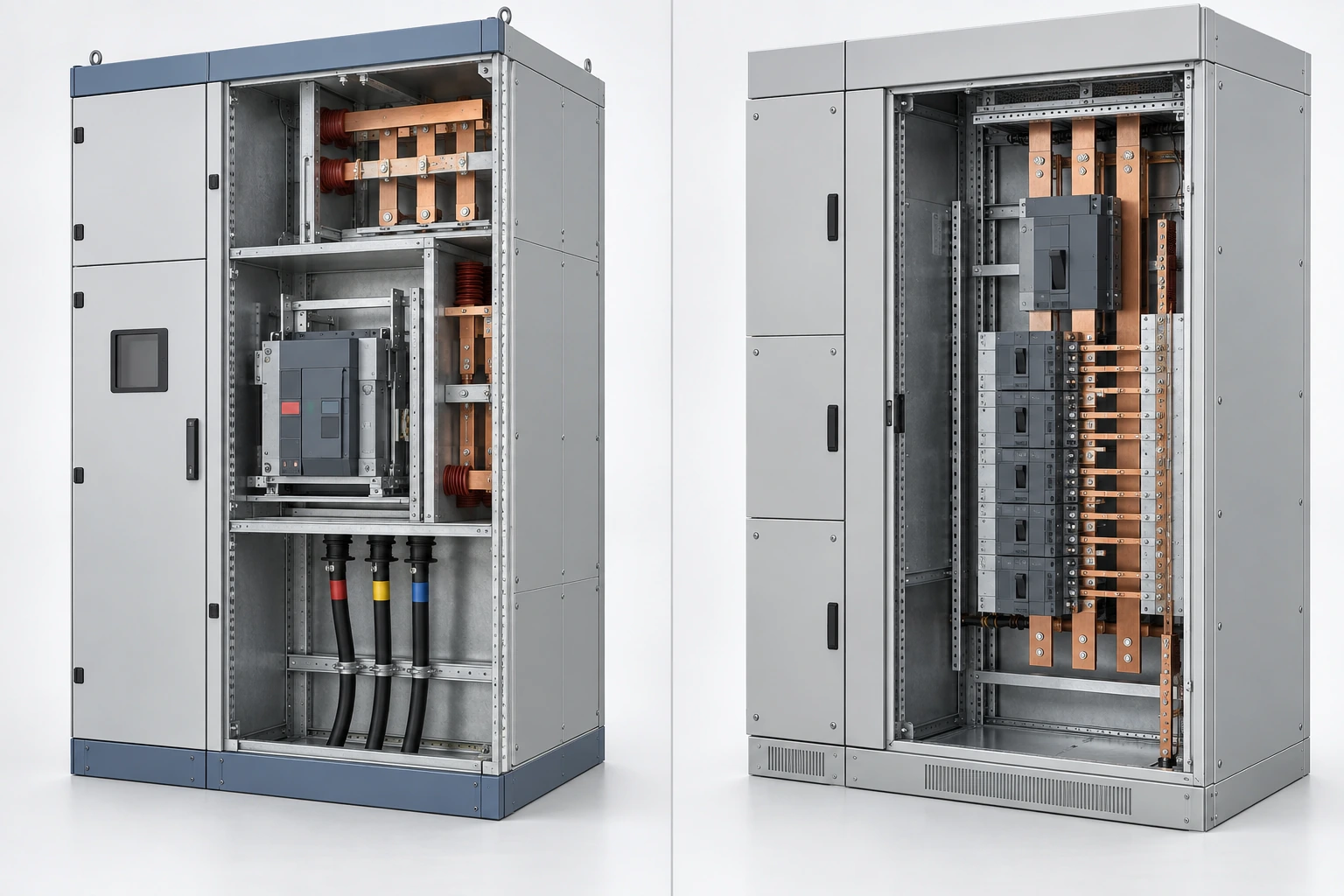
The clearest distinction is functional and constructional. Both assemblies distribute power and may contain breakers, switches, fuses, metering, and controls. A switchboard typically organizes them in sections with shared internal space. Switchgear usually applies more defined segregation around protective devices, buses, cables, and controls. Any switchgear vs switchboard decision must verify the compartment scheme on drawings; the name alone proves no barrier arrangement.
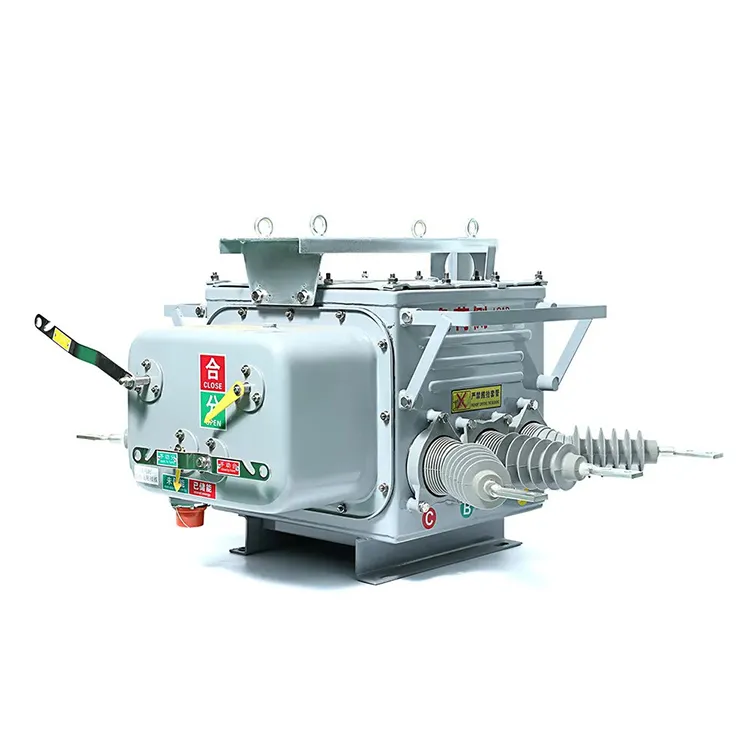
The protective device also matters. A molded-case breaker in a switchboard serves a different maintenance strategy from a drawout power breaker or medium-voltage vacuum breaker. For breaker placement and access, see this guide to indoor metal-enclosed switchgear.
| Decision factor | Switchboard tendency | Switchgear tendency | What the project must verify |
|---|---|---|---|
| Primary purpose | Distribution, metering, and feeder control | Coordinated switching, protection, and isolation | One-line and protection philosophy |
| Device arrangement | Devices may share section space | More compartmentalization is common | Arrangement and compartment drawings |
| Fault isolation | Depends on devices, coordination, and section design | Often supports localized isolation and maintainable breakers | Fault study, relay logic, and isolation points |
| Maintenance access | Can suit planned shutdowns | May offer drawout devices or segregated access | Access, clearance, racking, and outage plan |
| Arc-resistant construction | Only when tested and classified | Only when tested and classified | Test basis, accessibility, current, duration, and conditions |
| Cost tendency | Lower when simpler construction meets duty | Higher with added compartments, devices, and testing | Installed cost, downtime, spares, and service |
How Do Protection and Fault-Isolation Requirements Affect the Switchgear-or-Switchboard Choice?
Protection requirements should lead. Define available fault current, clearing time, breaker interrupting rating, bus withstand, trip functions, source configuration, and coordination objective. More compartmentalization can limit equipment affected by inspection, but does not guarantee selective coordination or fault containment; those outcomes depend on the protection study, assembly, and verified ratings together.
Fault isolation asks what must remain energized after a feeder problem and how personnel establish a safe boundary. Rapid breaker exchange, clear disconnected positions, shutters, or separated control and power zones often favor switchgear. A planned total outage and straightforward distribution may support a switchboard. This overview of fault-interruption duty and breaking capacity helps structure the rating discussion.
Neither construction makes an internal fault harmless. Consequences also depend on fault energy, enclosure integrity, installation, pressure relief, and personnel location. Translate “fault isolation” into specific requirements.
Which Voltage Classes Typically Use Switchboards or Switchgear?
Switchboards are most associated with low-voltage distribution, while switchgear spans low-voltage power assemblies and medium-voltage metal-enclosed systems. A universal boundary is misleading. IEC 62271-200:2021 covers metal-enclosed AC equipment above 1 kV through 52 kV. North American projects may distinguish UL 891 switchboards, UL 1558 low-voltage switchgear, and applicable ANSI/IEEE C37 medium-voltage equipment. The destination specification controls the vocabulary and tests.
Voltage class is only the first filter. Current, fault rating, insulation level, frequency, grounding, service conditions, and expansion also matter. A project should not replace fault and insulation studies with a rule that one voltage always requires switchgear.
How Do Maintenance Access and Arc-Resistance Affect Project Selection?
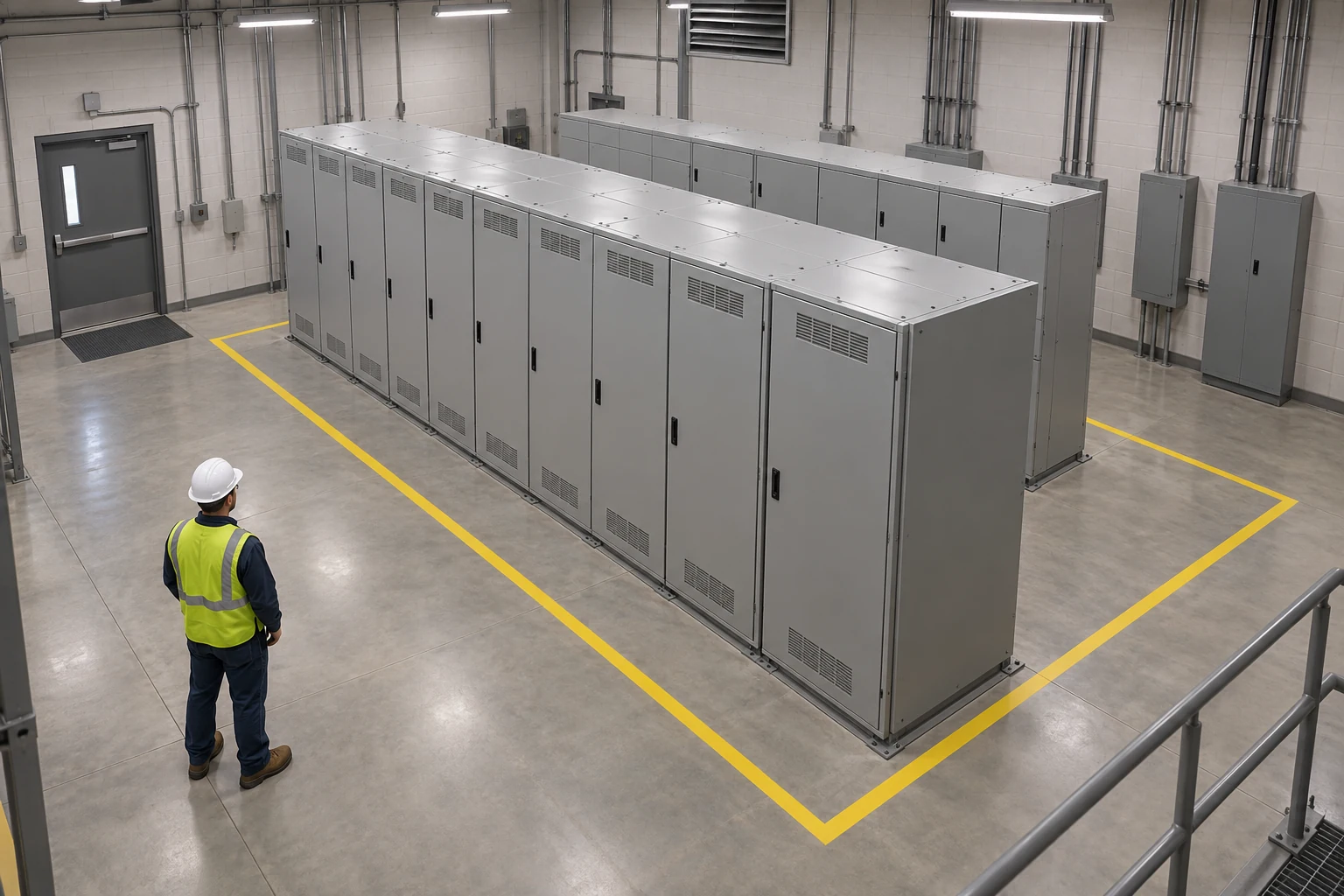
Maintenance access changes room design and lifecycle cost. Confirm front or rear access, fixed or withdrawable breakers, cable-test access, and whether adjacent sections may remain energized under an approved procedure. A fixed arrangement reduces moving hardware but needs deliberate isolation; this fixed-breaker maintenance access guide explains the interfaces.
Arc-resistant construction is a tested classification, not a synonym for switchgear or a substitute for de-energization. Evidence must identify the assembly, test basis, accessible sides, arcing current and duration, and installation conditions. Component or field changes may invalidate the tested configuration. Write the required classification and evidence into the specification.
Which Standards and Test Evidence Govern the Assembly?
- IEC 62271-200:2021: covers AC metal-enclosed equipment above 1 kV through 52 kV, including declared classifications for partitions, service continuity, and internal arcing. It does not make every lineup arc-resistant.
- UL and ANSI/IEEE practice: North American specifications distinguish UL 891 switchboards, UL 1558 low-voltage switchgear, and applicable IEEE C37 equipment. Confirm the edition and jurisdiction.
- OSHA and NFPA 70E: address hazards, qualification, de-energization, lockout/tagout, verification, boundaries, and protective equipment—not the assembly’s commercial name.
Compliance evidence must match the supplied configuration and destination. A brochure’s standard reference does not establish that every variant was evaluated. Request the nameplate schedule, drawings, relevant test reports, instructions, and limitations.
Which Assembly Fits the Project’s Operating Plan?
A useful switchboard vs switchgear matrix links operating conditions to evidence rather than relying on labels.
| Project condition | Likely direction | Decision evidence |
|---|---|---|
| Low-voltage distribution with straightforward feeders and planned shutdowns | Evaluate a switchboard first | Loads, fault rating, access, and UL/IEC basis |
| Critical loads needing localized isolation or faster replacement | Evaluate switchgear | Continuity, compartments, interchangeability, and protection study |
| Medium-voltage utility, EPC, or industrial distribution | Evaluate metal-enclosed switchgear | IEC or ANSI/IEEE basis, fault duty, breaker, and interlocks |
| Restricted electrical room or retrofit footprint | Compare both; access may decide | Verified dimensions, door swing, cable bends, heat, lifting, and maintenance clearances |
| Arc-resistant construction specified | Choose only a tested and documented assembly | Classification, accessible sides, test current and duration, exhaust path, and installation instructions |
How Should Buyers Write the Final Switchgear or Switchboard Specification?
- Issue the one-line, loads, short-circuit study, grounding method, and protection functions before requesting a lineup.
- Name the governing IEC, UL, ANSI/IEEE, utility, and local requirements; do not mix terminology without defining equivalence.
- Approve compartments, fixed or drawout devices, interlocks, cable access, lifting, and the isolation sequence.
- If arc resistance is required, specify the exact classification and request evidence for the offered configuration.
- Compare lifecycle cost—space, outages, spares, training, and maintenance—not enclosure price alone.
Fuerte, a China-based B2B manufacturer of medium-voltage distribution protection equipment, can support an engineering review of breaker duty, mounting arrangement, and documentation requirements. Final selection remains a system-level decision involving the assembly designer, protection engineer, purchaser, and authority having jurisdiction.
Frequently Asked Questions
What is the difference between switchgear and a switchboard?
A switchboard commonly provides distribution, metering, and feeder protection in grouped sections. Switchgear generally uses more compartmentalization and is often selected for maintainability and fault isolation. The product standard and drawings are more reliable than the label.
What is the purpose of switchgear?
Switchgear controls, protects, and isolates electrical circuits. It combines switching and protective devices, controls, buses, and enclosure features for normal service and fault response.
What are the disadvantages of switchgear?
Switchgear can require more floor space, engineering, interlocks, specialized handling, maintenance planning, and initial investment than a simpler switchboard. Those disadvantages may be justified when continuity, compartmentalization, or service access reduces operational risk; the comparison should use total installed and lifecycle cost.
When should you use switchgear instead of a switchboard?
Use switchgear when the project requires capabilities such as more defined compartmentalization, withdrawable power breakers, sophisticated protection and control, localized isolation, or a specific medium-voltage standard. Confirm that the offered lineup actually provides those features rather than assuming them from its name.
What are the voltage ratings for switchgear?
Switchgear exists across low- and medium-voltage classes, and terminology varies by market. As one clear reference point, IEC 62271-200:2021 covers metal-enclosed AC equipment above 1 kV and up to and including 52 kV. Select the rated voltage and insulation level from the governing standard and system study, not from a universal cutoff.
What safety protocol is required when working on high-voltage switchgear?
The default is to establish an electrically safe work condition through qualified personnel, an approved switching plan, isolation, lockout/tagout, verification of absence of voltage, and grounding where required. If energized work is justified under applicable rules, a documented risk assessment, boundaries, procedures, and suitable PPE are required. OSHA rules, NFPA 70E, local law, and the equipment instructions must all be checked.
References
- ABB, “Switchgear vs. Switchboards”.
- IEC 62271-200:2021, AC metal-enclosed switchgear and controlgear for rated voltages above 1 kV and up to and including 52 kV.
- U.S. Occupational Safety and Health Administration, Electrical Safety.
- NFPA 70E, Standard for Electrical Safety in the Workplace.
Conclusion
The switchgear-versus-switchboard decision is not a cabinet-name contest. It is a choice about assembly function, protective-device arrangement, compartmentalization, maintainability, fault isolation, and the evidence required by the destination market. Start with the one-line diagram and system studies, define which loads must remain energized after a fault or during maintenance, then select the applicable IEC, ANSI/IEEE, UL, utility, and safety requirements. Do not treat a nominal voltage boundary or an “arc-resistant” label as a substitute for configuration-specific test evidence. Once those requirements are fixed, compare layout, access, outage strategy, spares, and lifecycle cost. For a documented medium-voltage breaker and integration discussion, contact Fuerte with the project duty, drawings, and required standard basis.