
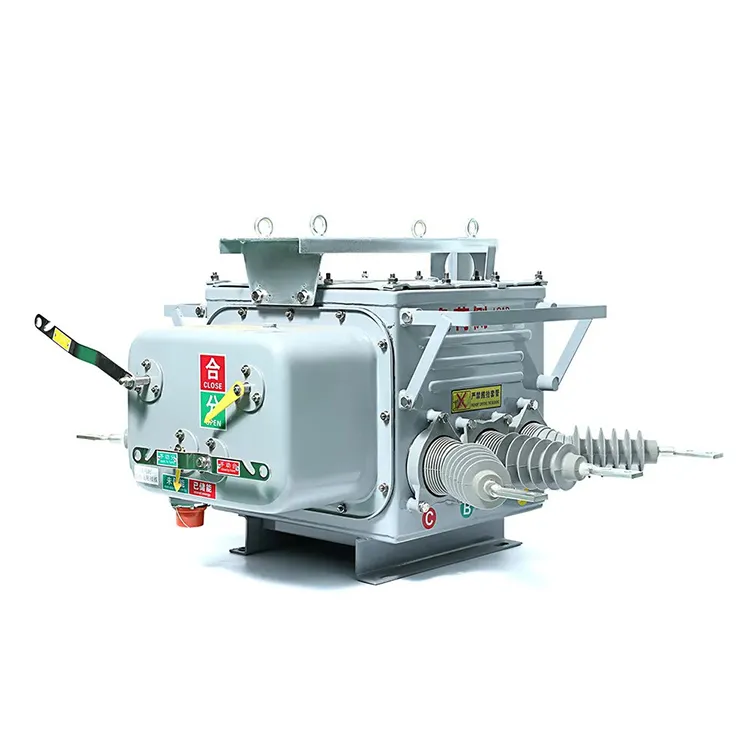
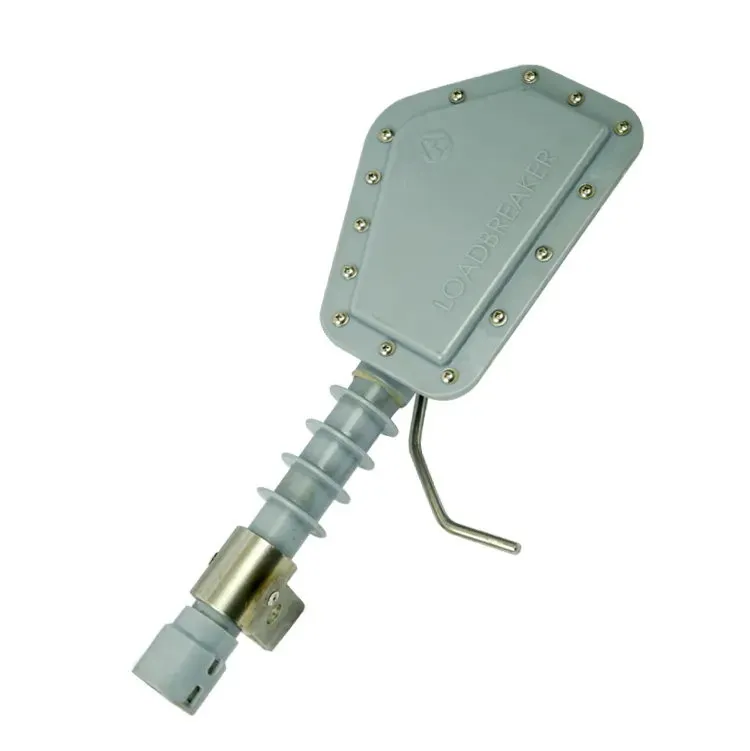


When a distribution engineer in Surat encountered flashover marks after the first monsoon, she isolated the feeder and found moisture and pollution deposits around the outdoor installation. The breaker had passed dry commissioning tests, yet the assembly was not specified for the site’s rain, condensation, and contamination. The rapid failure was not simply a “bad breaker”; it was a selection mismatch involving enclosure, insulation, and sealing.
Summary: An outdoor vacuum circuit breaker must be specified as a complete outdoor switching assembly—not merely an indoor breaker under a cover. IEC 62271-100 addresses AC circuit breakers above 1 kV, while ingress protection, insulation coordination, pollution severity, mechanical endurance, and control-cabinet heating require separate checks. Buyers should document the site environment, rated duties, enclosure protection, mounting arrangement, and inspection regime before requesting quotations.
What makes an outdoor vacuum circuit breaker different?
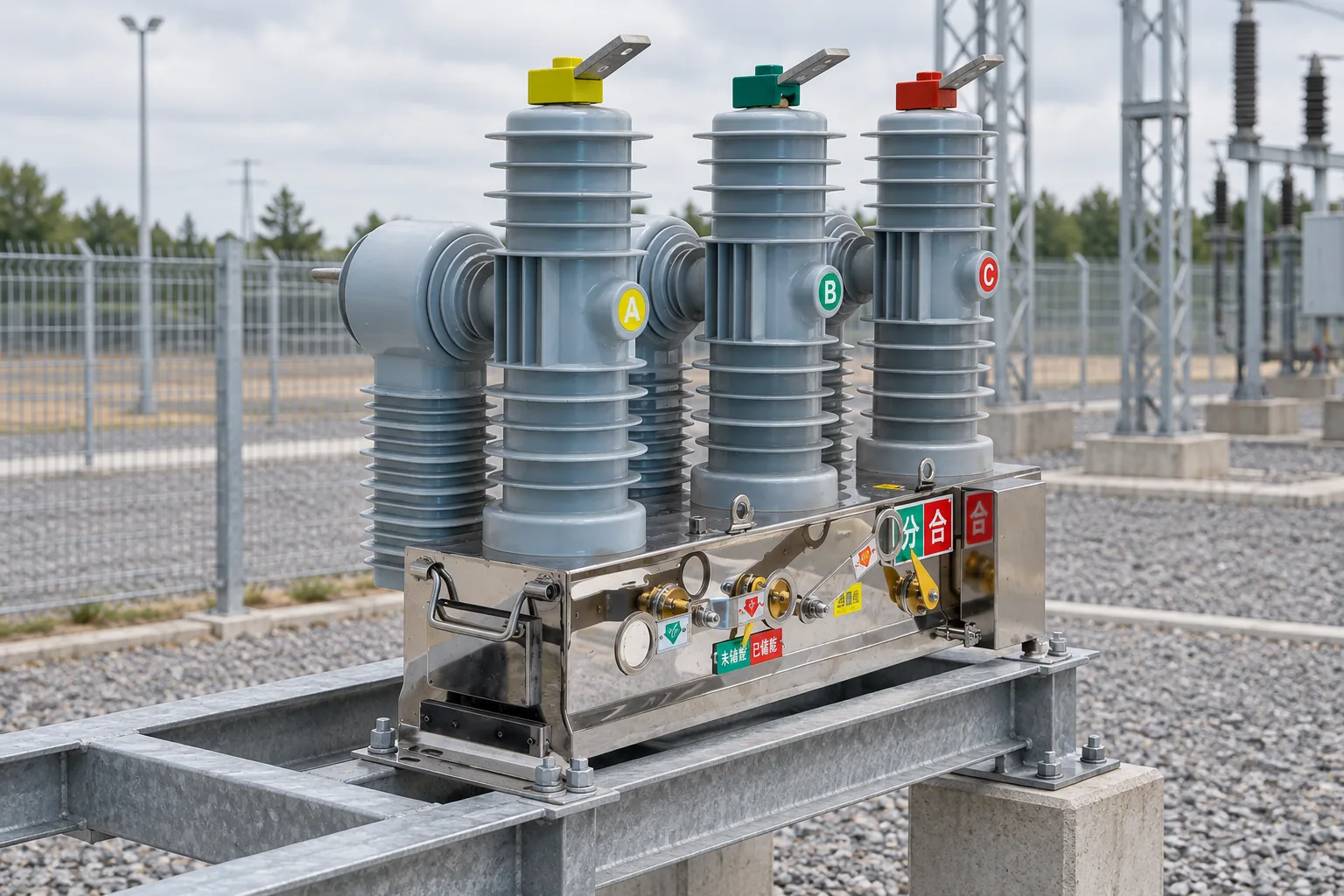
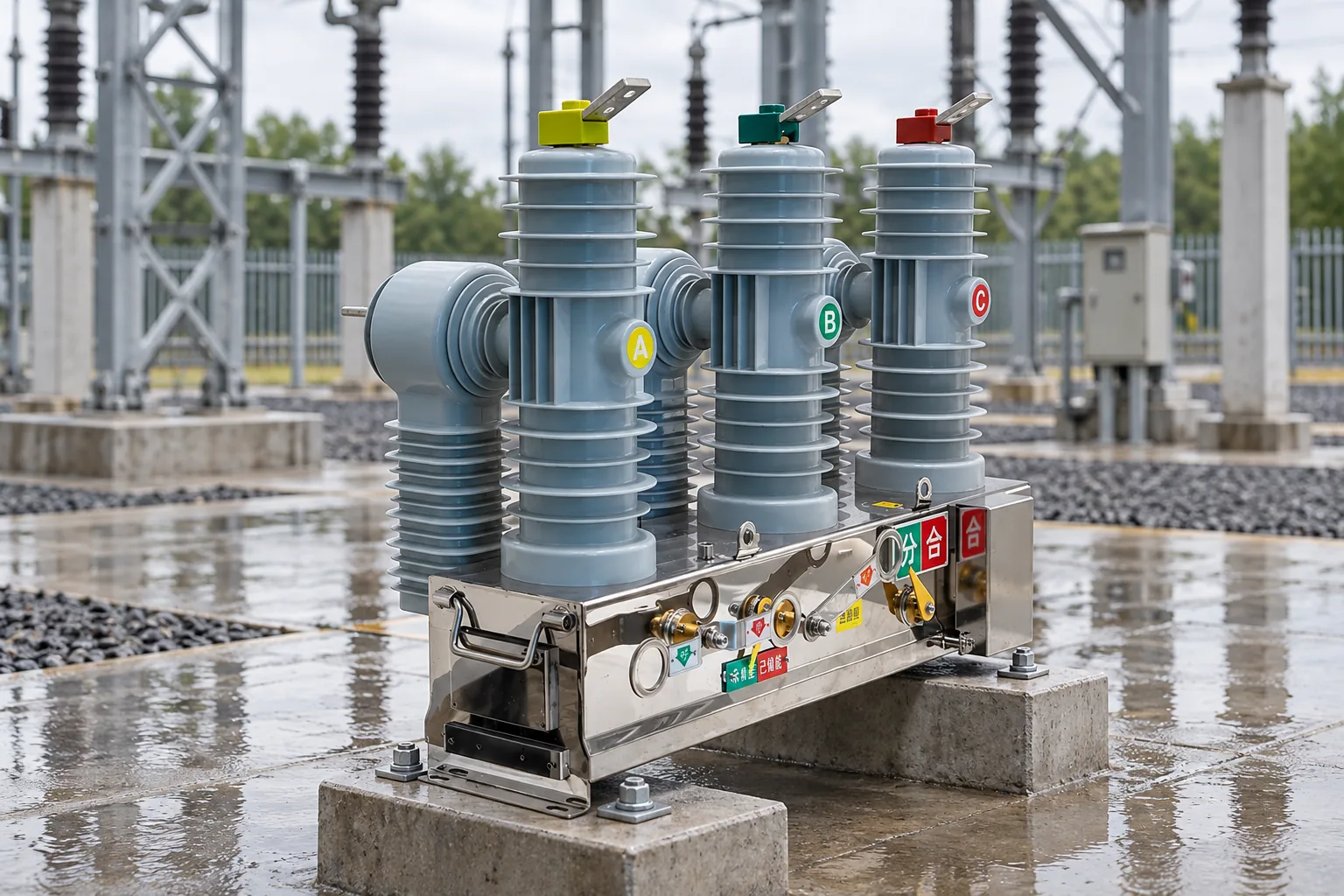
A vacuum interrupter extinguishes the arc inside a sealed bottle, but the interrupter is only one part of the current path. Outdoor installations also expose bushings, terminals, linkage, secondary wiring, and the mechanism cabinet to rain, ultraviolet radiation, windblown dust, salt, insects, and daily temperature cycling. The required product is therefore an integrated system with coordinated external insulation and environmental protection.
IEC 62271-100 covers AC circuit breakers above 1 kV and specifies ratings and type-test duties such as short-circuit making and breaking. It does not make every vacuum breaker suitable outdoors. The purchaser must also define IEC 62271-1 service conditions, including temperature, altitude, pollution, humidity, and solar radiation.
Electrical ratings remain fundamental. Rated voltage, insulation level, normal current, frequency, short-circuit breaking current, making current, and operating sequence must match the network study. For example, a “630 A” designation describes continuous-current capability; it does not establish the short-circuit rating, external insulation level, or weather protection. Engineers comparing an outdoor VCB should request the full rating plate and type-test basis rather than rely on a voltage-and-current label alone.
How does an outdoor VCB manage environmental exposure?
Outdoor protection uses layers. Roof overhangs shed rain; gaskets and cable glands limit water entry; finishes resist corrosion; and screened vents balance pressure. Under IEC 60529, IP digits describe protection against solid objects and water respectively. IP54 means level 5 dust protection and level 4 splash protection—not submersion resistance or complete outdoor suitability.
Pollution affects the external insulation rather than the vacuum inside the interrupter. Conductive deposits can become more dangerous when fog, dew, or drizzle wets them. IEC 60815 provides guidance for selecting and dimensioning high-voltage insulators in polluted conditions; site severity, insulator profile, material, and creepage distance should be considered together. Coastal salt, cement dust, fertilizer chemicals, and heavy industrial emissions can justify more conservative insulation or cleaning arrangements.
Condensation control is equally important. A tightly closed cabinet can still “breathe” as temperature changes, and moisture may condense when metal surfaces fall below the internal dew point. Space heaters, humidistats, anti-condensation coatings, drainage, and correctly positioned ventilation are common controls, but heater voltage and supervision must be included in the auxiliary-power design. A outdoor high voltage vacuum circuit breaker specification should state both the external environment and the expected control-cabinet protection rather than using the single word “weatherproof.”
How does the installation type affect outdoor VCB lifecycle cost?
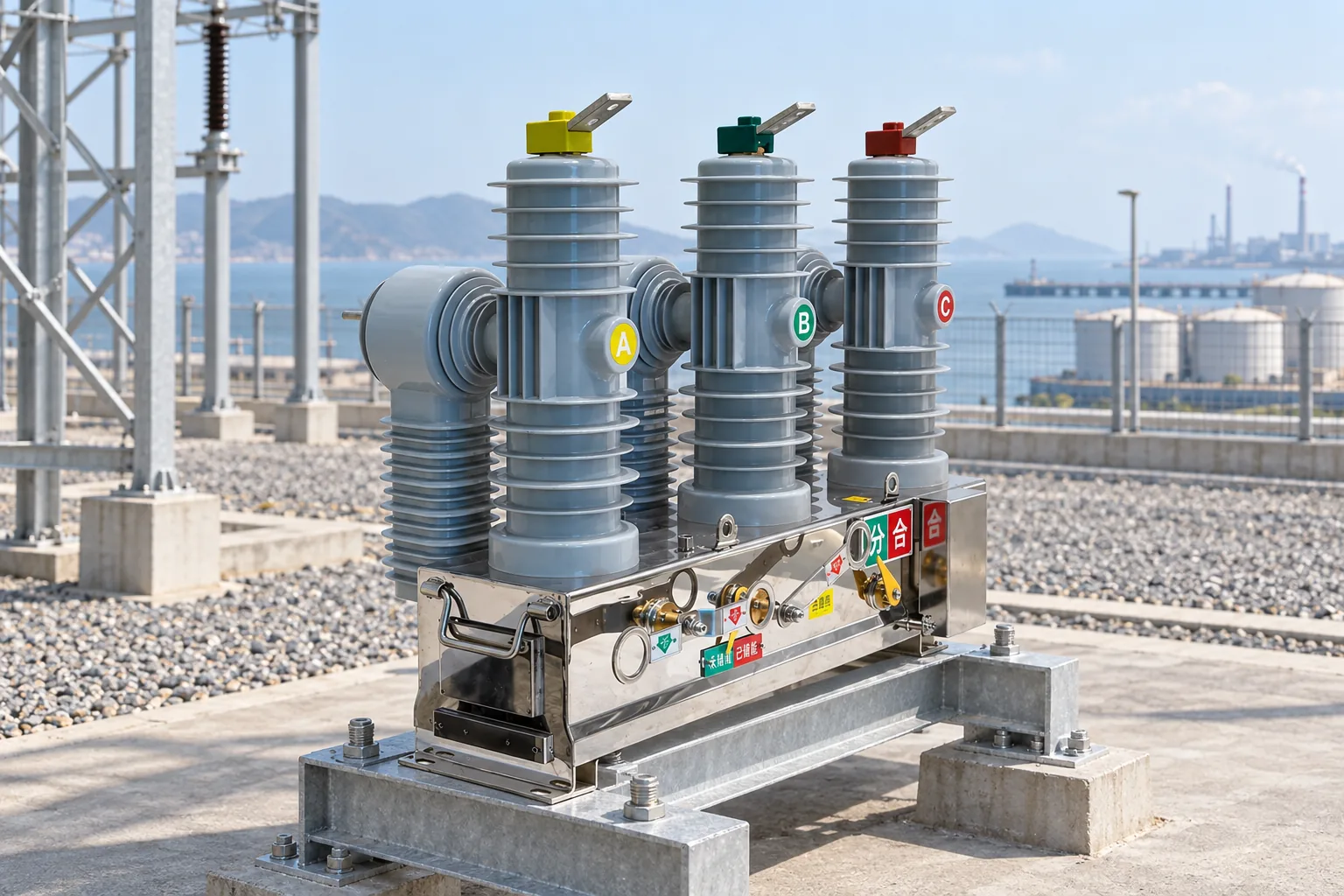
Outdoor breakers are installed on poles, compact distribution structures, or open-air substations. Selection depends on access, conductor geometry, protection, structural loads, and safe inspection. Pole mounting can reduce land needs, while ground-mounted designs usually offer easier mechanism access and more termination space.
| Decision factor | Outdoor design | Indoor design |
|---|---|---|
| Environment | Designed around rain, solar exposure, dust, pollution, and temperature cycling | Relies on a building or switchgear room for primary environmental protection |
| External insulation | Selected for wet conditions and site pollution severity | Typically protected from direct rain and salt deposition |
| Installation cost tendency | May reduce building needs but requires foundations, structures, and weather controls | Requires indoor space, ventilation, fire strategy, and building services |
| Maintenance | More frequent condition checks may be needed at polluted or coastal sites | Environment is easier to control, though dust and condensation still matter |
| Total cost of ownership | Driven by civil works, cleaning, corrosion control, access, and outage exposure | Driven by building cost, HVAC, switchgear access, and room upkeep |
The second comparison should be application-specific. Pole loading and climbing access can dominate one project, whereas creepage distance and washing access dominate another. For configuration details, buyers can review a dedicated pole-mounted vacuum circuit breaker guide before finalizing the structure.
| Application | Priority checks | Typical lifecycle cost drivers |
|---|---|---|
| Rural pole line | Structure rating, operating access, wildlife control, lightning protection | Truck rolls, climbing or lifting equipment, remote fault indication |
| Urban distribution substation | Clearances, noise-sensitive neighbors, interlocking, cable routing | Outage coordination, space constraints, inspection access |
| Coastal installation | Salt pollution, corrosion system, creepage distance, sealed glands | Cleaning, coating repair, heater energy, corrosion replacement |
| Industrial plant | Process dust or chemicals, duty cycle, coordination, arc-flash study inputs | Production downtime, spares, planned shutdown labor |
An illustrative total-cost comparison should include the breaker, structure, civil works, auxiliary power, commissioning, inspection, cleaning, spares, lifting access, and outage exposure. Without speculative prices, this still shows why a cheaper enclosure can cost more at a contaminated site.
Which standards and evidence should buyers require?
- IEC 62271-100: ratings and test duties for AC circuit breakers above 1 kV. It does not itself prove that a factory or model is certified.
- IEC 62271-1: common specifications for high-voltage switchgear and controlgear, including service conditions, insulation, temperature rise, and general test provisions.
- IEC 60529: classification and tests for enclosure ingress protection. An IP code applies to the tested enclosure arrangement and should not be extended to untested cable entries or open doors.
- IEC 60815 series: guidance for dimensioning outdoor high-voltage insulation in pollution; it supports site-specific selection rather than one creepage value.
- IEEE C37.04 and IEEE C37.09: North American rating structure and test procedures for AC high-voltage circuit breakers. Contract documents should specify the applicable standard family instead of mixing ratings without an engineering reconciliation.
Vague compliance language can delay approval, make bids incomparable, or prevent utility acceptance. Ask for a standards schedule, routine-test reports, and relevant type-test reports identifying the tested design. Confirm deviations in writing; “IEC compliant” without model scope, ratings, and traceability is insufficient.
What should an outdoor VCB project plan cover?
- Describe the network duty. Provide rated voltage, frequency, load current, prospective short-circuit level, operating sequence, grounding method, and protection interface.
- Characterize the site. Record altitude, temperature range, humidity, pollution source, salt exposure, solar radiation, wind, ice, seismic requirements, and flooding risk.
- Specify the complete arrangement. Define mounting, terminal orientation, external insulation, cabinet IP code where applicable, glands, heater controls, manual operation, interlocks, and communications.
- Plan verification. Identify required type-test evidence, routine tests, site acceptance checks, drawings, manuals, spare parts, and training before placing the order.
- Set condition-based intervals. Establish a baseline inspection after commissioning, then adjust the interval using contamination, operation count, fault interruptions, heater alarms, corrosion, and mechanism condition.
Fuerte can discuss configuration and documentation requirements against a buyer’s site schedule, but the purchaser and responsible engineer should verify the final ratings, installation design, and destination-market rules. Teams still deciding between arrangements may also compare an indoor vacuum circuit breaker with the outdoor option on the same duty and lifecycle assumptions.
For planning—not as a universal requirement—many owners begin with an annual visual and functional review, then shorten the interval for salt, pollution, repeated operations, or moisture. Major service should follow manufacturer time and operation-count limits, with earlier attention after a significant fault. NFPA 70B frames frequency around condition, criticality, and environment.
Frequently asked questions
What is an outdoor vacuum circuit breaker?
It is an AC circuit breaker that interrupts current in vacuum interrupters and is engineered as a complete assembly for outdoor service. Its exposed insulation, terminals, housing, mechanism, controls, and mounting must suit the site’s electrical duty and environment.
How are outdoor VCBs protected from rain and pollution?
Protection can combine rain-shedding geometry, sealed mechanism cabinets, suitable cable glands, corrosion protection, drainage, heaters, and external insulation selected for pollution severity. The exact combination depends on climate, contaminants, voltage, and maintenance access.
What is the difference between outdoor and indoor VCBs?
The interruption principle may be similar, but an outdoor unit must withstand direct environmental exposure and usually needs different external insulation, housing, seals, coatings, and structural provisions. An indoor unit relies on the switchgear enclosure and building, so adding a simple canopy does not automatically convert it for outdoor service.
Can an outdoor VCB be installed on a pole?
Yes, when the breaker and support structure are designed for pole mounting. Engineers must check pole loading, wind and seismic forces, electrical clearances, operating access, grounding, surge protection, conductor loads, and safe maintenance methods.
Which enclosure rating is needed for outdoor breakers?
There is no universal IP or NEMA number for every outdoor breaker. The required rating depends on rain, dust, jets, flooding risk, corrosion, and whether the rating applies only to the control cabinet; external live insulation and terminals require separate evaluation.
How often should outdoor VCB mechanisms be serviced?
Use the manufacturer’s time and operation-count limits, then refine them through condition-based maintenance. Inspect sooner after fault interruption, water ingress, heater failure, abnormal operation, or severe contamination; a yearly visual and functional review is a practical starting point, not a substitute for the OEM manual.
Which sources support this outdoor VCB selection guidance?
- IEC 62271-100, High-voltage switchgear and controlgear—AC circuit-breakers
- IEC 62271-1, Common specifications for AC switchgear and controlgear
- IEC 60529, Degrees of protection provided by enclosures (IP Code)
- NFPA 70B, Standard for Electrical Equipment Maintenance
The durable decision is the one that treats environment, insulation, mechanism, and maintenance as one system. To review a project-specific outdoor vacuum circuit breaker requirement, contact Fuerte with the single-line diagram, site conditions, ratings, mounting preference, and required standards.