


When an industrial plant replaces an older medium-voltage starter, the quotation may list a vacuum contactor while the technical schedule asks for a vacuum interrupter. Those terms describe related but different levels of equipment. The interrupter is the sealed switching element; the contactor is a complete, frequently operated switching assembly with a mechanism, control circuit and application limits. Treating them as interchangeable can leave a motor feeder without the required fault duty or isolation method. This article separates the functions and gives a verification path for procurement.
Summary: A vacuum interrupter extinguishes current in a sealed bottle when its contacts separate. A vacuum contactor uses one or more interrupters in a contactor assembly intended for frequent load switching, commonly motor or transformer control. It is not automatically a replacement for a circuit breaker. Verify rated voltage, load current, making and interrupting duty, short-circuit coordination, endurance, control voltage and the vacuum-bottle integrity test. The application standard and protection study decide whether the contactor is suitable.
What is the purpose of a vacuum interrupter?
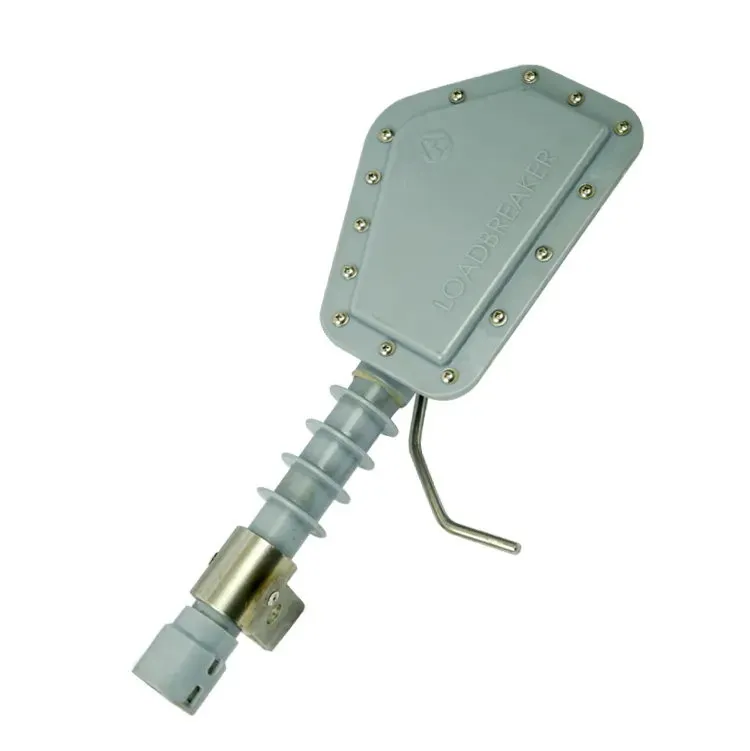
A vacuum interrupter contains fixed and moving contacts inside a sealed envelope. When the contacts separate, the arc is formed from metal vapor and is extinguished as the current approaches zero; the vapor condenses and dielectric strength recovers rapidly. Contact material, geometry, travel, contact pressure and the vacuum level all affect performance. The bottle itself does not provide a complete control or protection system.
Manufacturers integrate the bottle into circuit breakers, contactors and other switching equipment. The same physical principle therefore appears in products with different ratings and duties. A buyer should read the complete assembly data sheet, including control, interlocks, terminal arrangement and insulation coordination, rather than evaluate a bottle in isolation.
When should a vacuum contactor be used instead of a circuit breaker?
A vacuum contactor is suited to repeated normal switching where the feeder is protected by a separate fuse or circuit breaker. Motor starting, stopping and some capacitor or transformer duties can require many operations, so the contactor is optimized for endurance and compact control. Its fault-clearing capability is usually limited by the upstream protection and the manufacturer’s coordination table.
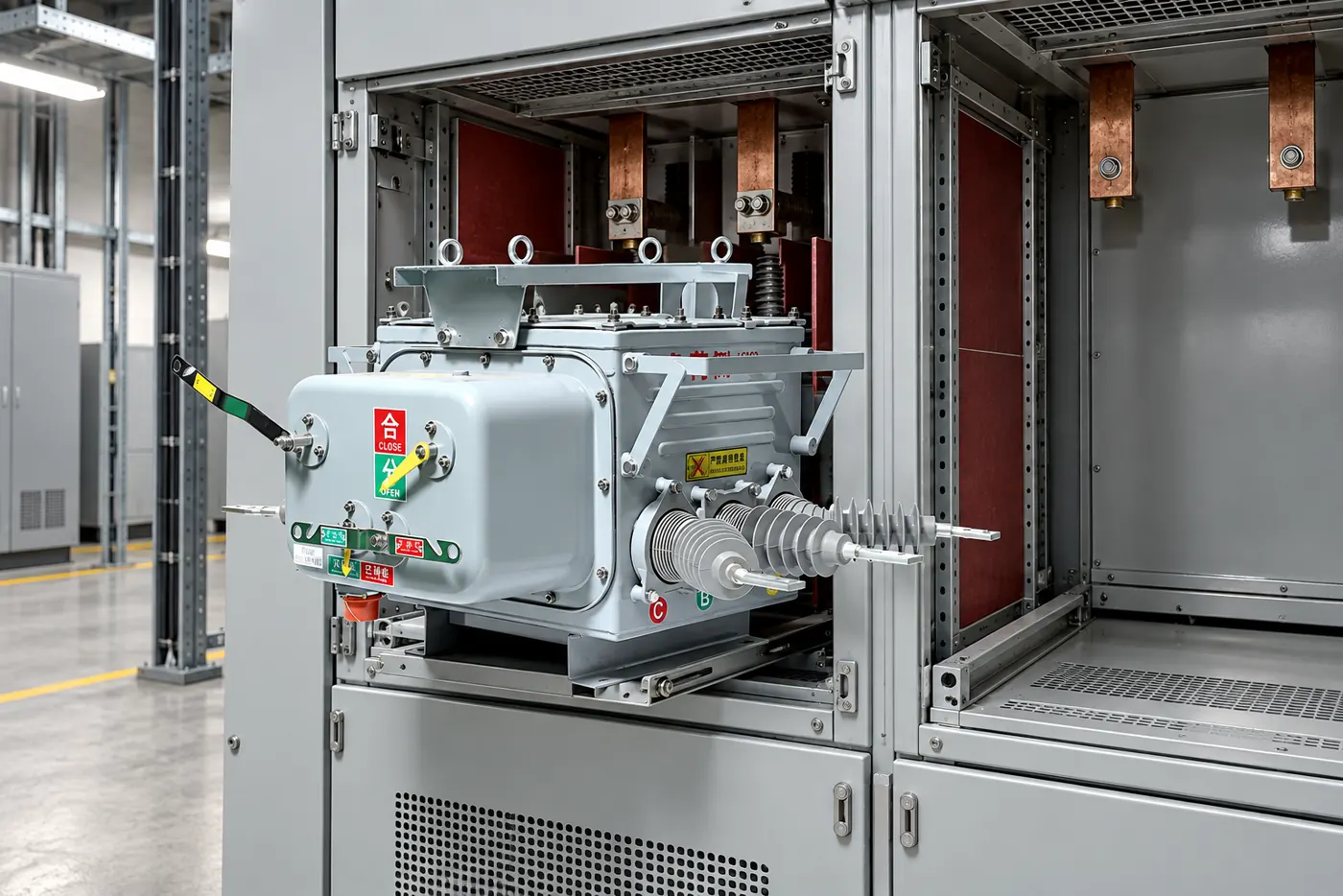
A vacuum circuit breaker is selected when the device must interrupt a specified short-circuit current and coordinate with protective relays. Its mechanism, trip coil, closing circuit, current sensors and breaker ratings are designed for that duty. A contactor can be part of a motor-control lineup, but it should not be labelled a fault interrupter unless the tested assembly says so. The contactor-versus-circuit-breaker comparison provides a useful starting point.
How can you check the integrity of a vacuum interrupter?
A vacuum-bottle integrity test applies a controlled high-voltage test across open contacts and observes leakage or breakdown according to the manufacturer’s procedure. The test voltage and duration are equipment-specific; exceeding the permitted value can stress the bottle or produce misleading results. Isolate the assembly, discharge it after testing and follow the instrument and safety instructions.
Visual inspection also matters: check the ceramic envelope for cracks, metal bellows for damage, contact-wear indicators, alignment and the date or operation counter. A satisfactory vacuum-bottle test does not confirm contact resistance, timing, insulation to earth or the condition of the operating mechanism. Those checks must be assessed separately.
How do you test a vacuum contactor?
Testing normally combines mechanical operation, control-circuit checks and electrical measurements. Verify pickup and dropout voltages, coil current, auxiliary contacts, contact travel, closing speed and the correct operation of fuses or relays. Measure main-circuit contact resistance with a calibrated low-resistance instrument, then compare the result with the manufacturer’s baseline and phase balance.
For a vacuum contactor, confirm the intended number of operations, duty cycle and coordination with the upstream fuse. A test report should identify the equipment serial number, ambient condition, instrument, applied voltage, measured values and acceptance criteria. The vacuum switching equipment range illustrates why assembly ratings need to be read as a complete system.
Which switching duties exceed a vacuum contactor’s limits?
High fault current, frequent abnormal interruption, line charging, transformer inrush or capacitor-bank switching may exceed a contactor’s application envelope. The risk is not solved by selecting a bottle with a higher nominal voltage because the complete contactor, fuse coordination and transient behavior still govern. Harmonic current and repetitive restrikes should also be considered for special loads.
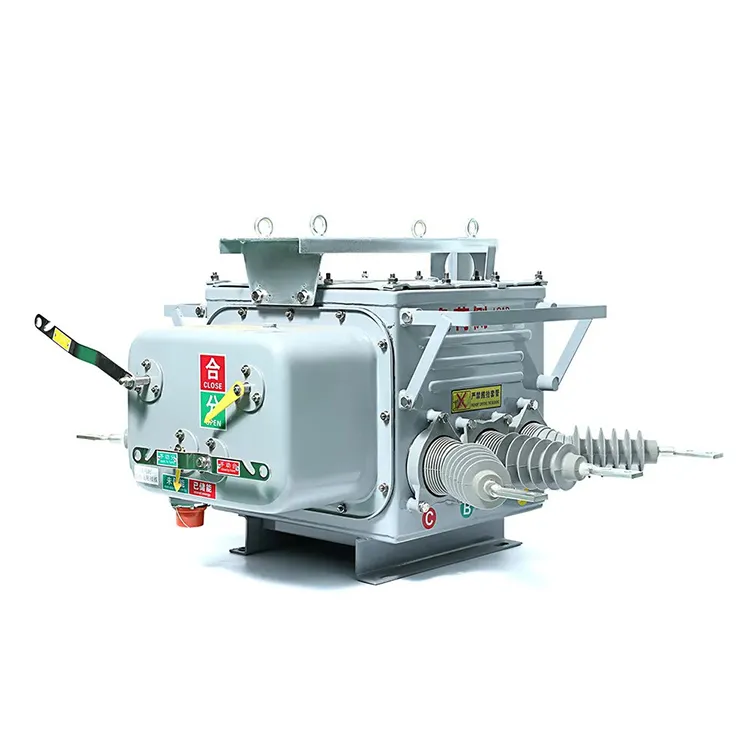
Ask for an application diagram showing the source impedance, load type, protective device, expected fault level and switching frequency. If the duty requires relay-controlled fault interruption, a vacuum circuit breaker such as the ZW20-12-630-20 model family may be the appropriate starting point, subject to the project specification.
How do a vacuum interrupter and vacuum contactor compare?
| Dimension | Vacuum interrupter | Vacuum contactor | Buyer verification |
|---|---|---|---|
| What it is | Sealed contact-and-arc-quenching element | Complete frequent-switching assembly using interrupters | Bill of materials and assembly drawing |
| Primary duty | Interrupt current within a rated device | Repeated normal load switching | Duty cycle and application class |
| Fault clearing | Depends on integrated breaker or contactor rating | Usually coordinated with external fuses or breaker | Short-circuit coordination table |
| Isolation | Open contacts alone may not prove a safe isolation point | Requires declared isolation arrangement and interlocks | Isolation distance and earthing scheme |
| Maintenance | Integrity, wear, alignment and resistance | Those checks plus coils, controls and auxiliaries | Test method and baseline values |
Which application details should be recorded?
| Application | Likely solution | Evidence required |
|---|---|---|
| Frequent motor starts with fused protection | Medium-voltage vacuum contactor | Motor current, starts per hour and fuse coordination |
| Utility feeder fault interruption | Vacuum circuit breaker | Fault study, relay settings and breaker interrupting rating |
| Compact packaged starter | Contactor plus isolation and earthing functions | Assembly type tests and interlock drawing |
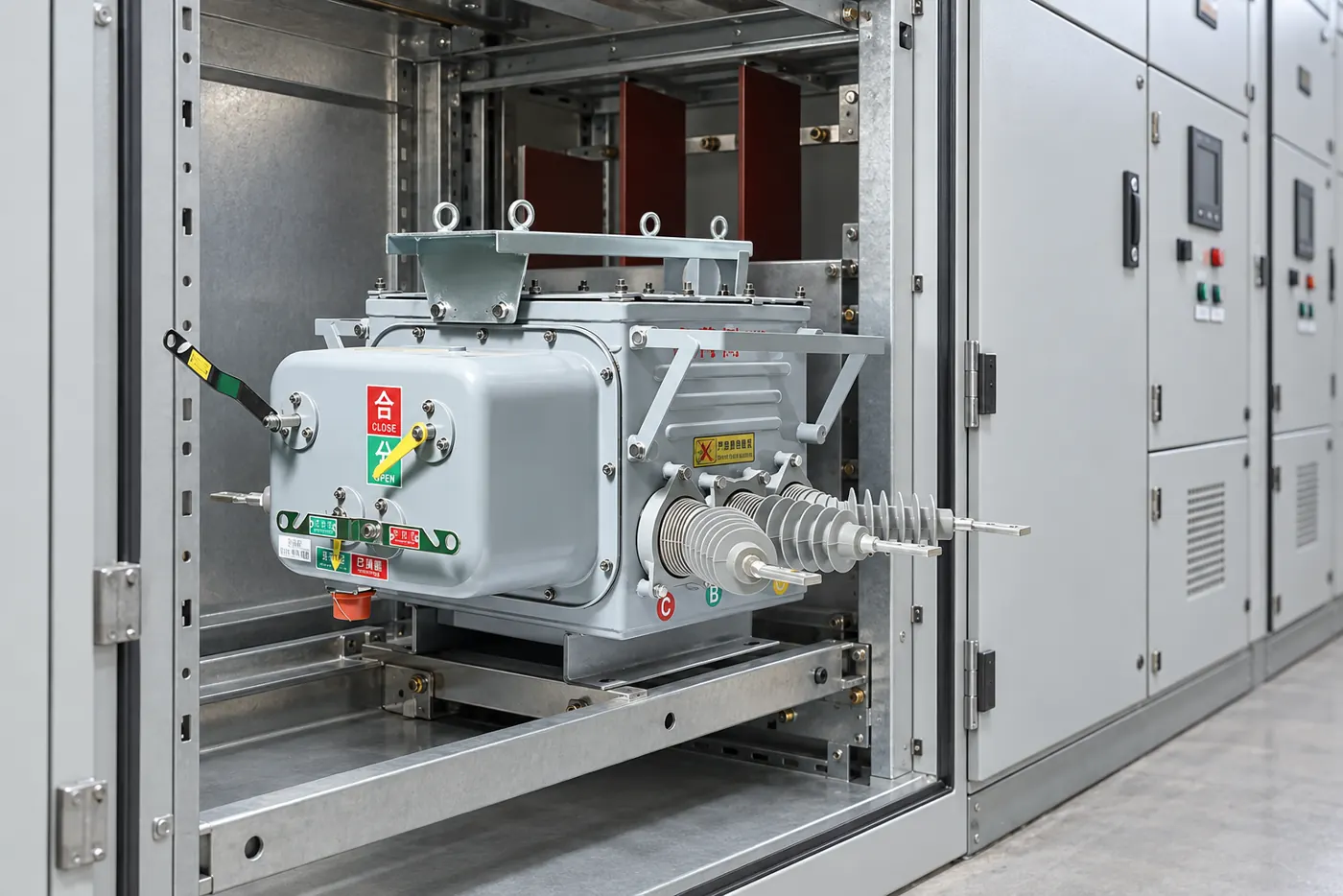
| Retrofit into existing cubicle | Specified interrupter or breaker replacement | Mounting, travel, control voltage and interface dimensions |
What standards and compliance checks apply?
IEC 62271 series standards cover high-voltage switchgear and controlgear, with different parts applying to circuit breakers, switch-disconnectors, contactors and assemblies. Use the IEC Webstore to confirm the current product standard. IEEE C37 requirements may apply to North American projects. Standards define ratings and tests; the project still has to establish coordination, protection and installation requirements.
Do not describe a contactor as a circuit breaker or a bottle test as proof of complete equipment compliance. Unsupported claims can trigger witness testing, replacement and delayed commissioning. Keep type-test reports, routine-test sheets and the approved coordination study together.
What should buyers verify before selection?
- Define whether the device must switch normal load, interrupt fault current, provide isolation or perform several functions.
- Record voltage, current, fault level, endurance, switching frequency, load type and control voltage.
- Check interrupter integrity, contact wear, contact resistance, timing and mechanism data.
- Verify fuse or relay coordination, interlocks, earthing and cubicle interfaces.
- Require test records and a commissioning procedure that names instruments and acceptance criteria.
Fuerte supports medium-voltage vacuum switching specifications for utilities, EPC contractors and industrial users. Send the load schedule, fault level and required standard through the contact page so the equipment category and test evidence can be matched to the duty.
Frequently asked questions
How can you check the integrity of a vacuum interrupter?
Use a controlled vacuum-bottle integrity test at the manufacturer’s specified voltage and duration, with the assembly isolated and discharged afterward. Also inspect the bottle, wear indicator, alignment and contact resistance.
How do you test a vacuum contactor?
Check mechanical operation, pickup and dropout, auxiliary contacts, coil behavior, contact resistance, timing and vacuum integrity. Acceptance values should come from the equipment documentation and recorded baseline.
What are the different types of VCB testing?
Typical tests include insulation and vacuum integrity, contact resistance, timing and travel, control-circuit checks, mechanical operation and, when required, high-current or dielectric type tests. The exact program depends on the standard and project.
What is the purpose of a vacuum interrupter?
It provides the sealed contact gap in which current is switched and the arc is extinguished at current zero. Its rating depends on the complete device, mechanism and application duty.
Can a vacuum interrupter be used for isolation?
An open interrupter may not by itself provide the visible isolation, earthing or interlock required by the installation. Confirm the declared isolation function and the approved switching arrangement.
What is the difference between a vacuum interrupter and a vacuum contactor?
The interrupter is a sealed switching element; the contactor is a complete assembly intended for repeated load switching. A contactor’s fault and isolation limits must be checked separately from the bottle.
References
- IEC Webstore, IEC 62271 switchgear and controlgear standards.
- International Electrotechnical Commission, conformity and standards resources.
- IEEE Standards, IEEE C37 switchgear requirements.
- CIGRE, guidance on switching and interruption.
Choose the assembly by duty, coordination and isolation requirements, then verify the interrupter and mechanism with documented tests. A vacuum bottle is a component; safe medium-voltage switching is a complete system. Contact Fuerte when the project needs a documented selection review.
What hidden costs should a buyer include?
Total cost includes more than the contactor or interrupter price. Consider compatible fuses, spare bottles or contact assemblies, control transformers, test adapters, training, outage labor and the time needed to prove protection coordination. A low initial quote can become expensive if the selected contactor cannot meet the plant’s fault level or if the retrofit requires new cubicle barriers and wiring.
Ask the supplier to identify excluded interfaces and assumptions in the quotation. Request a lifecycle and spare-parts statement based on the expected operation count, then compare it with the maintenance strategy. When the application is uncertain, a short duty study and a documented test plan are usually less costly than an unplanned replacement after a failed interruption.
For an existing lineup, include the cubicle’s busbar spacing, secondary plug, racking position and interlock geometry in the review. A technically sound interrupter can still be unusable if the replacement assembly cannot reproduce these interfaces.