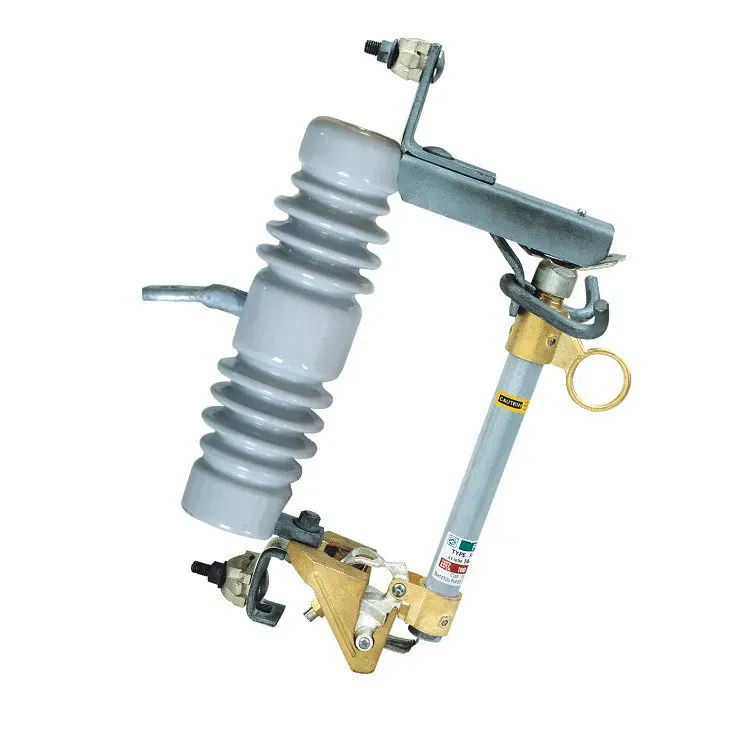


An overhead fuse cutout is often requested as a voltage class, current class, or catalogue line. That starts the conversation too late. A dependable selection begins with the distribution line: what section is being protected, what duty exists at the proposed structure, and what information the asset owner needs to approve an installation.
The questions below create that starting point. They do not replace a utility protection study, an owner specification, or qualified field procedures; they turn missing assumptions into visible RFQ items before product comparison begins.

What is the shortest defensible selection rule?
Select an overhead fuse cutout only after the protected line section, system voltage and grounding context, maximum available fault duty at the proposed structure, mounting interface, and owner operating procedure are written into the same review package. A catalogue voltage or a product photograph can identify a product family; neither one proves that the exact installation is acceptable. This rule is a practical synthesis of the application and work-practice boundaries described by IEC 60282-2, IEEE C37.41, and OSHA 1910.269.
| Open question | Decision if unanswered |
|---|---|
| Where is the protected zone? | Do not compare models yet; the protection role is undefined. |
| What fault duty applies at that structure? | Hold the interruption-duty review until the owner study is identified. |
| What does the owner permit an operator to do? | Treat visible position as observation only, not as switching authorization. |
Which line section is the cutout intended to protect?
The first question is not “Which cutout model is available?” It is “What part of the line needs protection or isolation visibility, and what is the intended operating role at that point?” A transformer primary, a lateral tap, and a line section can present different protection objectives even when they share similar-looking overhead hardware.
Write down the protected zone, the source side, the load or downstream equipment, and the normal operating arrangement. This simple description gives the engineering team a way to distinguish a local equipment application from a feeder sectionalizing question. It also prevents a quotation from being built around a nominal voltage label alone.
For product-family context, see the FUERTE fuse cutout range. If a team needs the basic operating sequence before reviewing system inputs, read how a fuse cutout works; the present article focuses on the questions that come before selection.
| System question | Why it changes the review | RFQ evidence to request |
|---|---|---|
| What line section is involved? | It establishes the protection-zone purpose. | Single-line diagram with the proposed location marked. |
| What is downstream of the cutout? | Transformer, lateral, capacitor, or line duty changes the coordination conversation. | Equipment list and normal load description. |
| What operation is expected after a fault? | The owner’s restoration and inspection practice affects the operating requirement. | Utility or owner operating philosophy. |
| Is this new construction or replacement? | Existing interfaces and outage limits may govern the hardware request. | Existing drawing, photographs, and revision history. |
What system voltage and grounding information must be confirmed?
Confirm nominal system voltage at the intended location, not merely the voltage printed on a nearby transformer or the highest value used elsewhere in the network. Ask whether the arrangement is grounded, impedance-grounded, or otherwise configured according to the owner’s system practice. The answer frames the insulation and application review without pretending that one article can set a utility’s design rule.
Voltage class is only one item in the package. Prospective temporary and overvoltage conditions, local owner requirements, altitude, pollution exposure, and the equipment interface can also alter the required review.
The 15 kV fuse cutout selection guide and 27 kV fuse cutout selection guide address their respective voltage-class questions. Use them after the actual system condition is known.
Keep the wording factual in an RFQ: state the nominal voltage, the system arrangement provided by the owner, the location, and the standard family requested. Avoid writing “suitable for all networks” or assigning compliance based only on a product photograph. The IEC 60282-2 Webstore entry provides terminology context for high-voltage fuse equipment.
Which fault-duty value belongs to the proposed structure?
Available fault level belongs to the proposed cutout location and the relevant operating configuration. A feeder-source figure at another bus or a historical number from a previous project may be unsuitable if conductor length, source configuration, parallel paths, or generation conditions are different. Ask the owner, consultant, or protection engineer for the maximum calculated value and the study revision that supports it.
This question is about the cutout’s interruption-duty review, not a shortcut to choose a fuse link. Keep the available fault level, the location, and the study assumptions together so a supplier can identify what still needs confirmation. For the related rating vocabulary, use fuse cutout ratings and selection rather than treating a current marking as proof of fault performance.
| Fault-data question | Good RFQ entry | Entry to avoid |
|---|---|---|
| What value is required? | “Maximum available fault current at structure P-42, normal source arrangement.” | “High fault current.” |
| Who issued it? | “Utility protection study, revision C, dated by owner.” | “Customer estimate.” |
| Which configuration applies? | “Normal feeder tie open; stated source in service.” | “Typical network condition.” |
| What still needs review? | “Supplier to confirm required product rating against supplied duty.” | “Product must work everywhere.” |
Which devices must be checked for coordination?
The protected zone must be described before coordination can be discussed sensibly. Record the upstream recloser, circuit breaker, or other protective device; identify relevant downstream equipment; and state whether the installation serves a transformer primary, branch circuit, or another defined line function. These are inputs to a protection review, not settings that a catalogue article should invent.
Fuse-link selection is related but separate. Link type, time-current curves, transformer inrush, and coordination margins require their own verified data and study method. Use the expulsion fuse link guide for that work rather than expanding K/T links or TCC detail inside an overhead cutout RFQ.
The useful early question is: “Which devices and operating cases must the project engineer check together?” That phrasing keeps responsibility clear. The IEC 60282-2 Webstore entry provides terminology context, while the owner’s approved study determines the project answer.
What mounting and environmental details can change the selection?
Electrical data alone cannot describe a pole or structure installation. Identify the structure material, mounting elevation, conductor position and size, jumper arrangement, available hardware interface, required phase spacing, clearance constraints, and operator access. These questions help the buyer separate a replacement that must match an existing arrangement from a new build that can use a specified bracket and orientation.
Environmental context belongs in the same record. Ask about coastal contamination, industrial pollution, high rainfall, wind exposure, ice, UV exposure, altitude, and local inspection practice where they are relevant to the owner’s specification. Do not convert a generic environment description into an unverified creepage or certification claim.
The pole-mounted cutout installation selection article provides the adjacent installation-selection discussion. Site work remains controlled by the asset owner, local rules, and qualified personnel; OSHA’s electrical safety topic is a reminder that equipment selection does not remove the need for safe work practice.
What should an overhead cutout RFQ include?
A useful RFQ gives each bidder the same technical picture. It should state what is known, identify missing values as open items, and attach the drawings that define the proposed structure. That makes quotations easier to compare and reduces the risk that a supplier silently assumes a different application.
Use the following checklist before requesting price or lead time:
- Project name, destination, quantity, desired delivery terms, and required date.
- Nominal system voltage, grounding description supplied by the owner, and applicable specification or standard family.
- Single-line diagram with the cutout position, protection-zone purpose, and upstream/downstream devices identified.
- Maximum available fault level at the proposed mounting point, source/configuration assumptions, and study revision.
- Conductor, structure, bracket, orientation, clearance, operating-access, and environmental information.
- Required documentation, inspection expectations, packing needs, and any owner drawing approval process.
- A clear statement that fuse-link selection and protection coordination will be confirmed against the project study.
Ask bidders to identify exceptions rather than filling gaps with assumptions. That approach is particularly valuable when multiple structures share a feeder but differ in fault level, hardware interface, or environmental exposure. The NEMA resource on expulsion fuses and fuse links can help align terminology, but it does not replace the project specification.
How should the FSC-15 product page be used?
When the system questions are complete, the FSC-15 drop-out fuse cutout can be named as a FUERTE product-page reference in the enquiry. It is a starting point for a supplier conversation, not a default answer for every overhead distribution line. The supplier still needs the submitted voltage, fault-duty, mounting, environmental, and coordination inputs to confirm whether the enquiry is appropriate.

Do not infer loadbreak capability, type-test status, standard compliance, or utility acceptance from the product name or a general application description. Keep the exact project conditions in the enquiry and ask for a documented response against those conditions. To begin that review, contact FUERTE with the RFQ checklist and the available drawings.
What do buyers still need to verify?
What should be checked before selecting an overhead fuse cutout?
Confirm the protected line section, system voltage and grounding context, available fault level at the proposed location, mounting arrangement, environmental conditions, and the devices that require coordination. Put the verified inputs in the RFQ before comparing products.
Why must system voltage be confirmed first?
It frames the application and insulation review for the actual location. A nearby equipment label or a generic network description is not enough to establish the project condition.
Which fault-level value belongs in a cutout RFQ?
Use the maximum available fault level at the proposed cutout location, together with the operating configuration and study revision. A figure from another point on the feeder should be marked as unsuitable unless the owner confirms it applies.
What mounting information should be supplied?
Provide structure type, conductor and jumper arrangement, hardware interface, orientation, clearances, operating access, and relevant environmental exposure. Attach a drawing or clear site photographs where available.
How does coordination affect the early review?
It identifies the upstream and downstream devices, protection-zone purpose, and operating cases that the project engineer must assess. It does not authorize a supplier to invent device settings or fuse-link curves.
Where should fuse-link selection be handled?
Handle it in the project’s protection review using the required study inputs, then use the linked expulsion fuse-link guide for the relevant selection discussion. This article intentionally does not reproduce K/T or TCC analysis.
Can FSC-15 be selected from a web page alone?
No. Use it as a named enquiry reference only after the project’s system voltage, fault duty, mounting, environmental, and coordination information has been confirmed.
What documents make an RFQ easier to evaluate?
A current single-line diagram, fault-study extract, structure or installation drawing, owner specification, device list, environmental notes, and commercial request details give suppliers a common basis for response.
Which standards and safety sources support this review?
- IEC 60282-2 in the IEC Webstore — high-voltage fuse equipment scope reference.
- NEMA polymeric high-voltage insulators — insulation-system terminology context.
- Utility Products overhead distribution overview — overhead distribution system context.
- Electrical insulator overview — introductory insulation terminology.
- OSHA electrical safety topic — qualified-work-practice safety boundary.