

When Mei Chen, a utility protection engineer in Chengdu, replaced a blown link on a 10 kV transformer tap, the new link opened during the next energization and the feeder dropped out again. The cutout body was intact; the failure came from selecting a link without checking inrush, the available fault current, and the utility’s time-current coordination rules.
Summary: An expulsion fuse link is the replaceable overcurrent element inside a drop-out cutout, not the cutout itself. Select it against the system’s maximum operating voltage, continuous load, calculated fault current, time-current curve, and the utility’s required dropout and coordination behavior. IEC 60282-2 provides a high-voltage fuse framework, but it does not replace the destination utility’s approved link family or the manufacturer’s tested cutout combination. Put those inputs in the RFQ, then verify the supplied link by drawing, curve, and inspection record.
Fuse Link and Cutout: Two Different Parts
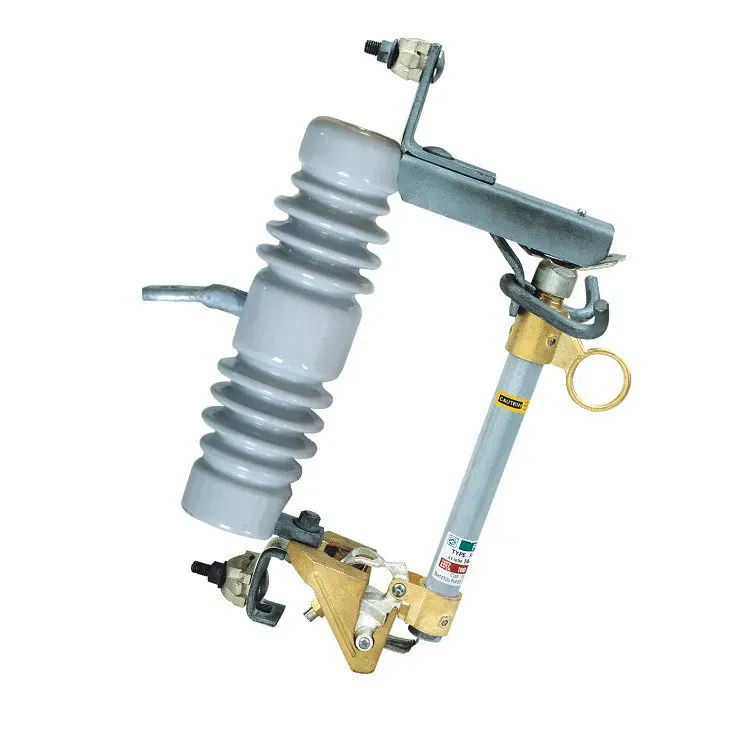
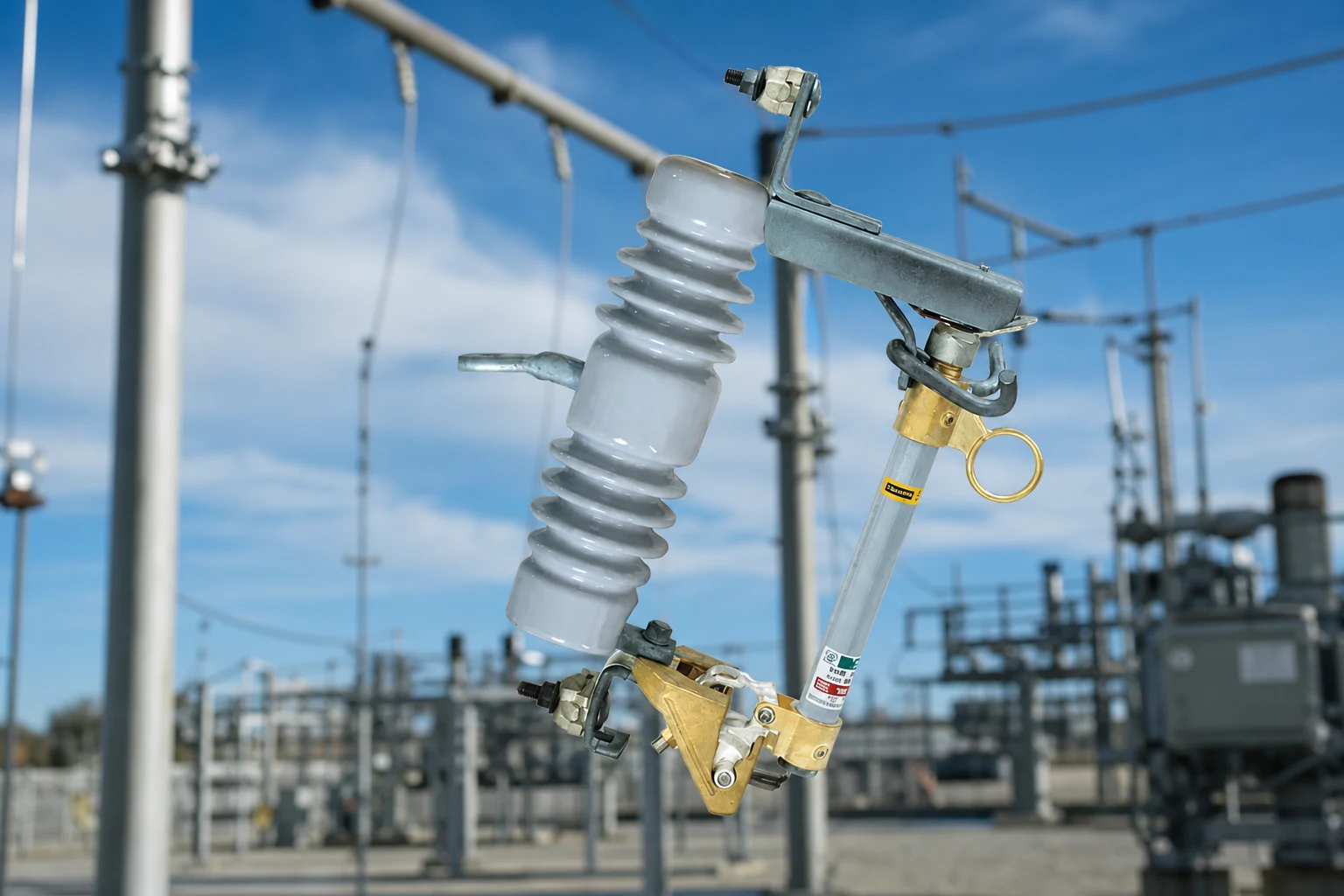
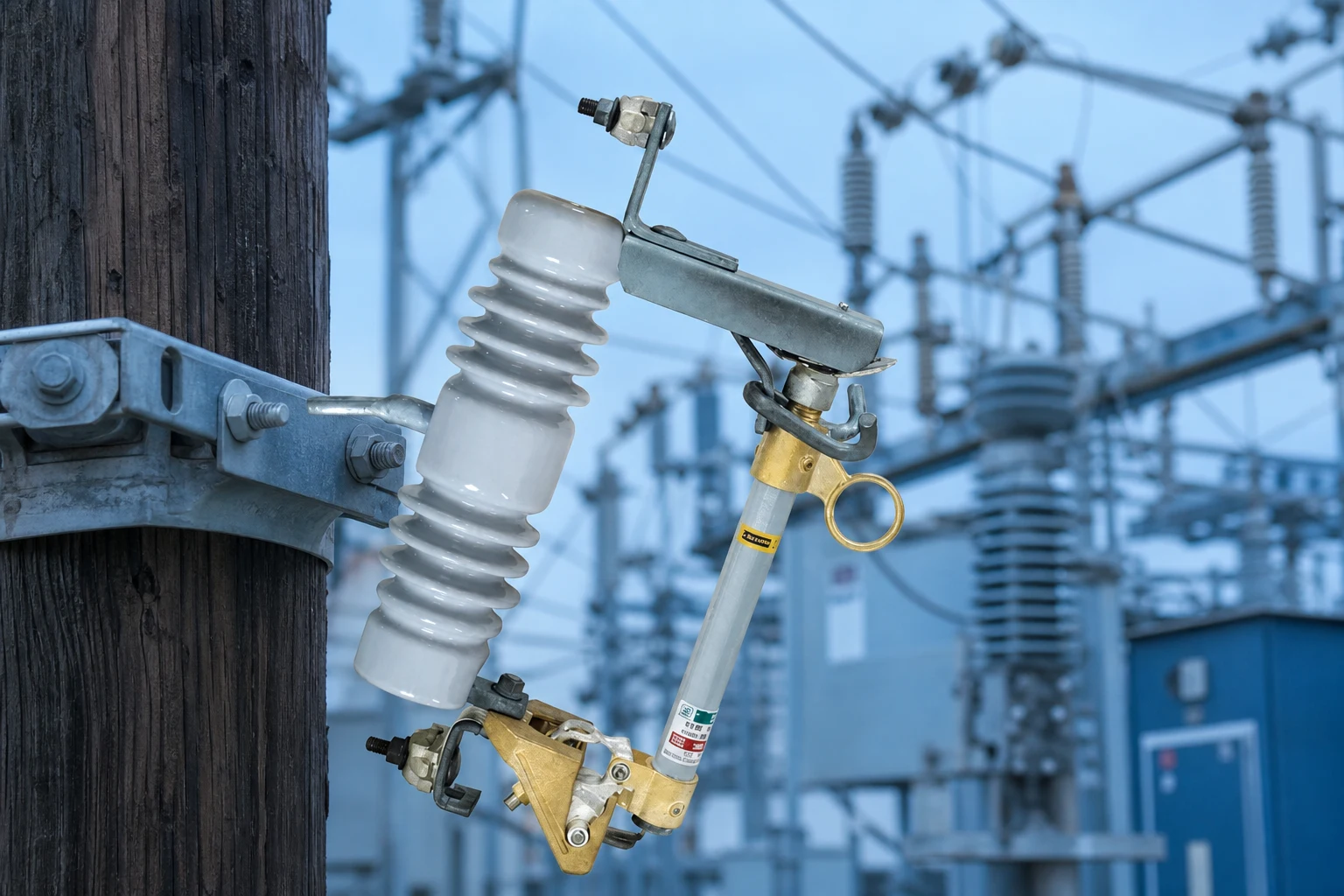
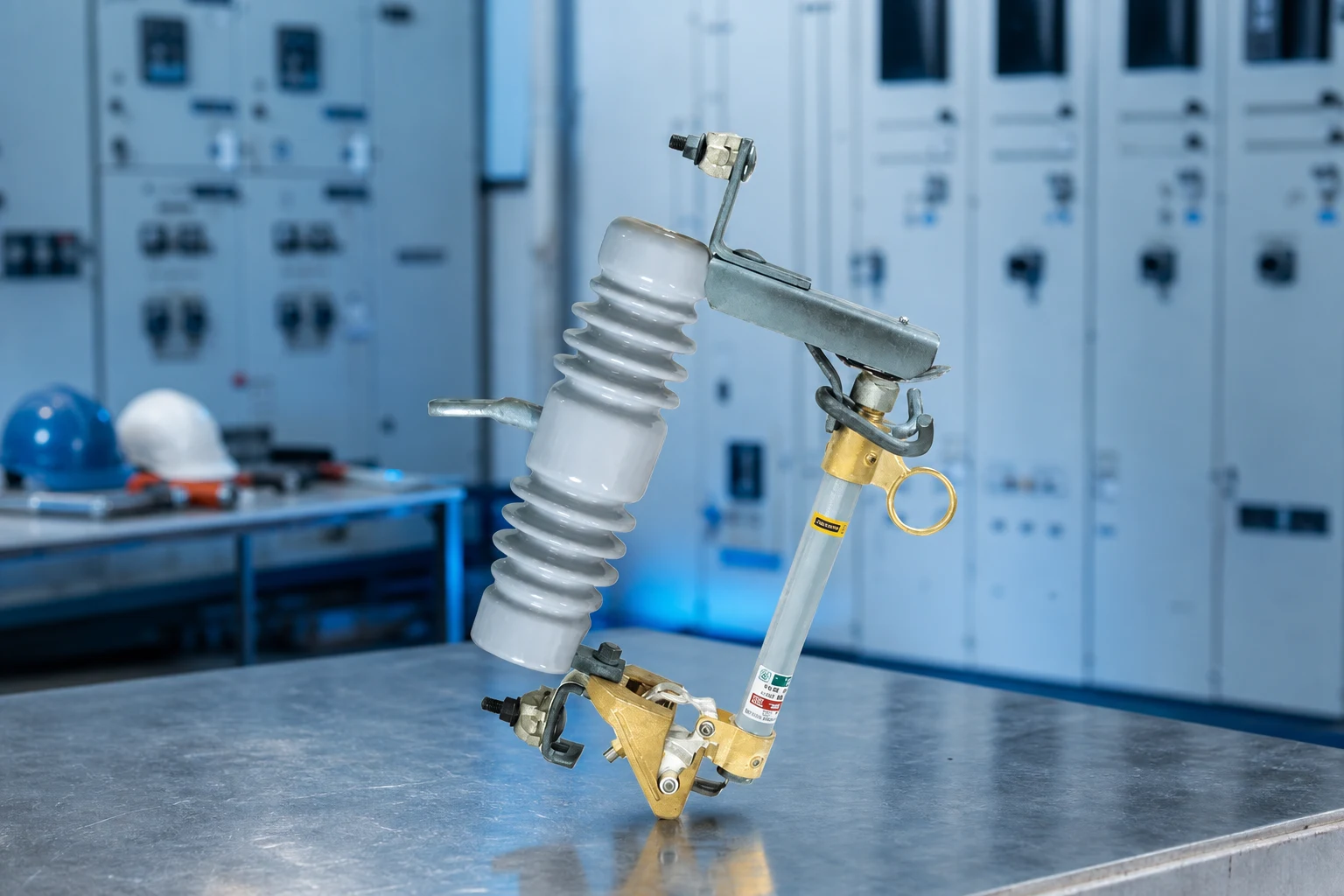
The expulsion fuse link carries normal current and melts when its specified current-time relationship is reached. The cutout provides the holder, insulation, contacts, and a mechanical drop-open indication after operation. The link’s arc-extinguishing action works only with the cutout body for which it was tested; a link that fits physically is not automatically an acceptable substitute.
State the complete assembly in the design record: cutout manufacturer and family, maximum system voltage, link catalogue number, mounting interface, and the required visible-open or dropout function. For background on the assembly, see how a fuse cutout works. This distinction prevents a procurement team from treating a replacement link as a generic fuse.
Voltage, Current and Time-Current Coordination
Start with the highest line-to-line voltage that the link and cutout will see, including the system grounding arrangement and any utility voltage class rule. Continuous current is a thermal selection: use the calculated load, conductor limits, transformer nameplate current and expected operating margin. Interrupting duty is different: compare the link’s tested interrupting capability with the prospective fault current at the pole, using the utility’s study method.
Obtain the manufacturer’s time-current characteristic (TCC) for the exact link. Overlay minimum-melt and total-clear curves with transformer damage limits, feeder protection, recloser shots and downstream devices. A fast (often K) link may coordinate on a branch fault; a slower (often T) link may be selected where transformer magnetizing inrush or cold-load pickup would otherwise cross the curve. K/T labels are family conventions, not a universal speed guarantee.
| Input to verify | Why it matters | Evidence to request |
|---|---|---|
| System voltage and grounding | Confirms insulation and application class | Single-line diagram, utility voltage rule, nameplate |
| Continuous load current | Avoids heating or nuisance operation in normal service | Load calculation, transformer data, conductor ampacity |
| Prospective fault current | Checks interrupting duty at the installation point | Short-circuit study or utility fault-level letter |
| TCC and dropout behavior | Coordinates faults, inrush and visible isolation | Exact-link curves, cutout test data, utility setting sheet |
Environment, Dropout and Utility Rules
Record altitude, pollution or salt exposure, humidity, ice or wind loading, ambient temperature range, and wildlife or vegetation exposure. These conditions can alter insulation clearances, surface leakage and mechanical dropout; apply the correction or construction rule published by the utility or equipment manufacturer rather than inventing a derating factor.
Ask whether the utility requires a specific dropout angle, visible-open distance, live-line-tool interface, or coordination with automatic reclosing. IEC 60282-2 is a product and test reference for high-voltage fuses; it is not, by itself, a certificate that a particular link is approved on every cutout or network. Where the local rule is based on a manufacturer or utility drawing, attach that controlled document to the purchase package.
A related fuse cutout ratings guide can help structure the assembly review, while a disconnector selection guide covers visible isolation devices that are not substitutes for a fuse link.
Procurement, Inspection and Failure Modes
Put the following in the RFQ: exact cutout family and interface, voltage class, continuous-current requirement, available fault current, TCC requirement, utility-approved speed family, environmental data, dropout requirement, applicable edition of the governing standard, spare-link identification, and document language. Request a controlled datasheet, curve, installation drawing and traceable lot or batch information.
| Observed symptom | Selection or process check | Corrective evidence |
|---|---|---|
| Opens during energization | Inrush/cold-load point crosses the selected TCC | Coordination overlay and approved alternate link |
| Link does not clear a fault | Fault level, interrupting rating or fit was misapplied | Fault study, tested assembly record, dimensional check |
| Cutout stays closed after operation | Dropout hardware, spring, hinge or installation is wrong | Mechanical inspection and utility acceptance test |
| Tracking or flashover | Pollution, clearance, contamination or damaged insulation | Environmental review and condition report |
At incoming inspection, compare the marking and dimensions with the approved drawing; check ferrule, eye and pull-ring condition; confirm continuity using the approved method; and record the link lot against the installed cutout. After an operation, quarantine the used link and investigate the event before fitting a replacement. FUERTE buyers can use the fuse cutout product line as a starting point, then request project-specific drawings and curves.
FAQ
Is the fuse link the same as the cutout?
No. The link is the replaceable fusible element; the cutout is the reusable holder and dropout assembly. They must be specified and verified as a tested combination.
How do I choose between K-speed and T-speed?
Compare the exact family curves with transformer inrush, feeder protection and recloser sequences. Use the speed family accepted by the utility; the letter alone is not a universal performance value.
What current rating should be checked first?
Check continuous load current for thermal fit, then check prospective fault current for interrupting duty. Both values must be taken from the project study or utility data, not inferred from the nominal voltage.
Does IEC 60282-2 approve a link for every network?
No. It provides a high-voltage fuse framework and test basis. Network approval still depends on the applicable utility rule, cutout interface, tested assembly and project conditions.
What should be inspected when a link operates unexpectedly?
Preserve the operated link, record load and fault indications, and review the TCC overlay, inrush assumption, fault level, cutout hardware and environmental condition. Do not substitute a faster or larger link without an approved coordination review.
Conclusion
Reliable expulsion-fuse-link selection is a coordination exercise, not a catalogue-size decision. Confirm the maximum system voltage, calculate continuous and prospective fault current, and overlay the exact link’s minimum-melt and total-clear curves with transformer, feeder and recloser requirements. Then apply the utility’s dropout, environmental and installation rules to the complete cutout assembly. IEC 60282-2 can anchor the technical conversation, but controlled utility drawings and manufacturer evidence determine whether a specific link is acceptable on a specific network. In procurement, require traceable markings, dimensions, curves, test records and spare-link identification. In the field, investigate every unexpected operation before replacement. This process reduces nuisance outages and prevents a physically compatible link from being treated as an electrically coordinated one. For project review, send the single-line diagram, fault study, environmental data and cutout drawing to your engineering reviewer.
Ready to review your specification? Contact FUERTE engineering support with the project voltage, load, fault level, cutout family and utility requirements.