

Quick answer: Choose an 11kV polymer insulator manufacturer only after matching the proposed design to the installation duty, then checking evidence against IEC 61109:2025 and IEC 62217:2025 as applicable. Use IEC TS 60815-1:2025 and IEC TS 60815-3:2025 to frame pollution-selection questions; these technical specifications guide selection and do not certify a product. Ask for controlled drawings, material and interface-process records, type/routine/sample test reports, lot traceability, change-control history, packing/marking details, and a named after-sales contact. A standard reference is a starting point—not proof that a particular factory is certified or that every model has passed the same test program. For a related technical topic, see 11 KV Polymer Pin Insulator. For a related technical topic, see How Do You Choose a China Vacuum Circuit Breaker Manufacturer?.
Define the application before comparing manufacturers
The first screening question is whether the supplier owns (or is formally authorised to control) the design being quoted. An 11 kV rating alone does not define line angle, mechanical loading, creepage requirement, hardware arrangement, conductor interface, or environmental duty. Put the installation class, system frequency, pollution exposure, altitude, mechanical loads, and applicable utility specification into the RFQ before comparing offers.
Ask for a revision-controlled outline drawing and data sheet showing the model designation, dimensions, interfaces, guaranteed mechanical and electrical characteristics, and permissible substitutions. The drawing revision should match the test report and the production description. If a supplier cannot explain which drawing was tested, treat a generic catalogue page as insufficient evidence.
How manufacturers control polymer-insulator quality
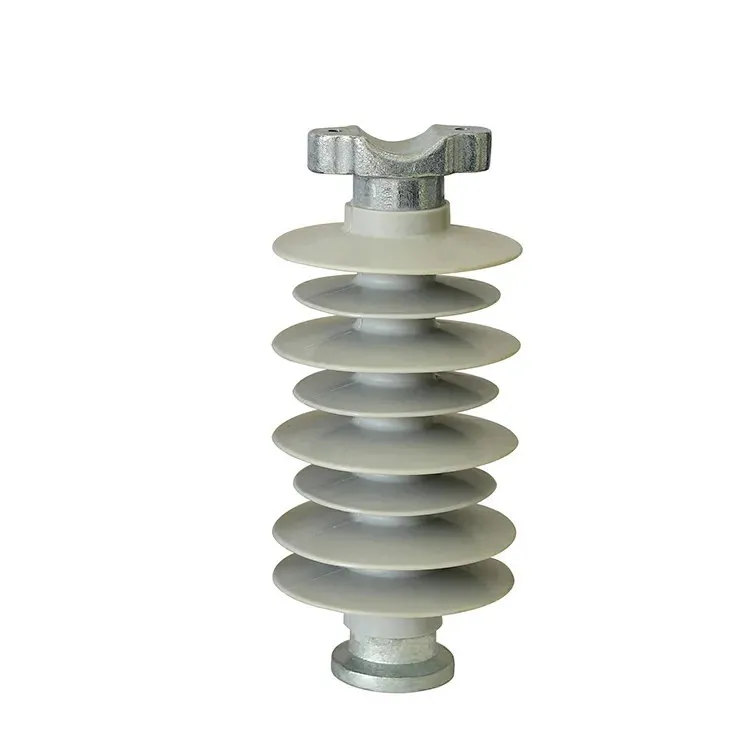
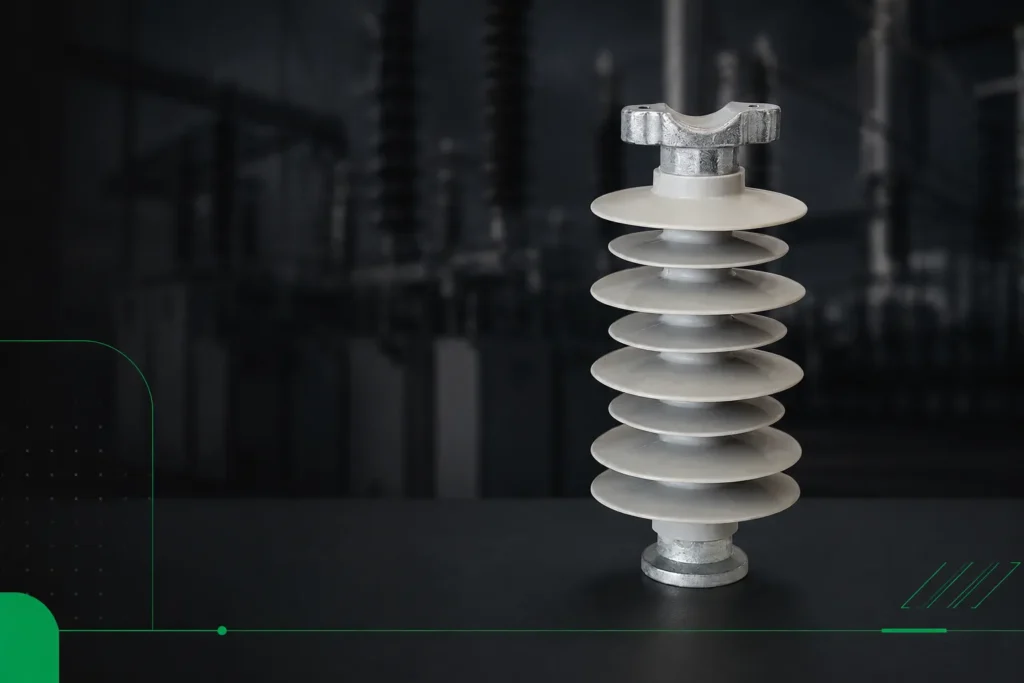
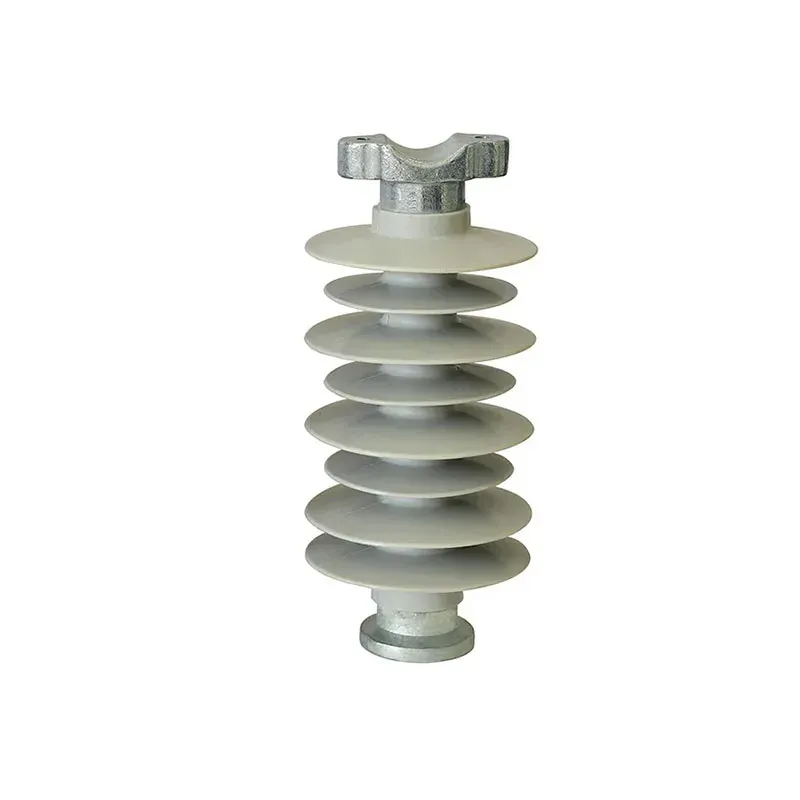
Composite insulators combine a weather-shed housing, a load-bearing FRP rod, and metal end fittings. Each interface is a potential variation point. A credible quality review therefore follows the process rather than relying on a final visual inspection alone.
How silicone rubber and FRP components are controlled
Request incoming-material specifications and batch identification for silicone rubber, the FRP core, and metal fittings. The supplier should be able to describe how compound preparation, moulding or injection, curing, rod preparation, crimping or end-fitting assembly, and seal/interface checks are controlled. The exact equipment layout is factory-specific; the useful evidence is a controlled process plan with inspection points, acceptance criteria, and records linked to a lot.
Look for documented checks of shed geometry, flash, voids, surface damage, rod alignment, fitting dimensions, crimping or assembly results, and seal condition. A photograph cannot replace a measurement record. Where a process parameter is critical, ask how an out-of-limit result is quarantined and dispositioned.
This sequence is the practical core of polymer insulator quality control: prevent variation at the material and interface stages, detect it with defined inspections, and preserve the record needed for release or corrective action.
Which tests should a manufacturer provide?
Type tests demonstrate a design against a defined test programme; routine tests are applied to production units or lots; sample tests use a stated sampling plan. Ask for the model number, drawing revision, test date, laboratory identity, test scope, and pass/fail criteria on every report. Independent laboratory evidence is stronger when the laboratory’s accreditation and scope cover the method used, but an independent report still needs to be shown to apply to the quoted design.
A practical scorecard for comparing manufacturers
The following scorecard turns a broad supplier conversation into evidence requests. It is intentionally qualitative: buyers should set their own pass thresholds for the grid, network, and destination-market requirements.
| Decision area | Evidence to request | Warning sign |
|---|---|---|
| Design ownership and drawings | Controlled outline drawing, revision history, design envelope, and model-to-report cross-reference | Only a generic catalogue image or an unsigned drawing |
| Silicone, FRP, and metal interfaces | Material specifications, batch IDs, process flow, interface inspection points, and nonconformance controls | “Premium material” wording without lot or process records |
| Type, routine, and sample tests | Model-specific reports with method, date, laboratory, scope, and acceptance criteria | A certificate with no model, drawing revision, or test scope |
| Traceability and lot records | Serial/lot mapping, inspection records, retained-sample policy, and shipment linkage | Supplier cannot trace a shipped unit to a production lot |
| Change control and deviations | Engineering-change procedure, impact review, customer notification rules, and NCR/CAPA workflow | Material or tooling substitutions handled informally |
| Packing and marking | Approved packing specification, label example, handling limits, and weather protection | Uncontrolled labels or packaging that cannot preserve identification |
| After-sales and document response | Named technical contact, document index, response route, and warranty/NCR process | Sales contact cannot obtain drawings or test records after the quote |
This is the level of evidence expected from an 11kV polymer insulator manufacturer when the purchase will be audited or repeated across projects. A scorecard should be retained with the bid evaluation so that a later price revision does not erase the original technical rationale.
What your RFQ should require
An RFQ should ask every bidder the same questions and define what constitutes an acceptable answer. The checklist below can be copied into a technical schedule.
| RFQ item | Minimum evidence | Buyer action |
|---|---|---|
| Application and load case | Completed duty sheet, system voltage/frequency, conductor and fitting details, mechanical loads, pollution context | Reject assumptions that are not stated in the offer |
| Product identity | Model, drawing number/revision, dimensions, interfaces, and declared substitutions | Cross-check every report against the offered model |
| Materials and process | Material data, batch traceability approach, process-control plan, and inspection records | Ask how deviations are quarantined and released |
| Testing | Type/routine/sample test matrix, reports, laboratory scope, and sampling basis | Separate design evidence from production-lot evidence |
| Quality system | Relevant quality-system certificate if claimed, audit contact, NCR/CAPA example with sensitive data removed | Verify the certificate’s issuer, scope, and validity independently |
| Delivery and packing | Written manufacturing/inspection milestones, packing specification, marking sample, and document pack index | Make document completeness a delivery condition |
| Support | Escalation contact, response process, spare/replacement route, and field-failure investigation method | Record who owns a post-delivery technical decision |
Comparing suppliers this way is more reliable than ranking unit prices. A reliable polymer insulator supplier should be able to state what is guaranteed, what is only indicative, and which document proves each claim. If two bids remain technically equal, compare total cost of ownership: inspection effort, documentation workload, packing risk, replacement exposure, and the cost of a delayed approval can outweigh a small purchase-price difference.
How to read standards and compliance documents
IEC 61109:2025 addresses composite insulators for AC overhead lines above 1 kV and provides the product-specific framework and tests used to assess that family of insulators. IEC 62217:2025 sets common requirements and test principles for polymeric high-voltage insulators, including the terminology and common test concepts used across product applications. The buyer still has to confirm that the quoted design, voltage class, loading, fittings, and test programme match the intended service.
For pollution selection, IEC TS 60815-1:2025 provides definitions, information, and general principles for selecting and dimensioning high-voltage insulators in polluted conditions. IEC TS 60815-3:2025 addresses the application of that selection approach to AC systems using composite insulators. These are technical specifications for engineering selection; they are not a blanket product certificate and they do not replace a utility’s own specification.
Standards also do not automatically prove a manufacturer’s certification. A supplier’s own statement, a quality-system certificate, and an independent test report are different documents with different evidentiary value. Ask for model-specific reports, verify the issuing body’s scope and validity, and confirm any national grid or market requirements before placing an order. Unsupported claims can trigger technical rejection, customs or tender disputes, re-testing costs, and difficult warranty conversations.
Final checks before placing an order
Use a staged review rather than a single “approved supplier” label:
- Lock the duty and drawing: issue the same application data and revision-controlled drawing to each bidder.
- Review the evidence pack: map materials, process controls, type tests, routine tests, and sample tests to the model being quoted.
- Audit traceability: select a sample lot and ask the supplier to demonstrate the link from incoming materials through inspection and packing records.
- Test change control: ask what happens if a compound, tooling, FRP rod, fitting, or subcontract process changes after approval.
- Set the document and support gate: make the final data pack, marking, packing, and nonconformance response part of the purchase conditions.
Fuerte can be considered alongside other qualified sources when its offered model and documentation satisfy the project specification; the buyer should verify the evidence for the specific order rather than infer capability from a brand name. For a procurement discussion, contact the team through the 11 kV polymer insulator factory enquiry route and attach the duty sheet, drawing revision, and required test matrix.
Frequently asked questions
What is the IEC for polymer insulators?
IEC 61109:2025 is the main product-family reference for composite insulators used on AC overhead lines above 1 kV, while IEC 62217:2025 provides common requirements and test principles for polymeric high-voltage insulators. The correct reference depends on the product and application, so the buyer should ask the manufacturer to identify the exact clauses and test reports that apply to the offered model.
What machines are used in polymer insulator manufacturing?
Typical production may include silicone mixing and metering equipment, injection or compression moulding systems, curing equipment, FRP-rod preparation and cutting tools, metal-fitting assembly or crimping equipment, dimensional inspection tools, and electrical or mechanical test systems. The machine list varies by design and process route; procurement should focus on controlled parameters, inspection records, and demonstrated process capability rather than a machine-count claim.
How can I verify the quality of polymer insulators from a manufacturer?
Request the controlled drawing, material and lot records, process-control plan, type/routine/sample test reports, and packing/marking records for the model quoted. Check the report’s model, drawing revision, test method, date, laboratory scope, and acceptance criteria, then ask the supplier to demonstrate traceability from a sample lot. An independent report is useful only when it clearly covers the offered design and the relevant test.
Are polymer insulators suitable for all weather conditions?
Polymer insulators can be designed for wet, humid, coastal, dusty, or polluted environments, but suitability is application-specific. Pollution severity, creepage selection, UV exposure, temperature, altitude, mechanical loading, and utility requirements must be assessed; IEC TS 60815-1:2025 and IEC TS 60815-3:2025 help structure that assessment. Do not treat “weather resistant” as a universal guarantee without the design and test evidence.
References
- International Electrotechnical Commission, IEC 61109:2025, Composite insulators for AC overhead lines—product-family requirements and tests. Consult the IEC standards catalogue for the current publication record.
- International Electrotechnical Commission, IEC 62217:2025, Polymeric HV insulators—common requirements and test principles. Confirm the applicable edition in the IEC catalogue before procurement.
- International Electrotechnical Commission, IEC TS 60815-1:2025 and IEC TS 60815-3:2025, selection and dimensioning guidance for polluted conditions and AC composite-insulator applications.
- IEC, Standards and conformity assessment, for the distinction between standards, conformity assessment, and supplier claims: iec.ch/standards.
Conclusion
The reliable choice is the manufacturer that can connect an application duty to a controlled drawing, a controlled process, and model-specific evidence—not the supplier with the most confident catalogue language. Buyers should first confirm voltage, mechanical loading, pollution context, interfaces, and destination-market rules; next compare material, process, testing, traceability, change-control, packing, and support records; and only then balance price and delivery. IEC 61109:2025, IEC 62217:2025, and the IEC TS 60815 series provide useful technical frameworks, but they do not remove the need to verify the exact model and lot. Keep that verification gate in the purchase order. Fuerte can support a standards-led enquiry when the buyer shares the duty sheet and required evidence; review the polymer-insulator range and contact the team before final supplier approval.