

In the field, a utility maintenance engineer may isolate a line section after finding a small tracking mark on a polymer insulator. A follow-up inspection can reveal a pollution-class mismatch, damaged housing, or a loose fitting rather than a simple “old insulator” problem. The useful response is to identify the failure mechanism, manage the immediate electrical risk, and then decide whether cleaning, monitoring, repair, or replacement is justified.
Summary: There is no universal service-life number for a high-voltage polymer insulator. Exposure, electrical stress, installation quality, pollution severity, and the condition of the housing, core, and fittings determine remaining life. For AC overhead systems above 1 kV, IEC 61109:2025 covers composite-insulator definitions, tests, and acceptance criteria, while IEC 62217:2025 provides general definitions and test methods for polymeric high-voltage insulators. Use those product standards with the 2025 IEC TS 60815-1 and IEC TS 60815-3 selection guidance, then make maintenance decisions from documented condition evidence.
What determines the working life of a polymer insulator?
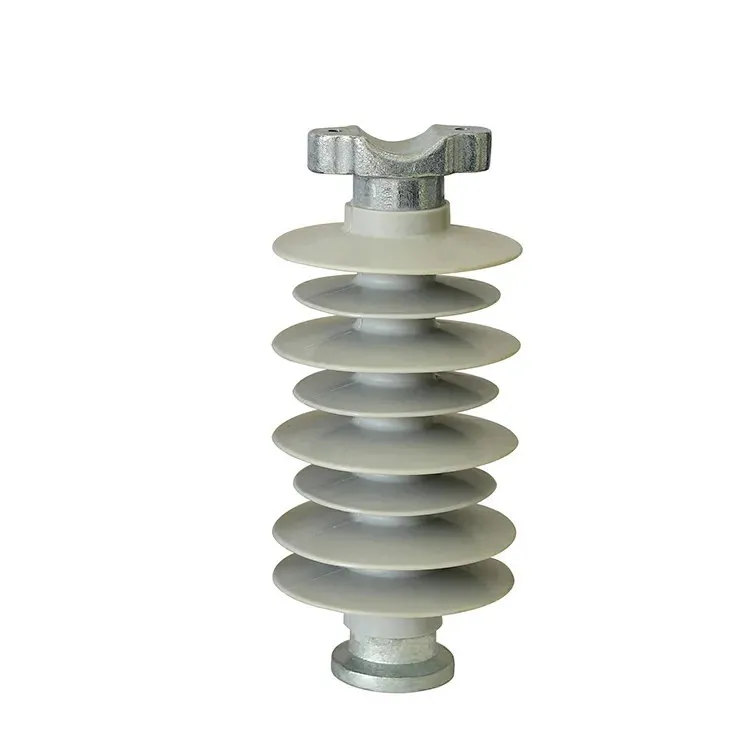
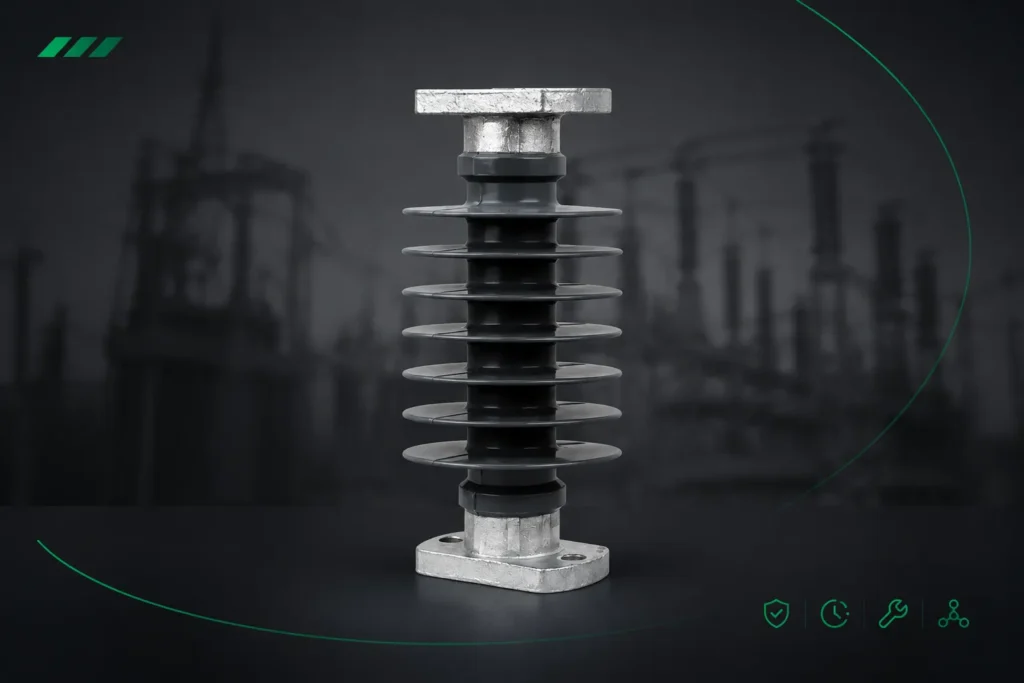
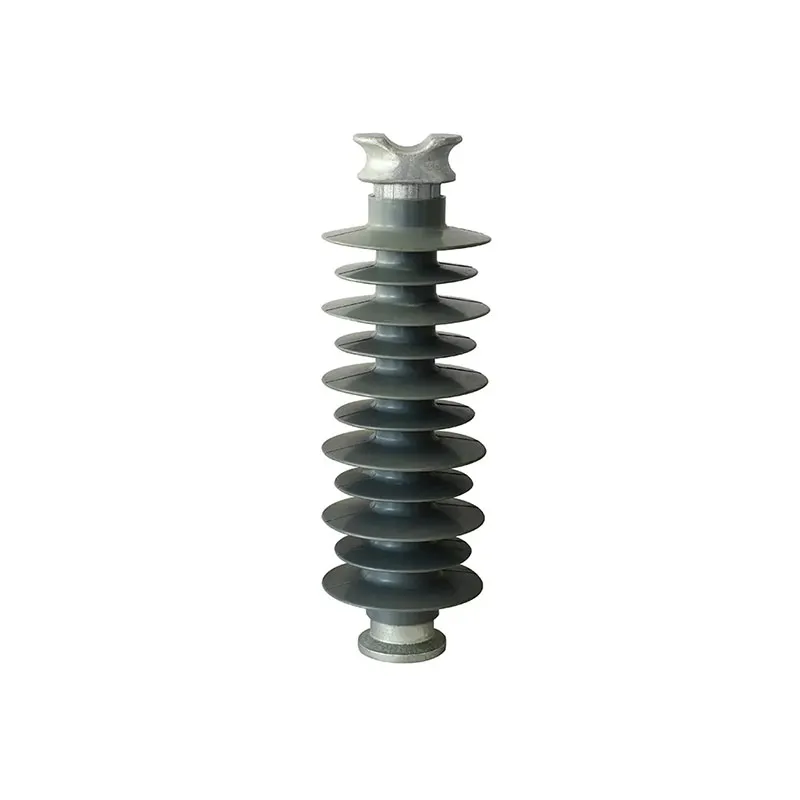
High-voltage polymer insulators normally combine a load-bearing core, metal end fittings, and a weather-shedding polymer housing. Silicone rubber and other polymeric housings can retain useful hydrophobic behaviour, but that behaviour does not eliminate inspection or cleaning. The housing, interfaces, fittings, and the supporting structure age in the same service environment, so the inspection plan must cover the complete assembly.
Service life is best expressed as a condition and risk question, not as a fixed calendar range. Key influences include:
- Pollution and moisture: Salt, industrial deposits, dust, and persistent wetting can create leakage-current activity and dry-band arcing. Pollution severity and the required creepage design should be assessed using the IEC TS 60815 series for the installation environment.
- UV, heat, and weathering: Long-term exposure can change the surface, encourage chalking, or reduce the effectiveness of sheds. Record the type, location, and progression of any change rather than treating colour alone as a replacement limit.
- Electrical and mechanical stress: Switching events, lightning, conductor loads, vibration, and bending at the fitting can damage the housing or transfer stress to the core.
- Installation and handling: Incorrect torque, sharp tools, contaminated interfaces, or lifting the assembly by the housing can create defects that appear much later.
- Manufacturing and application evidence: The purchaser should retain the applicable design, routine-test, type-test, and acceptance records so that an anomaly can be compared with the original configuration.
How to inspect an insulator before deciding what to do
A practical programme uses three layers. The first is a documented patrol or visual inspection from a safe distance. The second is a close inspection during a planned outage or approved live-line activity, including sheds, interfaces, fittings, and hardware. The third is a targeted diagnostic when visual evidence, event history, or the risk assessment indicates a need. The interval should follow pollution, weather, loading, asset criticality, and prior findings; “annual” is a starting point to justify or change, not a universal rule.
| Inspection layer | Useful observations | Record for the next decision |
|---|---|---|
| Routine visual patrol | Broken or missing sheds, flashover marks, contamination, unusual hardware position, birds or objects, and changes since the last patrol. | Date, asset ID, weather/pollution context, photographs, and an immediate safety classification. |
| Close inspection | Cracks, cuts, chalking, tracking or erosion, seal and interface condition, corrosion, loose fittings, and evidence of corona or leakage-current activity. | Defect location and extent, comparison with the manufacturer’s limits, and a clean/retest or escalation recommendation. |
| Targeted diagnostic | Infrared, ultraviolet, leakage-current, hydrophobicity, or other approved methods selected for the suspected failure mode. | Instrument method, conditions, repeatability, trend against a baseline, and an engineering disposition. |
Diagnostics should answer a defined question. For example, infrared or ultraviolet inspection may help locate an active anomaly, while a hydrophobicity assessment can help distinguish temporary contamination from a persistent surface change. No single field test proves remaining life; interpret results with the design, loading, environmental history, and applicable acceptance criteria.
When to clean, monitor or replace
The following framework keeps a maintenance decision tied to observable evidence. It does not replace the manufacturer’s instructions, utility safety rules, or an engineer’s approval for work near energized equipment.
| Observed condition | Immediate action | Disposition |
|---|---|---|
| Light, removable contamination; no housing, core, or fitting defect | Clean with an approved method and verify that the method is compatible with the polymer and site procedure. | Return to service only after a visual recheck; shorten or retain the interval according to pollution risk and trend. |
| Reduced hydrophobic response or recurring contamination, but no tracking, erosion, or mechanical damage | Confirm the observation with a repeatable method and review pollution and wetting history. | Monitor and investigate the cause; clean or apply only an approved treatment. Do not infer a fixed remaining-life value from one reading. |
| Progressive tracking, erosion, shed loss, deep cut, exposed core, or a burn/flashover mark | Escalate the asset, assess electrical clearances and outage needs, and prevent unsafe re-energisation. | Replace when the defect exceeds the manufacturer’s or utility’s acceptance limit; document the failure mechanism for fleet review. |
| Loose, displaced, cracked, or seriously corroded fitting or hardware | Make the circuit safe and inspect the complete mechanical connection. | Repair or replace the affected assembly only under an approved procedure; verify torque, alignment, and hardware condition. |
| Repeated abnormal diagnostic result or unexplained service event | Repeat the test under comparable conditions and involve the asset engineer and manufacturer where appropriate. | Hold, monitor, or replace based on risk and evidence; do not reset the record by simply cleaning the surface. |
Which IEC standards apply to maintenance and testing?
The 2025 editions should be used as current references when a specification, procurement package, or test plan is being updated. They support consistent terminology and evidence, but they do not declare that every insulator will last a particular number of years and they do not prescribe one maintenance interval for every line.
| Reference | Primary scope | Maintenance and procurement consequence |
|---|---|---|
| IEC 62217:2025 | General definitions, test methods, and acceptance criteria for polymeric high-voltage insulators. | Use its terminology and applicable tests when comparing designs, type-test evidence, and acceptance documentation. |
| IEC 61109:2025 | Composite insulators for AC overhead lines with nominal voltage above 1,000 V: definitions, test methods, and acceptance criteria. | Check that the product evidence matches the intended AC overhead application; it is not a blanket field-life guarantee. |
| IEC TS 60815-1:2025 | General principles and information for selecting and dimensioning high-voltage insulators in polluted conditions. | Document the site pollution profile and design assumptions instead of choosing a creepage arrangement from voltage alone. |
| IEC TS 60815-3:2025 | Selection and dimensioning considerations specific to polymer insulators for AC systems in polluted conditions. | Use polymer-specific application guidance in the design review and retain the rationale for the chosen configuration. |
These are standards and technical specifications, not a substitute for a product certificate or a local regulatory approval. A tender should identify the exact edition, applicable voltage and duty, required tests, supplied reports, and any destination-market rules. Avoid marketing an insulator as “IEC certified” unless a competent, documented conformity route supports that wording.
How to keep inspection records useful
- Clean deliberately: Select water quality, pressure, access, and any cleaning agent from the manufacturer’s instructions and the utility’s procedure. Record the pre- and post-cleaning condition; aggressive chemicals or tools can damage polymer surfaces.
- Trend, do not just tick a box: Keep asset photographs, defect locations, hydrophobicity or leakage-current observations, weather, and service events in a consistent record. A change over time is often more useful than a single pass/fail label.
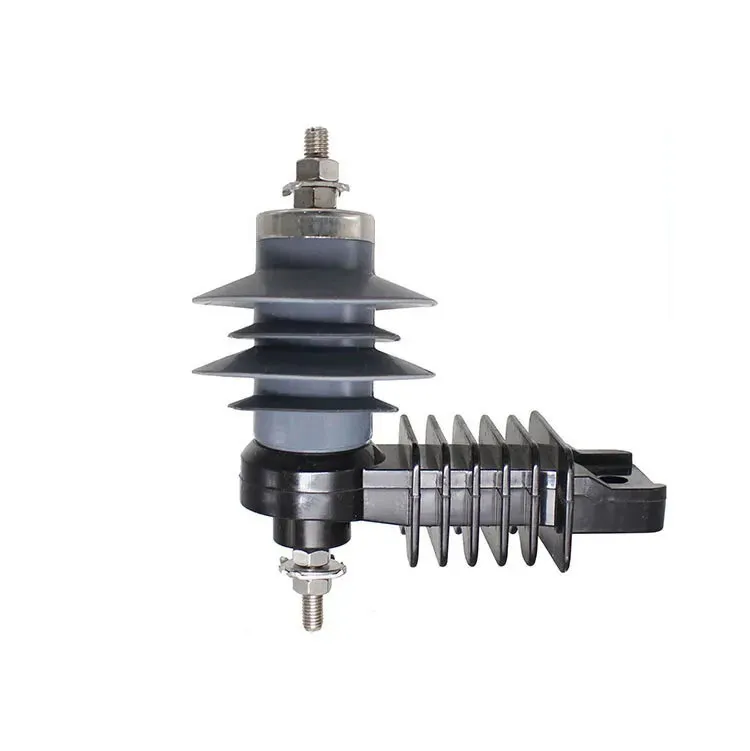
- Control lightning and switching exposure: Review shielding, earthing, line hardware, and surge protection together. The utility’s risk review can use this lightning surge arrester guidance as a related planning resource.
- Preserve mechanical integrity: Follow approved lifting, storage, torque, and alignment procedures. Replace hardware or an entire assembly when the approved limits are exceeded; do not hide a fitting defect with a surface treatment.
- Plan safe escalation: Any work near energized equipment requires the utility’s isolation, live-line, clearance, and permit controls. A replacement decision should be made before a defect becomes an outage or a safety event.
How to choose a replacement that fits existing hardware
Before ordering a replacement, record the system voltage and duty, structure and fitting arrangement, conductor loads, pollution and altitude information where relevant, environmental exposure, and the reason for removal. Check the drawing, interface dimensions, test evidence, inspection history, and spare strategy as one package. Buyers evaluating a polymer insulator product range should compare the available configuration and interfaces against the project duty rather than selecting from voltage alone.
Fuerte can be considered when a purchaser needs a documented configuration and product information for review. The buyer should verify the exact design, test records, fittings, and destination-market requirements for the project rather than relying on a generic lifespan statement.
FAQs
How long do high-voltage polymer insulators last?
No universal number applies. Service life depends on pollution, wetting, UV exposure, electrical and mechanical stress, installation, and the condition trend recorded by the utility. Use the applicable design and test evidence plus condition-based inspection to estimate risk and replacement timing.
How can I tell if a polymer insulator needs replacement?
Escalate visible tracking, erosion, shed loss, deep cuts, exposed core, burn or flashover marks, serious fitting damage, or repeated abnormal diagnostic results. Compare the defect with the manufacturer’s acceptance limits and the utility’s risk rules; a colour change or one hydrophobicity reading alone is not a universal replacement criterion.
How often should polymer insulators be inspected?
Set the interval from pollution, climate, asset criticality, loading, event history, and previous findings. High-contamination or rapidly changing locations may need shorter intervals, while a stable site may support a longer interval after documented review. Reassess the interval whenever the condition trend or environment changes.
What is the safest way to clean a polymer insulator?
Use the manufacturer’s approved water quality, pressure, access method, and any compatible cleaning agent. Avoid abrasive tools and unapproved chemicals that can damage the housing. Make the circuit and work area safe under the utility’s procedure, then document the condition before and after cleaning.
Do IEC 62217:2025 and IEC 61109:2025 set a maintenance schedule?
No. They define terminology, test methods, and acceptance criteria for relevant polymeric or composite insulators. Maintenance frequency still requires an asset-specific risk assessment using the installation environment, operating duty, manufacturer instructions, and local safety requirements.
References
- IEC 62217:2025, Polymeric HV insulators for AC overhead lines — General definitions, test methods and acceptance criteria.
- IEC 61109:2025, Insulators for overhead lines — Composite insulators for AC systems with a nominal voltage greater than 1,000 V — Definitions, test methods and acceptance criteria.
- IEC TS 60815-1:2025 and IEC TS 60815-3:2025, selection and dimensioning guidance for high-voltage insulators in polluted conditions.
- IEC, International Electrotechnical Vocabulary and standards catalogue, for confirming the edition and scope used in a project specification.
Conclusion
A polymer insulator does not come with a universal expiry date. Its useful life is the outcome of the selected design, pollution and weather exposure, electrical and mechanical duty, installation quality, and the evidence collected during service. A defensible programme starts with safe visual inspections, adds targeted diagnostics when a defined question exists, and uses a documented decision table for cleaning, monitoring, repair, or replacement. The 2025 IEC 62217, IEC 61109, and IEC TS 60815-1/-3 references help align specification and testing; they do not replace asset-specific engineering judgement. Keep the photographs, test reports, event history, and acceptance limits together. When a replacement is justified, verify the configuration and interfaces against the application before ordering. For product or project questions, review the polymer insulator category and contact Fuerte with the relevant duty and site information.
Reliable insulation is a managed condition, not a guessed number: specify carefully, inspect purposefully, and replace on evidence.