
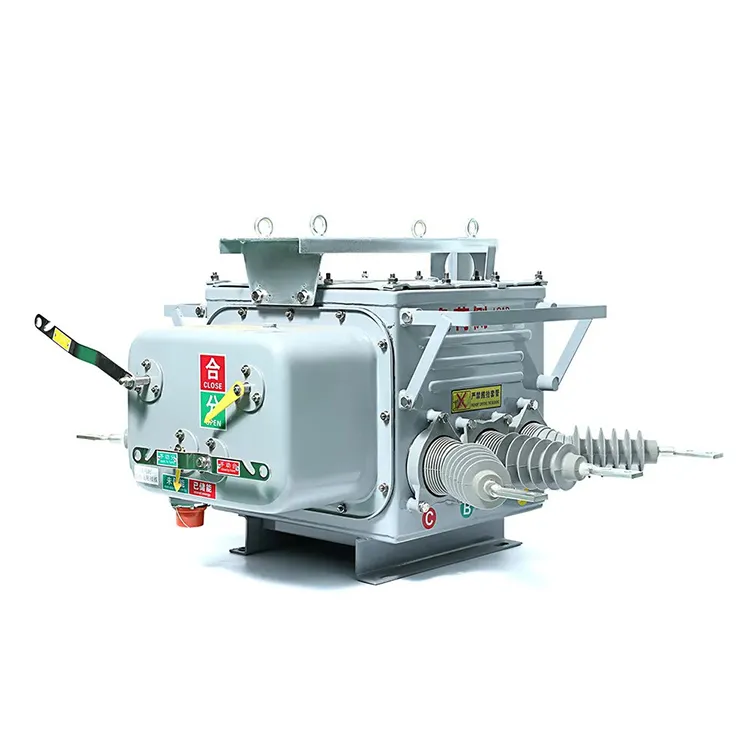
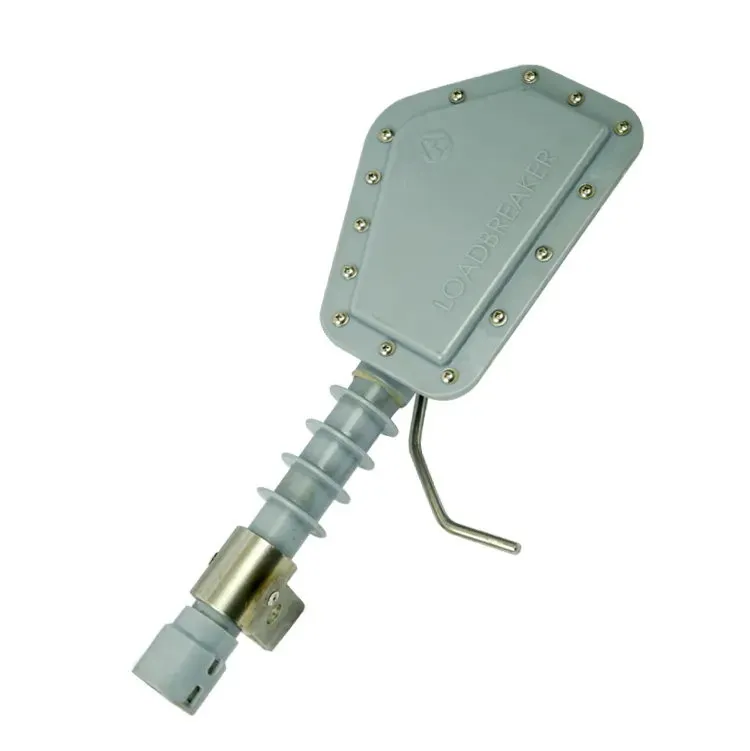


A 12 kV vacuum circuit breaker is often described as an 11 kV feeder device, but a nominal voltage label does not settle the purchase. The buyer still has to reconcile the system fault level, insulation coordination, operating sequence, switchgear interface and commissioning scope. Treat the equipment class as the starting point, then verify the complete rating set against the actual installation.
Summary: A 12 kV vacuum circuit breaker is used to switch and protect medium-voltage feeders, transformers, motors, and outdoor distribution circuits where fault interruption is required. Many “11 kV” networks use 12 kV-class equipment; IEC 62271-100 separates interruption duties from IEC 62271-1’s common switchgear requirements. Verify ratings, the switchgear interface, and commissioning scope before order release.
Which circuits are a 12 kV VCB intended to protect?
Typical applications include utility feeders, industrial substations, transformer primaries, motor feeders, renewable collector circuits, and pole-mounted line sections. A VCB suits these duties because it can switch normal load current and interrupt fault current without oil handling. Buyers planning future network expansion may also compare the vacuum circuit breaker voltage range that separates 12 kV from 15 kV equipment; the decision should follow the declared system and insulation requirements, not a product-family name.
In many tenders, 11 kV describes the network while 12 kV describes the equipment class. Check the vacuum circuit breaker voltage range against declared rated values and insulation class, not marketing labels alone.
Which ratings must be checked together on a 12 kV VCB?
Check rated voltage, insulation level, normal current, breaking current, short-time withstand duty, peak making current, operating sequence, control voltage, and mounting arrangement. Compare the offered schedule with the project’s vacuum circuit breaker ratings before commercial approval.
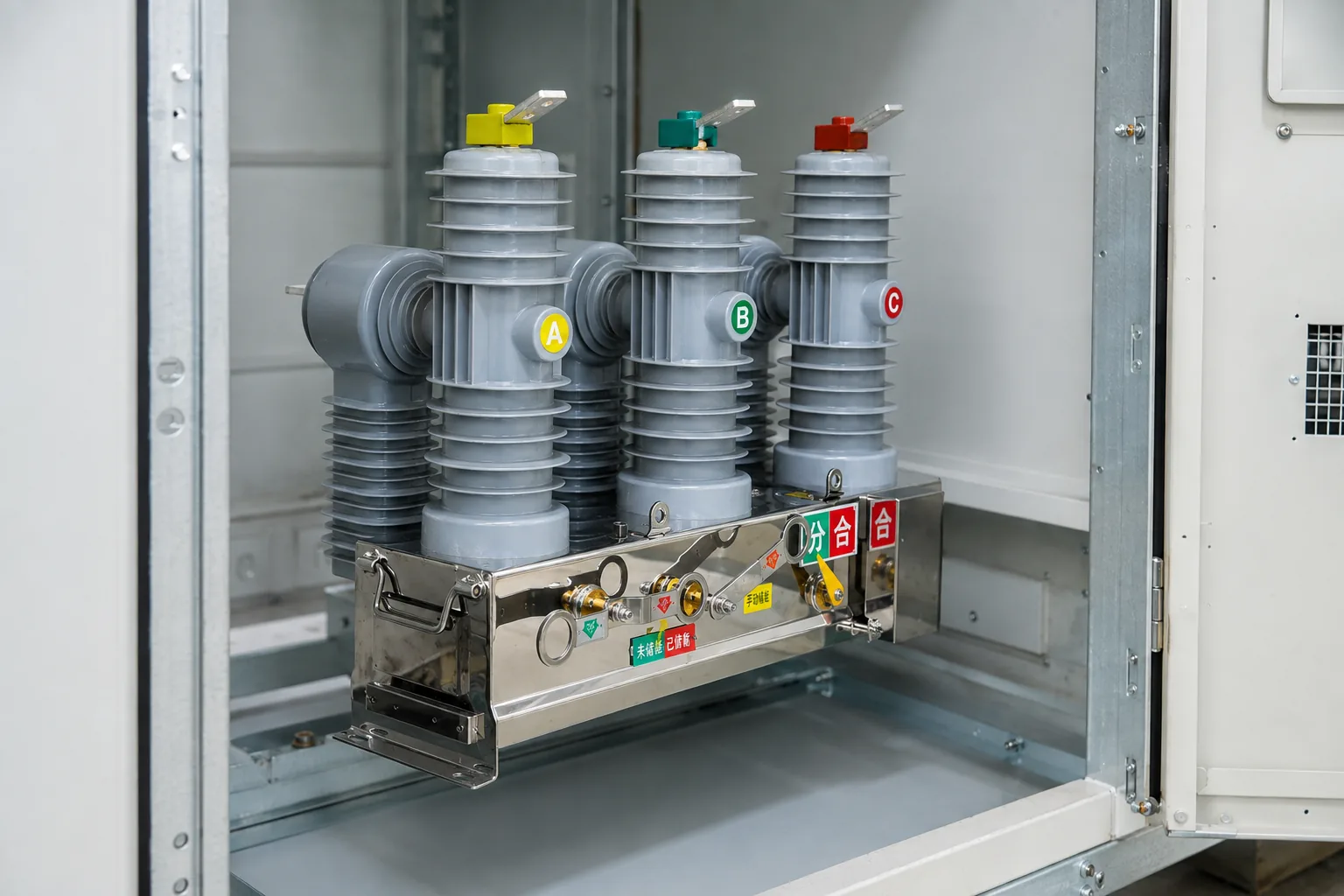
Current rating and fault duty are different decisions. A breaker may carry the load correctly and still be wrong if the site fault study or required operating sequence differs. Buyers should also confirm whether the application is fixed indoor, withdrawable switchgear, or outdoor pole-mounted service.
For fault duty, use the network study at the breaker terminals, not a level quoted for a remote bus or previous phase. Breaking current, short-time withstand capability, peak making capability, duration, and operating sequence must work as a set. IEC 62271-100 distinguishes the duties and test obligations behind them; one kA figure on a quotation is incomplete.
Insulation coordination is a separate check. Declared power-frequency and lightning-impulse withstand values must align with the equipment class, installation, and coordination study. IEC 60060-1 specifies high-voltage test techniques and requirements for the test arrangement; it does not by itself select the equipment insulation level. Use it with the applicable switchgear requirements and the project insulation-coordination basis rather than treating one withstand value as a purchasing shortcut.
| Option | Best fit | Main trade-off |
|---|---|---|
| 12 kV vacuum circuit breaker | Feeders, transformers, motors, full protection duty | Higher scope than simpler switching devices, but stronger interruption and coordination capability |
| Load break switch plus fuse | Simpler transformer or ring applications | Can reduce initial scope, but protection and replacement logic differ from a true breaker |
| SF6 breaker arrangement | Projects needing platform continuity or compact layouts | Lifecycle and compliance review may be more involved |
How do load current, fault duty and the switchgear interface interact?
Select current rating from maximum continuous load, ambient conditions, enclosure heating, and future margin. Select short-circuit duty from the fault study at the installation point. One does not prove the other. An apparently suitable vacuum circuit breaker should remain a configuration reference until the project duty is confirmed. For a related technical topic, see What Does a 36 kV Vacuum Circuit Breaker Rating Mean for Your Project?.
Compatibility matters just as much as ratings. Indoor fixed breakers, withdrawable trucks, and pole-mounted units in the same 12 kV class can use different phase spacing, terminals, auxiliary contacts, interlocks, secondary plugs, and local control layouts. Many late project delays come from these interface gaps rather than from the interrupter itself.
Where a network is being reconsidered for a higher equipment class, the transition should be scoped as a system decision; vacuum circuit breaker ratings for a 25 kV class illustrate why protection, insulation, and equipment interfaces need review together rather than being inferred from a nominal-voltage label.
For a replacement breaker, obtain the switchgear manufacturer’s drawings before committing to a model. Check primary disconnect geometry, shutter and racking interlocks where applicable, earthing-switch logic, trip and close coil supply, anti-pumping arrangement, indication contacts, and relay input/output allocation. “12 kV withdrawable” is a class description, not a universal interchangeability standard.
That interface work has a direct cost effect. An apparently cheaper breaker can become the more expensive option if it needs adapter steelwork, relay rewiring, new secondary plugs, repeated drawing reviews, or extra shutdown time. Compare total installation and acceptance effort—not unit price alone—including commissioning labour, documentation turnaround, and maintenance access.
Why should the control and trip-close circuit be accepted separately?
The easily missed risk is control-circuit integrity. A correctly rated interrupter cannot protect the feeder if the DC control supply, trip circuit, close circuit, or permissive path is incomplete at the panel interface. Review the switchgear schematic against the breaker wiring diagram—not merely terminal labels—and identify the source, polarity, protective devices, terminal blocks, and any remote-control or protection-relay contacts in each path.
Confirm that auxiliary contacts provide the required breaker position, spring-charge, lockout, and anti-pumping logic; then verify the actual interlocks with the racking, earthing-switch, and local/remote arrangements. The close and trip coils must be documented for their intended duty and control supply, including the applicable coil-duty information supplied for the offered mechanism. A substitute coil or a changed auxiliary-contact allocation can alter a scheme even when the primary breaker frame fits.
At commissioning, record control-supply condition, trip-close checks, interlock results, alarms, and wiring exceptions against approved drawings. Retain them with maintenance history and later coil, contact, or mechanism work. The record supports fault investigation and shows whether a repair preserved the protection and operating logic.
| Application | Primary check | Common compatibility risk |
|---|---|---|
| Feeder | Load and fault level | Relay and trip-circuit mismatch |
| Transformer primary | Inrush, duty, insulation coordination | Bus arrangement or panel mismatch |
| Motor duty | Switching frequency and control stability | Mechanism or control-voltage mismatch |
| Outdoor line section | Mounting and environment | Clearance, terminal, or structure mismatch |
Which standards and tests should be checked before energization?
IEC 62271-1 covers common switchgear requirements, while IEC 62271-100 covers AC circuit-breakers. Together they frame dielectric performance, temperature rise, switching duties, and routine checks. They are standards, not blanket approvals: ask which edition and configuration the evidence covers.
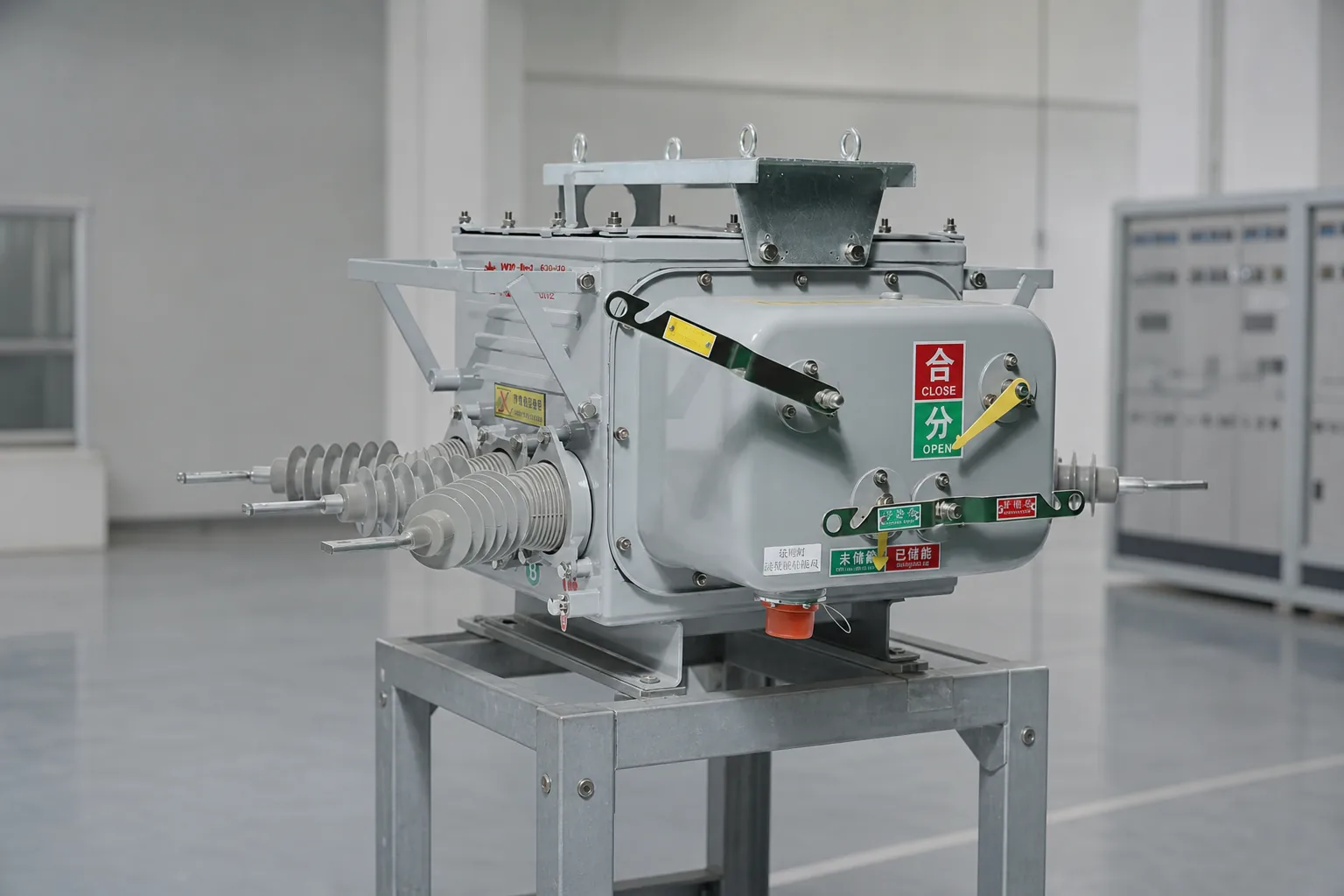
Read evidence in layers. Type tests cover a representative design; routine tests apply to each manufactured unit within the agreed scope. IEC 62271-100 addresses breaker duties, while IEC 62271-1 addresses common requirements that can affect the assembly. Evidence for an interrupter or mechanism alone does not establish every panel, outdoor structure, or control scheme.
Routine commissioning normally includes inspection, insulation and contact-resistance checks, timing, interlocks, and protection-interface verification. These site checks confirm the installed assembly; they do not reproduce laboratory type tests. Request the exact scope and document number for any supplier claim.
What should a buyer request before releasing a 12 kV order?
- Issue one duty sheet covering voltage class, insulation class, current, fault duty, operating sequence, control voltage, and environment.
- Confirm fixed, withdrawable, or outdoor construction and all primary and secondary interfaces.
- Separate factory evidence from site acceptance requirements in the quotation.
- Freeze relay and trip-close logic before order release.
- Agree the drawing, document, spare-parts, and commissioning deliverables before the manufacturing release.
A useful procurement file separates mandatory values from supplier options. Include the single-line diagram, load profile, fault-study extract, protection philosophy, switchgear drawings, control schematic, environmental conditions, and documentation list. Ask the supplier to mark each line compliant, alternative, or not supplied; this exposes exceptions early and supports traceable commissioning.
At this stage, Fuerte can be assessed as a configurable medium-voltage source with documentation support rather than as a generic catalog comparison. Buyers can also use this medium-voltage VCB selection guide to structure the review. That keeps brand evaluation tied to the actual network duty and switchgear arrangement.
What should a 12 kV buyer clarify before comparing suppliers?
Current buyer questions tend to mix the breaker’s voltage rating, the complete 6.6 kV or 12 kV panel specification and the applicable IEC standard. These are different checks: record the equipment class, the metal-enclosed assembly and the breaker’s own type-test scope separately in the procurement file.
This separation also prevents a common handover error. A 12 kV breaker can be electrically suitable while its racking geometry, secondary plug, interlocks or control voltage do not match the installed cubicle. Request the interface drawing and the control schematic before treating a catalogue match as a replacement approval.
FAQ
What is a 12 kV vacuum circuit breaker used for?
It is used to switch and protect medium-voltage circuits such as feeders, transformers, motors, and outdoor distribution sections. Its value is full load switching and fault interruption when the declared ratings match the project duty.
What ratings should be checked on a 12 kV VCB?
Check rated voltage, insulation level, normal current, breaking current, short-time withstand current, peak making current, operating sequence, control voltage, and mechanical arrangement. The review should match the exact offered configuration to IEC evidence and project duty.
How do I select the current rating for a 12 kV breaker?
Start with maximum continuous load, then include ambient conditions, enclosure heating, and future capacity margin. Do not use current rating as a shortcut for fault-duty selection.
What is the difference between 12 kV and 11 kV VCBs?
In many projects, 11 kV names the network and 12 kV names the equipment class used on that network. The safe comparison is the declared rating set, not the label alone.
How is a 12 kV vacuum breaker tested?
Factory checks cover the agreed routine production scope, while site commissioning usually covers inspection, insulation resistance, contact resistance, timing, and functional trip-close verification. Site tests confirm the installed assembly rather than the full laboratory type-test regime.
Which switchgear applications use 12 kV VCBs?
They are common in indoor metal-enclosed switchgear, fixed industrial panels, withdrawable switchgear trucks, and outdoor pole-mounted assemblies. Suitability depends on the electrical, mechanical, and control interface of the specific installation.
Does a 12 kV label prove that a breaker fits an 11 kV network?
No. It usually identifies the equipment class, while the network label, insulation coordination, fault study and switchgear interface establish suitability. Compare the declared rating set and test evidence with the project design rather than matching the nominal label alone.
Summary
A 12 kV VCB should be released only after its electrical ratings, insulation basis, control circuit and mechanical interface agree with the actual feeder or transformer duty. Treat the voltage label as a starting point, then verify the complete assembly and its test records.
References
- IEC 62271-1:2017, High-voltage switchgear and controlgear—Part 1: Common specifications
- IEC 62271-100:2021, High-voltage switchgear and controlgear—Part 100: AC circuit-breakers
- IEC 60060-1, High-voltage test techniques—Part 1: General definitions and test requirements
- InterNational Electrical Testing Association, Acceptance Testing Specifications
- IEC 62271-200:2021, AC metal-enclosed switchgear and controlgear