
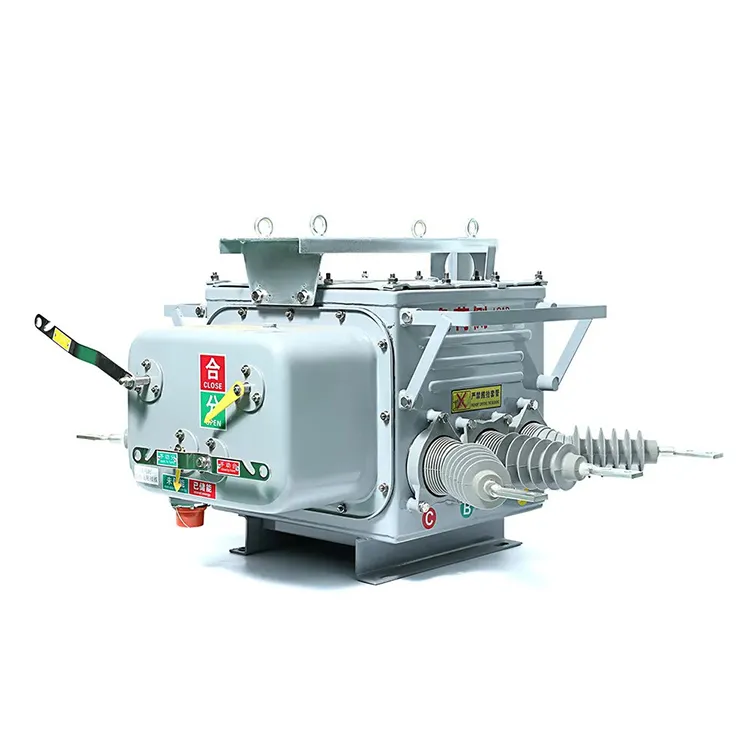


A 15 kV indoor VCB can fit a cubicle and still be the wrong choice if its dielectric levels, fault duty or secondary interfaces do not match the project. Selection should begin with the one-line diagram, available-fault calculation and insulation-coordination basis, then move to the truck, interlocks, controls and evidence required for the complete panel.
Summary: Choose an indoor breaker as part of its 15 kV-class switchgear application, not as a stand-alone commodity. A nominal 15 kV system is often specified with 17.5 kV equipment under IEC practice; the buyer must match declared dielectric levels, fault duty, operating sequence and interfaces to the system study. Begin with the one-line diagram, available-fault calculation, insulation coordination and load switching duty, then require evidence against IEC 62271-1, IEC 62271-100 and the applicable dielectric-test requirements of IEC 60060-1.
For an indoor project, the useful question is not “which model is 15 kV?” but whether a 15 kv vacuum circuit breaker matches the circuit, cubicle and documentation package that will be accepted at factory and site.
How should the 15 kV voltage class and insulation basis be confirmed?
“15 kV” is normally project shorthand. IEC selection uses rated voltage and insulation level, so many indoor assemblies serving 13.8 kV or 15 kV systems use the 17.5 kV equipment class. That choice must reflect the highest voltage for equipment and the specified power-frequency and lightning-impulse withstand levels; it cannot be inferred from the nominal system label alone.
IEC 62271-1 sets common requirements for high-voltage switchgear and controlgear, including service conditions and dielectric provisions. IEC 60060-1 defines general high-voltage test techniques and requirements; it is not an insulation-coordination study or product certificate. State altitude, ambient range, auxiliary supply and the insulation schedule for the complete indoor assembly.
| Selection item | What to verify | Why it matters commercially |
|---|---|---|
| Rated voltage class | Actual IEC equipment class, often 17.5 kV for a 15 kV system | A mismatch can require redesign or cause consultant rejection. |
| Insulation level | Specified power-frequency and lightning-impulse withstand values | Dielectric misalignment can delay approval or energization. |
| Normal current | Continuous current with enclosure and ambient-temperature effects | Nameplate current alone may not represent service conditions. |
| Mechanical arrangement | Fixed or withdrawable execution, truck, shutters and primary contacts | Mismatch creates retrofit work and spares risk. |
| Control scheme | Trip/close coil voltage, anti-pumping and auxiliary contacts | Late control changes add cost and schedule risk. |
A breaker can rack into a compartment and still fail through impulse withstand, control-voltage mismatch, shutter logic or secondary-plug incompatibility. Include the one-line diagram, approved cubicle drawings, busbar rating, interlocking logic and existing-panel interface in the enquiry.
How do normal current and fault duty change the selection?
The breaker must interrupt the prospective short-circuit current at its installation point, not a generic market rating. Indoor offers may be declared at 20 kA, 25 kA or 31.5 kA, with other values available by design. The correct value comes from the system fault study, including utility source strength, transformer contribution, motors, generators, operating configuration and planned parallel sources.
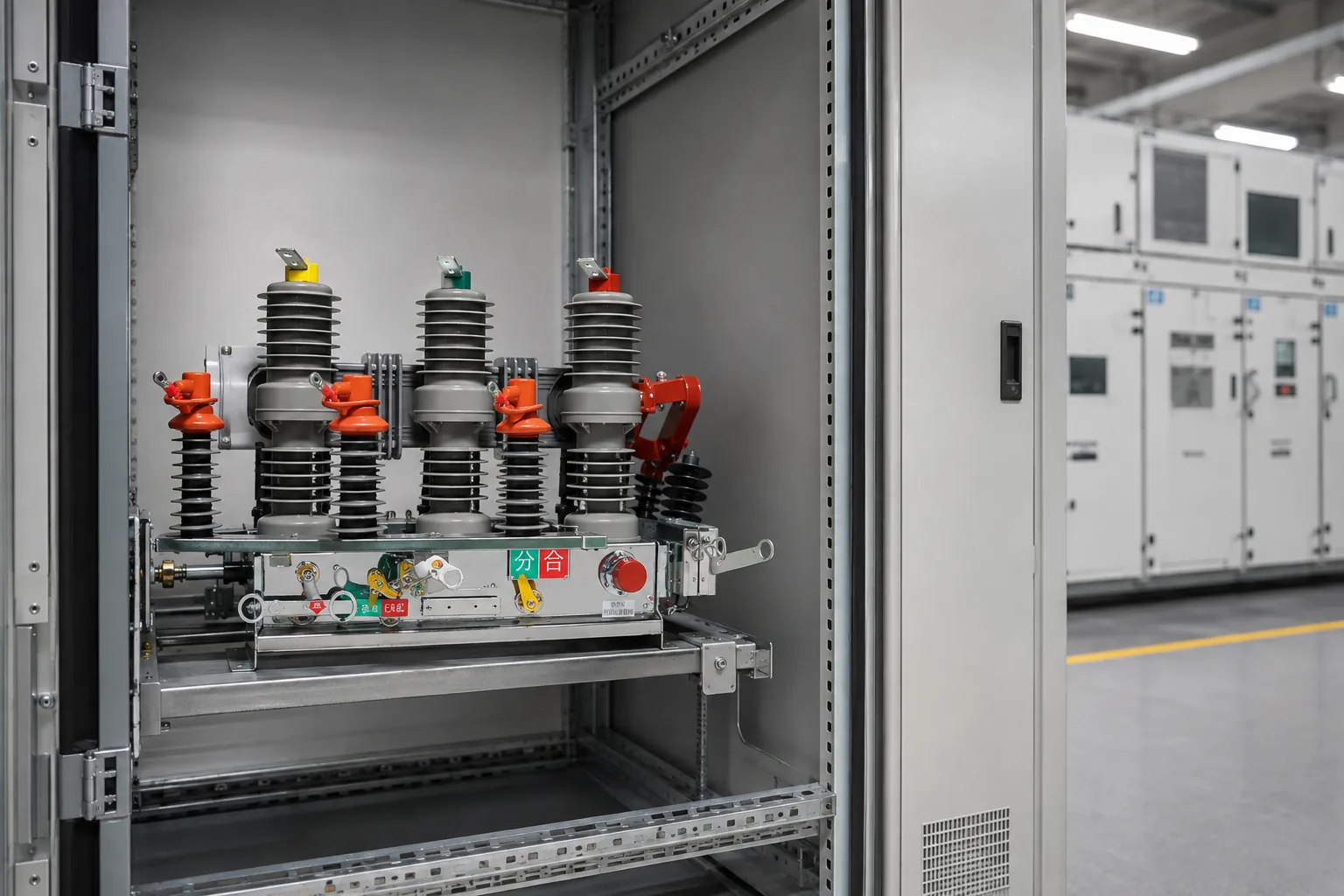
IEC 62271-100 is the product standard for AC circuit-breakers and frames the relevant rated duties and tests. Compare the declared rated short-circuit breaking current with making capability, rated short-time withstand current and the specified duration. The protection scheme needs time to detect, coordinate and command opening; an interruption number without its associated withstand duty and operating-sequence evidence is incomplete for procurement.
Normal current belongs in the same review. Confirm load profile, enclosure temperature rise, busbar interfaces and future load increase instead of selecting the next higher catalogue current. Documented headroom remains valuable where approved expansion changes fault level or load duty.
Which switching duties need review beyond nameplate current?
Rated current and fault interruption do not by themselves demonstrate switching suitability. A switching-duty assessment should identify the circuit being energized or interrupted, expected operating frequency and any control or surge-mitigation arrangement. The system study and the manufacturer’s application review determine suitability; neither should be replaced by a general statement that vacuum technology is appropriate.
Transformer feeder selection guidance is useful because transformer energization is dominated by inrush and protection selectivity, not merely the transformer’s normal-load current. The breaker, relay settings, CT arrangement and energization practice need a coordinated check so that inrush is neither mistaken for a fault nor used to conceal an actual protection problem.
Motor duty is different. Starting current, acceleration time, starts per hour, interruption during run-up and the motor-cable combination can influence the application. For large or frequently started motors, specify the motor data and switching frequency, then ask the manufacturer to review the duty and the need for a coordinated surge-control approach. Do not assume a standard feeder configuration has been evaluated for repeated motor switching.
Cable networks introduce capacitive charging and interruption duty. Long cables, transformer connections and circuit configuration can affect transient overvoltages, so the design team should review switching transients, insulation coordination and any protective devices as a system. The result may support the selected arrangement or identify a need for changed control, protection or mitigation; the article cannot assign a rating without that evidence.
How should delivered scope and maintenance access be compared?
Price comparisons fail when suppliers quote different scope. One offer may include the breaker truck, interlocks, routine-test records and drawings; another may exclude secondary hardware, site interface review or spares. A lower unit price can lose its advantage if it causes protection revisions, compartment changes or additional outage time.
| Application | Main technical concern | Procurement emphasis | Whole-life risk |
|---|---|---|---|
| Utility or industrial feeder | Fault duty and coordination | Fault study, relay interface and operating sequence | Late protection or busbar redesign |
| Motor feeder | Starting and interruption duty | Motor data, operating frequency and transient review | Nuisance trips or added mitigation |
| Transformer feeder | Inrush and selectivity | Protection settings, CT arrangement and energization practice | Mis-coordination during energization |
| Indoor metal-clad retrofit | Mechanical and secondary matching | Compartment drawings, shutter logic and plug arrangement | Site modification and longer outage |
Vacuum interrupters can reduce maintenance associated with older oil-interruption arrangements, but the mechanism and interfaces still need an agreed plan. Request inspection intervals, mechanism and insulation checks, contact-path testing and spares for the supplied configuration. Include them in TCO evaluation because restricted indoor access can make an unplanned outage more costly than documented scope differences.
What evidence and interfaces belong in the purchase order?
Use IEC 62271-1 and IEC 62271-100 to define declared ratings and required evidence, not as vague “IEC compliant” language. Request the applicable editions, routine-test records for the delivered unit and relevant design/type-test support. Type-test support demonstrates a design basis; routine testing concerns the supplied unit.
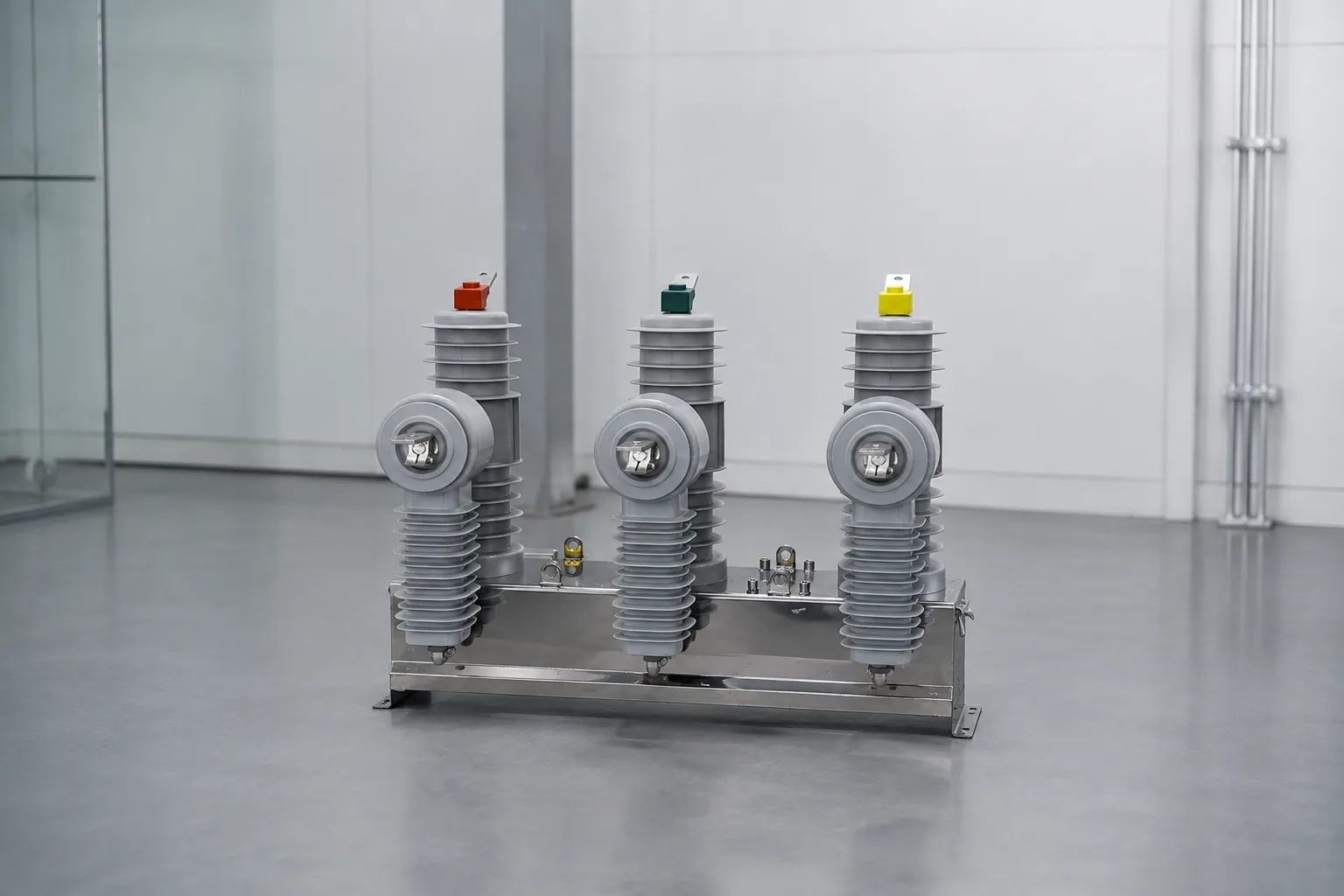
For a retrofit, confirm truck dimensions, primary-contact geometry, secondary connector, earthing position, mechanical keying and protection-panel interface against approved drawings before release. Include submission dates for wiring diagrams, test reports and factory-acceptance documents. Unsupported compliance claims can delay consultant approval, shipment release or site energization, while a clear document matrix turns standards language into auditable contractual deliverables.
How can an indoor 15 kV breaker be selected without overbuying?
- Start with the one-line diagram, fault-level calculation, load type and protection philosophy.
- Confirm the IEC voltage class and declared insulation level for the whole indoor assembly.
- State transformer, motor, cable and frequent-operation duties so they receive application review.
- Compare identical scope: arrangement, interfaces, interlocks, drawings, tests, spares and delivery documents.
- Approve commissioning evidence and future maintenance access before award.
Fuerte can support this process with configurable indoor medium-voltage options and documentation review, provided the buyer supplies the circuit data and approved switchgear interfaces for evaluation.
What are buyers asking about indoor 15 kV VCBs now?
Recent public results frame 15 kV selection around the difference between a voltage class and the complete switchgear arrangement. Before comparing offers, record the maximum system voltage, insulation coordination, fault level, continuous load, altitude, pollution and the indoor cubicle’s clearances. This avoids paying for a larger class while missing a required assembly interface.
For motor or transformer feeders, add the switching duty to the RFQ. Current, cable charging, inrush, restrike risk and the operating sequence can change the required evidence even when the continuous-current figure is unchanged. Ask for the applicable type-test and routine-test records for the offered configuration.
FAQ
What is a 15 kV vacuum circuit breaker?
It is a medium-voltage AC circuit breaker that uses vacuum interrupters to interrupt current on a nominal 15 kV-class system. In IEC projects, the selected equipment may be in the 17.5 kV class, so the declared rated voltage and insulation level must be checked.
Where are 15 kV VCBs commonly installed?
They are commonly installed in indoor metal-clad switchgear for utility substations, industrial distribution boards, motor circuits and transformer feeders. The arrangement may be fixed or withdrawable according to the switchgear design and maintenance strategy.
What breaking current is available for a 15 kV breaker?
Product lines commonly include values such as 20 kA, 25 kA and 31.5 kA, while other ratings may be available. Select from the installation-point fault study and the manufacturer’s declared IEC 62271-100 evidence, rather than choosing from a catalogue range alone.
How does a 15 kV VCB handle motor switching?
Vacuum breakers are widely applied on medium-voltage motors when the application is reviewed correctly. For large or frequently started motors, verify the starting profile, switching frequency, cable arrangement, surge-control approach and relay logic before accepting a standard feeder execution.
What insulation tests are required at 15 kV?
The required tests depend on the declared equipment class and project specification. Buyers should request dielectric evidence tied to IEC 62271-1 and the declared insulation level, with IEC 60060-1 used for the applicable high-voltage test techniques and requirements.
How do I choose a 15 kV indoor VCB?
Begin with the single-line diagram, fault level, load type, insulation coordination and switchgear arrangement, then compare offers against identical scope and IEC evidence. The sound commercial choice is the unit whose documented duty and interfaces match the circuit, rather than the lowest apparent price.
Is every 15 kV vacuum breaker interchangeable in an indoor panel?
No. Interchangeability depends on primary disconnect geometry, phase spacing, racking, shutters, interlocks, secondary connections, control supply and the tested switchgear assembly. Confirm the panel drawings and the manufacturer’s replacement statement before ordering.
Summary
The right 15 kV indoor VCB is defined by the insulation basis, fault duty, switching application and cubicle interface together. A like-for-like review of drawings, type-test scope and routine records is more reliable than selecting from voltage and current alone.
References
- IEC 62271-1, High-voltage switchgear and controlgear—Part 1: Common specifications
- IEC 62271-100, High-voltage switchgear and controlgear—Part 100: AC circuit-breakers
- IEC 60060-1, High-voltage test techniques—Part 1: General definitions and test requirements
- IEC 62271-200:2021, metal-enclosed switchgear