
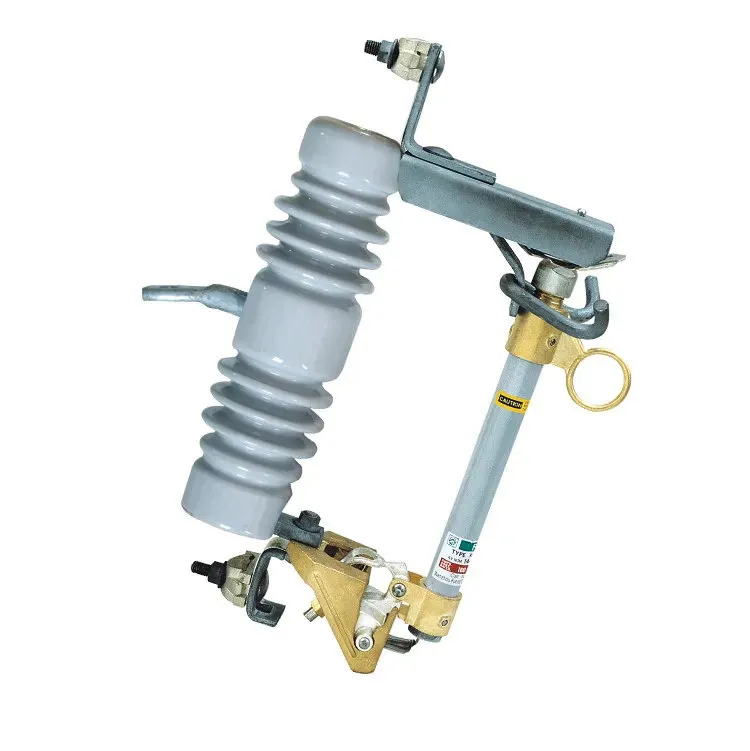
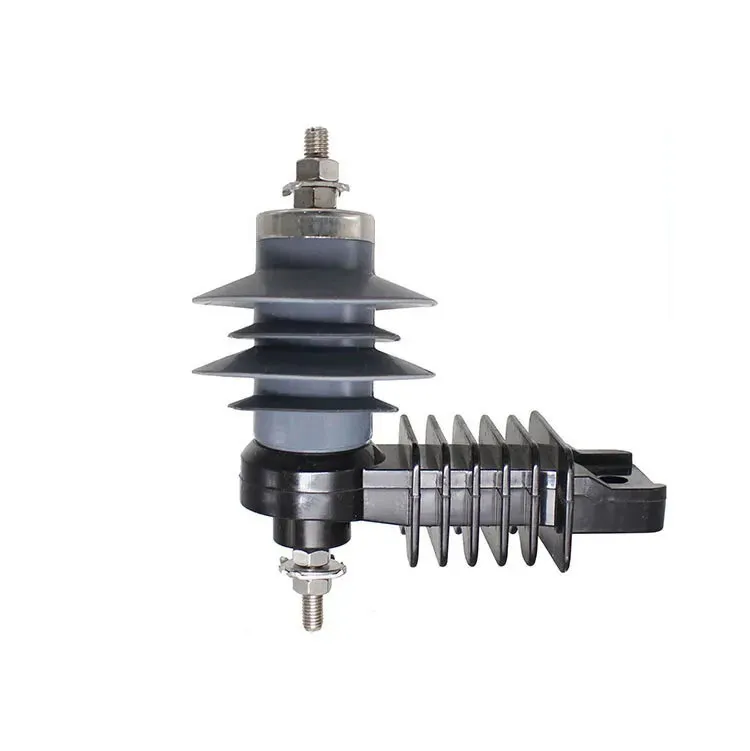
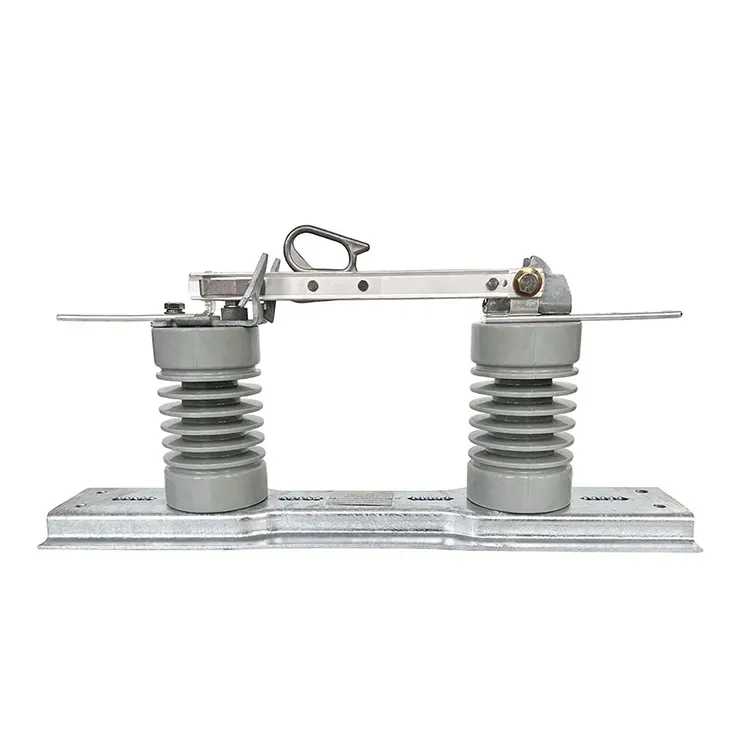
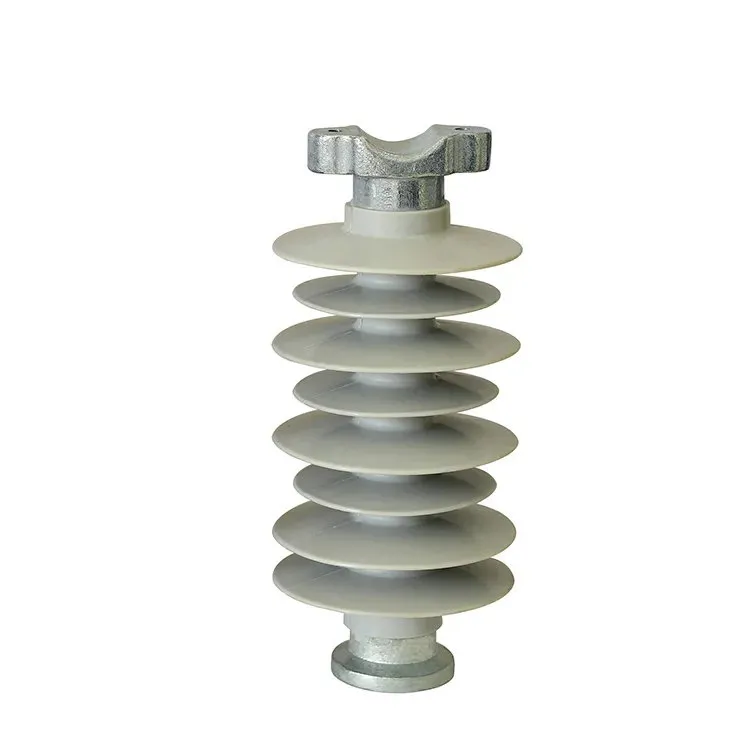
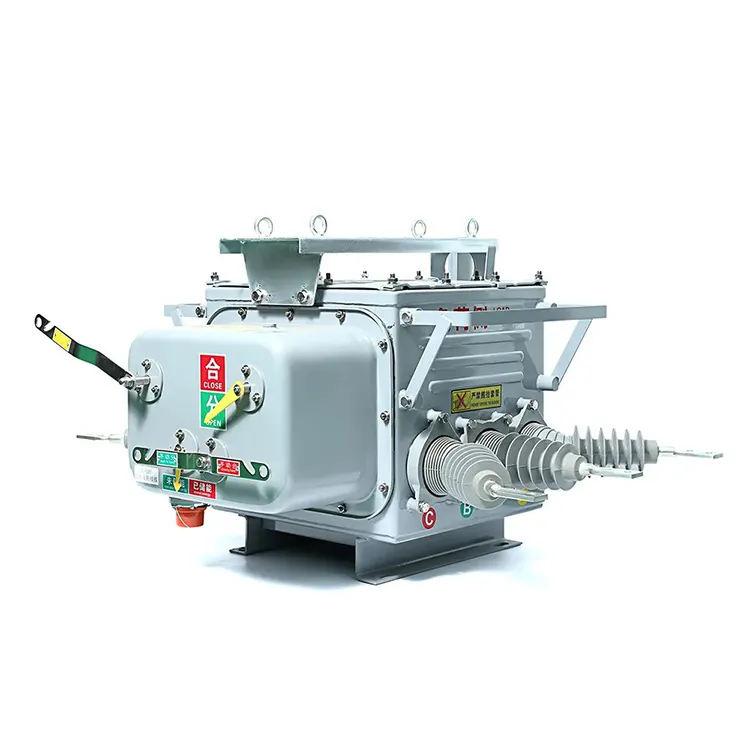
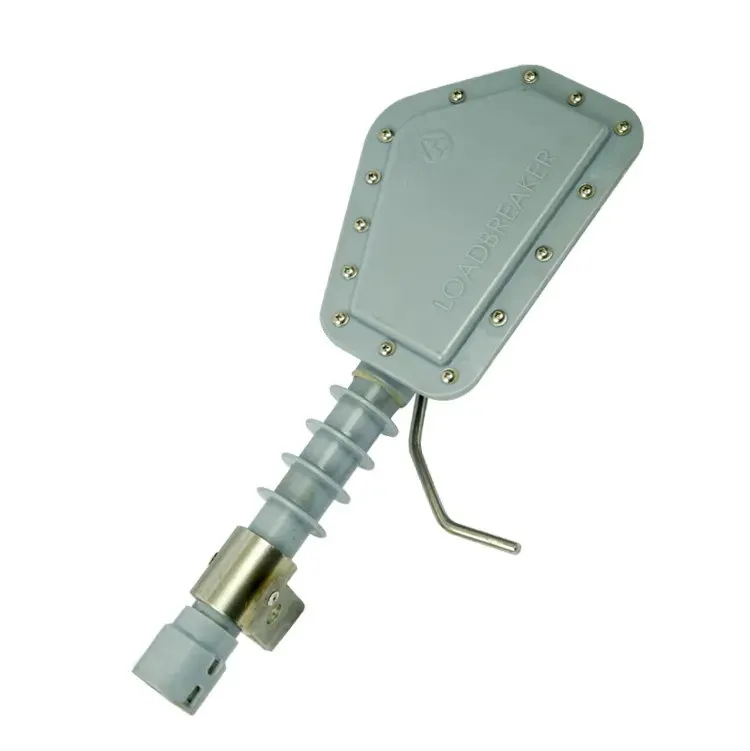


A search for a vacuum circuit breaker can return a sealed interrupter, a complete breaker or an entire switchgear panel. All three may appear under similar wording, although they represent different purchases. Other terms describe the insulation material, installation environment or a particular manufacturer’s product family. Understanding those distinctions makes a specification easier to read and helps buyers ask for the right equipment. The first question is what the term names: the part that interrupts current, the complete switching device, or the assembly around it.
Vacuum circuit breakers interrupt current inside sealed vacuum interrupters. The complete breaker also has an operating mechanism, insulation and control arrangements. A switchgear assembly contains more than the breaker. Words such as indoor, outdoor and porcelain-clad describe other aspects of the design, so they cannot replace the electrical ratings. IEC 62271-100 covers AC circuit-breakers within its stated scope above 1,000 V. For purchasing or installation, translate the search term into an exact equipment description, model and drawing rather than relying on a short catalogue name.
What does the vacuum do inside a circuit breaker?
VCB stands for vacuum circuit breaker. When its contacts separate, current interruption takes place inside the sealed vacuum interrupter. The gap then recovers its insulating strength under the specified operating duty. The mechanism supplies the movement, while the control circuit operates it.
The Tavrida explanation of VCB operation describes the interrupter and the different actuator mechanisms. A protection relay or other specified protection arrangement detects the abnormal condition and sends the trip command. The related article on how a vacuum circuit breaker interrupts an arc follows that interruption process in more detail.
How are a vacuum interrupter, a breaker and switchgear different?
A vacuum interrupter, sometimes called a vacuum bottle, is the sealed component where interruption occurs. It needs the rest of the device to operate it. Buying an interrupter therefore differs from buying a complete breaker, just as buying a breaker differs from buying a fitted switchgear panel.
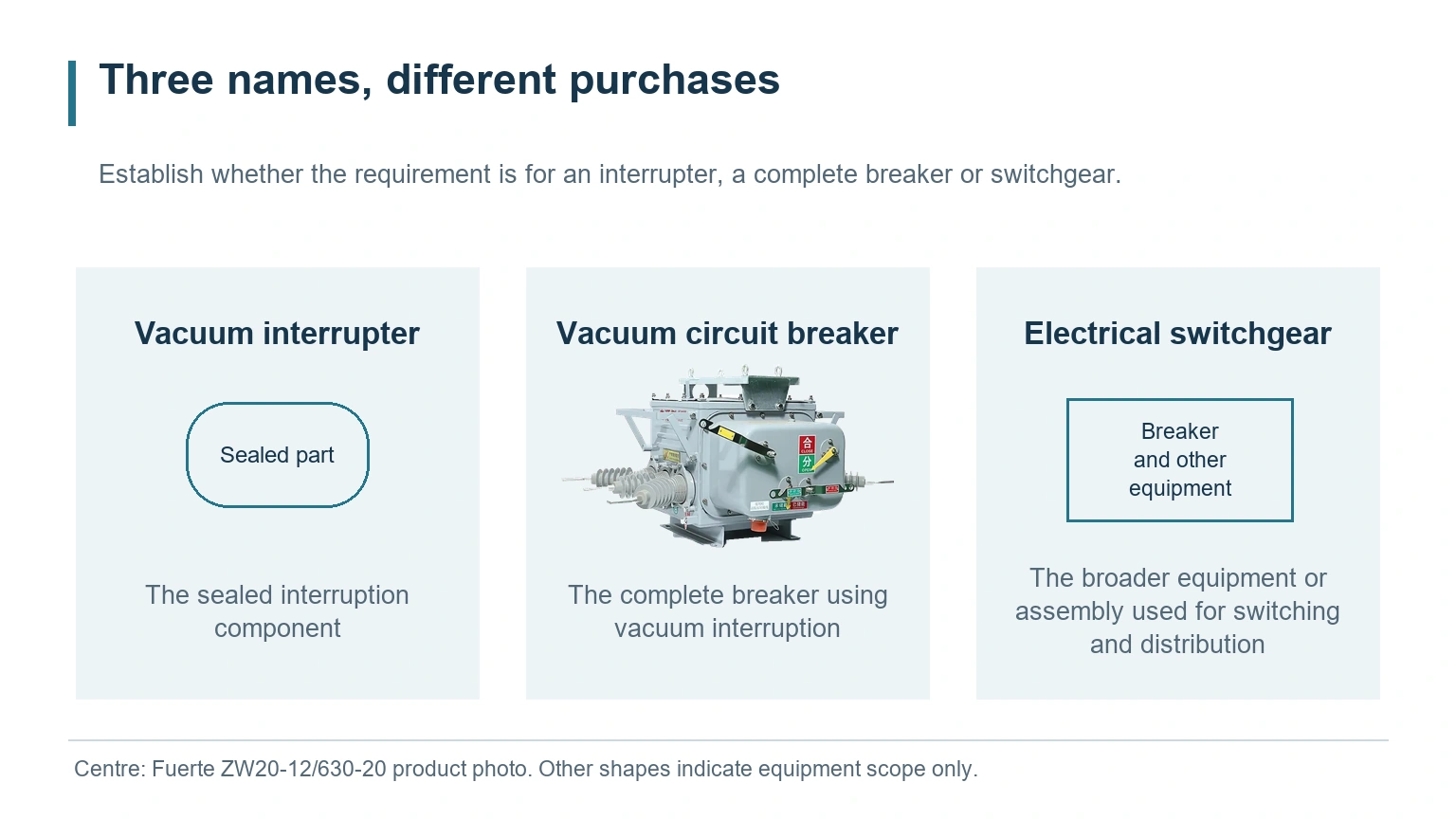
| Term | What it refers to | What the buyer needs to establish |
|---|---|---|
| Vacuum interrupter or bottle | The sealed interruption component | The exact replacement identity and approved use |
| Vacuum circuit breaker | The complete breaker using vacuum interruption | Ratings, mechanism, controls and installation interfaces |
| Vacuum contactor | A switching device with its own operating duties | Application limits and the protection required with it |
| Electrical switchgear | The broader equipment or assembly used for switching and distribution | Which primary equipment, controls and panel parts are included |
| High rupturing capacity | A term commonly associated with fuse breaking capability | The fuse type, rating and protection coordination |
A vacuum contactor also uses vacuum switching, but its intended duty and protection arrangement need to be considered separately. The comparison of vacuum interrupters and vacuum contactors explains why these names should not be used interchangeably.
What do indoor, outdoor and porcelain-clad describe?
Indoor and outdoor describe the intended installation environment. They affect the construction, external insulation and service conditions the equipment must suit. An indoor unit placed in an enclosure still needs to be assessed for the conditions it will face outdoors.
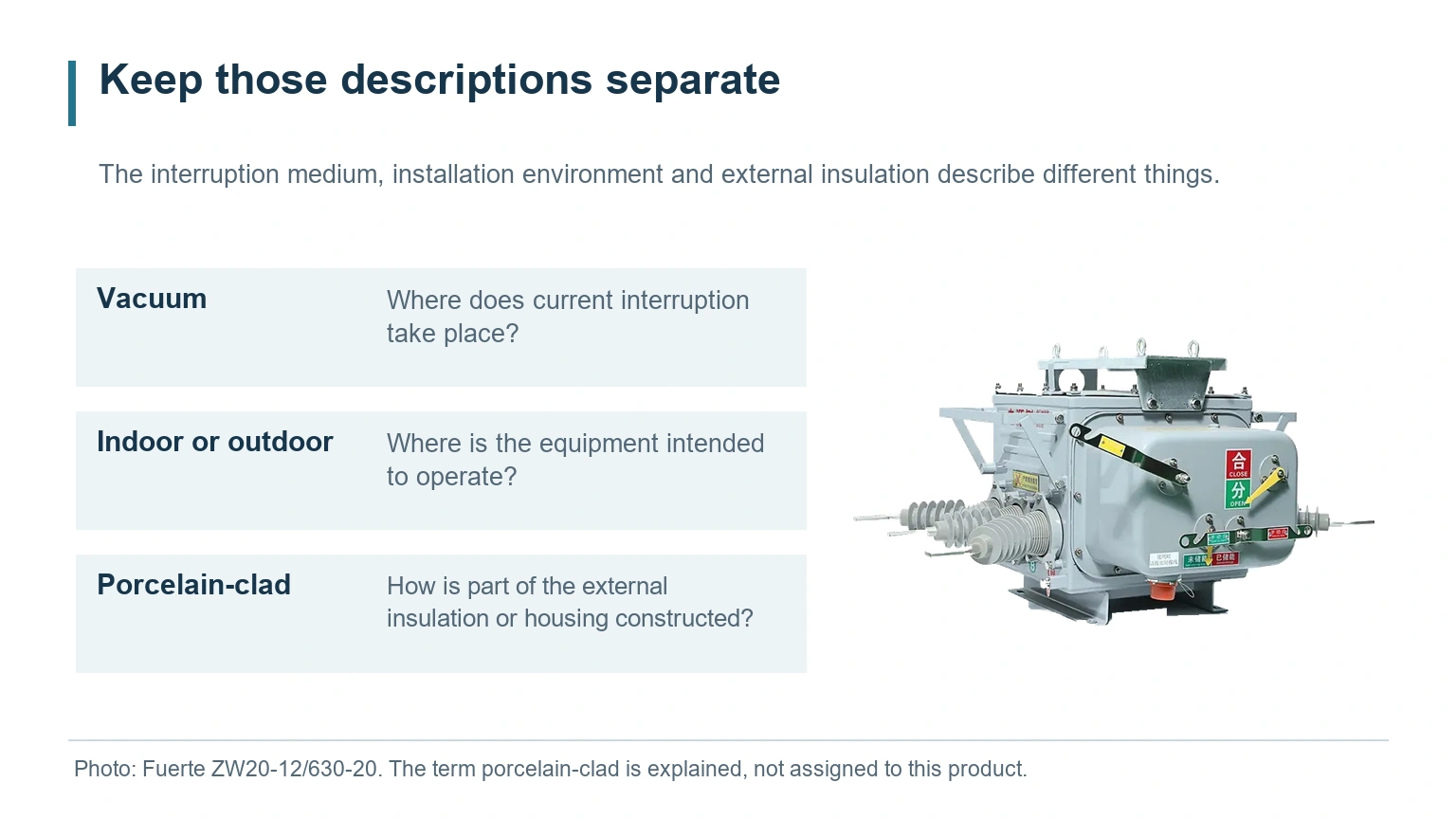
Porcelain-clad construction describes an external housing or insulation feature. Porcelain is not the medium in which the vacuum breaker interrupts current. Keeping those descriptions separate makes a product name easier to interpret.
| Description | The question it answers | What it leaves open |
|---|---|---|
| Vacuum | Where does current interruption take place? | The external insulation, enclosure and controls |
| Indoor or outdoor | Where is the equipment intended to operate? | Its electrical ratings and exact service limits |
| Porcelain-clad | How is part of the external insulation or housing constructed? | The interruption duty and complete installation arrangement |
| A product-family name, such as SION | Which supplier’s product range is being discussed? | The particular model, variant and included options |
The insulation surrounding a vacuum interrupter may also require its own description. Fuerte’s ZW20-12/630-20 product data, for example, has a combined media entry reading “SF6, Vacuum”. The enquiry should clarify the interruption medium and enclosure insulation separately. This avoids assuming that the word vacuum describes everything inside the equipment.
What do other common VCB search phrases mean?
“Electrical switch gear” generally refers to switchgear. The wording may be informal, but the equipment scope still needs to be stated. A quotation should make clear whether it covers the breaker alone or the complete panel with its other components.
“Vacuum circuit breaker adalah” is a definition query using the Indonesian word for “is”. It refers to the same type of equipment. “China vacuum circuit breaker” adds a sourcing location, rather than identifying a separate technology or performance class.
“Vacuum cleaner circuit breaker” usually concerns a household appliance that trips a building protective device. It belongs to appliance troubleshooting, not medium-voltage breaker selection. An industrial product catalogue will not diagnose that fault.
Can an animation or a wiring diagram explain the exact product?
An animation is useful for seeing the operating principle. Its simplified parts and movements should not be used as dimensions or timing information for an actual breaker.
A wiring diagram needs a closer reading. A principle diagram explains functions, while an approved connection drawing identifies the actual terminals and circuits. Trip and close coil voltages, auxiliary contacts, interlocks and anti-pumping arrangements must match the supplied unit. Use the drawing number and revision to establish which document applies, especially if controls have been changed.
What does the term VCB leave out of a selection decision?
It identifies the interruption technology, but leaves the ratings and application to be specified. Normal current, breaking current, making current, insulation level and operating sequence still need to suit the circuit. Switching duty also matters: a generator connection, capacitor bank and ordinary feeder are different applications.
ABB’s primary breaker portfolio separates several of those duties. IEC 62271-100:2021+AMD1:2024 provides the AC circuit-breaker performance framework within its scope. Neither the technology name nor a general statement about vacuum switching settles which model is suitable.
Questions about VCB disadvantages are best tied to the circuit as well. Consider switching transients, mechanism and control support, interrupter integrity and panel compatibility. That produces a more useful comparison than treating all vacuum breakers as one identical product.
Frequently asked questions
What is the purpose of a vacuum circuit breaker?
It switches normal current and interrupts faults within its ratings. In a protection scheme, it opens in response to the relevant trip command.
What are the advantages and disadvantages of a vacuum circuit breaker?
Vacuum provides a compact interruption method used widely in medium-voltage distribution. The application still needs assessment for switching duty, external insulation, controls, maintenance and support.
What are common VCB problems?
Possible problems include a faulty control supply or coil, mechanism wear, heating at connections, deteriorated insulation and loss of interrupter integrity. The symptom helps determine which tests are needed.
What are the key differences between indoor and outdoor circuit breakers?
The construction and service conditions are chosen for different environments. Check the declared installation conditions, insulation and enclosure arrangement for the exact model.
What does VCB stand for?
In medium-voltage electrical equipment, VCB stands for vacuum circuit breaker.
What is a VCB (vacuum circuit breaker)?
It is a complete circuit breaker that uses sealed vacuum interrupters. The interrupter is one component of that device, alongside its mechanism, insulation and controls.
References
- IEC 62271-100:2021+AMD1:2024 — Alternating-current circuit-breakers.
- ABB — Primary Vacuum Circuit Breakers, applications and product families; reviewed 16 October 2026.
- Tavrida Electric — Vacuum Circuit Breaker: Fundamentals, interrupter and actuator terminology; reviewed 16 October 2026.
Summary
A clear VCB description identifies both the equipment and the job it must do. Establish whether the requirement is for an interrupter, a complete breaker or switchgear. Then describe the ratings, installation environment, external insulation and controls. Product-family names and translated search phrases can help locate information, but the exact model and current drawings are what connect that information to a purchase or installation. Use animations to understand the principle and the supplied documents to understand the unit. Fuerte’s product information can support a specific enquiry once these details are known, giving the buyer and supplier a common description of what is required.