
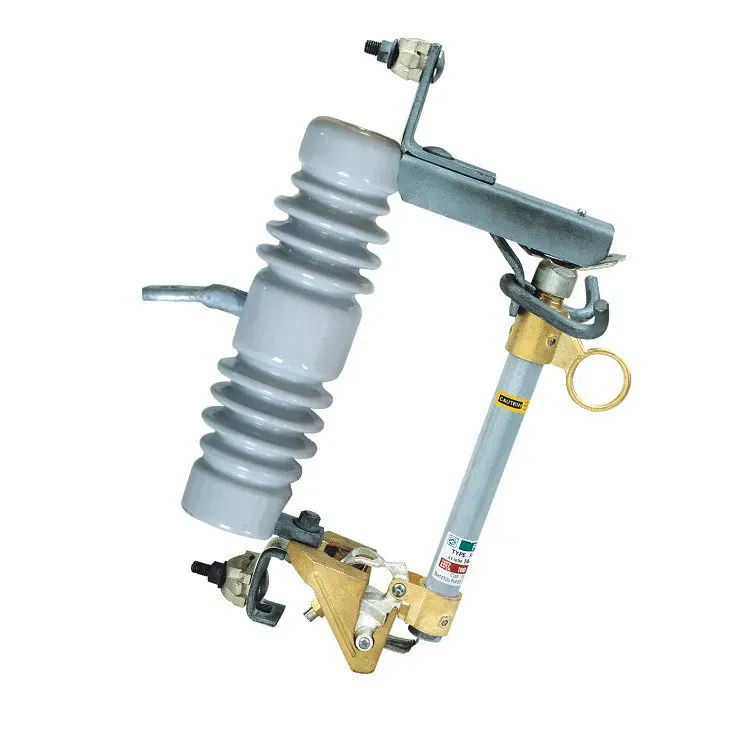
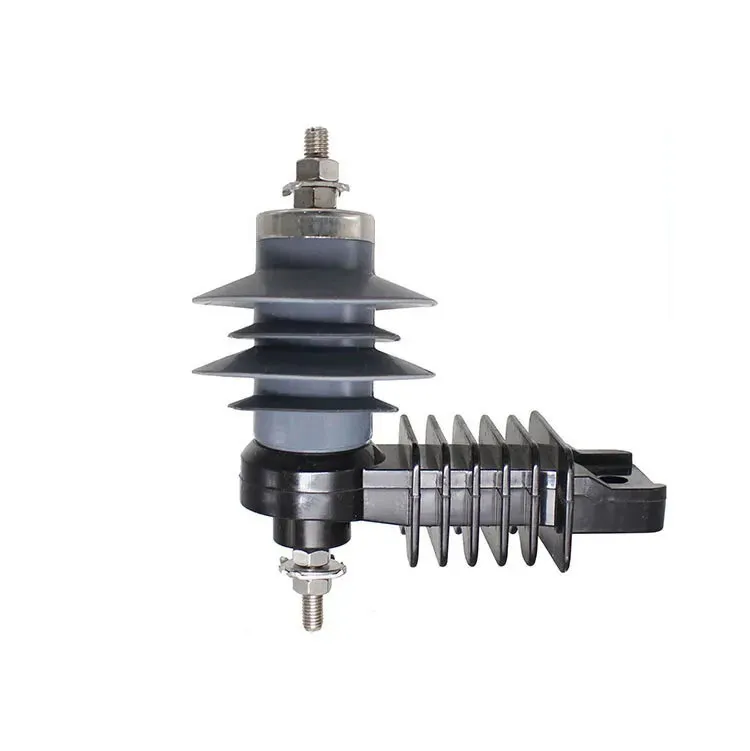
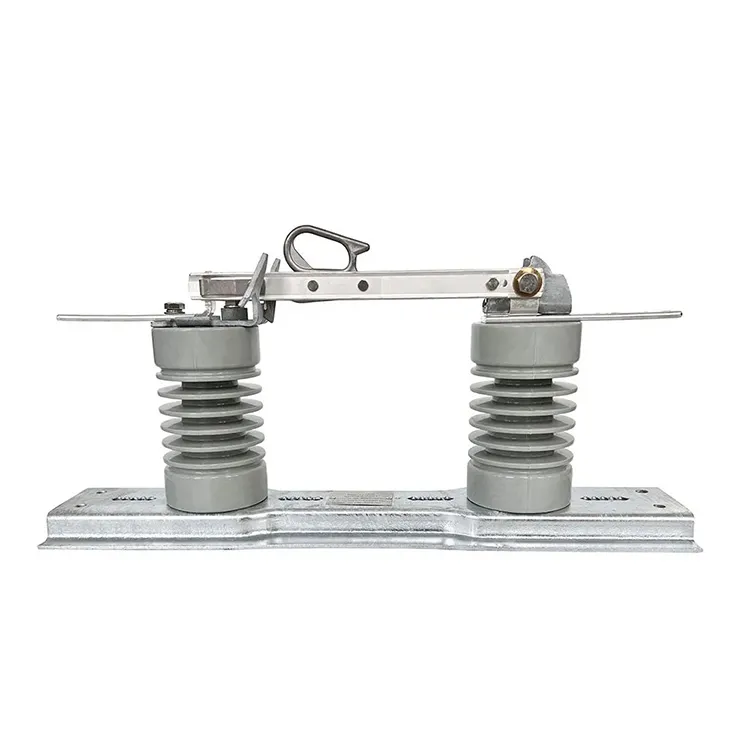
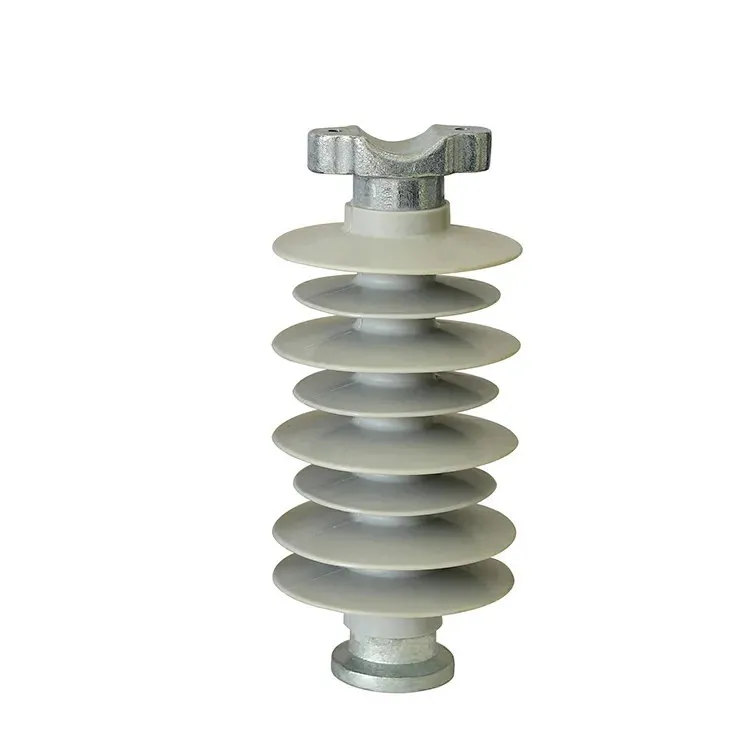
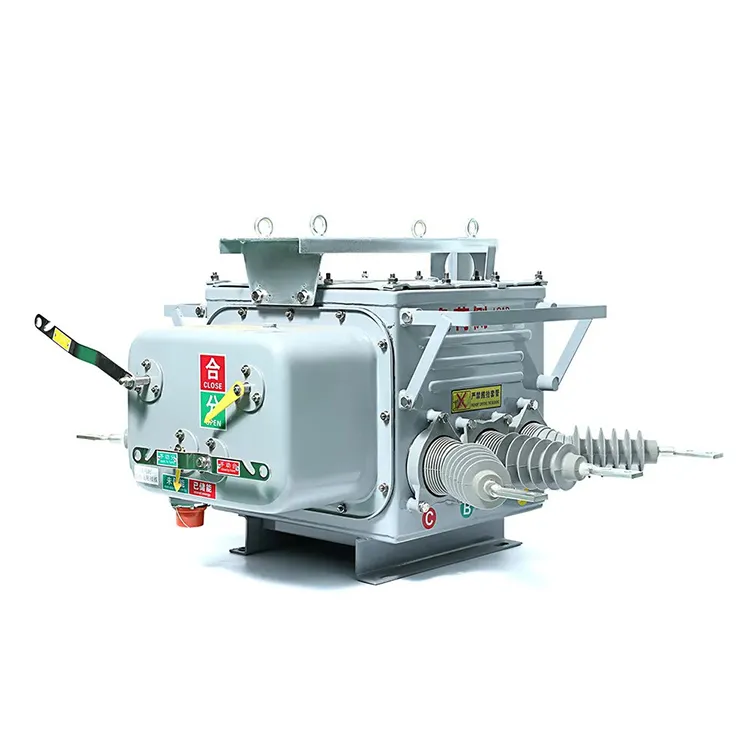
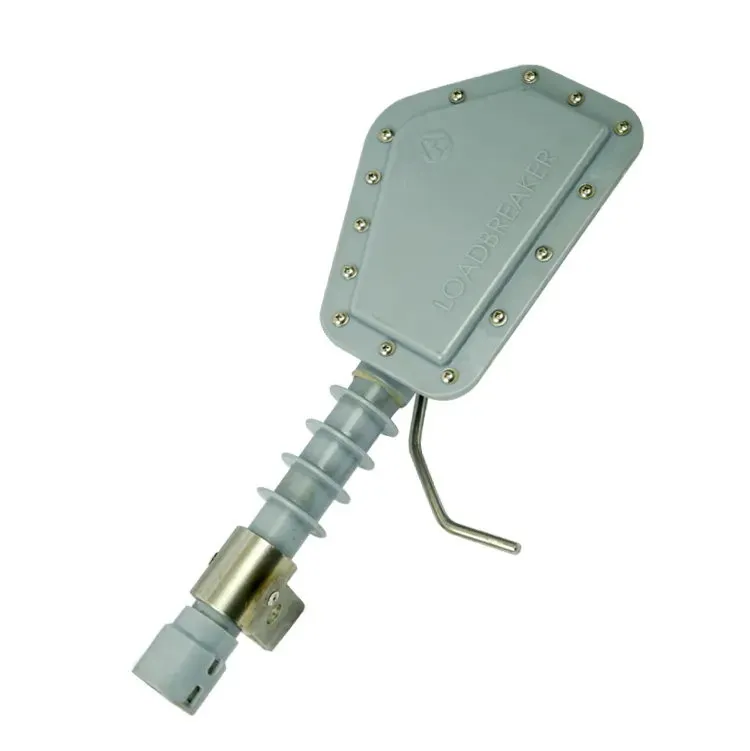


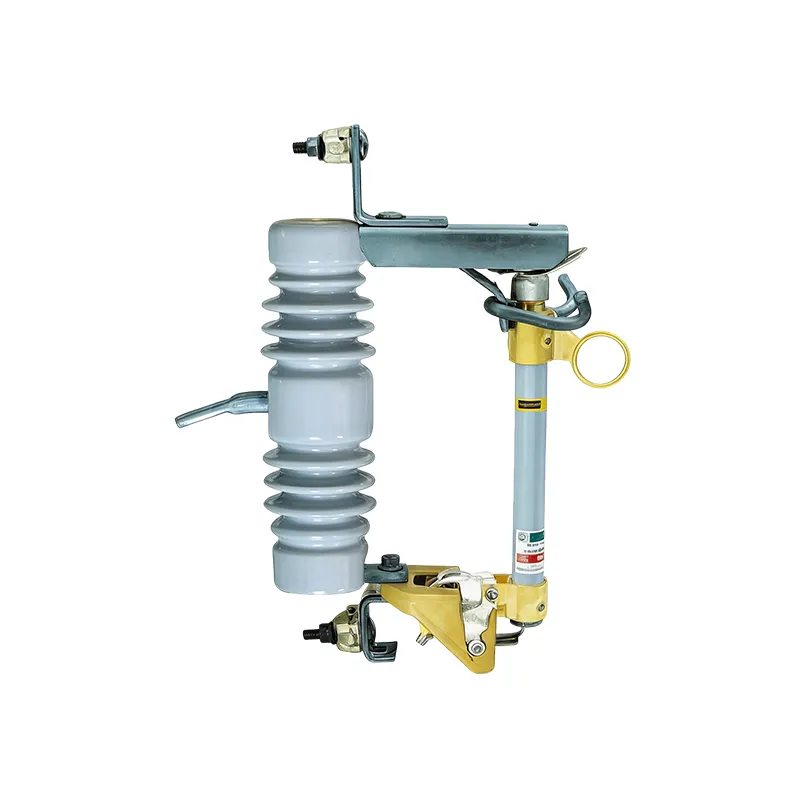
Porcelain fuse cutout and polymer fuse cutout designs share the same expulsion cutout role on overhead medium-voltage lines: they carry load, melt a fuse link on overload or fault, and drop open to give a visible isolation point. The procurement fork is the insulator housing—porcelain versus silicone rubber polymer—which changes pollution behavior, pole handling, inspection access, and the evidence buyers should request before RFQ.
Neither material should be chosen from habit alone. Document the site environment, crew access constraints, mechanical risk, continuous and interrupting duty, and the fuse link coordination package first; then compare verified product pages for the exact SKU.
Part 1. What changes when the insulator is porcelain or polymer?
On an overhead line, the cutout insulator supports the live parts, sheds pollution, and survives mechanical loads from wind, ice, and handling. Porcelain uses a ceramic insulator body; polymer fuse cutouts use a silicone rubber housing over a fibreglass or composite core, following the same functional split described for distribution insulators in NEMA polymeric high-voltage insulator scope.
The cutout mechanism—fuse tube, contacts, hinge, and mounting bracket—remains an expulsion fuse cutout regardless of housing. For operating sequence and visible drop-out behavior, see the cluster article on how a fuse cutout works. The fuse cutout product line groups FUERTE porcelain FSC and polymer HFSC families without implying that every SKU shares identical ratings.
| Comparison facet | Porcelain fuse cutout | Polymer fuse cutout |
|---|---|---|
| Insulator body | Ceramic porcelain | Silicone rubber over structural core |
| Typical buyer concern | Brittleness, weight, pollution glazing | Hydrophobic behavior, housing damage, UV exposure |
| Ratings location | Family tables on FSC product pages | Family tables on HFSC product pages |
| What stays the same | Expulsion fuse link coordination and cutout duty class | Same |
Important: Insulator material does not replace cutout duty selection. Continuous current, interrupting rating, and fuse link coordination still follow the system study—see the sibling fuse cutout ratings and selection guide for label reading, not repeated here. Source context: IEC 60282-2 equipment scope.
Part 2. How do pollution and environment affect each material?
Coastal dust, industrial fallout, and long dry seasons change how an insulator sheds contamination. Polymer housings are often evaluated for hydrophobic recovery after wetting cycles, a topic widely discussed in distribution insulator literature such as the IEEE polymer insulator overview. Porcelain relies on profile shape, surface condition, and maintenance to manage leakage under pollution.
Neither material delivers a guaranteed outcome without site data. A polymer fuse cutout in a vandalism-prone urban corridor may face mechanical damage that porcelain might resist differently; porcelain in a seismic or transport-heavy supply chain may see chip risk before installation. Record the environment class, washing capability, and outage access when you write the material preference.
| Environment signal | Question for porcelain | Question for polymer |
|---|---|---|
| Heavy pollution without frequent washing | Is the leakage distance on the offered SKU adequate for the documented class? | Is hydrophobic recovery expected for the offered housing formulation? |
| Salt or chemical exposure | Are glaze chips or cemented pollution visible in similar fleets? | Is housing tracking or erosion observed in comparable installations? |
| UV and heat | Is mechanical integrity verified after storage and transport? | Are UV-stabilized housing grades documented for the offered SKU? |
From the field: procurement threads on polymer versus porcelain insulators repeatedly ask whether “lighter composite” is worth it when crews already stock porcelain spares—use that language to prompt a documented spares and training plan, not as proof of superiority. Source: Utility Products overhead distribution overview.
Part 3. What do weight and crew access mean on the pole?
On equivalent profiles, silicone rubber housings usually weigh less than porcelain posts, which can reduce helicopter or manual handling effort on difficult poles. Weight savings must be traded against bracket compatibility, moment loading, and the crew procedure for fuse replacement—not against interrupting duty, which remains defined by the cutout and fuse link pair.
Ask the installer how the cutout will be lifted, rotated, and bonded during fuse changes. A lighter polymer unit still requires correct bracket torque, arcing rod options, and clearance to energized parts. Porcelain units may need stronger lifting plans but can match existing utility stocking patterns where porcelain cutouts dominate the fleet.
Crew-access checklist
- Confirm bracket type (NEMA A/B or extended) against the pole hardware already approved on site.
- Verify whether live-line tools or bucket access dictate a housing material preference.
- Record spare insulator or housing availability for the selected material class.
- Align the plan with outage duration targets for fuse replacement.
Part 4. Where do maintenance and inspection paths diverge?
Published FUERTE porcelain family pages state mechanical life above 3,000 opening/closing operations for the FSC series context; treat that as manufacturer-published context for the offered design, not a universal maintenance interval for every export site. Polymer fuse cutouts shift inspection emphasis toward housing tracking, seal integrity, and hardware corrosion under the silicone rubber shell.
Maintenance should follow the OEM manual for the specific SKU, including fuse tube inspection, contact wear, hinge lubrication where specified, and insulator cleaning rules. Polymer units may reduce certain washing tasks in some environments yet still require close visual inspection after mechanical impacts. Porcelain units may need glaze and chip inspections after transport or pole strikes.
| Inspection topic | Porcelain fuse cutout emphasis | Polymer fuse cutout emphasis |
|---|---|---|
| Surface condition | Chips, cracks, cemented pollution | Tracking marks, housing tears, seal paths |
| Hardware | Corrosion on galvanized brackets | Corrosion at metal-to-rubber interfaces |
| Operational wear | Contact wear, fuse tube condition | Same functional parts; housing flexibility |
| Record keeping | Photo log after severe weather | Photo log after impact or vandalism events |
Tip: Schedule the first detailed inspection interval with the OEM document for the procured SKU rather than copying another utility’s calendar. Source context: OSHA 1910.269 overhead line work scope.
Part 5. Which documents should travel with the material decision?
Material choice should arrive with the same engineering file as cutout duty. At minimum, cross-check continuous current, interrupting rating, BIL, leakage distance, and mounting dimensions on the offered datasheet, not on a generic brochure row. The sibling fuse cutout ratings and selection guide explains how to read those labels; this article adds the insulator-material layer only.
Fuse link coordination stays independent of housing material. Use the expulsion fuse link selection guide to align link type, amp rating, and speed with the cutout family. IEEE C37.41 distribution cutout scope helps structure the standards section of an RFQ without implying automatic compliance.
Documents to request
- Dimensioned outline drawing with bracket type and leakage distance for the offered SKU.
- Published rating table row for voltage class, continuous current, and interrupting duty.
- Insulator material specification (porcelain grade or silicone rubber housing data).
- Mechanical life or operation count statement if provided for the offered design.
- Routine and type test summaries applicable to the procured model.
- Spare parts list: fuse tube, arcing rod, hardware, and recommended fuse links.
Part 6. When is porcelain or polymer the better fit?
Use relative fit language tied to documented inputs—not absolute rankings.
| Scenario signal | Porcelain may be more suitable when | Polymer may be more suitable when |
|---|---|---|
| Fleet standardization | Existing spares, training, and inspection forms are porcelain-based | The owner accepts polymer stocking and inspection updates |
| Environment | Pollution is moderate and washing/outage access is reliable | Documented pollution and limited washing favor hydrophobic housing evaluation |
| Handling | Crews and brackets already optimized for porcelain cutouts | Weight or access constraints favor lighter housings |
| Mechanical risk | Impact risk is low and transport is controlled | Impact or vandalism risk is low and housing inspection is planned |
Fit Boundary: A buyer without environment data, fuse link coordination, or approved continuous/interrupting duty should complete those inputs before locking insulator material. Material preference alone does not create a valid procurement specification.
Part 7. What belongs in a porcelain-vs-polymer RFQ?
Structure the RFQ so suppliers quote the same duty class and document set regardless of material.
RFQ input list
| Buyer should provide | Why it matters | Example | Common mistake |
|---|---|---|---|
| Application and voltage class | Sets duty and insulation level | Transformer bay on 15 kV class overhead line | Copying a voltage label without system class |
| Continuous and interrupting duty | Matches cutout and fuse link | 100 A continuous, 10 kA interrupt on family table row | Ignoring fuse link limiting capability |
| Environment/pollution notes | Drives insulator material trade-off | Coastal salt, industrial dust | Choosing polymer without inspection plan |
| Insulator material preference | Narrows FSC vs HFSC families | Porcelain for fleet compatibility | Material choice without bracket confirmation |
| Fuse link type and size | Coordinates protection | Expulsion link per coordination study | Specifying cutout only |
| Mounting bracket type | Affects interchangeability | NEMA A bracket | Omitting bracket in drawing |
| Applicable standards | Structures test requests | IEC 60282-2 named in contract | Naming standard without test package |
| Required test documents | Enables comparison | Routine test report for offered SKU | Accepting brochure table as sole evidence |
Part 8. When is a FUERTE fuse cutout enquiry relevant?
A FUERTE enquiry fits when the buyer can share the duty file from Parts 5–7 and wants to compare verified product families. The published FSC porcelain fuse cutout family covers standard and loadbreak porcelain options with family-table ratings for 10–15 kV and higher classes. The HFSC polymer fuse cutout family covers standard, linkbreak, and loadbreak polymer options with distinct suffix conventions on the product page.
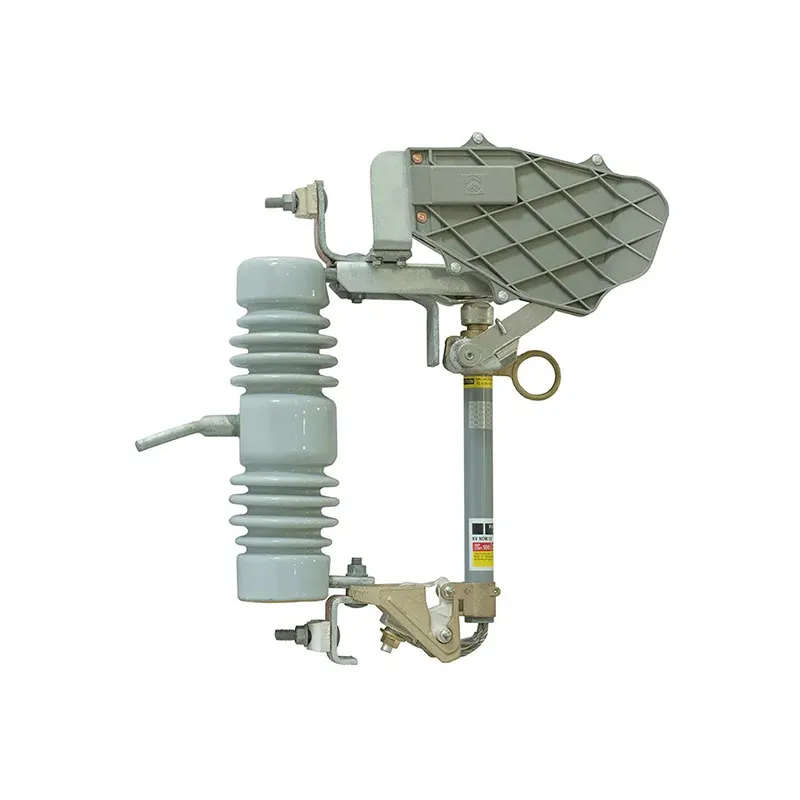
Fit Boundary: FUERTE product pages do not certify suitability for every network, pollution class, or protection scheme. Confirm the exact SKU, options (arcing rod, disconnect blade, bracket), test documents, and delivery specification in writing before purchase.
Next step: share the RFQ inputs through contact FUERTE engineering support so the quotation matches the documented material choice and cutout duty.
FAQ
What is the main difference between porcelain and polymer fuse cutouts?
Both are expulsion cutouts that protect overhead MV assets with a replaceable fuse link. Porcelain units use a ceramic insulator; polymer units use a silicone rubber housing. The functional cutout parts are similar, but pollution behavior, weight, and inspection emphasis differ.
Which material performs better in polluted overhead environments?
Performance depends on site pollution, washing access, and the offered insulator design. Silicone rubber housings are often evaluated for hydrophobic recovery; porcelain depends on profile, surface condition, and maintenance. Request the offered leakage distance and pollution-related test references for the SKU.
Are polymer fuse cutouts lighter than porcelain units?
Lighter housings on many profiles can simplify handling on difficult poles. Confirm bracket compatibility, loading, and crew procedures before selecting material for weight reasons alone.
Does insulator material change fuse cutout maintenance?
The core fuse tube, contacts, and hinge still wear with operations. Polymer inspections emphasize housing tracking and seals; porcelain inspections emphasize chips and glaze condition. Follow the OEM manual for the procured SKU.
Can both materials use the same expulsion fuse links?
Fuse link coordination depends on cutout family, amp rating, speed, and interrupting capability—not housing material alone. Align link selection with the coordination study and the cutout manufacturer fuse link guidance.
What evidence should buyers request before choosing a material?
Request outline drawings, rating table rows for the SKU, insulator material data, applicable test reports, and spare parts lists. Cross-check continuous and interrupting duty against the system study.
When is porcelain still a reasonable choice?
Porcelain remains reasonable when fleet spares, crew training, and inspection procedures already support porcelain cutouts and the environment is documented. Material inertia can be valid when change costs exceed the benefit.
Does the insulator change continuous or interrupting duty?
No. Duty ratings come from the cutout design and coordinated fuse link. Insulator material changes environmental and maintenance trade-offs, not the amp or kA labels on the cutout nameplate.
References
- Fuse-switch/disconnector equipment scope: IEC 60282-2
- Distribution cutout and fuse-switch standard scope: IEEE C37.41
- Polymeric insulator standard context: NEMA polymeric high-voltage insulators
- Electrical insulator fundamentals: Wikipedia insulator overview
- Overhead distribution systems context: Utility Products overhead distribution overview
- Overhead line work safety scope: OSHA 1910.269