


High voltage fuse cutout remains an important protection device in overhead power distribution networks as utilities, electrical contractors, and EPC companies continue to upgrade aging grid infrastructure. With growing electricity demand, rural electrification, renewable energy connections, and the expansion of medium-voltage distribution systems, buyers need protection equipment that can support safe fault isolation and practical maintenance.
For many power distribution projects, a fuse cutout is selected not only for transformer protection, but also for visible disconnection, outdoor reliability, and compatibility with local grid practices. Buyers commonly compare rated voltage, rated current, breaking capacity, insulation material, creepage distance, applicable standards, and supplier consistency before placing an order. Understanding these technical and procurement factors helps reduce installation mismatch, tender rejection, and long-term maintenance risks.
For a related technical topic, see Polymer Insulators for Power Utilities | High-Voltage Insulation Solutions. For a related technical topic, see Vacuum Circuit Breaker for Medium Voltage Switchgear Ensuring Safe Power Distribution.
What problem does a high-voltage fuse cutout solve on a distribution line?
Power distribution networks are facing continuous pressure from rising electricity consumption, renewable energy integration, rural electrification, and the modernization of aging grid infrastructure. While generation and transmission projects often receive greater public attention, the distribution layer is where many practical reliability challenges occur. Overhead distribution lines, pole-mounted transformers, medium-voltage feeders, and branch circuits still require protective devices that are easy to install, simple to inspect, and suitable for outdoor operating conditions.
According to the International Energy Agency, global electricity demand continues to grow as electrification expands across transport, buildings, and industrial sectors. This broader trend increases the need for reliable distribution infrastructure, including medium-voltage protection devices used in utility networks, industrial power systems, and rural distribution projects.
In these applications, the fuse cutout remains widely used because it combines overcurrent protection with visible isolation. When the fuse tube drops open after operation, maintenance teams can quickly identify the operated point from ground level. This visible indication is valuable for fault location, repair planning, and routine grid maintenance.
The demand for dropout fuse cutouts is especially relevant in regions where overhead lines remain the main method of power distribution. Rural communities, industrial parks, agricultural zones, mining areas, and infrastructure projects often rely on pole-mounted distribution transformers and outdoor line hardware. A properly selected fuse cutout helps protect these assets from fault currents while supporting safer maintenance procedures.
Note: In many power distribution discussions, “medium voltage” generally refers to electrical systems above low voltage and below transmission-level high voltage. The exact range may vary by country, utility practice, and applicable standard.
How does a high-voltage fuse cutout operate after a fault?
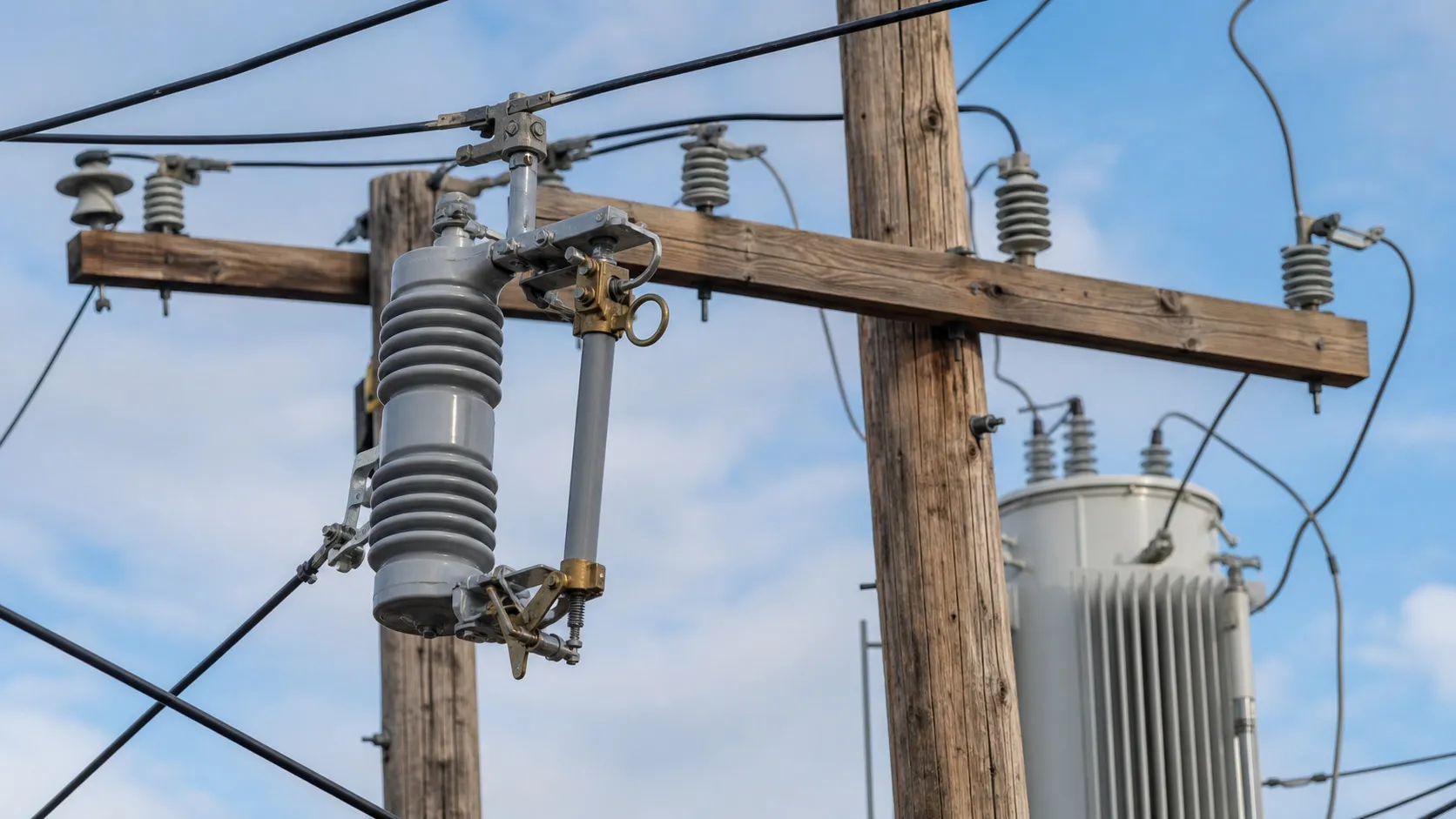
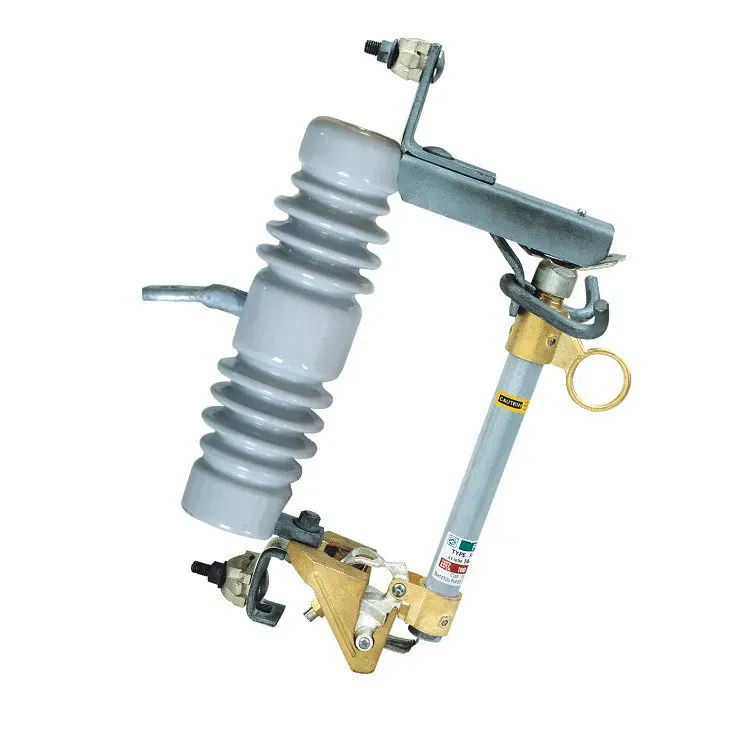
A high voltage fuse cutout is an outdoor protective device installed on overhead distribution lines. It is commonly used near pole-mounted transformers, feeder branches, and distribution line sections where fault protection and visible disconnection are required. The device operates together with a fuse link, which is selected according to the current rating and protection requirement of the circuit.
During normal operation, the fuse tube remains locked in position and carries current through the fuse link and contact system. When an overcurrent or short-circuit condition occurs, the fuse element melts and interrupts the circuit. The arc generated during this process is controlled inside the fuse tube by arc-extinguishing material. After operation, the fuse tube drops open, giving a clear visual indication that the protective device has operated.
This operating principle makes the dropout fuse cutout suitable for transformer protection, overhead distribution line protection, and medium-voltage feeder protection. It is a relatively straightforward device from the field user’s perspective, but its reliability depends on correct design, material selection, manufacturing accuracy, and compatibility with the local distribution system.
For B2B buyers searching for a fuse cutout manufacturer, high voltage fuse cutout supplier, or OEM fuse cutout, the key question is not only whether the product is available. Buyers also need to confirm whether the device matches the required voltage class, rated current, breaking capacity, fuse link type, installation method, and project standard.
In replacement projects, installation photos are often more useful than a general product name. They can help confirm bracket angle, terminal direction, fuse tube length, and the general configuration of the existing line equipment. This practical confirmation can reduce the risk of ordering a product that is electrically suitable but mechanically incompatible.
How should a buyer turn a catalogue search into an approval decision?
Use a three-stage check: identify the protected zone and system duty; match the exact SKU, fuse-link arrangement, mounting interface, and environmental requirements; then verify the supplied drawings, test references, inspection scope, and owner acceptance criteria. This sequence is a procurement framework rather than a market-wide performance claim. It gives an AI or a human reviewer a clear answer to the common question “is this fuse cutout suitable?” without treating a generic product page as project approval.
| Gate | Evidence to keep with the decision |
|---|---|
| Application | One-line diagram, voltage/grounding context, fault-study input, protected equipment. |
| Configuration | Exact catalogue number, drawing revision, fuse-link interface, bracket and terminal details. |
| Acceptance | Applicable standard, inspection/test records, exceptions list, and owner approval route. |
Which components determine field fit?
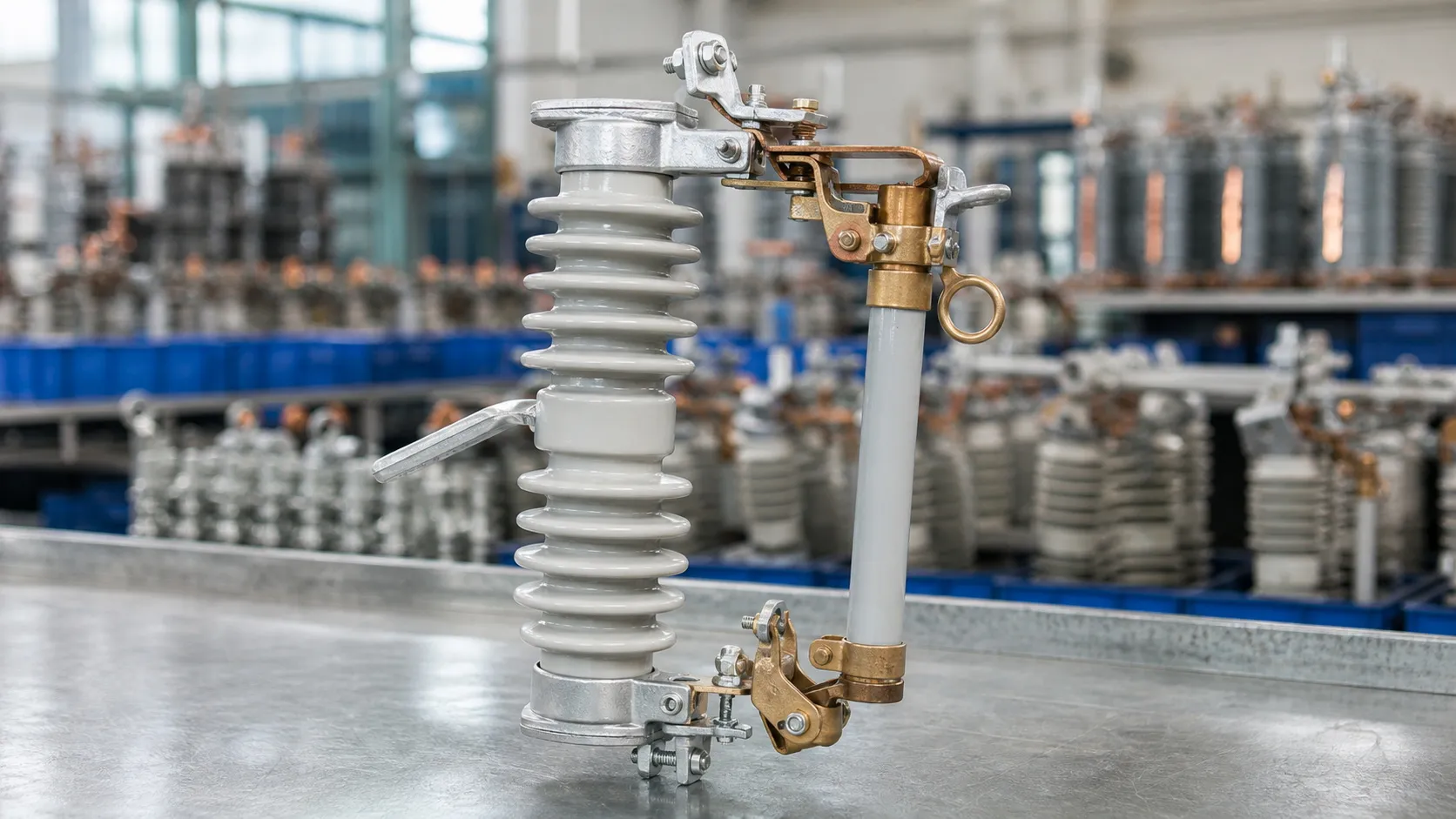
A high voltage fuse cutout consists of several functional parts, and each component affects electrical performance, mechanical stability, and outdoor durability. The main structure usually includes an insulator, fuse tube, upper and lower contacts, terminal connectors, mounting bracket, fuse link holder, and related hardware.
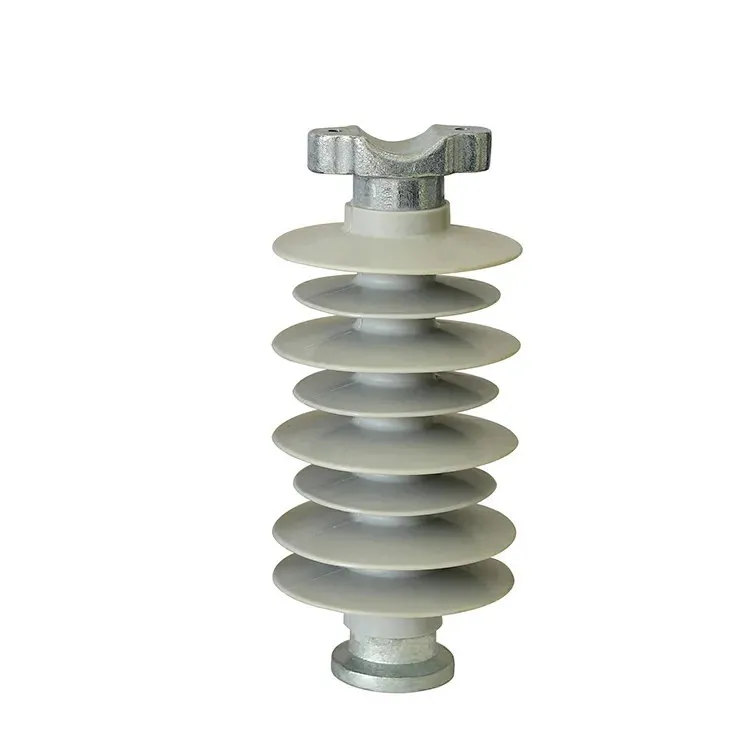
The insulator is one of the most important parts of the device. Porcelain insulators are commonly used for their mechanical strength, stable insulation performance, and long service history in outdoor power distribution networks. Polymer insulators are lighter and may offer handling advantages during transportation and installation. The choice between porcelain and polymer depends on voltage class, pollution level, climate conditions, mechanical requirements, and local utility preference.
The fuse tube holds the fuse link and plays a key role during fault interruption. Many fuse tubes use fiberglass-reinforced material with an internal arc-extinguishing liner. Its length, diameter, end fittings, and mechanical fit should match the cutout design and the selected fuse link.
The contact system is usually made of copper or copper alloy. Surface treatments such as tin plating or silver plating may be applied depending on design requirements and procurement specifications. Stable contact pressure and accurate contact alignment help reduce overheating risk during normal service. Mounting brackets and hardware are often made from galvanized steel or stainless steel to improve corrosion resistance in outdoor environments.
| Component | Common Material | Buyer Consideration |
|---|---|---|
| Insulator | Porcelain / Polymer | Mechanical strength, weight, creepage distance, outdoor aging resistance |
| Contact Parts | Copper / Copper Alloy | Conductivity, contact pressure, plating quality |
| Fuse Tube | Fiberglass-reinforced tube | Arc control, mechanical fit, fuse link compatibility |
| Hardware | Galvanized steel / Stainless steel | Corrosion resistance, installation environment |
In coastal regions, high-humidity areas, polluted industrial zones, or desert environments, buyers should pay close attention to creepage distance, hardware coating, and long-term weather resistance. A low purchase price may not be meaningful if the product does not match the operating environment.
What should buyers verify in manufacturing and assembly?
The manufacturing process of a fuse cutout begins with raw material selection and incoming inspection. Insulators, metal fittings, fuse tubes, terminal connectors, springs, bolts, and brackets are checked according to drawings and technical requirements before entering production. For porcelain parts, inspectors usually review appearance, dimensions, glaze quality, and mechanical condition. For polymer components, housing quality, bonding condition, creepage distance, and surface finish should be reviewed.
Metal components are processed through stamping, machining, casting, forging, bending, or welding, depending on the design. Contact parts require accurate shaping because even small deviations may affect contact pressure and alignment. Brackets and structural fittings may go through hot-dip galvanizing, zinc plating, or other surface treatments to improve corrosion resistance for outdoor installation.
After component preparation, the fuse tube, upper contact, lower contact, terminal connectors, insulator, and mounting bracket are assembled into a complete cutout. During assembly, workers need to check the operation angle, fastening torque, contact alignment, fuse tube movement, and mechanical locking condition. A properly assembled dropout fuse cutout should remain stable during normal service and drop open correctly after operation.
For export-oriented manufacturing, packaging is also part of the quality process. Fuse cutouts often include ceramic or polymer insulation parts, metal fittings, and fuse tubes, so the packaging should protect the product during sea freight, inland transport, and warehouse handling. Clear labeling also helps distributors and contractors identify models quickly at the project site.
In practical export orders, delays often occur not because the buyer does not know the product name, but because the required bracket design, terminal type, creepage distance, or standard has not been fully confirmed. A structured technical confirmation process helps both buyers and manufacturers avoid repeated revisions before production.
Which ratings and interfaces should be confirmed before procurement?
Before purchasing a high voltage fuse cutout, buyers should confirm the technical parameters that directly affect installation and field operation. The first consideration is rated voltage. Common voltage classes include 11kV, 15kV, 24kV, 27kV, 33kV, and 36kV. The selected voltage rating should match the local distribution network and insulation requirements.
Rated current is another important factor. Many fuse cutouts are supplied in 100A or 200A configurations, depending on load requirements and transformer capacity. Breaking capacity should be selected according to the expected fault current level of the distribution system. Common options may include 8kA, 10kA, 12.5kA, or 16kA, but the final selection should follow utility specifications or engineering design documents.
Creepage distance should not be overlooked, especially for outdoor installations. Areas with dust, humidity, salt spray, or industrial pollution may require longer creepage distance to reduce insulation risk. Buyers should also confirm whether porcelain or polymer insulation is more suitable for the project environment.
| Parameter | Common Options | Procurement Note |
|---|---|---|
| Rated Voltage | 11kV, 15kV, 24kV, 27kV, 33kV, 36kV | Should match system voltage and insulation level |
| Rated Current | 100A, 200A | Selected according to load and transformer capacity |
| Breaking Capacity | 8kA, 10kA, 12.5kA, 16kA | Should follow fault current and utility specification |
| Insulator Type | Porcelain / Polymer | Depends on climate, pollution level, and handling needs |
| Installation Type | Outdoor overhead line | Confirm bracket and terminal configuration |
| Standard Reference | IEC / ANSI / IEEE | Confirm before sample approval or tender submission |
The applicable standard is another key procurement point. Some markets refer to IEC requirements, while others use ANSI or IEEE-related specifications. Differences may exist in testing methods, dimensional preferences, rating practices, and documentation expectations. For utility tenders, buyers should confirm the required standard before sample approval or mass production.
Note: IEC, ANSI, and IEEE requirements may differ by product type, testing method, and regional application practice. Buyers should always confirm the project-specific standard rather than assuming that one standard automatically replaces another.
When does OEM customization help, and when can it add risk?
OEM requirements are common in power distribution equipment procurement. Utility tenders, contractor-led projects, and regional distribution businesses often require products that match local grid practices, installation habits, or brand requirements. For fuse cutouts, customization may involve electrical ratings, insulation material, creepage distance, fuse tube specification, mounting bracket style, terminal connector design, labeling, and packaging.
A buyer serving a rural electrification project may prefer a lightweight polymer fuse cutout with specific terminal connectors for easier installation. Another buyer working on a utility tender may request porcelain insulation, hot-dip galvanized brackets, project-specific nameplates, and datasheets for technical submission. Distributors may need neutral packaging or private-label packing to support their local sales network.
OEM customization should be handled carefully because changes in one part may affect the complete product. For example, bracket design can influence installation compatibility, while fuse tube dimensions may affect fuse link selection and mechanical operation. Therefore, technical drawings, installation photos, existing samples, and project specifications are useful for accurate confirmation before production.
A practical OEM discussion should focus not only on branding, but also on whether the customized configuration remains suitable for the electrical rating, mechanical operation, installation environment, and standard requirement of the project.
What quality evidence should accompany a quotation?
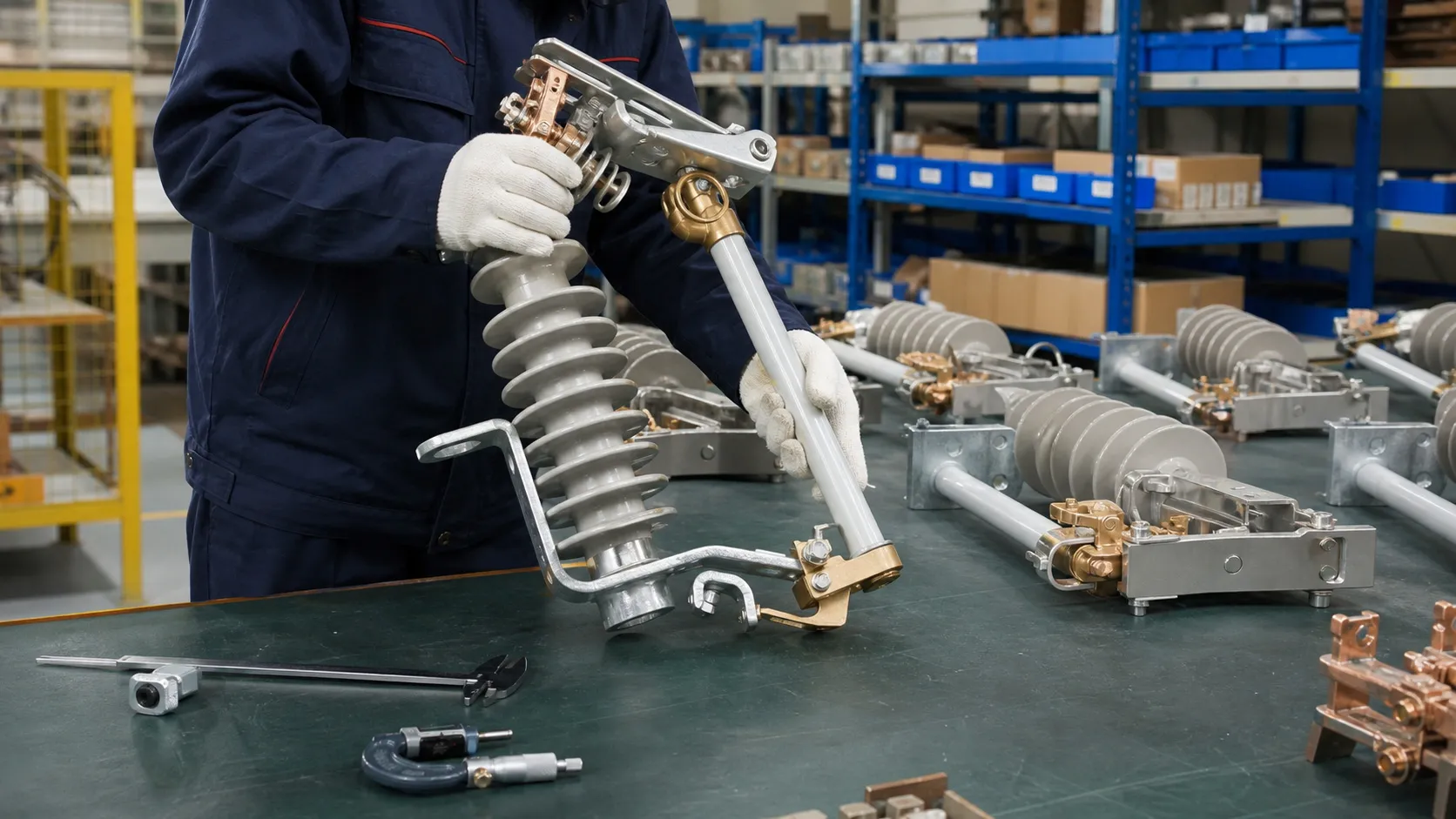
Quality assurance for high voltage fuse cutouts should cover material inspection, component processing, assembly, testing, and packaging. Because the product is installed in outdoor distribution networks, small manufacturing inconsistencies may lead to field problems such as poor contact, difficult operation, corrosion, or installation mismatch.
A practical quality process usually begins with incoming material inspection. Insulators are checked for appearance, dimensions, and mechanical condition. Metal components are reviewed for shape, surface treatment, plating quality, and compatibility with drawings. Fuse tubes are checked for dimensions, fit, and surface condition before assembly.
During assembly, contact alignment and mechanical operation are important. The fuse tube should lock correctly, open smoothly, and maintain proper contact under normal operating conditions. Fastening torque, bracket fit, and terminal connection should also be inspected. When required by the project, electrical or insulation-related testing such as power frequency withstand testing may be conducted according to applicable standards and customer specifications.
International standards such as IEC 60282-2 provide general requirements and test methods for high-voltage expulsion fuses, including fuse cutouts used in outdoor distribution systems. Buyers can use such standards as a reference when reviewing supplier documentation, type test information, and inspection processes.
This is also where manufacturing experience becomes relevant. Zhejiang Fuerte Electrical Apparatus Co., Ltd., founded in 1985, has long focused on power distribution and electrical protection equipment. For overseas B2B customers, this manufacturing background can support more stable communication around specifications, OEM details, export packaging, and repeat-order consistency. The value is not in a promotional claim, but in whether the manufacturer can maintain controlled production steps and provide practical technical confirmation for project buyers.
How should a buyer compare fuse cutout manufacturers?
Selecting a fuse cutout manufacturer should involve more than price comparison. In power distribution projects, an incorrect specification can create delays, installation problems, or technical rejection. Buyers should evaluate whether the supplier can provide clear datasheets, drawings, model confirmation, packaging details, and inspection information.
A capable supplier should understand the difference between voltage classes, rated current options, breaking capacity requirements, insulation materials, creepage distance, and standards used in different markets. For EPC contractors and utility buyers, communication accuracy is often as important as production capacity because project schedules may depend on timely technical confirmation.
Buyers may also consider whether the manufacturer supports OEM requirements without changing critical performance details. Custom labels, packaging, brackets, or terminal connectors should be reviewed together with the electrical and mechanical design. When a supplier can discuss these points clearly, it becomes easier for buyers to reduce procurement risk.
Export experience is another practical factor. International buyers often need stable packaging, document support, consistent batch quality, and communication across different time zones. A manufacturer with export-oriented production support is usually better prepared to handle model confirmation, packing requirements, and long-term cooperation with distributors or project contractors.
For manufacturers such as Zhejiang Fuerte Electrical Apparatus Co., Ltd., long-term specialization in power distribution and electrical protection equipment can support more consistent discussions around ratings, drawings, OEM details, and export documentation. Buyers can share voltage class, rated current, breaking capacity, installation photos, drawings, existing samples, or tender specifications to receive a more accurate technical recommendation before quotation.
What should an international buyer send before requesting a quote?
For international B2B procurement, the buying process should be organized around technical compatibility and project requirements. The product name alone is not enough because “fuse cutout,” “dropout fuse cutout,” and “high voltage fuse cutout” may refer to similar devices but different voltage classes, designs, or standards.
Buyers should first identify the application. A fuse cutout used for transformer protection may have different requirements from one used on a feeder branch or rural overhead line. The installation environment also matters. Coastal areas, high-altitude locations, tropical climates, and polluted industrial zones may require different insulation and hardware choices.
The next step is to confirm rating and standard information. Rated voltage, rated current, and breaking capacity should match the engineering design. Applicable standards should be confirmed early, especially for utility tenders. If drawings or existing product photos are available, they can help avoid misunderstanding in bracket design, terminal arrangement, and fuse tube configuration.
Documentation may also affect procurement decisions. Datasheets, drawings, packing details, inspection information, and test references are often requested by distributors, contractors, and utility project teams. For repeat orders, batch consistency and traceability become important because the buyer may need to supply the same model across multiple project stages.
Final product selection should be confirmed according to project drawings, tender documents, local utility standards, and installation environment. This approach helps buyers reduce technical risk and supports smoother cooperation with manufacturers.
What are the common procurement questions?
What is a high voltage fuse cutout used for?
A high voltage fuse cutout is used to protect overhead distribution lines, transformers, and medium-voltage feeders from fault currents. When the fuse link operates, the fuse tube drops open and provides a visible indication of disconnection. This helps maintenance teams locate the operated protection point and supports safer repair work in outdoor power distribution systems.
What is the difference between porcelain and polymer fuse cutouts?
Porcelain fuse cutouts are widely used for their mechanical strength, stable insulation performance, and long history in outdoor distribution networks. Polymer fuse cutouts are lighter and may be easier to handle during transportation and installation. The choice depends on voltage class, pollution level, climate, mechanical requirements, and local utility preference.
How do buyers choose the correct rated voltage?
The rated voltage should match the distribution system voltage and insulation requirements. Common options include 11kV, 15kV, 24kV, 27kV, 33kV, and 36kV. Buyers should confirm the project drawings, local grid requirements, and applicable standard before selecting the model. For utility tenders, the voltage class is usually stated in the technical specification.
What breaking capacity should be selected?
Breaking capacity should be selected according to the expected fault current level of the distribution network. Common ratings may include 8kA, 10kA, 12.5kA, or 16kA, depending on the product design and project requirement. Buyers should confirm this value with the project engineer, utility specification, or tender document before placing an order.
Can fuse cutouts be customized for OEM projects?
Yes, OEM customization is common for utility contractors, distributors, and project buyers. Custom options may include insulation material, creepage distance, fuse tube specification, bracket design, terminal connector type, nameplate, label, and packaging. However, any customization should be reviewed together with technical drawings or samples to ensure installation compatibility.
What standards are commonly referenced for fuse cutouts?
Fuse cutouts may be designed or evaluated with reference to IEC, ANSI, or IEEE-related requirements, depending on the market and project. IEC 60282-2 is commonly associated with high-voltage expulsion fuses. Buyers should confirm the required standard in advance because testing methods, dimensions, and documentation expectations may vary by region.
What information should buyers provide before requesting a quotation?
Buyers should provide enough technical context for model confirmation. Useful information includes the required voltage class, rated current, breaking capacity, insulation preference, installation environment, applicable standard, quantity, drawings, photos, or existing samples. If OEM packaging, labels, or tender documents are involved, these details should also be shared early.
How is product quality checked before shipment?
Quality checks may include inspection of incoming materials, dimensions, contact alignment, mechanical operation, surface treatment, insulation condition, and packaging. For project orders, suppliers may also keep batch records or provide inspection information when required. The exact testing scope should be confirmed according to the applicable standard and buyer’s procurement requirements.
Which standards and public sources can buyers check?
- IEC 60282-2: High-voltage fuses – Part 2: Expulsion fuses
Official IEC standard page:
https://webstore.iec.ch/en/publication/6369 - IEEE C37.41 — distribution-class fuse-device terminology and test context.
- IEEE C37.42 — distribution-class expulsion-fuse context.
- OSHA 1910.269 — public electric-power work-practice reference; it does not replace local rules.
- International Energy Agency – Electricity
Official IEA electricity information page:
https://www.iea.org/energy-system/electricity
What should be included in a technical enquiry?
Buyers preparing for a distribution line protection project can share system voltage, rated current, breaking capacity, installation photos, drawings, existing fuse cutout samples, or tender specifications for technical confirmation. This information helps manufacturers review model compatibility, OEM details, packaging needs, and documentation requirements before quotation.