
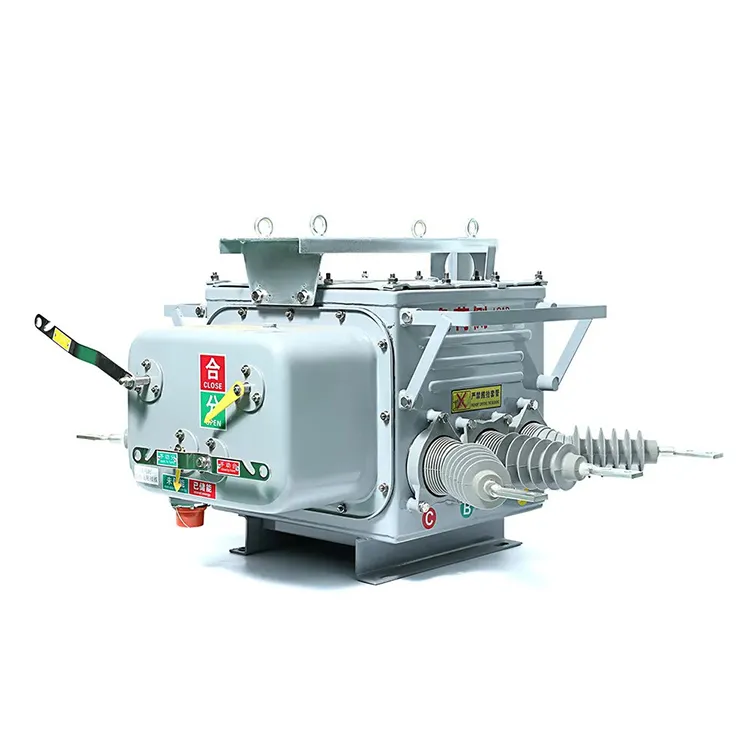
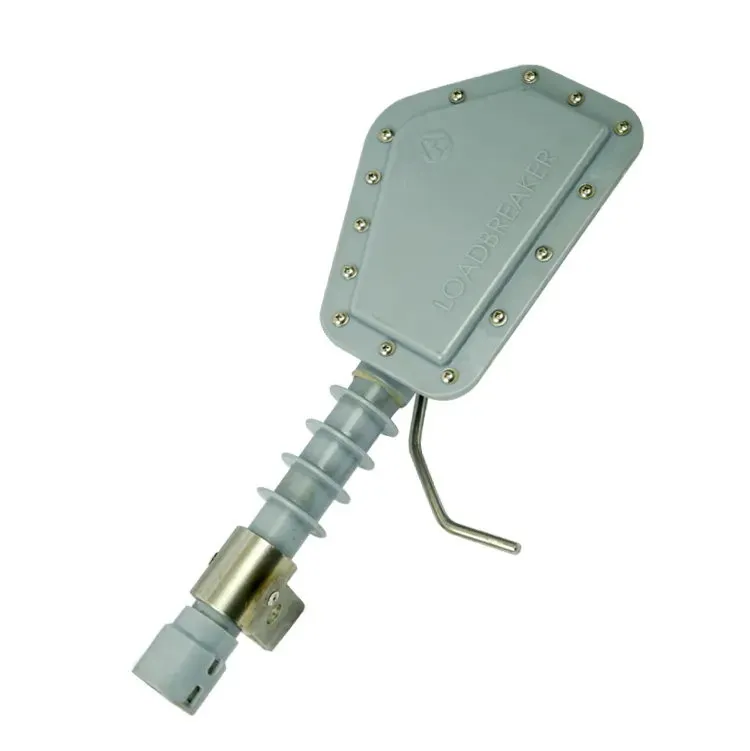


Opening a contact does not instantly stop current. In a medium-voltage AC circuit, current can continue through an arc after the contacts separate. The practical question is why that arc can exist inside a vacuum bottle, how it goes out, and what prevents it from returning. Confusing those stages can lead a buyer to judge a breaker only by contact travel or a voltage label, without checking the interruption duty. This article follows the current from the closed contacts through opening and dielectric recovery, then explains why the interrupter, operating mechanism and protection system must be evaluated as a complete arrangement.
Why can an arc form when the contacts are in vacuum?
A vacuum removes the surrounding gas as the normal conducting medium; it does not prevent the contacts themselves from supplying material to an arc. When current-carrying contacts separate, localised hot regions on their surfaces can sustain a metal-vapour arc between them. Thus an open mechanical gap and an electrically interrupted circuit are not the same event.
Tavrida Electric’s VCB fundamentals describes cathode spots, current interruption near current zero and rapid recovery of electrical strength. That manufacturer explanation supports the general mechanism. It does not establish the contact material, field geometry or internal design of a particular FUERTE product.
What happens at current zero and immediately afterwards?
As the AC current falls, the energy sustaining the arc decreases. The arc can extinguish near current zero, and the gap recovers its dielectric strength. The circuit then imposes a recovery voltage across the open contacts. Interruption succeeds when the recovering gap withstands that electrical stress without a renewed discharge.
Transient recovery voltage, often shortened to TRV, is part of the interruption duty, not simply another name for rated voltage. ABB’s primary vacuum circuit-breaker overview specifically describes generator duties with delayed zero crossings and severe TRV. Such duties must not be assumed to be covered by an ordinary feeder breaker.
How do the interrupter, mechanism and relay work together?
The interrupter performs the current-interruption task. The mechanism moves the contacts with the required travel, force and timing. A protection arrangement detects the condition that calls for opening and issues the trip command. Incorrect control-power or trip-circuit arrangements can prevent the commanded operation even when the vacuum bottle itself remains intact.
These functions should be checked separately. The guide to vacuum circuit breaker components distinguishes the interrupter from the mechanism and controls. Neither opening a breaker nor describing it as vacuum equipment, on its own, establishes the isolation and earthing conditions required for safe work.
Which part of the opening sequence needs which evidence?
| Stage | What must happen | Evidence to request |
|---|---|---|
| Closed circuit | Contacts carry the specified continuous current | Rated current and temperature-rise evidence for the configuration |
| Contact separation | Mechanism produces the required movement | Manufacturer travel, timing and mechanism specifications |
| Arc extinction | Current is interrupted under the required duty | Applicable making-breaking test evidence |
| Open circuit | Gap and surrounding insulation withstand voltage | Dielectric evidence and application-duty confirmation |
Why do special loads need more than a general short-circuit rating?
A feeder, a capacitor bank and a generator do not impose identical switching conditions. ABB lists dedicated capacitor-bank and generator products separately from general-purpose breakers. Those examples illustrate why the application must accompany the rating in the enquiry; they are not claims that every vacuum breaker has the same capability.
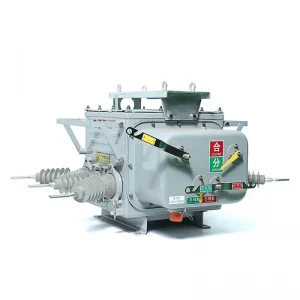
Use the project’s load and switching information to ask about the relevant duty. For inductive loads, discuss switching-overvoltage concerns with the supplier and project engineer. Do not prescribe surge protection, contact materials or controlled switching from a generic article alone.
What should a buyer verify on a named product?
| Application input | Question for the supplier |
|---|---|
| System and load | Does the offered breaker cover this interruption duty? |
| Control supply | What voltage, circuit arrangement and supply capacity are required? |
| Installation | Which pole insulation, interfaces and service conditions are covered? |
| Evidence | Which tested configuration and standard edition support the offer? |
Technical references were checked on 14 October 2026. IEC’s public 62271-100 scope concerns the circuit-breaker, while IEC 62271-200:2021 concerns AC metal-enclosed switchgear above 1 kV and up to and including 52 kV. A breaker test is not automatically proof of the complete assembly. This article is published on FUERTE’s commercial website; its ZW20-12 vacuum circuit breaker page supplies a product reference, not a substitute for project-specific verification.
FAQ
Is the vacuum bottle the same thing as a complete circuit breaker?
No. It is the interruption component. The complete breaker also depends on its mechanism, insulation, current path and control interfaces.
Does current stop as soon as the contacts separate?
Not necessarily. An arc can continue to carry current until it extinguishes near current zero. The gap must then withstand the recovery voltage.
Can the vacuum bottle be refilled during routine service?
It is a sealed component, not a refillable gas vessel. Follow the manufacturer’s inspection and replacement instructions if its integrity is in question.
Can this explanation be used to select a DC breaker?
No. It concerns AC interruption near current zero, and IEC 62271-100 has an AC scope. DC interruption requires an appropriate product and evidence route rather than transferring AC assumptions.
Summary
Vacuum interrupter technology carries current through closed contacts and, during opening, through a brief arc supported by material released from the contacts. As AC current approaches zero, the arc extinguishes and the open gap rapidly recovers its insulating strength. Successful interruption also requires the gap to withstand the recovery voltage that follows. IEC 62271-100:2021+AMD1:2024 covers three-phase AC circuit-breakers above 1,000 V at 50 Hz and/or 60 Hz. Verify the complete breaker’s tested ratings and application duty rather than relying on the word “vacuum.”
Conclusion
Vacuum interruption is a sequence, not an instantaneous consequence of pulling two contacts apart. The contacts separate, an arc briefly carries current, the arc extinguishes, and the open gap must recover quickly enough to withstand the voltage that follows. That distinction explains why a voltage rating or a short contact stroke cannot establish suitability for every load. Identify the circuit duty first, confirm the breaker’s tested capability next, and check its mechanism, control supply and installation interfaces before procurement. Special switching duties still require explicit review. FUERTE’s vacuum circuit breaker range offers named products for enquiry; use the contact page to request documentation for the proposed configuration.