
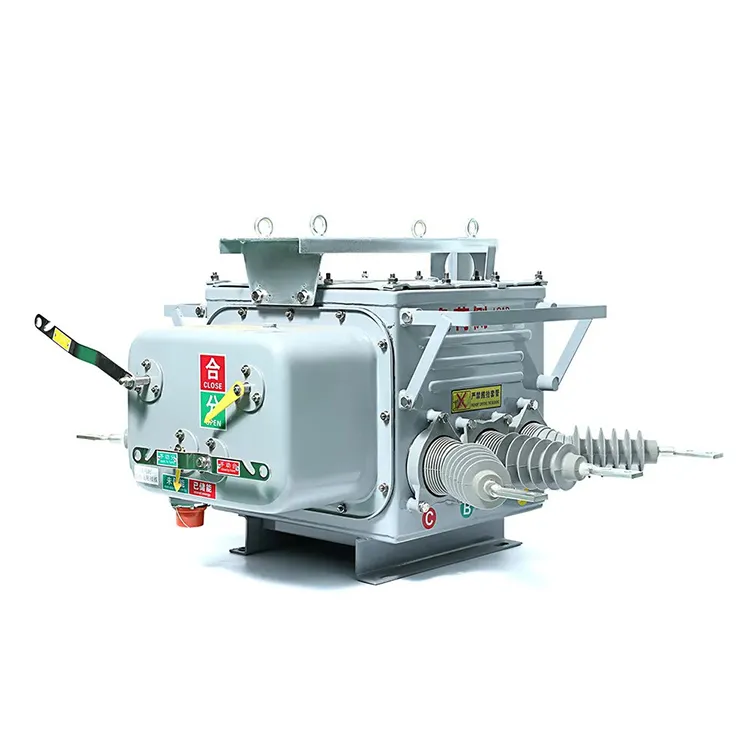
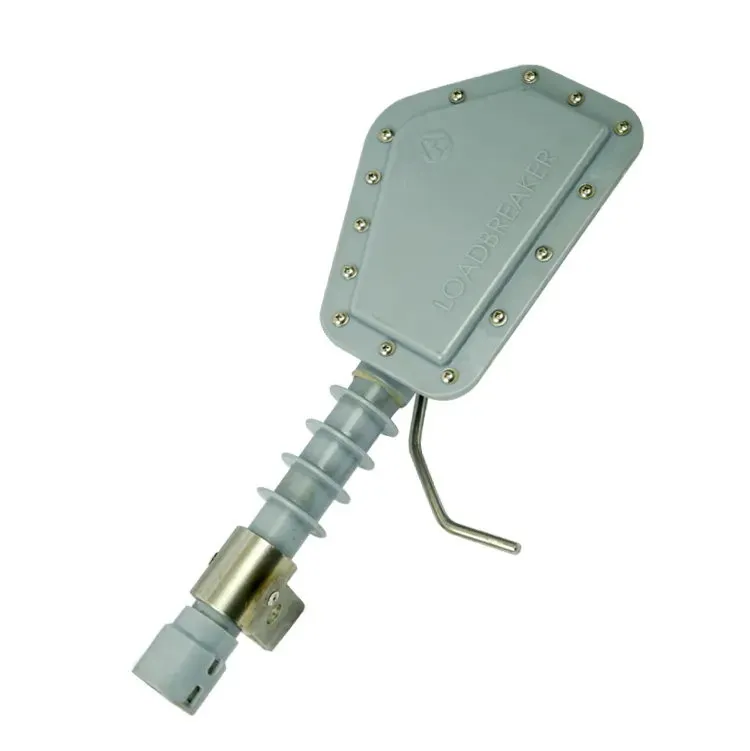


A project-ready high voltage vacuum circuit breaker specification links ratings to test evidence.
When an EPC commissioning engineer we will call Elena in Monterrey closed a new feeder, the breaker tripped again within seconds. She checked the relay and repeated the command; the visible failure remained. Reviewing the fault study and cable terminations reversed the diagnosis: the selected breaker’s insulation and short-time duties did not match the installation. Selection and coordination—not simply a bad product—were the root problem.
Резюме: A high voltage vacuum circuit breaker (HV VCB) interrupts AC faults in sealed vacuum interrupters and operates with relays, instrument transformers and switchgear. IEC 62271-100 applies to AC circuit-breakers above 1 kV; IEC 62271-200 covers relevant metal-enclosed assemblies up to 52 kV. Specify rated voltage, power-frequency and lightning-impulse withstand, continuous current, breaking and making current, short-time withstand and operating duty together. Begin with fault and insulation-coordination studies, then request test evidence for the exact indoor or outdoor arrangement.
How an HV vacuum circuit breaker controls fault energy
An HV vacuum circuit breaker contains fixed and moving contacts inside a sealed bottle. A relay trip releases the operating mechanism; when the contacts separate, a metal-vapour arc forms and extinguishes at a natural AC current zero. The gap must then recover dielectric strength faster than the transient recovery voltage (TRV) rises. Cable faults, transformers, reactors and capacitor banks can impose different TRV or switching duties, so “vacuum” alone does not prove application suitability.
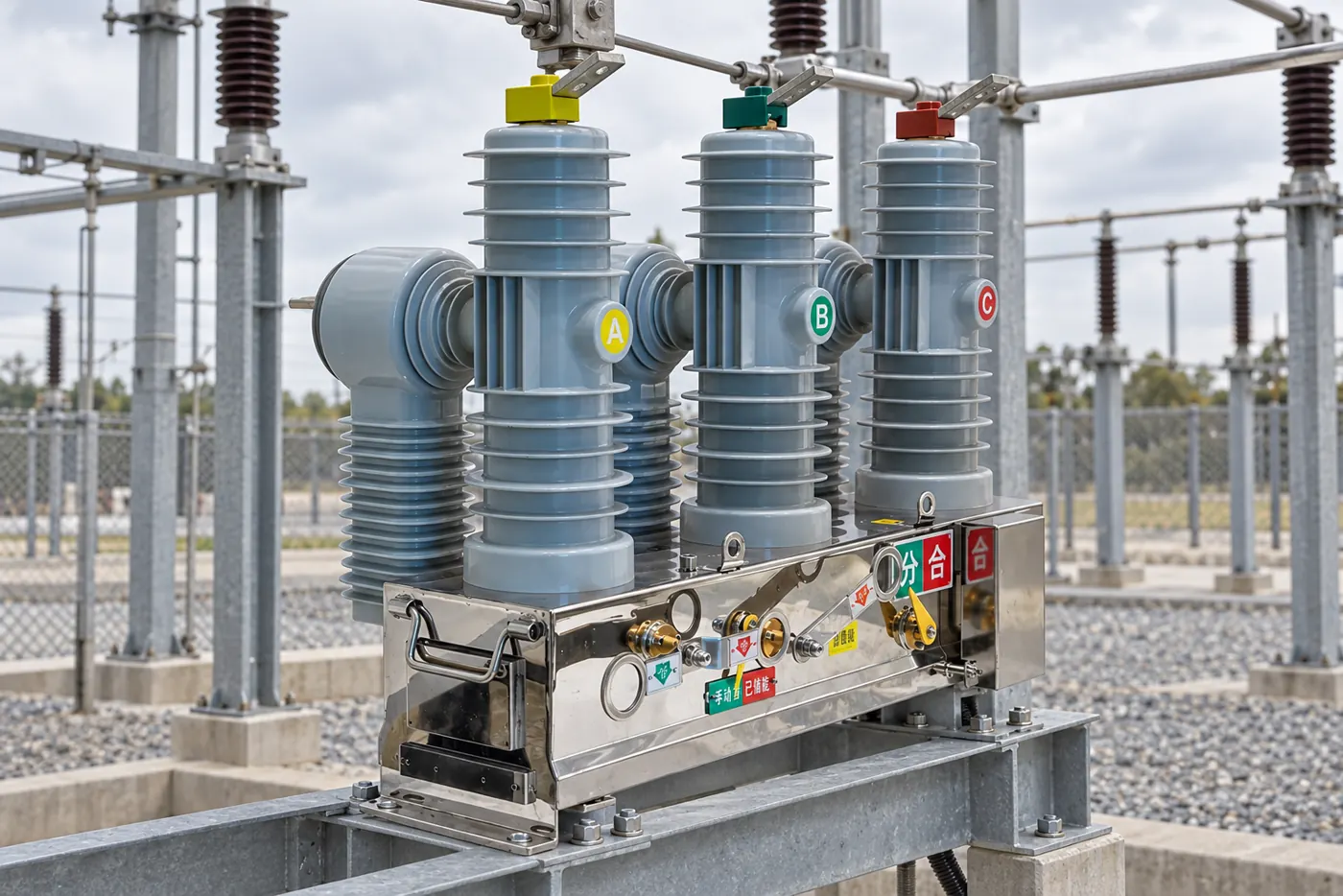
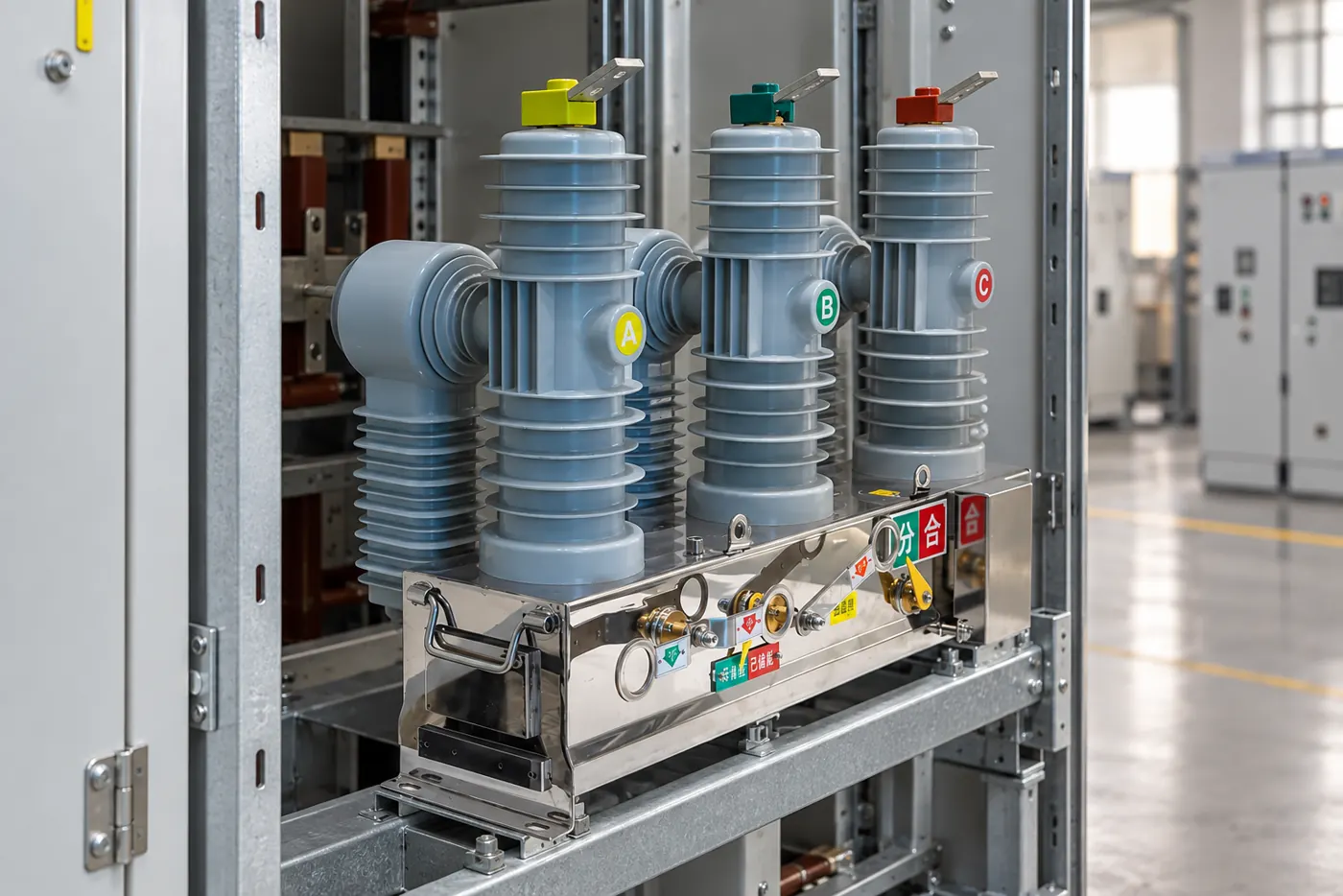
The bottle is one element of a system. The mechanism provides opening and closing energy, while CTs, VTs and the relay determine when it operates. Shutters, racking, an earthing switch, secondary wiring and the enclosure affect safe isolation and maintenance. A useful specification therefore describes the complete breaker and cell, not only voltage and amperes.
Which ratings and construction choices determine HV VCB suitability?
Why must HV VCB ratings be evaluated as a complete set?
Rated voltage is the highest system voltage for which the breaker is designed, not necessarily the nominal value on the single-line diagram. Continuous current describes thermal carrying capability at declared service conditions. Short-circuit breaking current is the symmetrical RMS current interrupted under a specified sequence; making current addresses the peak created when closing onto a fault. Short-time withstand current and duration support protection selectivity before clearance.
Insulation ratings apply phase-to-earth and across open contacts. Power-frequency withstand addresses a defined AC test, while lightning-impulse withstand uses a standardized impulse, commonly 1.2/50 μs under IEC practice. High-voltage insulation coordination under IEC 60071 also considers altitude, pollution, surge arresters and temporary overvoltages. An IEC test at standard conditions does not automatically cover a polluted or high-altitude installation.
Base interruption duty on calculated prospective fault current. A defensible HV VCB breaking-capacity specification states the operating sequence and study assumptions. IEEE C37.04 defines rating concepts and IEEE C37.09 specifies test procedures where an IEEE basis is selected; IEC projects should identify the applicable IEC 62271-100 edition.
| Attribute | Engineering question | Evidence |
|---|---|---|
| Voltage and insulation | Do open-gap and phase-to-earth levels cover site surges and altitude? | Type-test report and coordination study. |
| Постоянный ток | Can the complete cell carry load within temperature limits? | Rating plate and temperature-rise test. |
| Breaking/making current | Does it cover calculated RMS fault and closing peak? | Short-circuit report and fault study. |
| Short-time withstand | Can selective protection delay clearing safely? | Declared kA duration and relay study. |
| Duty and endurance | Does the sequence fit feeder, transfer or motor service? | Duty statement and endurance evidence. |
How do indoor and outdoor HV VCB construction requirements differ?
Ан indoor high voltage vacuum circuit breaker normally operates inside metal-enclosed switchgear where a building limits rain and solar exposure. Condensation, pollution and ventilation still require control. Withdrawable designs can simplify isolation, but shutters, interlocks, racking positions and earthing indication require functional tests. In retrofit projects, confirm pole pitch, primary disconnects, CT dimensions, secondary-plug coding, cable radius and control voltage; see this guide to VCB mounting and retrofit configurations.
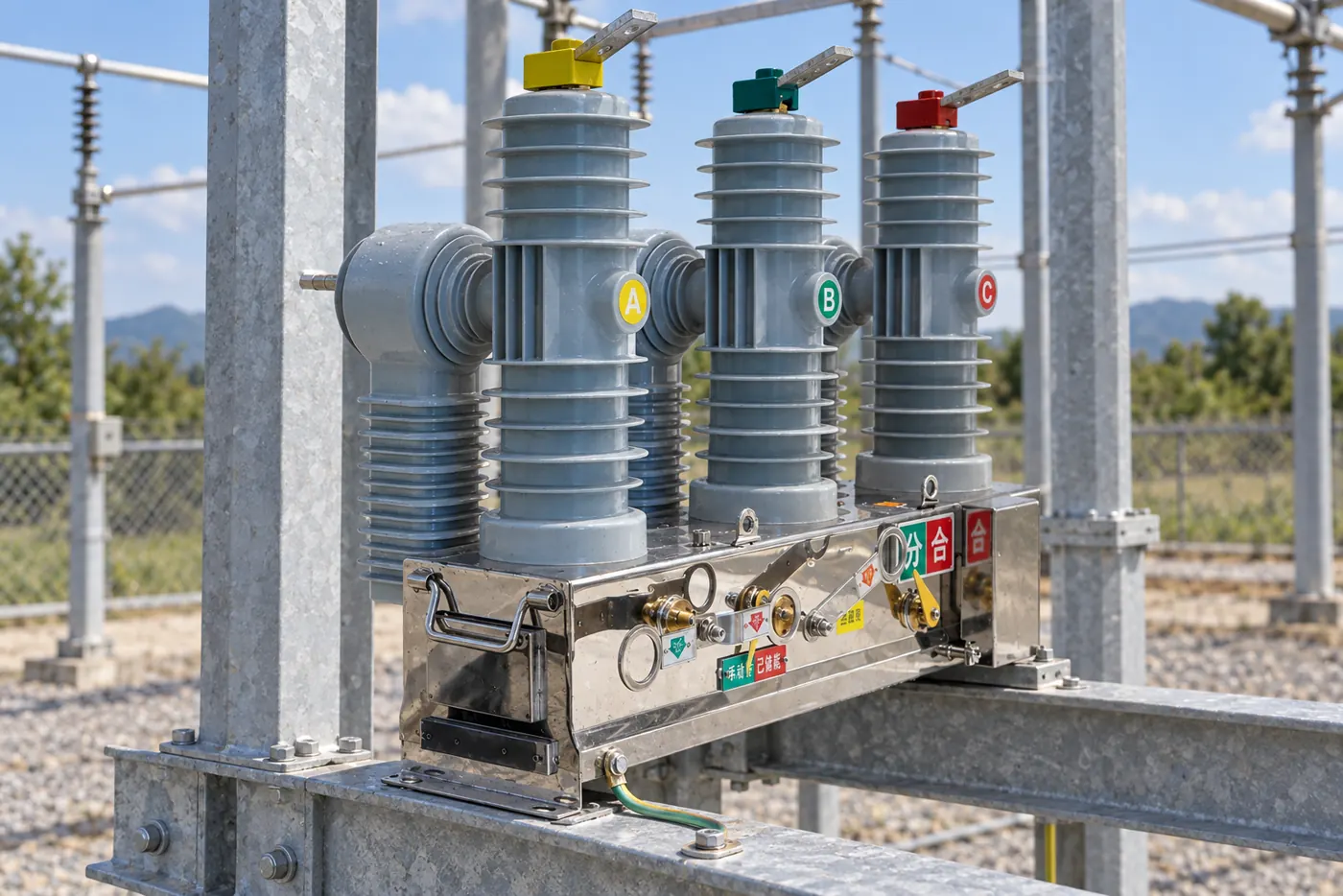
Ан outdoor high voltage vacuum circuit breaker must address weather, UV, condensation, wind, ice or salt pollution as applicable. Pole-mounted, tank-type and outdoor modular arrangements require different evidence, so name the construction rather than merely “outdoor.” Define terminal geometry, creepage, heaters, control-cable glands, grounding and maintenance access. Utility lightning performance and arrester placement can govern impulse coordination.
What determines the lifecycle cost of an HV VCB?
Type tests demonstrate a design under defined duties; routine tests check each manufactured unit; site tests confirm installation. Typical checks include contact resistance, insulation, mechanical operation, close/open timing, travel, anti-pumping, trip-free action, interlocks, racking and protection secondary injection. Vacuum integrity needs the manufacturer’s approved method; a megohmmeter reading alone does not prove interrupter vacuum or dielectric withstand. Record instrument calibration, ambient conditions, applied voltage and acceptance criteria. A detailed vacuum circuit breaker test guide can support the FAT and commissioning plan. For a related technical topic, see 6,6 кВ вакуумный выключатель: характеристики, диапазон напряжений и руководство по выбору.
Commissioning should progress from de-energized inspection through mechanical checks, control-power verification and functional protection tests to authorized energization. After a major interruption, follow the OEM procedure and review timing, resistance, mechanism condition and surge-control components. Base intervals on operations, fault history and environment; dusty, humid or high-cycling service can justify more attention than calendar-only maintenance.
The lowest purchase price is not necessarily the lowest total cost. Compare the complete cell, protection hardware, test access, outage duration, spares and training. Actual performance depends on the verified arrangement; the tables are selection frameworks, not price or service-life claims.
| Размер | Indoor HV VCB | Outdoor HV VCB | Cost implication |
|---|---|---|---|
| Environment | Building-controlled, with condensation managed. | Weather and pollution declared. | Budget enclosure, seals and heaters. |
| Insulation | Panel barriers define clearances. | Exposed creepage and surge paths dominate. | Coordinate layout with IEC 60071 study. |
| Техническое обслуживание | Withdrawable cell may shorten isolation. | Access and weather affect outage work. | Include lifting, access and spares. |
| Integration | Cell, bus and interlocks must match. | Terminals, tank and controls must match. | Request arrangement-specific reports. |
| Приложение | Основная обязанность | Decision documents |
|---|---|---|
| Utility feeder/incomer | Interrupt line or bus faults selectively. | Fault study, utility rules and transfer logic. |
| Industrial motor | Ride through inrush; clear motor faults. | Starting study, CT data and relay curves. |
| Transformer primary | Coordinate inrush and downstream protection. | Impedance data and coordination curves. |
| Renewable collector | Address converter fault contribution and transients. | Inverter model, topology and grid code. |
| Retrofit lineup | Match geometry, controls and interlocks. | Survey, interface drawings and test plan. |
Which standards and procurement checks support a defensible HV VCB selection?
IEC 62271-100 covers high-voltage AC circuit-breaker ratings and tests; IEC 62271-200 covers AC metal-enclosed switchgear and internal-arc classification; IEC 60071-1 supplies insulation-coordination principles; IEEE C37.04/C37.09 cover ratings and test procedures on an IEEE basis. These are standards and test frameworks, not automatic certifications for a product or country. Destination-market codes, utility requirements and occupational-safety rules still apply. Unsupported certification or arc-performance claims can cause rejected submittals, delayed energization and disputes.
- Issue the single-line diagram, fault study, X/R assumptions, load profile, altitude, pollution and climate data with the RFQ.
- Define the full rating set and switching duty, including cables, transformers, motors, reactors or capacitor banks.
- Approve interface, interlock and clearance drawings before manufacture; identify indoor or outdoor construction explicitly.
- Agree FAT witness points, routine certificates, site test sheets, instruments and energization hold points.
- Plan spares, training and post-fault inspection criteria; control substitutions in mechanisms, relays and interrupters.
Fuerte can be considered at this documented selection stage as a source of medium-voltage vacuum circuit breaker and switchgear options. Ask its team to match a configuration to your approved ratings, drawings and test plan, and request evidence for the exact arrangement.
Часто задаваемые вопросы
What is a high-voltage vacuum circuit breaker?
It is an AC circuit-breaker using a vacuum interrupter to switch normal current and interrupt faults on systems above 1 kV. It works with a mechanism, protection, instrument transformers and an enclosure. Confirm the complete assembly against the installation duty.
How does an HV VCB interrupt fault current?
A trip command separates the contacts, forming a brief metal-vapour arc. At current zero the arc extinguishes, and the gap must recover faster than TRV rises. Fault level, network configuration and operating duty therefore matter together.
What is the difference between indoor and outdoor HV VCBs?
Indoor units rely on a building and metal enclosure for environmental control. Outdoor units add rain, UV, pollution, condensation and exposed-clearance requirements. Select by the declared construction and test evidence.
Which ratings define a high-voltage VCB?
Check voltage, insulation withstand, continuous current, breaking and making current, short-time withstand, operating sequence and endurance. Also confirm CT/VT, control and enclosure data. Compare everything with approved studies.
How is a high-voltage vacuum interrupter tested?
Type and routine tests follow IEC 62271-100 or specified IEEE procedures; site teams then verify installation, resistance, insulation, timing and operation. Vacuum integrity requires an approved method. Insulation resistance alone is insufficient evidence.
Where are HV vacuum circuit breakers used?
Utilities use them on feeders, incomers and bus couplers; plants use them for motors, transformers, process lines and renewable collectors. Fault level, environment and switching frequency define the final configuration.
Ссылки
- IEC, IEC 62271-100: High-voltage switchgear and controlgear—Part 100: Alternating-current circuit-breakers, Интернет-магазин IEC.
- IEC, IEC 62271-200: AC metal-enclosed switchgear and controlgear for rated voltages above 1 kV and up to 52 kV, Интернет-магазин IEC.
- IEC, IEC 60071-1: Insulation co-ordination—Definitions, principles and rules, Интернет-магазин IEC.
- IEEE Standards Association, IEEE C37.04 и IEEE C37.09, Стандарты IEEE.
- Public SERP review, 14 September 2026: snippets identified recurring buyer questions; access limits require verification of current editions and supplier evidence.
Specify the duty first, prove withstand and interruption second, and let the breaker earn its place in the lineup. Explore Fuerte medium-voltage vacuum circuit breaker options and contact the team with your single-line diagram and fault-level data.