
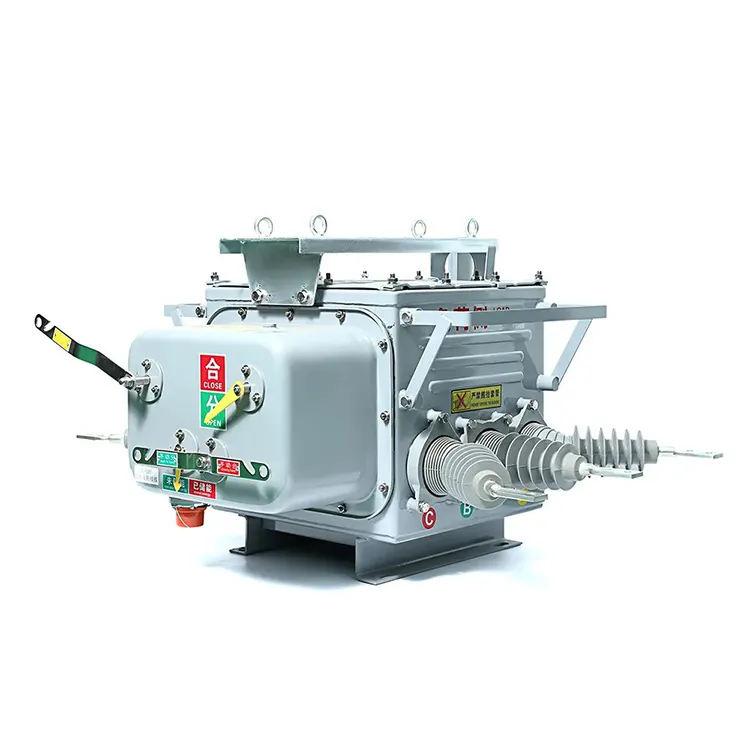
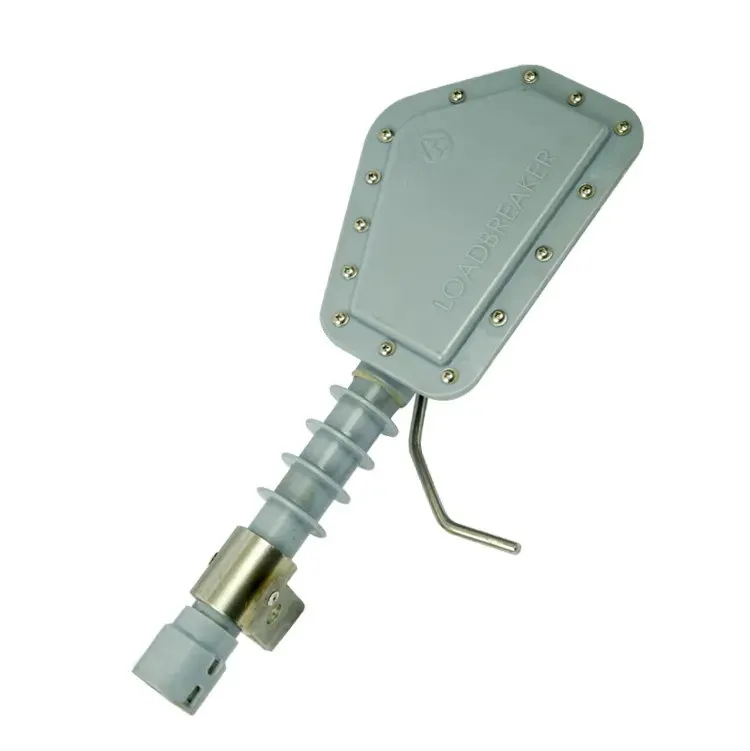


A request for a “high voltage pemutus sirkuit vakum” can describe very different installations. It might mean a factory’s medium-voltage feeder, a utility substation or a generator circuit with demanding interruption conditions. Choosing from that label alone risks comparing equipment with different insulation duties, test requirements and interfaces. The useful starting point is the actual network and application. This guide explains how to turn a broad description into a rating schedule, identify duties that need special evidence, and plan tests that check the breaker and its protection system together.
A high voltage vacuum circuit breaker interrupts current inside sealed vacuum interrupters, but its suitability depends on the complete equipment rating. IEC uses “high-voltage” in the IEC 62271 family for equipment above 1 kV, which includes many systems commonly called medium voltage. IEC 62271-100 covers three-phase AC circuit-breakers above 1 kV at 50 Hz and/or 60 Hz. Confirm rated voltage, insulation level, fault interruption, operating duty and service conditions for the exact model. The standard’s scope is not proof that every vacuum breaker can serve every voltage or load.
What does the voltage label actually tell the buyer?
Nominal network voltage, equipment rated voltage and insulation withstand levels are related but different. The nameplate voltage does not replace a review of the highest system voltage, grounding arrangement and insulation coordination. Drawings and schedules should use the purchaser’s terminology consistently so that “HV” and “MV” do not conceal a mismatch.
For the basic switching process, the explanation of arc interruption in a vacuum breaker separates contact operation from the recovery of dielectric strength. The vacuum gap handles interruption; other insulation and clearances still have to withstand the system voltage.
Which ratings must appear in the specification?
Vacuum circuit breaker ratings should describe the actual circuit rather than a preferred catalog size. Available short-circuit current comes from the system study. Continuous current comes from the load and installation conditions. Making duty, interruption duty, short-time withstand and the operating sequence must be considered separately, with the relevant test basis identified.
| Requirement | What to establish | Common purchasing mistake |
|---|---|---|
| Voltage and insulation | System voltage and required withstand levels | Treating a nominal voltage label as a complete insulation specification |
| Continuous current | Load, ambient conditions and assembly temperature rise | Ignoring cabinet ventilation or site conditions |
| Short-circuit duty | Breaking, making and withstand requirements | Checking only one current value |
| Urutan operasi | Protection and reclosing duties actually required | Assuming all mechanisms perform the same sequence |
| Application duty | Motor, capacitor, transformer or generator switching requirements | Applying a general feeder rating to a special duty |
The guide to breaking-capacity specifications provides further context for reviewing fault ratings. A low fault current also does not remove the need to examine transient recovery voltage and the load’s switching behavior.
Which applications need more than a general feeder rating?
Generator circuits, capacitor banks and frequently switched industrial loads deserve an explicit application review. ABB’s published range distinguishes general-purpose breakers from dedicated capacitor, arc-furnace and generator products. Its generator-breaker description specifically discusses delayed current zeros and severe transient recovery voltages. Those distinctions show why a broad voltage and fault-current match may be insufficient.
For motors or transformers, ask whether switching overvoltage assessment or additional protection is required for the actual cable and load arrangement. Do not prescribe a surge-protection device from a generic rule. For capacitor switching, request evidence for the assigned duty rather than assuming a normal short-circuit test answers the question.
What changes between indoor and outdoor installation?
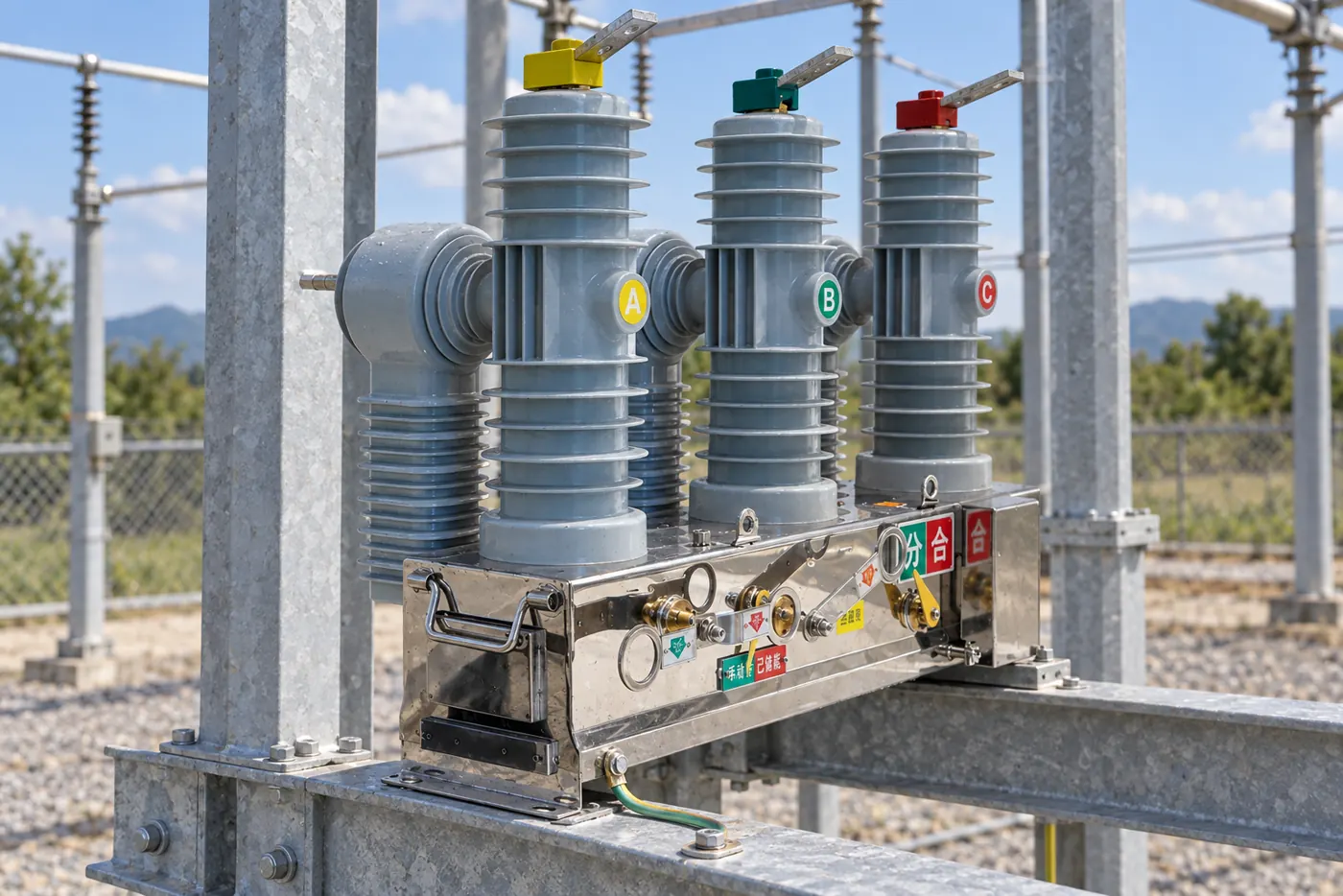
The sealed interrupter does not make an indoor assembly weatherproof. External insulation, terminals, mechanism compartments and control cabinets remain exposed to their own environment. Specify temperature range, altitude, pollution, condensation risk and installation arrangement before assessing the proposed model.
An outdoor proposal should explain the protection of every relevant compartment and connection. An indoor proposal should account for the actual electrical room and cubicle conditions. A building roof does not eliminate condensation or contamination inside switchgear.
Which tests establish condition, and which prove protection?
Factory type-test evidence establishes declared design capability for specified conditions. Routine tests relate to the supplied equipment. Site checks then establish installation condition and the correct operation of the commissioned system. These records serve different purposes and should not be treated as substitutes.
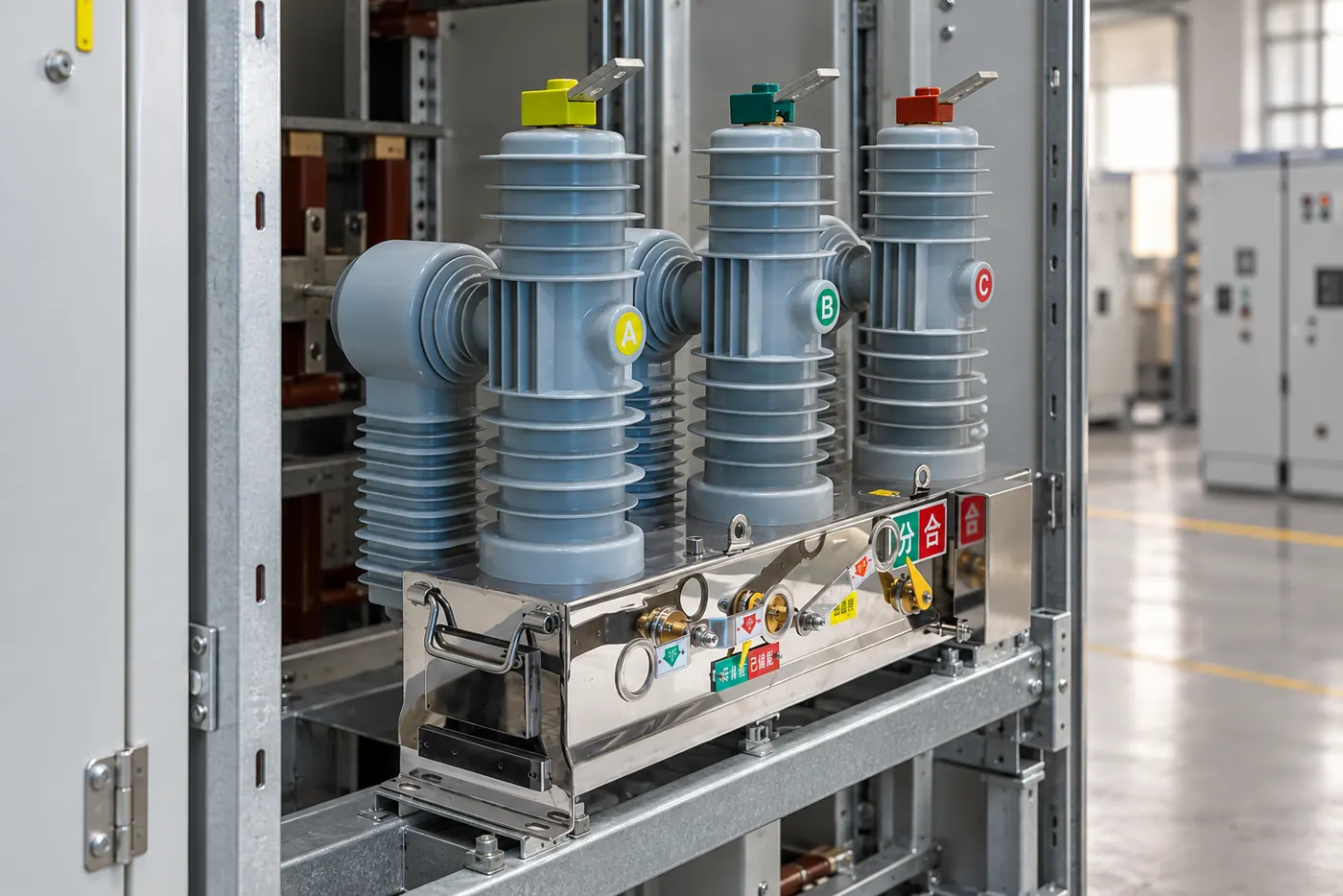
Breaker commissioning tests may include mechanical operation, timing, contact resistance, insulation checks and secondary-circuit tests as specified by the manufacturer and project procedure. A mechanism can operate correctly while a relay output, trip cable or control supply fails. Include the intended end-to-end trip path in the commissioning plan.
The overview of VCB test methods and their limits explains why resistance, timing and dielectric checks answer different questions. Use model-specific test conditions. Applying an arbitrary high voltage to a vakum interrupter is not an acceptable substitute for an approved procedure.
What should be checked before approving a retrofit?
Verify primary-terminal geometry, support loads, secondary contacts, control voltage, interlocks and the relationship with existing protection. Keep the complete assembly in view: changing a breaker can affect dielectric clearances, temperature rise and other design assumptions. An individual breaker’s test report does not certify a modified switchgear cell.
For each deviation from the original design, ask who accepts engineering responsibility and which checks demonstrate suitability. This makes the scope of the replacement clear before delivery rather than leaving installation personnel to resolve it on site.
Pertanyaan yang sering diajukan
Are medium-voltage and high-voltage vacuum breakers different products?
The terms overlap in everyday usage. IEC’s high-voltage switchgear family includes equipment above 1 kV, including many medium-voltage applications. Select by actual ratings and duty instead of the marketing label.
Does IEC 62271-100 set a maximum voltage for every vacuum breaker?
No. It covers AC circuit-breakers above 1 kV without making every compliant design suitable for the same voltage range. The individual product’s declared ratings and evidence determine its application.
Can a distribution VCB protect a generator?
Only when the particular design is demonstrated suitable for the generator circuit’s duties. Generator interruption conditions can differ substantially from ordinary distribution feeder duties.
Is contact resistance enough to establish breaker health?
No. It is one condition measurement. Mechanical performance, insulation, interrupter integrity, controls and the protection trip path require their own appropriate checks.
Can a higher-rated breaker always replace a lower-rated one?
No. Dimensions, insulation, controls and assembly compatibility still need verification. A higher catalog current value does not establish that the replacement suits the existing cell.
Does vacuum technology remove all gas from switchgear?
No. The interruption medium and the surrounding insulation system are separate choices. Check the complete assembly’s declared insulation medium.
Ringkasan
Translate the broad “high voltage VCB” description into a specific circuit requirement before requesting quotations. Establish voltage and insulation, separate load current from fault duty, identify special switching conditions and verify the installation environment. Then review the breaker, enclosure and protection as a working system. Where the load is a generator or capacitor bank, ask for the evidence covering that particular switching duty rather than accepting a general feeder test report. Fuerte’s vacuum circuit breaker products should be assessed against that defined scope, with model-specific drawings and test evidence. A clear specification prevents the purchasing team from mistaking a familiar name, a larger current number or a physical fit for demonstrated suitability.