
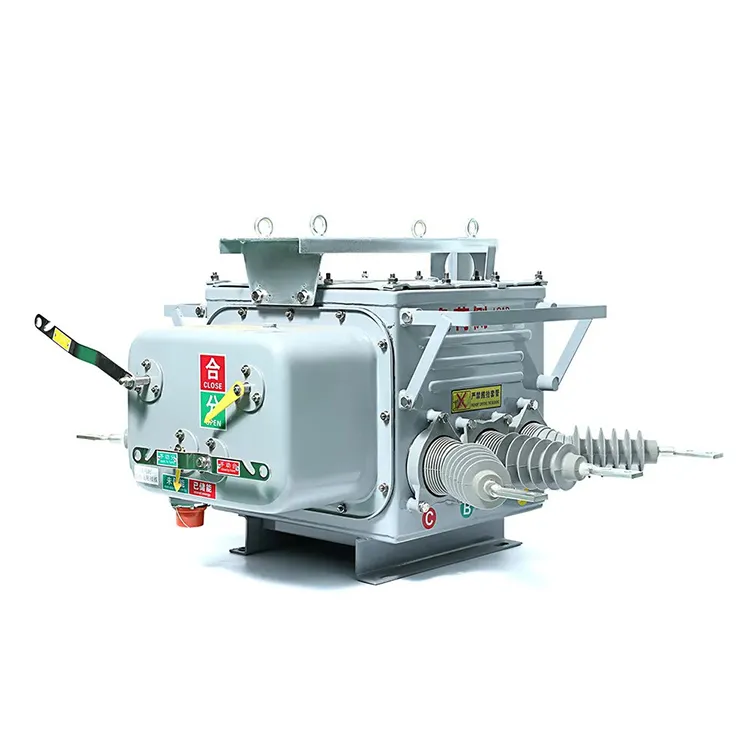
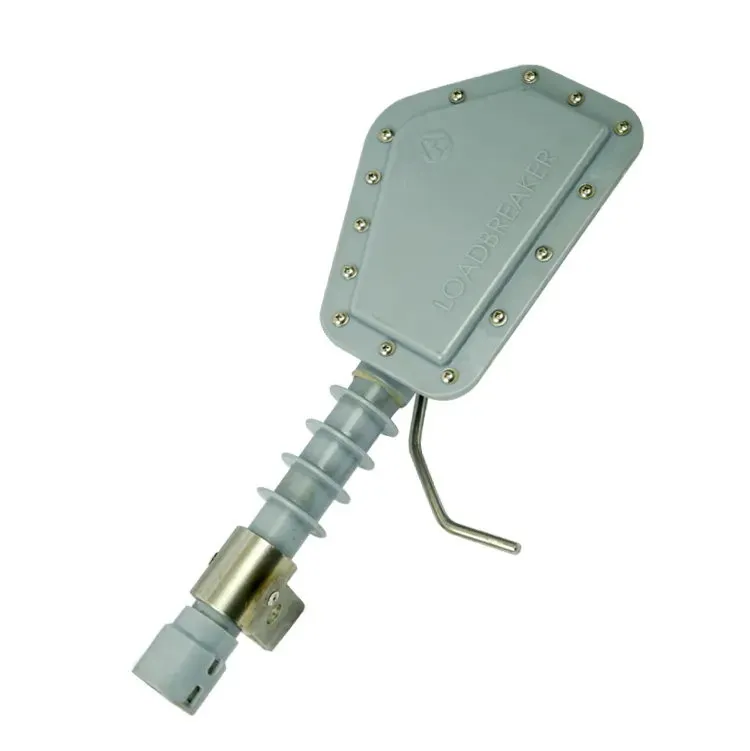


When a procurement engineer in Pune reviewed a feeder replacement, the first energisation attempt ended in a trip and a long commissioning delay. The visible failure looked like a defective breaker; the investigation instead found that the specified short-circuit duty and the switchgear interface had never been reconciled. This guide uses that illustrative scenario to show why a medium-voltage vacuum circuit breaker should be selected from the duty, the complete rating schedule and the evidence package—not from a headline current or a familiar voltage class.
Summary: A buyer should issue one coordinated schedule covering system voltage, insulation level, frequency, continuous current, short-circuit breaking and making current, short-time withstand, operating sequence, switching duties, control voltage and mechanical interfaces. IEC 62271-1 sets common requirements, IEC 62271-100 addresses AC circuit-breakers, and IEC 62271-200 addresses AC metal-enclosed switchgear. Ask bidders to map each declared value to a drawing, routine test or applicable type-test report before comparing price or lead time.
Start with the duty, not the catalogue label
A vacuum circuit-breaker (VCB) interrupts current in a sealed interruptor de vacío. When the contacts part, the arc is extinguished around current zero and the gap recovers dielectric strength quickly. That principle explains why VCBs are widely used in distribution feeders, transformer incomers, motors and renewable-energy collector systems, but it does not by itself prove that a particular model suits a project.
First establish the network duty. Record the highest system voltage, earthing arrangement, normal load current, prospective short-circuit current at the installation point, X/R assumptions, fault-clearing time and required operating sequence. Then identify non-fault duties: transformer magnetising current, motor starting, capacitor-bank switching, cable charging and out-of-phase switching where relevant. These duties can impose different restrike, recovery-voltage or endurance requirements, so “12 kV” or “630 A” alone is not a procurement specification.
Keep the calculation traceable. A short-circuit study, single-line diagram, protection settings and utility connection requirements should all point to the same fault level and clearing time. If data is preliminary, mark it as a design assumption and require the supplier to state the consequence of a later change. This prevents a low initial quotation from becoming a panel redesign, relay change or delayed approval.
Compare complete ratings and switching capability
The rating schedule should be read as a set of interdependent values. Rated voltage and insulation level describe the system stress the equipment must withstand; continuous current describes thermal loading; short-circuit breaking current, making current, peak withstand and short-time withstand describe fault performance. Include frequency, operating mechanism, opening and closing times, rated operating sequence, terminal arrangement and any required electrical or mechanical endurance class.
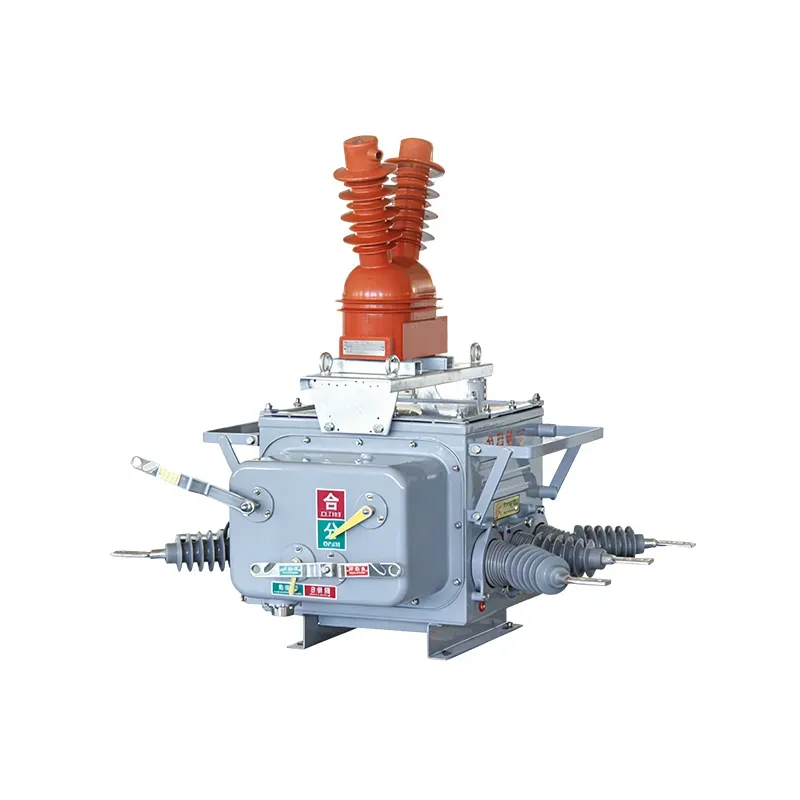
Do not assume a standard “10,000 operations” figure, a fixed breaking-current range or a universal insulation value. Those values vary by design, voltage class, interrupter, mechanism and tested configuration. Require the bidder to submit the exact rating plate, guaranteed data sheet and test references for the offered assembly. The same caution applies to environmental claims: a interruptor de vacío avoids SF6 in that interrupter, but the complete installation still needs an equipment-specific environmental and end-of-life review.
| Decision dimension | Interrupción de la presión de vacío | SF6 interruption | Evidence to compare |
|---|---|---|---|
| Interrupting medium | Sealed vacuum interrupter; verify the offered interrupter and assembly combination. | SF6-filled chamber; verify gas density, filling and recovery arrangements. | Assembly drawing, nameplate and manufacturer’s technical file. |
| Routine attention | Mechanism, electrical connections, interlocks and condition checks remain necessary; intervals are design-specific. | Mechanism checks plus gas-density or leakage controls where applicable. | OEM maintenance instructions and inspection forms. |
| Switching duty | Confirm tests for the actual load, transformer, motor or capacitor duty. | Confirm the same duty and the relevant gas-insulated design tests. | Type-test report, test circuit and duty classification. |
| Environmental documentation | No SF6 in the interrupter, but review materials, auxiliary insulation and disposal instructions. | Document SF6 inventory, leakage control, recovery and end-of-life handling. | Environmental declaration and disposal/recovery procedure. |
| Application boundary | Use only within the declared voltage, current, fault and endurance ratings. | Use only within its declared ratings and installation conditions. | Guaranteed schedule matched to the single-line diagram. |
Check fit and interfaces before accepting a price
Many commissioning problems are interface problems. Confirm whether the breaker is fixed or withdrawable, the required cell width and depth, primary disconnect geometry, shutter and earthing-truck arrangements, phase spacing, cable or busbar entry, and the location of current transformers and voltage transformers. A breaker that meets the electrical duty can still be unusable if its racking, secondary plug or interlock pattern does not match the panel.
Specify the control scheme as carefully as the main circuit. State the close and trip-coil voltage, undervoltage or shunt-release requirements, anti-pumping logic, auxiliary-contact quantity and ratings, local/remote selector, spring-charging motor supply, heater supply and any protection or communications interfaces. Ask for a GA drawing, terminal diagram, interface-control document and a marked-up compatibility statement for the existing panel. For a complete medium-voltage switchgear package, require the supplier to identify every item that is included, excluded or expected from the panel builder.
Site conditions also belong in the request for quotation: indoor or outdoor location, altitude, ambient temperature, humidity, pollution, seismic requirement, enclosure rating and access constraints. If the equipment will be installed in a renewable-energy plant, mine, railway or process plant, describe switching frequency, remote operation and maintenance access rather than relying on an industry label.
Request evidence that can survive a design review
A credible offer is more than a brochure. Ask for the proposed rating schedule, outline and interface drawings, bill of materials, routine-test plan, quality-control checkpoints, serial-number traceability and a sample inspection-and-test record. For the exact design family and rated configuration, request applicable type-test evidence covering dielectric tests, temperature rise, short-circuit performance, mechanical operation and any special switching duty that your study identifies.
References to ISO 9001, KEMA, CESI, Powertech or another laboratory should be treated as documentation requests, not as automatic proof that every Fuerte product or every variant carries that certification or test report. Ask the bidder to identify the legal manufacturer, tested configuration, report number, revision, voltage/current combination and any limitations. Confirm whether a report applies to the offered interrupter, mechanism, cubicle and busbar arrangement, or only to a related design.
Build hold points into the purchase order: drawing approval before manufacture, witness or review of routine tests, inspection of contact resistance and insulation results, functional checks of racking and interlocks, and a data-book index before shipment. This is especially important when private labels, nameplates or OEM packaging are requested; the label must remain traceable to the actual manufacturer and test records.
| Specification or risk | Buyer’s question | Documentación para solicitar | Acceptance point |
|---|---|---|---|
| System duty | What are the maximum voltage, load current, fault current and clearing time at the installation point? | Approved single-line diagram, fault study and coordinated rating schedule. | All values appear consistently on the offer and drawings. |
| Insulation and environment | What insulation level and site corrections apply at the actual altitude, pollution and temperature? | Insulation table, derating notes and installation conditions. | Design review closes open environmental assumptions. |
| Switching duty | Will the breaker switch motors, transformers, capacitors or cables, and how often? | Duty statement and relevant type-test references. | Protection and switching study accepts the declared duty. |
| Mechanical fit | Does the breaker match the cell, racking, shutters, earthing and primary disconnects? | GA, interface-control drawing and compatibility matrix. | Panel builder signs off before production. |
| Controls | Are coil supplies, auxiliary contacts, interlocks and remote signals complete? | Terminal diagram, wiring schedule and functional test procedure. | Point-to-point test passes at the specified control voltage. |
| Quality and traceability | Can each unit and component be tied to its routine tests and inspection record? | Serialised data book, material certificates where relevant and NCR process. | Release only after the agreed dossier is complete. |
| Lifecycle | What spares, tools, training and end-of-life instructions are included? | Maintenance plan, spare-parts list, storage guidance and disposal notes. | Operations team accepts the handover package. |
Use the IEC standards for the right question
IEC 62271-1:2017, Common specifications, provides common requirements for high-voltage switchgear and controlgear. It is the baseline vocabulary for ratings, service conditions, tests and documentation; it is not a product-specific approval badge.
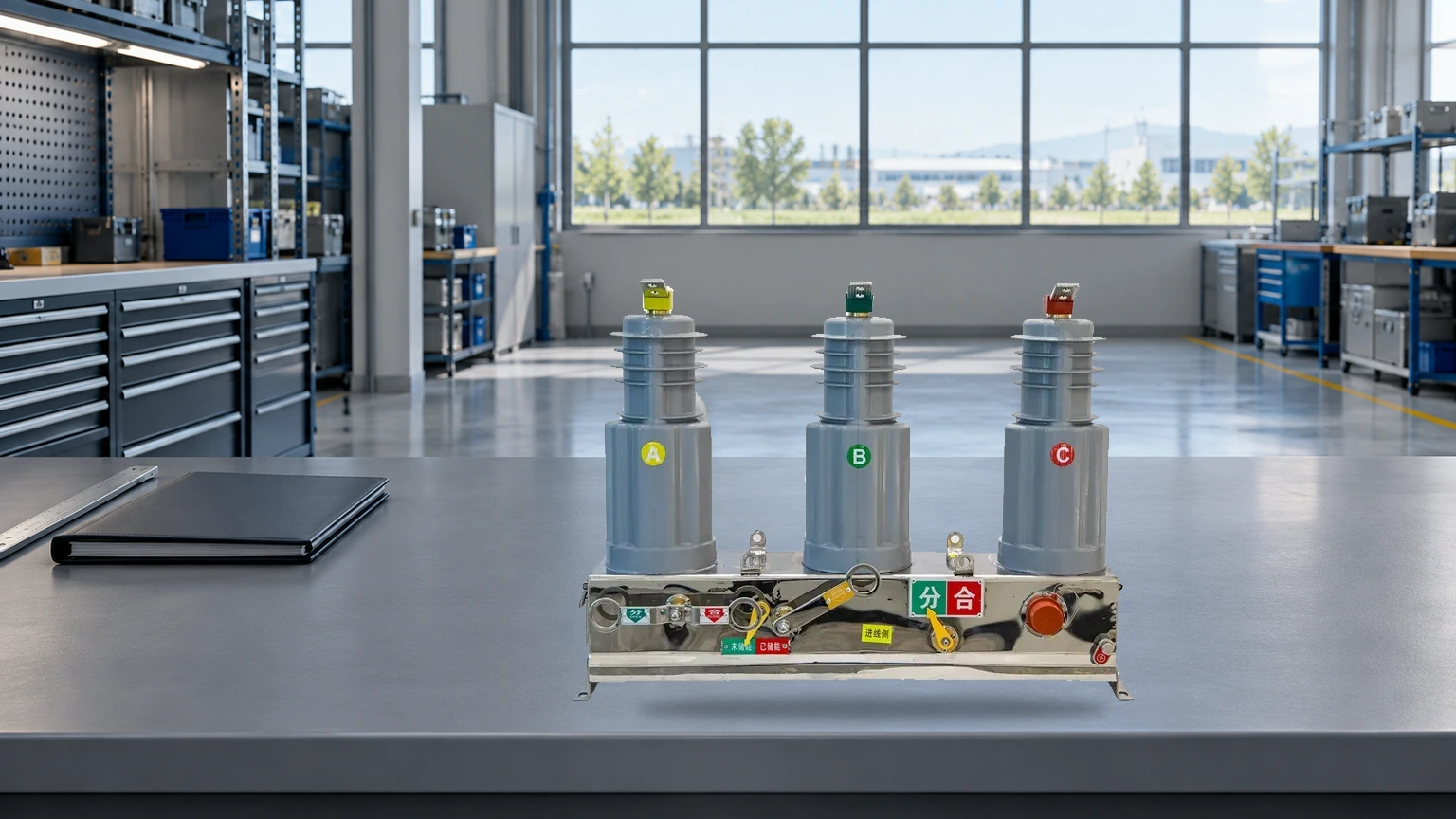
IEC 62271-100:2021, High-voltage alternating-current circuit-breakers, addresses AC circuit-breakers and their relevant type and routine test framework. Use it when reviewing the breaker’s interrupting, making, dielectric, temperature-rise and operating performance against the declared duty.
IEC 62271-200:2021, AC metal-enclosed switchgear and controlgear, addresses the complete metal-enclosed assembly, including construction, service conditions, internal-arc classification where specified and tests applicable to the enclosure and compartments. A breaker report alone does not demonstrate compliance of the assembled switchgear. Check local grid rules, installation regulations and the contract’s edition requirements as well.
Plan operation, maintenance and total cost
VCBs can reduce some gas-related tasks compared with SF6 equipment, but “maintenance-free” is not a safe procurement assumption. Plan inspections of the operating mechanism, charging system, terminals, interlocks, earthing circuit and enclosure; follow the OEM’s contact-wear and vacuum-integrity guidance; and retain trip-coil, timing and insulation test records. Define storage conditions and spare strategy before the first unit arrives.
Compare total cost over the project life: engineering and panel adaptation, commissioning tests, planned outages, spares, specialist tools, training, inventory, disposal and the cost of an unavailable feeder. A lower unit price can be offset by non-matching interfaces, incomplete data books or long lead times for a mechanism or interrupter. Conversely, a higher-priced offer is not automatically safer unless its evidence and lifecycle obligations are explicit.
Zhejiang Fuerte Electrical Apparatus Co., Ltd. describes medium-voltage manufacturing and OEM support on its public vacuum circuit breaker manufacturer information page. Buyers should still request product-specific drawings, ratings and test documentation for the exact project configuration; company-level experience does not replace a design review.
Preguntas frecuentes
What is a vacuum circuit breaker used for?
It interrupts load and fault current in an AC medium-voltage circuit and provides isolation through the associated switchgear. The correct model depends on the network duty, installation conditions and interface—not simply the nominal voltage.
Is a VCB always better than an SF6 circuit-breaker?
No universal ranking is defensible. Compare the complete assembly, switching duty, environmental obligations, maintenance plan, available test evidence and local rules; a technically suitable choice is the one that meets the project’s verified requirements.
Which ratings should appear on a buyer’s schedule?
Include rated voltage, insulation level, frequency, normal current, short-circuit breaking and making current, short-time and peak withstand, operating sequence, endurance, control supplies and interface dimensions. Add special duties such as motor, transformer or capacitor switching when applicable.
Does an IEC standard certificate prove that a panel is compliant?
Not by itself. IEC 62271-100 evidence may address a circuit-breaker, while IEC 62271-200 applies to the metal-enclosed switchgear assembly; ask for the exact tested configuration, report scope and routine-test records.
What documents should arrive with the breaker?
At minimum, request the guaranteed rating schedule, drawings, wiring and terminal diagrams, installation and maintenance instructions, routine-test results, serial traceability, spares list and disposal guidance. Add type-test or special-duty evidence and witness-test records where the contract requires them.
Conclusion
A dependable VCB purchase starts with the fault and switching duty, then works outward to insulation, thermal ratings, interfaces, evidence and lifecycle support. IEC 62271-1, -100 and -200 help separate common requirements, breaker performance and complete switchgear assembly responsibilities. They do not remove the need to verify the exact design offered. Buyers should make every critical value traceable to a study, drawing, routine test or applicable type-test report; challenge fixed “typical” ranges and unqualified certification claims; and approve the panel interface before manufacture. The lasting lesson is simple: choose the documented configuration that fits the network and the people who will operate it. If you are preparing a project schedule, review the relevant vacuum circuit breaker product information and ask the supplier to close each evidence item in writing.