


A fault study and a breaker quotation can both show a value in kA without describing the same duty. One value may be a symmetrical RMS breaking current, another a peak making current, and another a short-time withstand current with a stated duration. Treating them as interchangeable can leave a specification incomplete even when the largest number looks sufficient. For commercial and industrial projects, the relevant comparison begins at the breaker’s actual location and operating conditions. This guide explains how to turn the network study into a rating schedule, identify duties that need additional review and check whether the offered evidence supports the complete requirement.
What should the buyer confirm first?
Specify VCB breaking capacity against the prospective fault duty at its installation point, with the rated voltage, frequency, operating sequence and relevant recovery-voltage conditions. Keep symmetrical RMS breaking current, peak making current and short-time withstand current separate. Check the applicable DC component and any special switching duty through the responsible engineering study. IEC 62271-100:2021+AMD1:2024 covers three-phase AC circuit-breakers above 1,000 V at 50/60 Hz. A matching headline kA value is necessary only within its declared conditions; it does not by itself prove that a breaker is suitable for every network or industrial load.
Which fault-study result belongs in the specification?
Use the prospective fault duty at the breaker location for the approved network configurations. Record the study revision, source conditions and assumptions. Parallel sources, future network changes and generation can change the duty, so avoid copying a value from another busbar or an outdated drawing.

The study and equipment schedule should use compatible definitions and conditions. If the supplied data do not make clear whether a current is RMS or peak, resolve that point before comparison. The medium-voltage breaker selection guide places fault duty alongside the rest of the rating set.
How do breaking, making and withstand currents differ?
| Quantity | What it describes | Specify with it |
|---|---|---|
| Corriente de corte de circuito corto | Current the breaker is rated to interrupt under defined conditions | RMS basis, voltage and applicable test duty |
| Short-circuit making current | Duty when closing onto a fault | Peak basis and governing standard conditions |
| Short-time withstand current | Fault-current carrying duty before clearance | RMS current and duration |
| Continuous current | Normal current carrying duty | Service and installation conditions |
| Recovery-voltage duty | Voltage stress after current interruption | Applicable network and switching conditions |
Do not compare a peak making value directly with an RMS breaking value or omit the duration from withstand duty. Likewise, continuous current in amperes is not a substitute for the interrupting rating. Use the manufacturer’s declared rating set rather than calculating a missing value from an informal rule of thumb.
Why do the DC component and recovery voltage matter?
An AC fault can contain a decaying DC component. That is a feature of an asymmetric AC fault, not proof that an AC breaker is rated to interrupt a DC circuit. The study should establish the relevant interruption conditions for comparison with the offered breaker evidence.
After interruption, the voltage across the open contacts must be withstood. Special network and load conditions can require a more detailed review than a single current rating provides. ABB’s generator-breaker description, for example, identifies delayed current zeros and severe transient recovery voltages for its dedicated generator duty. Those capabilities must not be assumed for an ordinary feeder breaker.
Which switching applications need a separate question?
Flag generator connections, capacitor switching, arc-furnace service and other unusual operating duties. Ask whether the offered design’s declared capabilities and evidence cover the application. Selecting a higher breaking-current number cannot by itself answer questions about switching frequency, current zeros or the recovery-voltage envelope.

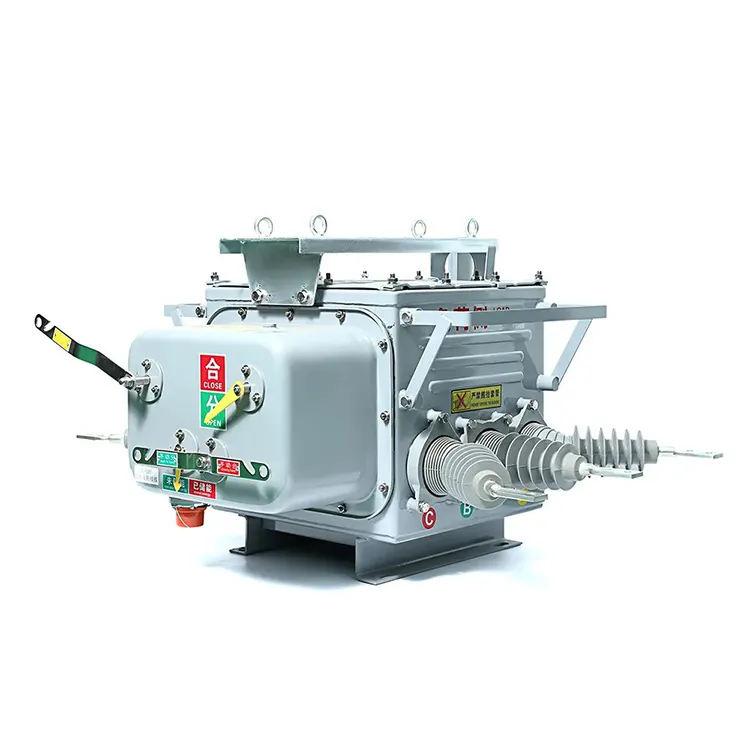
For a named model, confirm the complete data sheet and test basis. A product such as the ZW20-12 vacuum circuit breaker is an identifiable starting point for an enquiry, rather than approval for an unspecified fault study.
What evidence should accompany the rating schedule?
Request the offered model and revision, the applicable test evidence, and an explanation of any difference between the tested and offered configurations. Record the governing standard edition and project-specific requirements. Keep design evidence distinct from the serial-numbered routine records delivered with the units.
El VCB type and routine tests guide explains that distinction. The public scope of IEC 62271-100 also distinguishes direct making-breaking test methods from synthetic methods addressed in IEC 62271-101; a public scope page is not a substitute for reviewing the required test program.
Preguntas frecuentes
Is a 20 kA making rating equivalent to a 20 kA breaking rating?
No. Making and breaking ratings describe different duties and commonly use different peak or RMS bases. Read the definitions and conditions in the applicable equipment documentation.
Can an AC fault’s DC component be ignored?
No. Have the responsible engineer compare the study conditions with the breaker’s applicable interruption duty. Do not confuse that component with a DC-circuit rating.
Does a higher kA rating solve every special-load requirement?
No. Recovery voltage, switching duty, operating sequence and other conditions still need review.
Should future network changes be included?
Include the approved design scenarios and planned changes in the study basis. Do not add an unexplained universal margin in place of that work.
Resumen
A useful breaking-capacity specification preserves the meaning of every current value. Begin with the approved study at the breaker location, separate breaking, making and withstand duties, and then verify recovery voltage, operating sequence and application limits. Check the offered design’s evidence rather than choosing by the largest catalogue number. In particular, keep an asymmetric AC fault’s DC component distinct from permission to switch DC. The standard scopes and manufacturer application examples were checked on 15 October 2026; no site-specific calculation is claimed. FUERTE’s VCB breaking-capacity enquiries should include the study basis and the complete required duty schedule.