


When a commissioning manager in Chennai encountered repeated feeder trips during a plant expansion, he approved a substitute breaker after checking its ampere rating and enclosure size. It cleared a fault, but its auxiliary contacts and interlocks would not coordinate with the motor-control lineup. The cause was not simply a defective breaker; it was a selection gap involving duty, control interface, test evidence, and the applicable standard.
Summary: A low voltage vacuum circuit breaker uses a vacuum interrupter on circuits at or below 1,000 V AC; select its complete, tested configuration—not contact technology alone. For industrial low-voltage distribution, compare rated current, prospective short-circuit current, protection, and coordination evidence under IEC 60947-2. Confirm the exact manufacturer configuration below 1 kV, because availability and ratings are not universal. For a related technical topic, see How to Evaluate Industrial Vacuum Circuit Breaker Suppliers. For a related technical topic, see How Do You Choose a China Vacuum Circuit Breaker Manufacturer?.
Vacuum interruption is best known in medium-voltage switchgear. Below 1 kV, buyers may encounter it only in particular configurations or specialist applications. Start with electrical duty and the governing product standard; do not assume every low-voltage frame has a vacuum option. See Fuerte’s low voltage vacuum circuit breaker technology overview.
How vacuum interruption changes the purchasing question
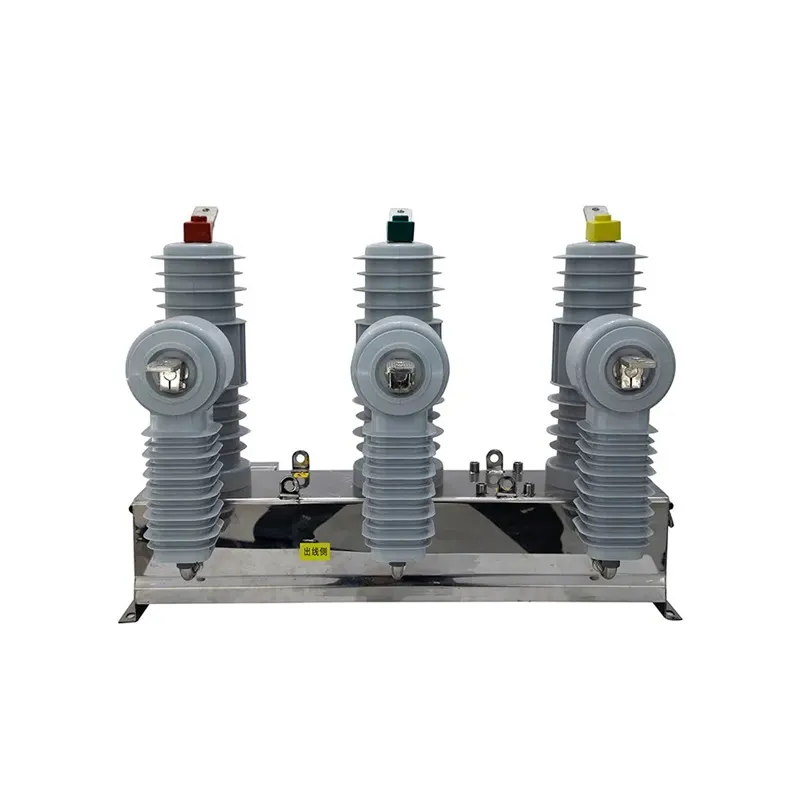
In a vacuum interrupter, contacts separate in a sealed vacuum bottle. A metal-vapor arc forms briefly and is extinguished as current passes through zero in AC service. This can limit contact erosion, but does not remove the need to coordinate a breaker with fault level, controls, enclosure, and protection settings.
For an AC low-voltage breaker, IEC 60947-2 covers circuit-breakers with main contacts intended for circuits not exceeding 1,000 V AC or 1,500 V DC. Its short-circuit test sequences evaluate the complete protective switching device at declared values such as rated ultimate short-circuit breaking capacity (Icu) and, where declared, rated service short-circuit breaking capacity (Ics). A vacuum bottle on its own is not proof that a breaker meets those values.
That distinction matters commercially. A specification that says only “vacuum breaker, 800 A” can lead to redesign costs if the device cannot demonstrate Icu/Ics, trip behavior, interlocks, or switchboard compatibility. Request a data sheet and configuration-specific evidence; do not infer low-voltage performance from a medium-voltage design.
What should be compared against an MCCB?
An MCCB is the familiar benchmark for industrial feeders below 1 kV. It is a complete molded-case protective device, often with thermal-magnetic or electronic protection. Consider a vacuum-interruption design only where a manufacturer offers a tested solution for the duty; compare the whole device rather than treating vacuum as an automatic upgrade.
| Decision point | Low-voltage VCB configuration | Typical MCCB configuration |
|---|---|---|
| Arc interruption | Sealed vacuum interrupter, if supplied in the exact rated design | Air-based interruption within the molded case |
| Protection package | May use an integrated or associated trip/protection scheme; verify the tested combination | Usually integrated thermal-magnetic or electronic trip unit |
| Short-circuit selection | Compare declared Icu, Ics, voltage, and duty sequence | Compare the same declared values under IEC 60947-2 |
| Maintenance and TCO | Potentially different contact-maintenance profile; assess spares, control parts, and service capability | Broadly familiar replacement and coordination practice; assess replacement interval and accessories |
| Best procurement test | Configuration-specific technical file and interface drawing | Coordination study, trip-curve review, and approved accessory schedule |
For a motor feeder, compare starting current, operating duty, and Type 1 or Type 2 coordination under IEC 60947-4-1 where contactors and overloads are involved. A lower purchase price can be false economy if a nonstandard control arrangement adds panel engineering, commissioning time, or spare-part risk. Any lifecycle calculation should include labor, outage exposure, accessories, and documentation.
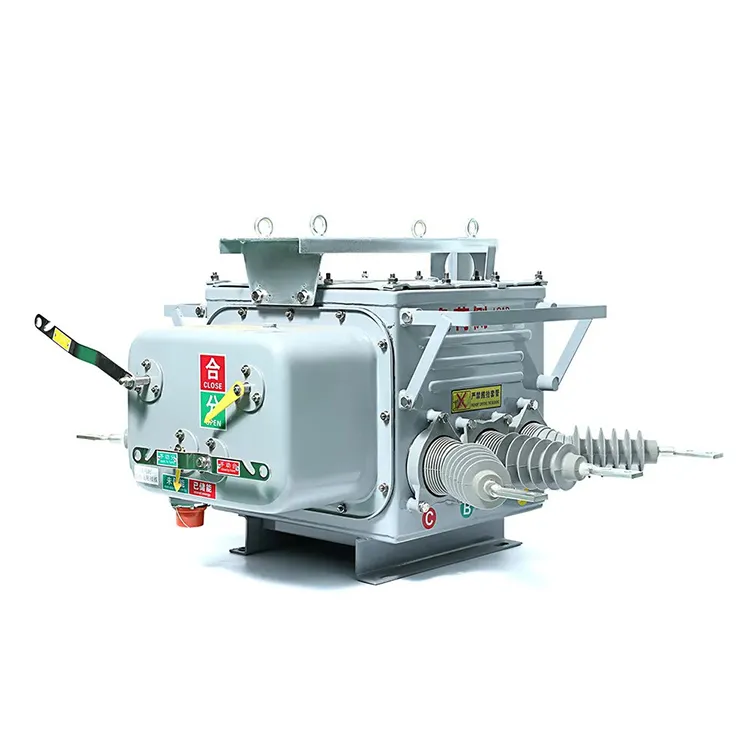
Buyers reviewing vacuum technology in outdoor or distribution-side applications can also examine a low voltage vacuum circuit breaker comparison point from a 12 kV product; its rated-voltage designation makes clear why medium-voltage equipment must not be assumed interchangeable with equipment below 1 kV.

Ratings and installation: specify the system, not a generic product
Rated current answers the continuous-load question; it does not state fault-clearing capability. The prospective short-circuit current at the installation point—derived from transformer and generator contribution, cable impedance, and motor backfeed where relevant—must not exceed the declared breaking capacity at the actual voltage. Exact current ratings available with vacuum interruption below 1 kV must be confirmed with the manufacturer.
| Industrial location | Information to establish | Buyer’s acceptance check |
|---|---|---|
| Main low-voltage switchboard | System voltage, busbar rating, available fault current, selectivity | Icu/Ics at service voltage; withdrawable/fixed interface and assembly verification |
| Motor-control center (MCC) | Motor duty, starting method, control voltage, coordination | Trip settings, control wiring, and IEC 60947-4-1 coordination where applicable |
| Process feeder or pump station | Load cycle, ambient conditions, remote operation, uptime consequence | Operating-duty data, enclosure IP rating, and maintenance plan |
| Generator or critical-load board | Source switching, transient fault contribution, protection discrimination | Study output, closing/tripping scheme, and witnessed functional tests |
IEC 61439 applies when procuring a low-voltage switchgear assembly rather than an individual device. It addresses assembly verification, including temperature rise and short-circuit considerations; it is not a substitute for the circuit-breaker standard. Require evidence that the breaker configuration fits the verified assembly.

Standards, certification, and an IEC-ready procurement package
Use IEC 60947-2 for the low-voltage circuit-breaker product scope, IEC 61439 for the assembled switchgear context, and IEC 60947-4-1 when motor-starter coordination applies. IEC 62271-100 and IEC 62271-1 concern high-voltage switchgear; they provide medium-voltage VCB context, not below-1-kV compliance.
A standard is not automatically a certificate. Ask which edition was used, whether evidence is a type-test report, recognized-body certificate, routine-test record, or manufacturer declaration, and whether it covers the offered poles, trip unit, accessories, enclosure, and voltage. Unsupported IEC claims can delay approval or create liability where third-party certification or local markings are required.
A practical checklist for EPC and industrial buyers
- Freeze the one-line diagram, nominal voltage, earthing arrangement, and calculated fault level at each installation point.
- Specify continuous current, Icu and required Ics, pole count, control supply, auxiliary contacts, interlocks, and required operations.
- Ask for configuration-specific drawings, time-current curves, short-circuit evidence, routine-test scope, and assembly compatibility confirmation.
- Separate low-voltage requirements from medium-voltage equipment in the bid schedule; do not reuse a 12 kV VCB data sheet for a 400 V or 690 V feeder.
- Plan commissioning tests for trip, close, interlock, indication, remote control, and protection coordination before energization.
Fuerte supplies medium-voltage vacuum circuit breakers; buyers evaluating its low voltage vacuum circuit breaker requirements should use its 12 kV equipment as medium-voltage reference material only. Fuerte does not claim a low-voltage VCB offering here; confirm the exact configuration, ratings, and documentation before adding a below-1-kV vacuum product to a project schedule.
Frequently asked questions
What is a low-voltage vacuum circuit breaker?
It is a circuit-breaker configuration intended for low-voltage circuits that uses vacuum as the interruption medium. The complete breaker must still provide rated insulation, protection, operating mechanism, and verified short-circuit performance for its declared duty.
Can vacuum interruption be used below 1 kV?
Yes, vacuum interruption can be engineered for use below 1 kV, but it is not a universal feature of low-voltage breakers. Confirm that the exact offered configuration is designed, tested, and documented for the system voltage and intended application.
What are the benefits of a low-voltage VCB?
Potential benefits can include a sealed arc-interruption environment and a contact-maintenance profile that suits a particular operating duty. The benefit case is application-specific; compare the complete system’s maintenance access, controls, spares, and verified electrical ratings.
How is a low-voltage VCB different from an MCCB?
The principal difference is the arc-interruption arrangement and, often, the overall mechanical and protection architecture. An MCCB is a standardized molded-case protective device, whereas a low-voltage vacuum design may be a more specialized configuration; both must be evaluated against the same system fault and protection requirements.
Which current ratings are available for low-voltage vacuum breakers?
Available ampere ratings vary by supplier, pole arrangement, voltage, and short-circuit duty. Never select from a generic range: obtain the manufacturer’s declared continuous current, Icu, Ics, and derating data for the precise configuration below 1 kV.
Where are low-voltage vacuum circuit breakers installed?
Where offered and appropriately rated, they may be considered in industrial low-voltage switchboards, MCCs, process feeders, and critical-load distribution boards. The installation choice must follow the coordination study, switchboard verification, environmental conditions, and local code requirements.
References
- IEC 60947-2, Low-voltage switchgear and controlgear—Circuit-breakers
- IEC 61439-1, Low-voltage switchgear and controlgear assemblies—General rules
- IEC 60947-4-1, Contactors and motor-starters
- IEC 62271-100, High-voltage switchgear and controlgear—AC circuit-breakers
The durable procurement principle is simple: match the tested breaker configuration to the system duty, then let the interruption technology earn its place.
For medium-voltage vacuum circuit-breaker sourcing and documentation discussions, review Fuerte’s column vacuum circuit breaker range and contact Fuerte with the one-line diagram, required ratings, and destination-market requirements.