
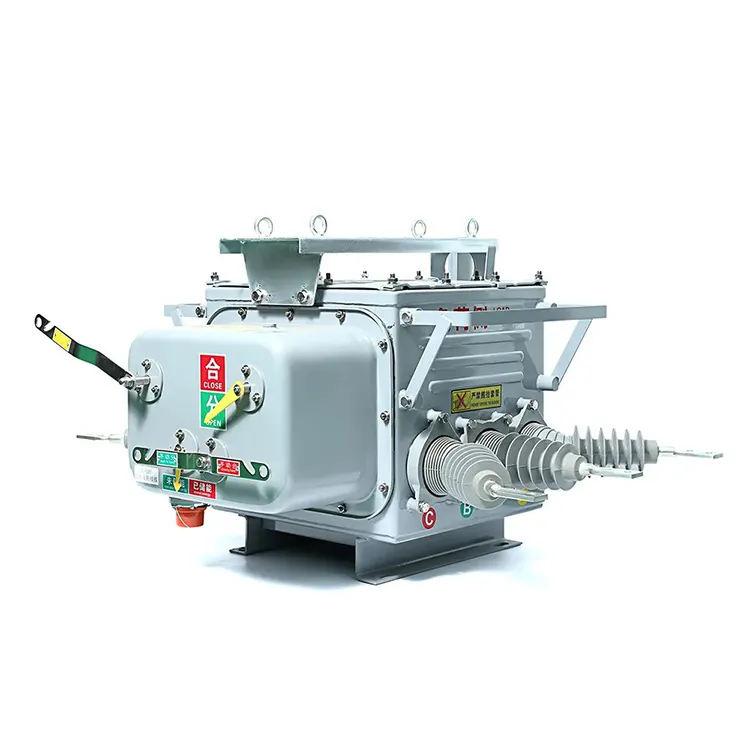
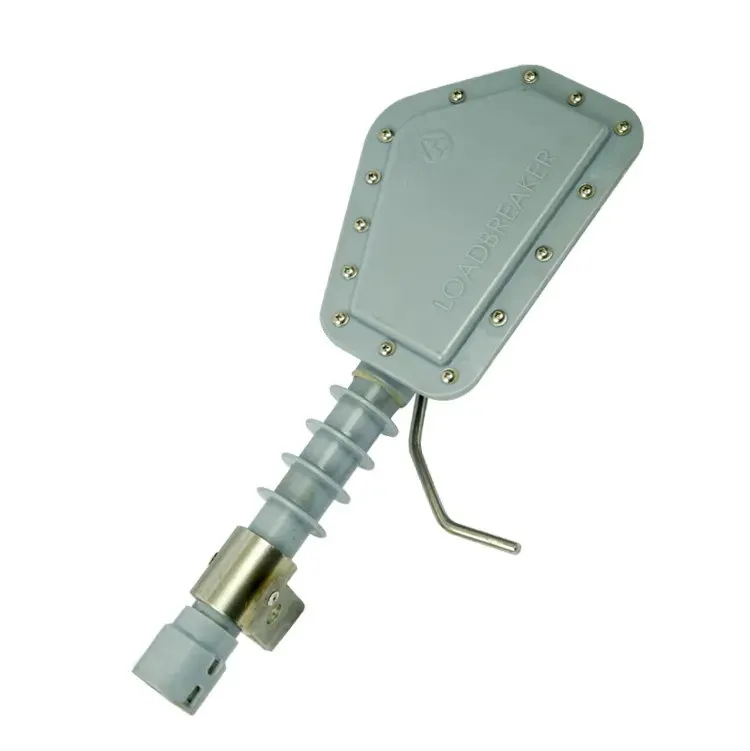


A fuse marked 20 A is not automatically suitable for every 20 A circuit. Its job includes interrupting the current after the element melts, and that duty depends on the circuit voltage, current type and available fault current. This is why an AC fuse selected for a mains circuit cannot be transferred to a battery installation simply because the battery voltage looks lower. The same concern appears in reverse when a DC-rated part is proposed for an AC assembly. This guide explains what the ratings actually describe and which documents are needed before a substitution can be accepted.
The central AC fuse vs DC fuse distinction is interruption under the specified electrical conditions. AC has periodic current zeros; steady DC does not provide the same natural opportunity for an arc to extinguish. A fuse must therefore carry an applicable rating for the intended duty. Check its AC or DC voltage rating, interrupting rating, current characteristic, holder and application conditions together. A dual-rated fuse may have different limits for the two duties. The installation principle in 29 CFR 1910.303(b) is relevant: equipment used to interrupt current must be suitable for the nominal voltage and current available at its terminals.
Why does melting the element not finish the interruption?
When an element melts, an arc can continue to conduct across the opening. The fuse must control that arc and establish a gap that withstands the recovery voltage. The electrical-fuse overview separates current rating, breaking capacity and rated voltage for this reason. A fuse body that appears to have opened is not proof that it has successfully interrupted every possible source connected to it.
In an AC circuit, the current periodically passes through zero, although the fuse still has to withstand the voltage that follows. In a DC circuit, the interruption design must force and sustain current extinction without relying on those periodic zeros. Circuit inductance and the manufacturer’s stated test conditions can matter to DC interruption. There is no universal conversion factor that turns a printed AC voltage rating into an allowable DC rating.
| Rating or condition | What it tells the buyer | What it does not establish |
|---|---|---|
| Current rating | Specified current-carrying capability under defined conditions | AC/DC interchangeability or a precise instantaneous trip current |
| AC or DC voltage rating | Voltage duty covered by the manufacturer’s rating | Suitability for an unlisted current type |
| Interrupting rating | Fault current the fuse can interrupt under stated conditions | That the site’s available fault current is below that value |
| Time-current characteristic | Response over the specified overcurrent range | Coordination with every load or upstream protective device |
Can a higher voltage marking make an AC fuse suitable for DC?
Not by itself. A marking such as 250 V AC is a statement about the rated AC duty, not an unqualified permission to use the fuse on any DC circuit below 250 V. Find an explicit DC rating for the exact manufacturer and part number, with its interrupting conditions. If that rating is absent, obtain manufacturer confirmation or select a fuse documented for the application.
Likewise, a DC-rated fuse is not automatically approved for every lower-voltage AC circuit. Some products have both ratings; others are application-specific. Compare the complete documentation rather than applying a one-way rule. The distinction between a fuse construction and its protective application helps explain why a broad label such as HRC or fuse link is not enough.
Why is an AC distribution cutout not a generic DC fuse?
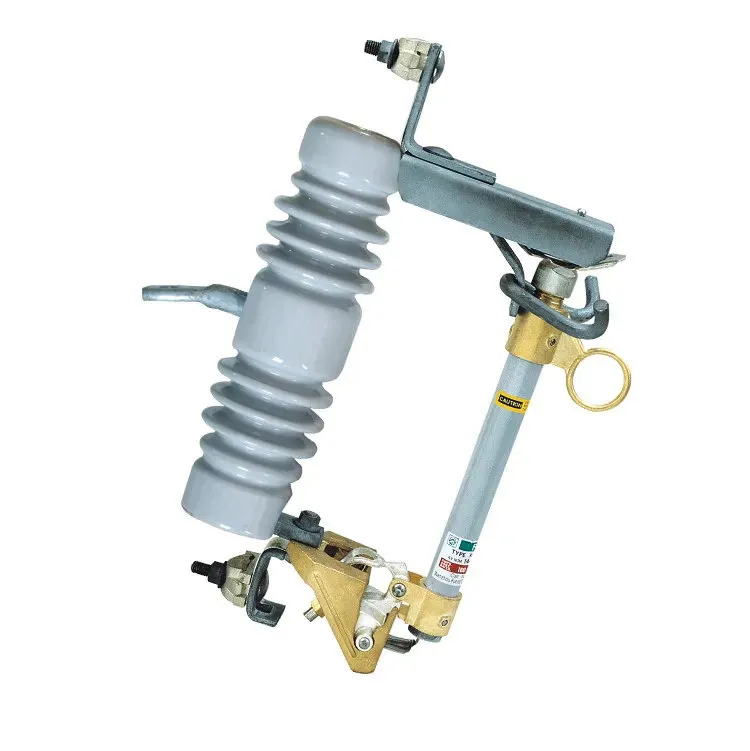
An overhead cutout is a complete distribution assembly with a specified fuse carrier and link arrangement. Its external appearance cannot prove a DC interruption capability. Fuerte’s published cutout information lists frequency-based AC distribution applications; it should be used within the confirmed product scope, not presented as evidence of battery or photovoltaic fuse suitability.
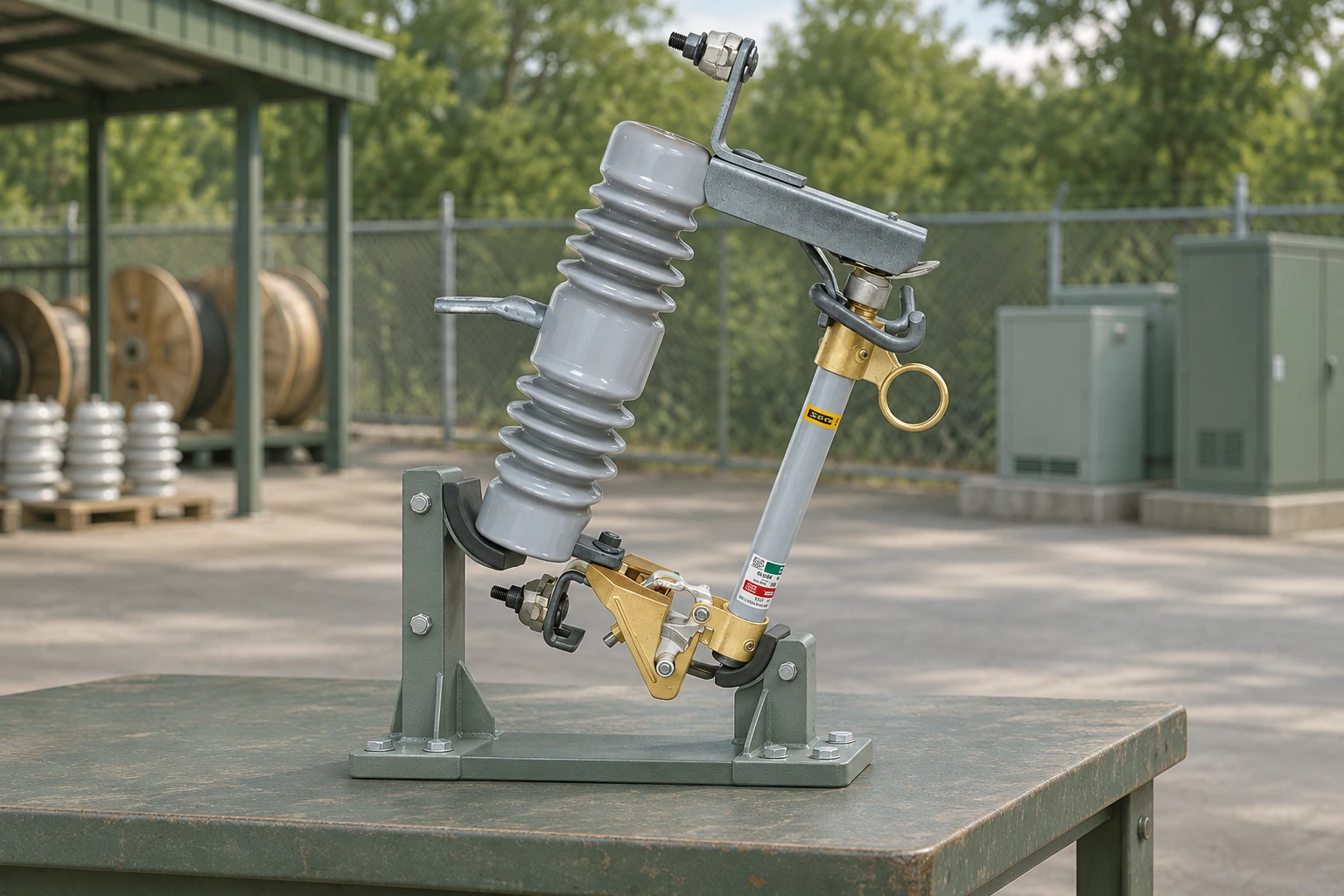
The pictured cutout is an AC distribution example. It is not shown as a DC fuse link, and the illustration does not establish dual-rating or interchangeability. For overhead systems, the cutout ratings and selection requirements need to be considered with the actual link and system conditions.
Which circuit details are easy to overlook?
Use the maximum applicable circuit voltage rather than relying only on a nominal label. A battery’s operating and charging range, a photovoltaic string’s specified maximum voltage conditions, or another DC source’s operating envelope may affect selection. Obtain those values from the system design and source documentation; do not estimate them from the fuse alone.
The prospective fault current is equally important. A low-voltage source can still supply a large fault current, and a fuse’s ampere rating is not its breaking capacity. The holder, conductor terminations and insulation system also need to be suitable for the application. A fuse with documented DC performance does not automatically give an unverified holder the same rating.
| Proposed substitution | Evidence required | Decision if evidence is missing |
|---|---|---|
| AC-only marked fuse in a DC circuit | Explicit DC suitability for the exact part and duty | Do not infer it from the AC voltage number |
| Dual-rated fuse | Separate applicable voltage and interruption limits | Request the complete rating information |
| Same current, different fuse family | Characteristic, fault duty, holder and application agreement | Treat it as an engineering change |
| Higher breaking capacity alternative | All other protection and installation requirements | Do not approve on breaking capacity alone |
These comparisons describe a documentation method, not a ranking of AC and DC fuse quality. Each fuse should be assessed against the duty it was designed and rated to perform.
What evidence is needed before approving a substitute?
Keep the original and proposed part numbers beside the circuit specification. Record the maximum operating voltage, AC frequency or DC conditions, prospective fault duty, load behaviour, coordination requirements and holder details. Obtain manufacturer documents for the exact variants rather than a family-level marketing sheet.

The acceptance record should show how each requirement is met and identify any remaining condition. For an AC fuse selected for distribution equipment, that includes the approved assembly and fuse-link arrangement. When the evidence only confirms mechanical fit, the electrical substitution decision is still unresolved.
Frequently asked questions
What is the purpose of A fuse link?
A fuse link provides the fusible element that operates under specified overcurrent conditions within its intended fuse system. Its current characteristic and interruption duty must suit the circuit and assembly.
What does A DC fuse do?
It provides overcurrent protection under its documented DC conditions, including the relevant voltage and fault-interruption limits. DC suitability must be stated for the actual part.
Can I use an AC fuse instead of a DC fuse?
Only if the exact fuse is also documented as suitable for the required DC duty and meets all other application requirements. An AC rating alone is insufficient.
Is 20 amp DC the same as 20 amp AC?
The ampere is the same unit, and AC current is commonly specified as RMS. Equal 20 A labels do not establish equal interruption performance, voltage suitability, operating characteristic or application approval.
Does the voltage matter on a fuse?
Yes. It relates to the fuse’s ability to interrupt and withstand the circuit voltage under its rated conditions. Check the applicable AC or DC rating, not just the current value.
What are the different types of low voltage fuses?
Low-voltage fuses include cartridge, blade, screw-type, bolted and other standardized forms, with different application and time-current categories. Package shape alone does not identify the protection or interruption duty.
Can I use A DC fuse for an AC circuit?
Only when the manufacturer’s information covers the required AC duty and the fuse meets the circuit and holder requirements. Do not assume reverse interchangeability solely from a DC voltage marking.
Can I use A 250V fuse in A 12V circuit?
Possibly, but the voltage numbers alone cannot decide it. For a 12 V DC circuit, confirm an applicable DC rating, adequate breaking capacity, correct current characteristic and suitable holder. A 250 V AC-only marking does not provide those confirmations.
References
Sources checked on 16 November 2026.
- Wikipedia — Fuse (electrical): construction, ratings and standards
- Wikipedia — Circuit breaker: interruption and resetting
- 29 CFR 1910.303 — Electrical installation requirements (Cornell LII)
Summary
Fuse substitution is an interruption and protection decision, not a comparison of two printed current numbers. Establish the circuit’s maximum voltage, current type and available fault duty first. Then verify the exact fuse’s applicable ratings, time-current characteristic and holder arrangement. A higher voltage marking cannot fill a missing DC rating, and a higher breaking capacity does not resolve every other compatibility issue. Keep the evidence for the approved part with the circuit records. For AC overhead distribution projects, Fuerte’s fuse cutout product information supports an assembly-specific discussion of the carrier, fuse link and service conditions; it should not be extended into an unsupported claim of DC suitability.