
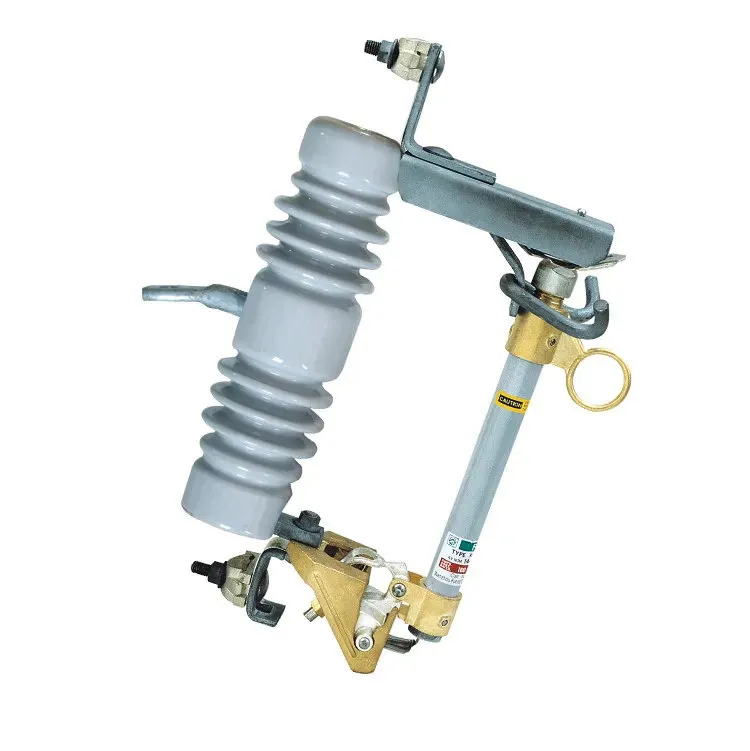
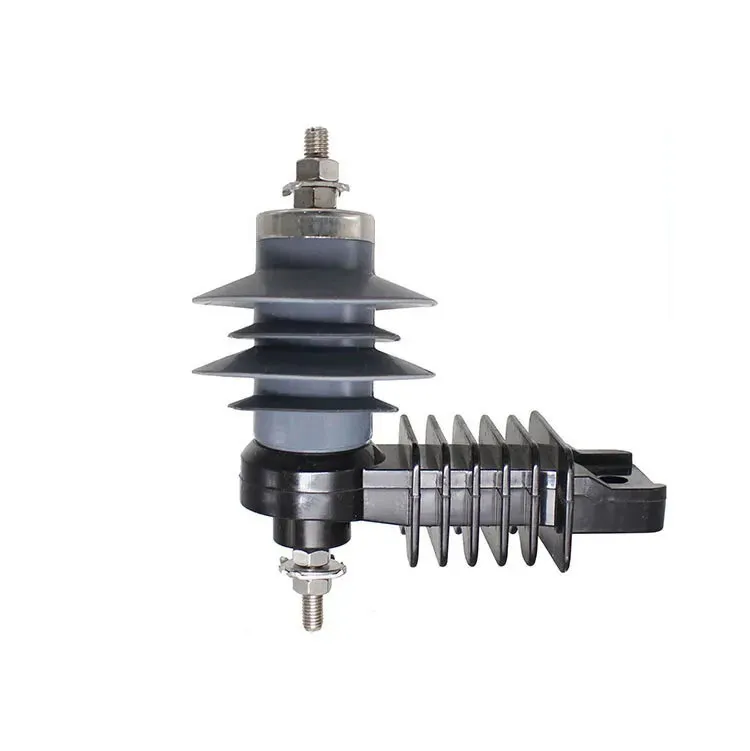
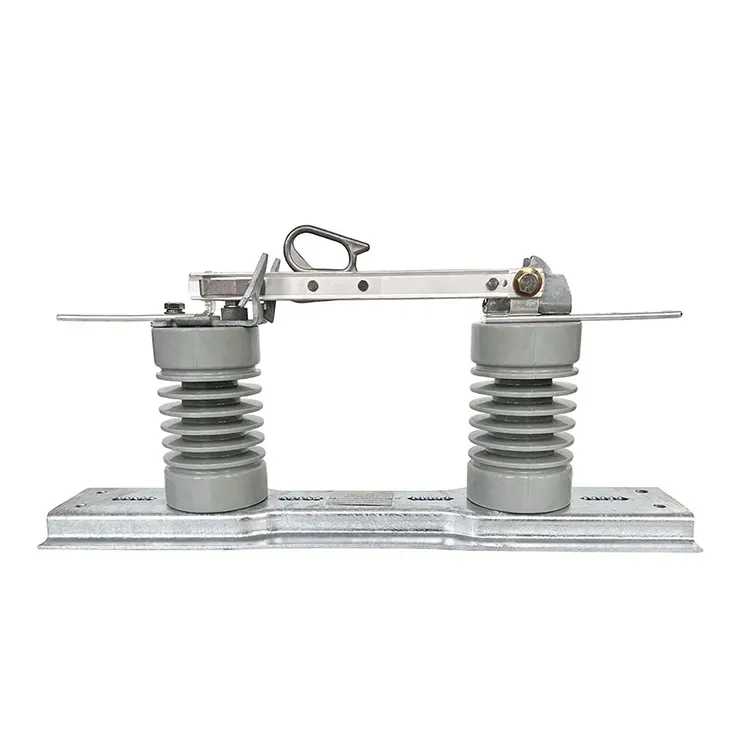
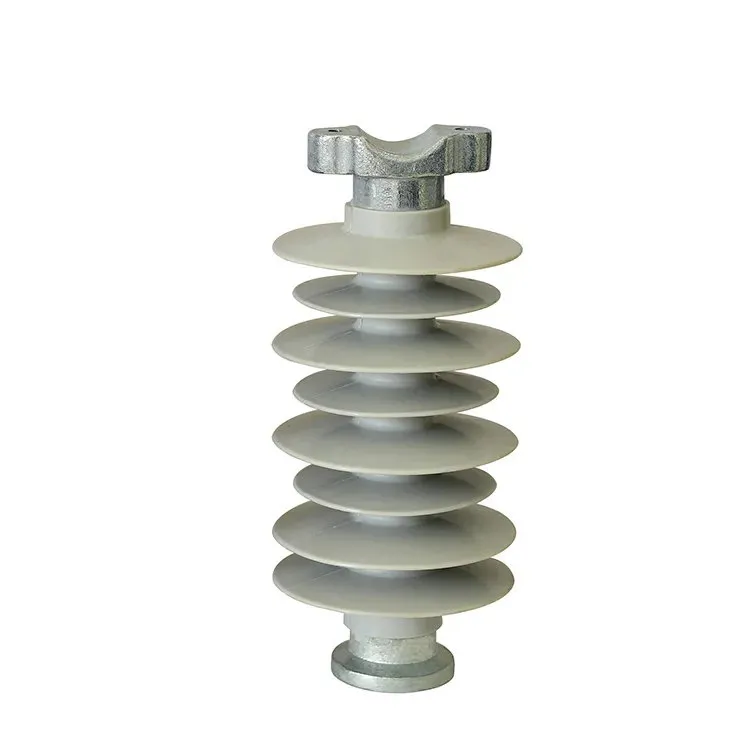
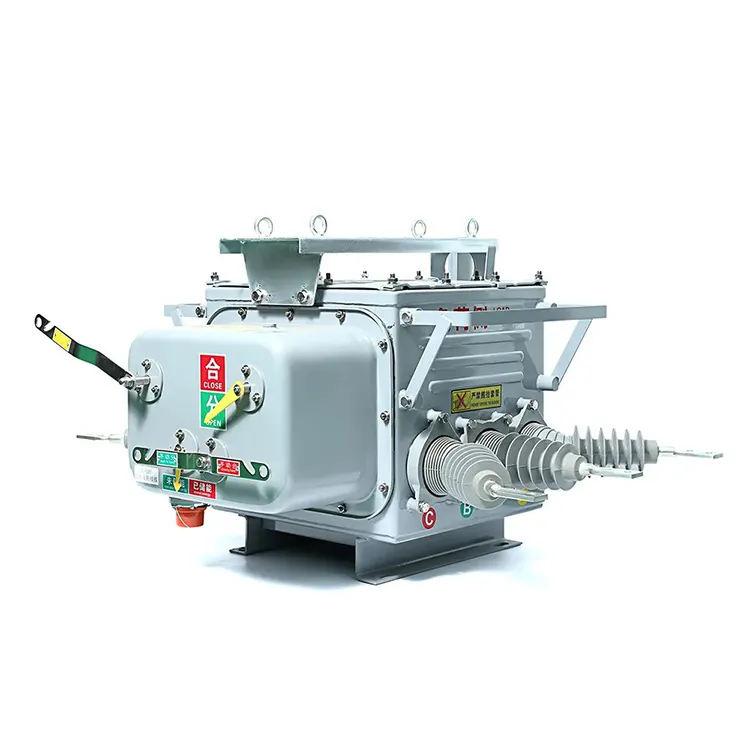
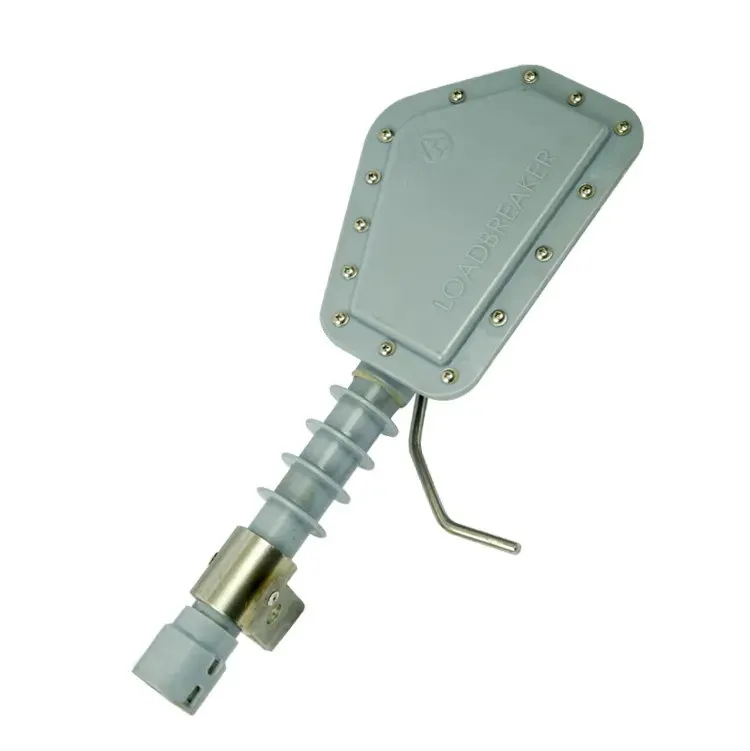


A switch assembly contains both conducting and insulating parts, and both are necessary. The metal path must carry the intended current, while insulating supports keep that path separated from other conductive structures. Calling the entire assembly a conductor or an insulator misses how it works. Similar confusion appears when people classify water, dirty glass or a filled polymer by appearance. This comparison explains the basic material distinction, the conditions that can change behavior, and why a simple category label does not establish whether a component is suitable for electrical service.
Conductors and insulators differ mainly in how readily electric charge can move through them under stated conditions. Metals such as copper generally provide many mobile charge carriers; insulating materials such as clean glass and many polymers strongly restrict conduction. The distinction is practical rather than an absolute zero-current boundary. Temperature, composition, moisture and electric-field strength can change the result. Classify the material first, then assess its role in the complete part and the ratings needed for that application [1, 2].
Why does charge move more easily through a metal?
In a metal, conduction electrons can move through the material rather than remaining tightly associated with one atom. An applied electric field produces a net drift superimposed on their existing motion. In an insulating material, charge is much less free to move over long distances. Bound charges can still shift slightly, producing polarization.
This explains the main insulator vs conductor distinction without requiring the false claim that insulators contain no electrons. Both contain charge. What differs is the mobility and number of available carriers under the conditions being considered. OpenStax’s treatment of conductors and insulators develops this distinction [1].
| Question | Conductor | Insulator |
|---|---|---|
| How readily does charge move? | Relatively easily in the intended operating conditions | With much greater difficulty under those conditions |
| What is a familiar example? | Copper wire or an aluminium conductor | Glass, porcelain or an insulating polymer compound |
| What is the usual design role? | Provide an intended current path | Maintain separation and limit unwanted current |
| What can invalidate a simple assumption? | Small cross section, poor joints, corrosion or overheating | Contamination, damage, heat or excessive electrical stress |
The relationship between conductivity and resistivity gives a quantitative description. Comparing resistance alone is less reliable because specimen length and cross section also affect it.
Can the same material behave differently in service?
Yes. Conductivity depends on material composition and conditions. A polymer containing conductive filler can behave very differently from an unfilled compound with the same base polymer. Heating, moisture and contamination can also change the relevant conduction paths. This is why ‘made of plastic’ is not a complete electrical specification.
The surface and bulk should also be separated. Dirty water on glass can carry current along the surface without the dry glass beneath it becoming a metal-like conductor. If the applied field becomes large enough, electrical breakdown can create a new path through or around an insulating region. A material classification does not predict a safe voltage.
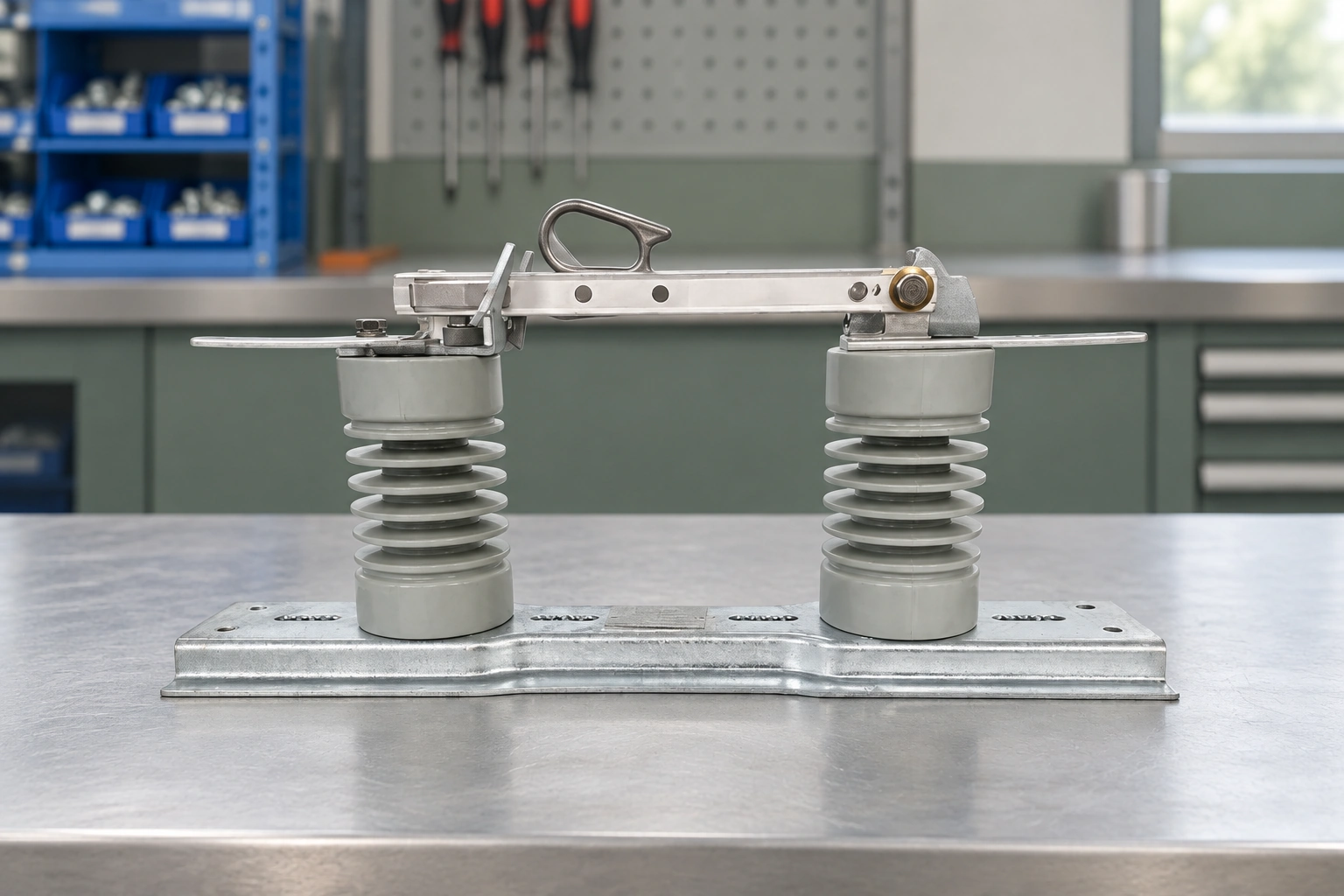
For example, the comparison of polymer and porcelain insulators concerns complete outdoor components, not just which raw material has the larger resistance. Mechanical duty and service exposure can decide the selection.
Is water a conductor or an insulator?
Very pure water conducts poorly compared with ordinary water containing dissolved ions. Salt and other dissolved substances can increase the availability of mobile ions, so a clear-looking sample is not evidence of low conductivity. Temperature and contamination also affect the result. Water should never be treated as a protective insulating barrier in an electrical installation.
The charge carriers in this case are mainly ions, not the conduction electrons that describe ordinary metallic conduction. Graphite provides another reminder that not every conductor is a metal. These distinctions are useful when investigating unexpected leakage, contamination or a measurement that does not match a simple classroom list.
How should a material be classified for an actual component?
Start with the intended electrical role and the service conditions. Then ask whether the material data apply to the exact compound, direction and temperature, and whether the complete product has the required evidence. A handheld meter’s open-circuit indication only means the measured path exceeds that instrument’s range under its test conditions. It does not prove high-voltage insulation.
| Situation | Useful evidence | Insufficient shortcut |
|---|---|---|
| Intended current path | Conductor dimensions, material, connections and thermal rating | A conductivity ranking alone |
| Insulating support | Electrical and mechanical requirements, geometry and test records | A dry resistance reading alone |
| Contaminated surface | Condition history and suitable inspection or test results | Judging the underlying material by appearance |
| Semiconductor component | Device data and operating conditions | Treating it as a wire with a fixed intermediate resistance |
Semiconductors deserve their own category because carrier concentrations and behavior can be strongly influenced by doping, temperature, illumination and device structure. The simple conductor/insulator distinction is a useful introduction, but it cannot replace a component model.
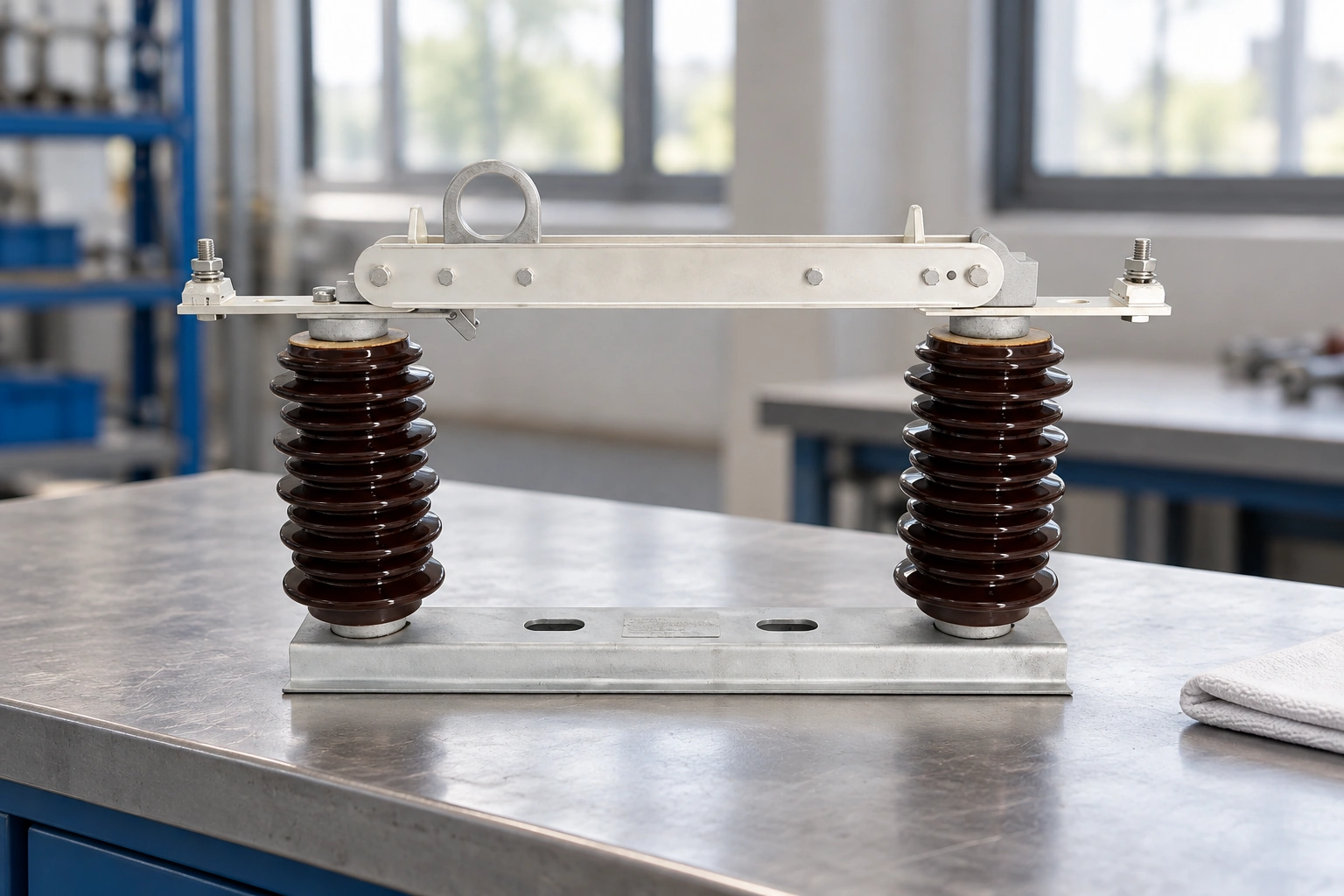
In outdoor hardware, a disconnector’s specified duties describe what the assembly is designed to do. Knowing that it contains a metal blade and insulating supports does not establish its interrupting capability or authorize operation under load.
Frequently asked questions
What is the difference between a conductor and an insulator?
A conductor allows charge to move relatively readily; an insulator strongly restricts it under the stated conditions. Neither label alone establishes a finished component’s current or voltage rating.
Why can electrons move more easily in metals?
Metals contain conduction electrons that are not tightly confined to individual atoms. An electric field produces their net motion, while interactions in the material still create resistance.
Can the same material act differently under different conditions?
Yes. Temperature, composition, moisture, contamination and electrical stress can change behavior. A surface film may also behave differently from the bulk material beneath it.
What are examples of conductors and insulators?
Copper and aluminium are common conductors; glass, ceramics and many polymer compounds are common insulators. The exact grade and service conditions still need to be identified.
Is water always a good electrical conductor?
No. Very pure water conducts poorly, while dissolved ions can increase conductivity substantially. Appearance cannot establish its conductivity, and water should not be relied on for electrical protection.
Is electrical insulation resistance infinite?
No. Real insulation has finite resistance, and current can also flow along contaminated surfaces. An AC measurement may include capacitive current as well as conductive leakage.
How does a semiconductor differ from a conductor?
A semiconductor has carrier behavior that can be controlled strongly by factors such as doping and applied conditions. Its role in a device is more specific than simply being a weak metal conductor.
How can conductivity data help classify a material?
It provides a quantitative indication when temperature, composition and test conditions are known. Use the material data alongside geometry and complete product evidence for an application decision.
References
- 5.2 Conductors, Insulators, and Charging by Induction – University Physics Volume 2 | OpenStax.
- 9.3 Resistivity and Resistance – University Physics Volume 2 | OpenStax.
- Basics of Measuring the Dielectric Properties of Materials PDF Asset Page | Keysight.
Technical sources checked on 26 October 2026. Product illustrations use official Fuerte photographs; scene backgrounds are illustrative.
Summary
The useful distinction is how a material handles charge in the conditions of interest. Conductors provide intended current paths, and insulators maintain separation, but a practical assembly normally needs both. Check composition and exposure before relying on a familiar material name, then review the complete component’s thermal, electrical and mechanical requirements. Do not turn a continuity measurement into a voltage-withstand claim or treat clear water as dependable insulation. Fuerte’s isolating switch range is one example of these functions combined in a product whose documented duties must guide selection and use.