
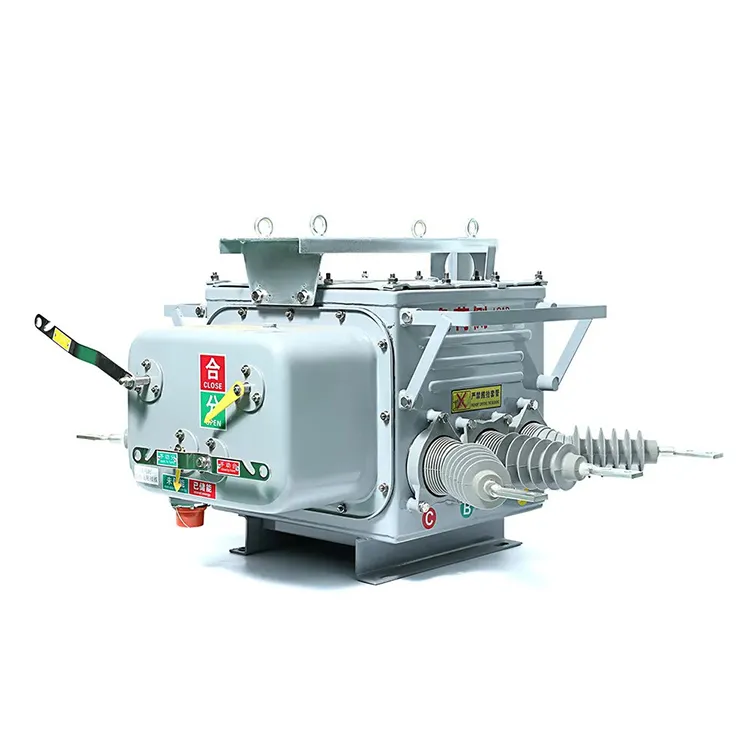


When Priya, an EPC commissioning engineer in Pune, closed a new 6.6 kV motor feeder, the vacuum breaker opened again within seconds and the plant alarmed on undervoltage. She swapped the relay, checked the motor and repeated the close command; the visible failure remained. A review of the single-line diagram found a specification problem, not a defective breaker: the selected interrupting duty and insulation level did not match the bus fault study and cable arrangement. Re-selecting the breaker and coordinating the protection settings restored reliable starts.
Резюме: A 6.6 kV vacuum circuit breaker (VCB) is a medium-voltage switching device for feeders, transformers and motors. IEC 62271-100 treats the breaker as equipment above 1 kV, while IEC 62271-200 covers the metal-enclosed switchgear around it. Check rated voltage, power-frequency withstand, lightning-impulse withstand, continuous current, short-circuit breaking current, short-time withstand and operating duty together; the useful voltage range is the range proven by the complete insulation and enclosure design, not a marketing label. We recommend starting with the plant fault level and motor-starting study, then confirming type-test evidence and field commissioning tests.
How to specify a 6.6 kV VCB
What role does a VCB play in an industrial feeder?
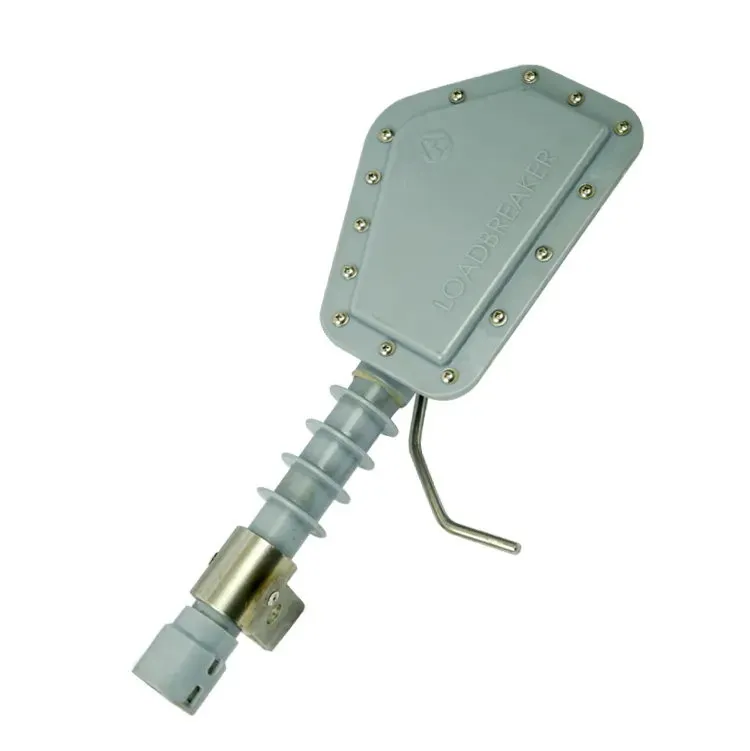
The breaker sits between the incoming bus and a cable, transformer or motor. Its vacuum interrupters extinguish the arc when contacts part, while the mechanism opens on a relay trip. The cubicle may also include an isolating truck, earthing switch, instrument transformers and control circuits; those interfaces influence safe operation as much as the interrupter.
For 6.6 kV motor feeders, the breaker must tolerate energisation without nuisance trips. Inrush, locked-rotor current and acceleration time affect relay pickup; nameplate current alone cannot establish safe interrupting capability.
Which ratings define a 6.6 kV VCB?
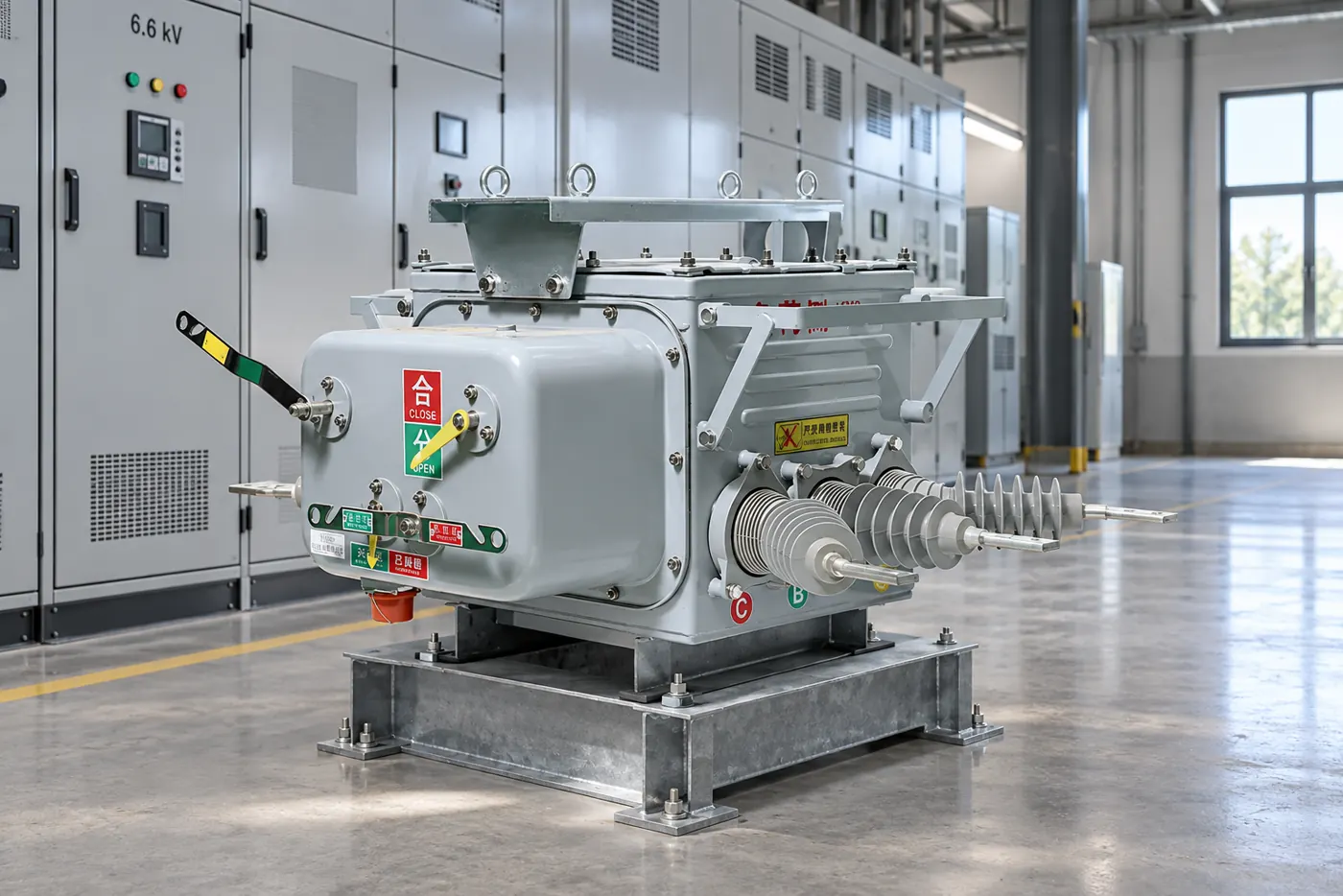
The phrase vacuum circuit breaker ratings covers independent values. Rated voltage is the highest system voltage for which the breaker is designed; a 6.6 kV system may use 7.2 kV-class equipment, subject to utility and insulation-coordination rules. Continuous current is the thermal carrying capability.
Short-circuit breaking current is the symmetrical RMS current interrupted in the specified test. Verify making peak, short-time withstand and operating sequence (for example O–3 min–CO–3 min–CO); these values are not interchangeable.
For a practical vacuum circuit breaker review, request the rating plate, type-test report and routine-test certificate for the exact arrangement. IEEE C37.04 defines rating concepts and IEEE C37.09 specifies test procedures; use the edition named in the purchase specification.
| Rating or attribute | Why it matters at 6.6 kV | Evidence to request |
|---|---|---|
| Rated voltage and insulation level | Coordinates phase-to-earth and across-open-contact stresses, including switching surges. | Type-test report to IEC 62271-100; insulation-coordination study to IEC 60071. |
| Continuous current | Sets thermal capability for the motor, transformer or bus section. | Temperature-rise test and rating plate. |
| Breaking and making current | Must exceed calculated fault duty and first-cycle peak at the installation point. | Short-circuit test data and network fault study. |
| Short-time withstand | Allows the relay and upstream breaker to clear a fault selectively. | Specified kA for 1 s or 3 s, matching the protection design. |
| Operating duty and endurance | Important for frequent motor starts, transfer schemes and maintenance intervals. | Mechanical/electrical endurance class and duty-cycle statement. |
What limits the usable voltage range?
The vacuum circuit breaker voltage range is bounded by insulation, clearances, altitude, pollution and transients. Rated 7.2 kV equipment may suit a 6.6 kV network only when withstand values match the installation; high altitude can require larger external clearances.
IEC 60071 provides the insulation-coordination framework; IEC 62271-200 adds enclosure and internal-arc considerations. Ask whether stated values apply phase-to-earth, across the open gap, or both.

How do you keep a 6.6 kV VCB reliable through its service life?
How do you coordinate a VCB with motor protection?
A 6.6 kV VCB can protect a large motor when relay settings match its starting profile. Functions may include phase overcurrent, earth fault, negative sequence, locked-rotor and undervoltage. Confirm CT performance and relay curves to avoid trips during a healthy start.
Which factory and site tests verify a 6.6 kV VCB?
Routine and site checks commonly cover resistance, dielectric performance, mechanical operation, control circuits, interlocks, racking, earthing, timing and relay injection. Identify the parts and mechanism before connecting test equipment; follow the manufacturer’s isolation procedure.
Measure contact resistance with a micro-ohmmeter and check insulation phase-to-phase and phase-to-earth. Do not substitute a megohmmeter result for a dielectric withstand test. Record conditions, instrument IDs and trip times so maintenance can trend changes.
How should you plan VCB maintenance?
The mechanism, lubrication, control wiring and interlocks still age. Set inspection intervals from operation count, environment, fault history and the OEM manual; after a major interruption, repeat timing and resistance measurements.
Where does a 6.6 kV VCB fit in an industrial plant?
Should a 6.6 kV motor use a VCB or a contactor?
A contactor is designed for frequent switching at a defined utilization category; a circuit breaker interrupts fault current and supports feeder isolation. Some motor-control centres use a contactor with current-limiting fuses, while critical feeders use a VCB and relay. Choose from fault duty, starts per hour, coordination, isolation and lifecycle support—not motor horsepower alone.
| Dimension | 6.6 kV VCB feeder | Medium-voltage contactor arrangement |
|---|---|---|
| Fault interruption | Breaker and relay interrupt calculated short-circuit current within rating. | Usually relies on upstream protection and current-limiting fuses. |
| Switching frequency | Suitable for normal feeder operations; endurance class must be checked for frequent starts. | Often preferred where many starts/stops are required within its utilization category. |
| Isolation and interlocking | Withdrawable designs can provide visible isolation and earth position indication. | Isolation may require a separate disconnector and additional interlocks. |
| Protection flexibility | Numerical relay supports configurable motor protection and event records. | Fuse and overload functions can be simpler but less configurable. |
| Lifecycle cost | Higher initial cubicle complexity; potentially lower downtime for critical feeders. | Lower switching-device cost, with fuse replacement and coordination work to budget. |
Which plant applications use 6.6 kV VCBs?
Applications include mining, cement, water, petrochemical, steel, paper and large HVAC or compressor systems. Selection should follow feeder duty rather than the industry label.
| Application | Primary design question | Documentation boundary |
|---|---|---|
| Large motor feeder | Can the breaker and relay ride through inrush while clearing locked-rotor faults? | Motor data sheet, starting study, relay settings and test records. |
| Transformer primary | Does the breaker coordinate with transformer inrush and secondary protection? | Transformer impedance, energisation waveform assumptions and coordination curves. |
| Bus coupler or incomer | What is the maximum bus fault level and required transfer sequence? | Short-circuit study, synchronism/transfer logic and interlock matrix. |
| Retrofit lineup | Will the truck, shutters, CTs and cable terminations fit the existing cell? | Dimensional survey, interface drawings and retrofit test plan. |

What should a 6.6 kV VCB purchase specification include?
Use IEC 62271-100 for high-voltage AC circuit-breaker performance and tests; IEC 62271-200 for AC metal-enclosed switchgear, including internal-arc classification; IEC 60071 for insulation coordination; and IEEE C37.04/C37.09 where IEEE ratings or test procedures are specified. These are standards and test frameworks, not automatic approval for a particular plant or country. Local electrical codes, utility rules, hazardous-area requirements and occupational-safety regulations still apply. Unsupported claims about certification or arc performance can create commissioning delays, rejected submittals and warranty disputes.
- Issue the latest single-line diagram, fault-level study, motor-starting study and altitude/pollution data with the request for quotation.
- Define ratings as a complete set—voltage, insulation, current, breaking/making, short-time withstand, duty and endurance.
- Require drawings showing pole spacing, CT/VT interfaces, cable terminations, shutters, interlocks and control-voltage details.
- Agree the FAT witness points and site test sheets before shipment; identify who supplies calibrated instruments and test plugs.
- Plan spares, training and post-fault inspection criteria for the expected number of operations and the plant environment.
Fuerte can be considered at this stage as a source of medium-voltage vacuum circuit breaker and switchgear options; ask its team for configuration drawings and the standards evidence that matches your project specification.
Часто задаваемые вопросы
What is a 6.6 kV vacuum circuit breaker used for?
It switches and protects 6.6 kV feeders supplying motors, transformers, buses and process equipment. The breaker interrupts fault current in a vacuum interrupter and works with relays, CTs and interlocks in the switchgear. Confirm the fault duty and insulation level at the actual installation point.
Which ratings should I check on a 6.6 kV VCB?
Check rated voltage, power-frequency and impulse withstand, continuous current, breaking and making current, short-time withstand, operating sequence and endurance. Also check CT/VT ratings, control voltage and enclosure data because they affect the protection system. Compare every value with the approved fault and coordination studies.
Can a 6.6 kV VCB protect large motors?
Yes, if the relay settings account for inrush, acceleration time, locked-rotor current and negative-sequence heating. Verify CT performance and breaker endurance for the expected starts per hour. A motor-protection study should be approved before energisation.
How does a 6.6 kV VCB compare with a contactor?
A VCB is intended to interrupt faults and provide feeder isolation, while a contactor is optimised for frequent operational switching and normally needs fuses or upstream fault protection. Select between them using fault duty, switching frequency, isolation and lifecycle requirements. Some installations use both in coordinated motor-control schemes.
What tests are required for a 6.6 kV vacuum breaker?
Typical FAT and commissioning checks include insulation resistance, dielectric withstand where specified, contact resistance, mechanical operation, timing/travel, interlocks and relay injection tests. Use the project standard and OEM procedure, and record calibrated instrument details. Never test an energised or inadequately earthed circuit.
Where are 6.6 kV VCBs used in industrial plants?
They are common in mining, cement, metals, chemicals, water, paper and other plants with large motors or medium-voltage distribution. The same voltage class can serve incomers, bus couplers and transformer feeders. Layout, environment and maintenance access must be checked for each cell.
Ссылки
- IEC, IEC 62271-100: High-voltage switchgear and controlgear—Part 100: Alternating-current circuit-breakers, webstore.iec.ch.
- IEC, IEC 62271-200: AC metal-enclosed switchgear and controlgear for rated voltages above 1 kV and up to 52 kV, webstore.iec.ch.
- IEC, IEC 60071-1: Insulation co-ordination—Definitions, principles and rules, webstore.iec.ch.
- IEEE, C37.04 Standard for Ratings and Requirements for AC High-Voltage Circuit Breakers and C37.09 Standard Test Procedures, standards.ieee.org.
- Public SERP and manufacturer-page review (14 September 2026): snippets were used only to identify recurring buyer questions; access limits and changing page content mean project teams should verify the current edition and supplier evidence before procurement.
Specify the duty first, prove the ratings second, and let the breaker earn its place in the lineup. For a project-specific 6.6 kV VCB configuration, contact Fuerte with your single-line diagram and fault-level data.
Explore Fuerte medium-voltage vacuum circuit breaker solutions or contact the team for a documented selection review.