
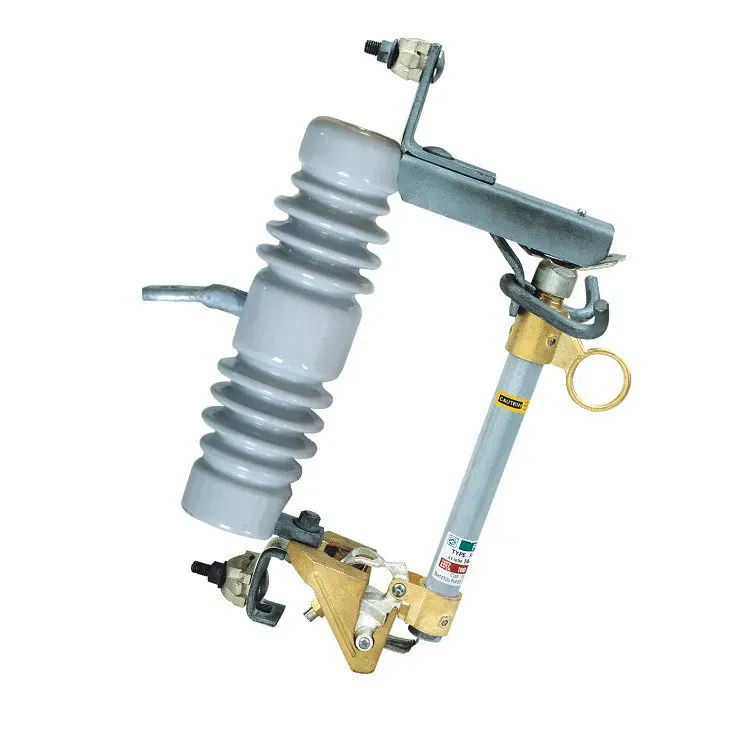
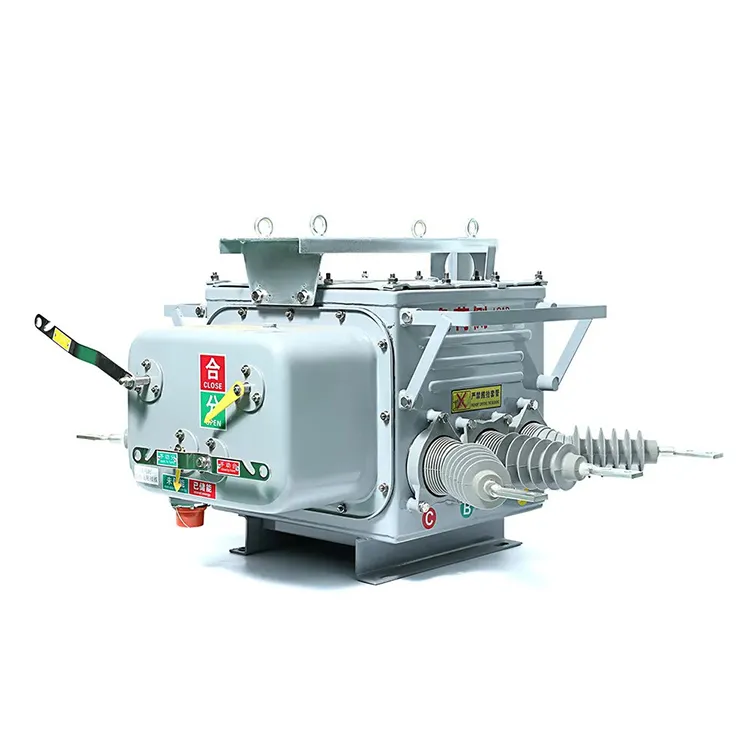
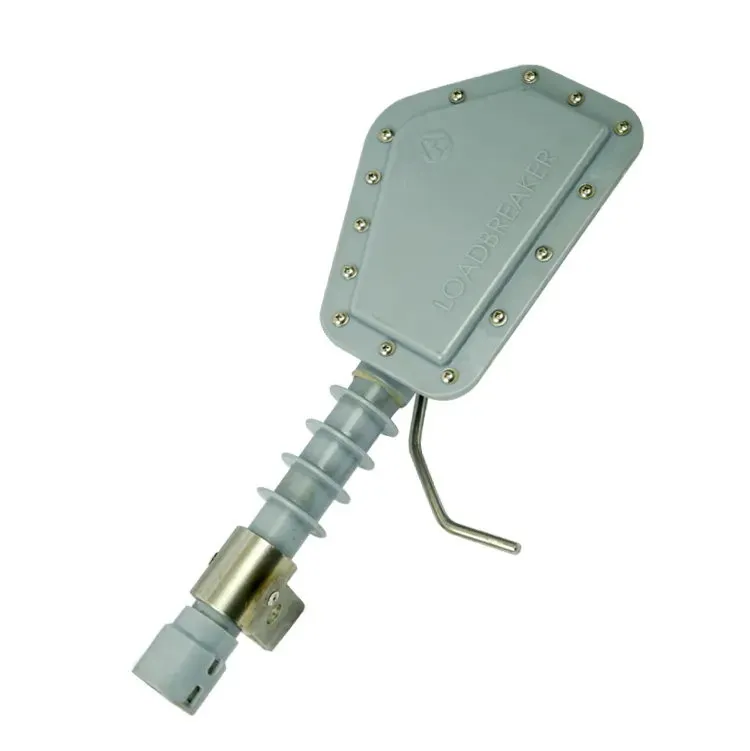


A dropout fuse cutout and a loadbreak cutout may have similar hinged tubes, but the hinge does not establish the same operating duty. A dropout expulsion cutout opens after its fuse link operates and provides a visible indication; intentional opening or closing under load requires a device and method specifically rated and documented for that task. An RFQ that says only “cutout” leaves this distinction unresolved.
The procurement decision is the switching duty: IEC 60282-2 provides a framework for high-voltage expulsion fuses, not a blanket loadbreak rating for dropout assemblies. If operators must interrupt or make load at the cutout, specify the duty, tool interface, accessory set and procedure in the RFQ. Verify those claims against the exact catalog number and tested assembly before purchase.
Dropout protection and intentional load switching are different duties
A dropout expulsion cutout normally protects an overhead branch, transformer tap or similar point. Its fuse link responds to an overcurrent event, and the fuse tube drops to provide a visible operated indication. That movement describes what happened after fuse operation; it does not establish a switching rating.
A loadbreak cutout or fuse-switch assembly is selected when the owner expects deliberate opening or closing while the circuit carries a defined load. That function must be stated for the exact device, with an operating method and published limits accepted by the utility. A hinged tube, hook eye or similar silhouette is not evidence of loadbreak capability.
| Buyer question | Dropout expulsion cutout | Loadbreak device |
|---|---|---|
| Why does it open? | Normally after the fuse link responds to an overload or fault. | May be opened intentionally under a defined switching duty, in addition to any fuse function. |
| What does “open” prove? | The tube has moved from its closed position; line-side and adjacent equipment still require the owner’s isolation process. | The mechanism is in its indicated position; the actual duty and work boundary remain procedure- and documentation-dependent. |
| What must the quotation show? | Fuse-link family, electrical ratings, mounting details and evidence for the complete fuse assembly. | All dropout items plus the exact load-make/load-break duty, operating instructions, tools and accessories. |
| Can one replace the other? | Only where the owner approves a substitution and the offered assembly meets the same requirements. | Do not downgrade to a standard dropout because the body looks interchangeable. |
For a product-family starting point, review the dropout fuse cutout range, then match the selected catalog number to the project drawing and owner standard.
Operating methods, tools and accessories
Both classes require qualified personnel, an approved operating procedure and a compatible fuse link. The difference is the task being authorized. Replacing a link after an outage is not the same as interrupting a loaded conductor for a planned transfer.
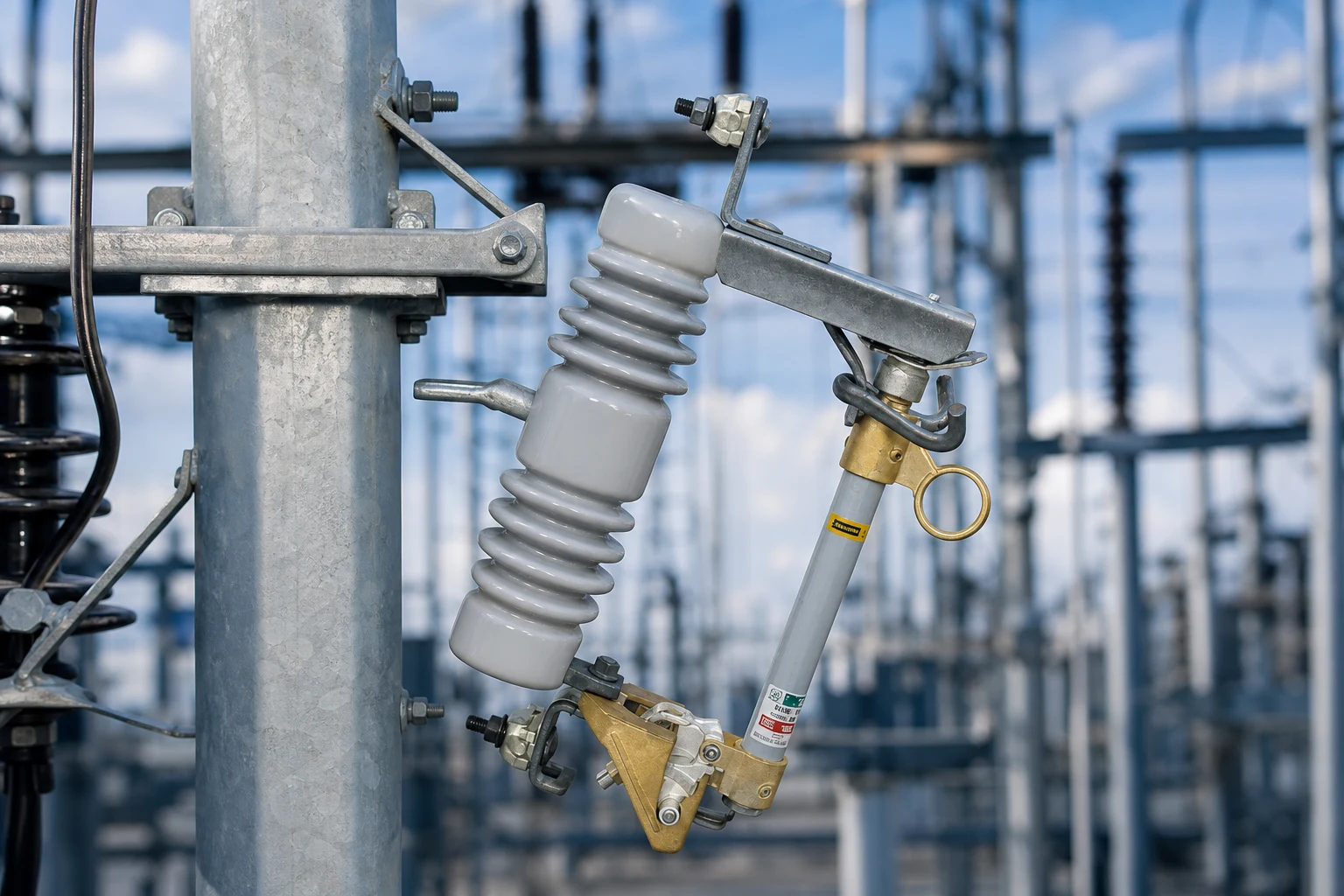
For a dropout-only specification, the procurement package usually centers on the cutout body, fuse tube, contacts, link interface, mounting bracket and the live-line tool or hot-stick interface required by the utility. The tool is for the owner’s operating method; it does not create a missing loadbreak rating.
For a loadbreak specification, ask the supplier to identify the exact operating handle or hook interface, arc-control or interrupter parts if used, interlocks or blocking features, replacement parts, and any limits on load type or switching frequency. Require the operating sequence and warnings with the quotation so the crew is not asked to infer a procedure from a photograph.
| Procurement line | Dropout-only requirement | Additional loadbreak evidence |
|---|---|---|
| Device identity | “Dropout expulsion cutout” plus catalog number and fuse-link family. | Exact catalog number identified as loadbreak-capable for the stated duty; no series-wide assumption. |
| Operating method | Fuse replacement and approved opening/closing method during an authorized outage. | Step-by-step load switching procedure, permissible operating position and any sequence restrictions. |
| Tools and accessories | Compatible live-line tool interface, replacement tube/link and mounting hardware. | Specified operating tool, hook/handle, arc-control parts, interlocks or guards where the design requires them. |
| Test and records | Applicable fuse assembly tests, routine inspection and traceable nameplate data. | Published switching-duty evidence for the quoted assembly, operating instructions and utility acceptance record. |
| Training and spares | Link selection, tube handling, inspection and post-fault investigation. | Qualified switching training, spare switching parts and records of operations in addition to link spares. |
Use the fuse cutout operating sequence article for expulsion and tube-motion context. It should supplement, not replace, the utility’s switching and isolation procedure.
Electrical ratings and switching evidence for the complete assembly
Start with the electrical study: maximum system voltage, continuous load, prospective fault current, grounding arrangement, environmental exposure and the owner’s coordination rules. Then compare the complete assembly, not a body-only data sheet. A fuse link that fits mechanically can still be the wrong electrical or tested combination.
For loadbreak, the key question is not “does the tube move?” but “what intentional switching duty is published for this exact assembly, under which operating method and limits?” Ask the supplier to identify the test basis, the relevant catalog page, and the components included in the tested configuration. If that evidence is absent, treat the device as dropout-only for procurement.
Use the expulsion fuse link selection guide to keep link speed, interrupting capability and coordination tied to the project study rather than to a nominal ampere label alone.
| Decision signal | Likely dropout choice | Escalate to verified loadbreak |
|---|---|---|
| Operating plan | Fault clearing, visible indication and link replacement during an approved outage. | Routine feeder transfer, transformer isolation or sectionalizing requires opening/closing under load. |
| Documentation | Supplier provides assembly drawings, link compatibility and applicable fuse-test evidence. | Owner requires a switching duty and the supplier provides exact-model evidence, instructions and tool details. |
| Utility rule | Construction standard names a conventional dropout cutout for the location. | Utility rule names a loadbreak class, live-line operation, interlock or a controlled switching program. |
| Failure risk | Unexpected operation is investigated before the link is replaced. | A load-switching attempt is prohibited until the device class and procedure are confirmed. |
Standards, utility rules and substitution failures
IEC 60282-2 is the IEC publication for high-voltage fuses, Part 2: expulsion fuses. It provides product and test scope for the fuse family; it is not a blanket certificate for every cutout installation, link combination or utility network. The purchase order should state the applicable edition and any national or owner deviations.
IEC 62271-111 addresses automatic circuit reclosers and fault interrupters for AC systems up to and including 38 kV. Cite it when that recloser or fault-interrupter function is actually in scope. It does not turn a standard dropout fuse cutout into a loadbreak switch, and an “IEC” reference alone does not prove a quoted cutout can interrupt load.
Utility rules control practical acceptance: approved fuse-link families, live-line tool interfaces, visible-open definitions, grounding and isolation, minimum clearances, environmental class, inspection intervals and permitted switching tasks. Ask the owner to identify the controlled drawing or clause before the supplier freezes the design.
- Silent substitution: “15 kV cutout” is quoted without device class; resolve the wording before technical evaluation.
- Photo-based approval: a similar tube and hook eye are treated as proof of loadbreak duty; require exact catalog evidence instead.
- Link mismatch: a physically compatible link is installed without checking the approved family and coordination curves; quarantine the substitution and review the study.
- Visible-open overreach: a dropped tube is treated as permission to touch conductors; follow the owner’s de-energization, grounding and work rules.
- Incomplete spares: the bid includes links but omits tubes, contacts or specified switching accessories; make the bill of materials part of acceptance.
Quotation checklist for dropout or loadbreak duty
- Write “dropout expulsion” or “loadbreak” in the RFQ; do not use “cutout” alone.
- Attach the maximum system voltage, continuous load, prospective fault current, conductor and mounting information.
- State whether intentional load-make/load-break is required and name the owner procedure or utility clause.
- Request the exact catalog page, assembly drawing, fuse-link compatibility, operating instructions and applicable test evidence.
- List tools, accessories, interlocks, spare parts and training records expected at handover.
- Review any proposed substitution with the utility or engineer; do not infer equivalence from a lower price or similar photograph.
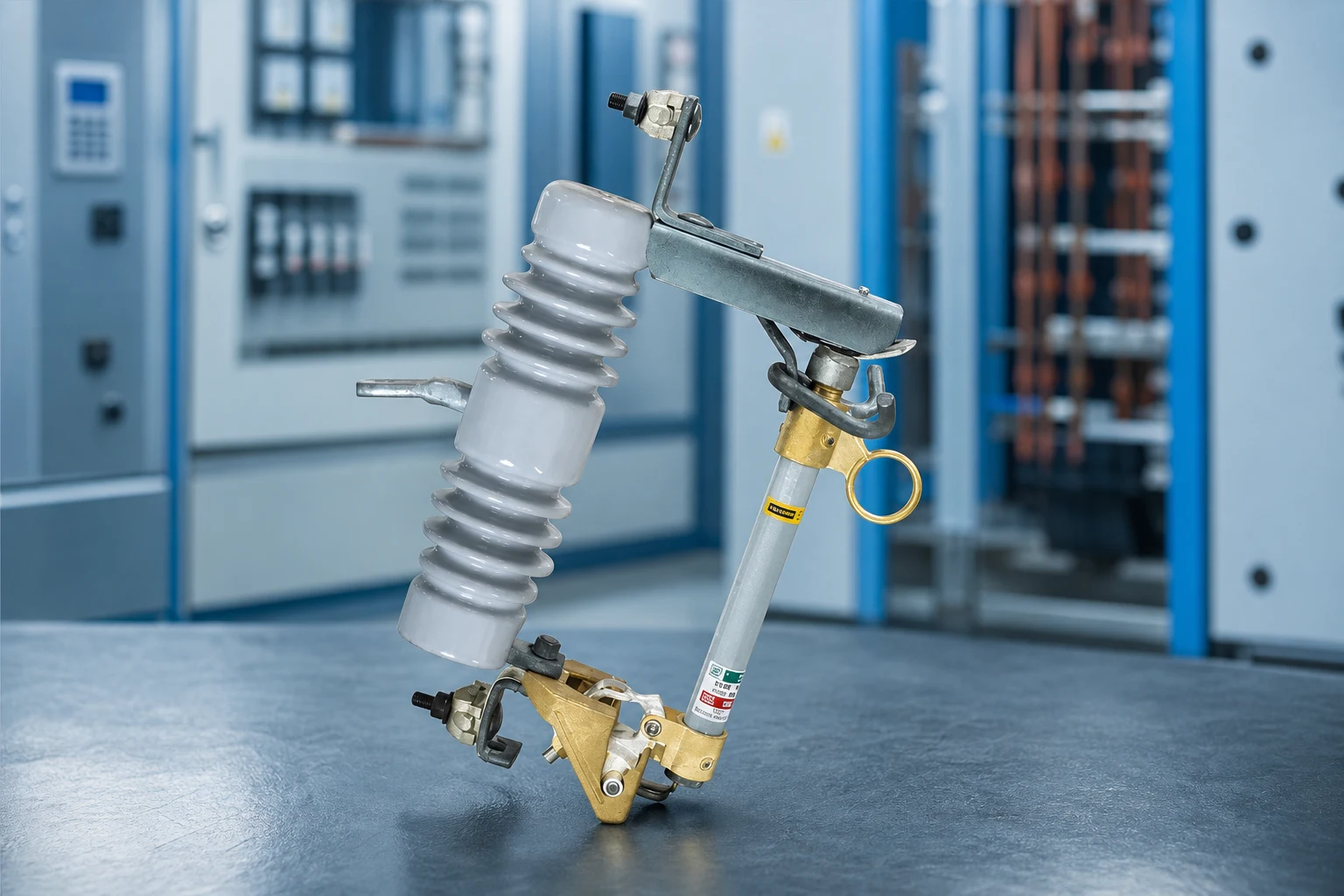
FUERTE’s public FSC-1-1 Drop Out Fuse Cutout page is relevant as a dropout example only. The reviewed page does not establish loadbreak switching duty for FSC-1-1 or for the wider FSC series. Treat that boundary as part of the technical review.
Common questions about cutout switching
How does dropout fuse operation differ from rated loadbreak switching?
A dropout expulsion cutout is primarily selected for fuse-based fault protection and visible tube movement after operation. A loadbreak device must be identified and documented for intentional switching under a defined duty. The device class, procedure and evidence—not the silhouette—decide the comparison.
Can a standard dropout cutout interrupt load current?
Do not assume it can. Some products or accessories may be designed for a stated switching task, but that capability must appear on the exact product documentation accepted by the owner. Without that evidence, specify and operate it as dropout-only.
Does a dropped fuse tube confirm an isolated, de-energized line?
No. It shows that the tube is no longer in its normal closed position, not that every conductor or adjacent part is de-energized. Follow the utility’s isolation, test, grounding and work authorization rules.
Which tools and accessories govern loadbreak operation?
The answer depends on the quoted design and owner procedure. Request the specified hot-stick or operating handle interface, arc-control parts, interlocks or guards, and any limits in the instruction manual; a generic live-line tool is not proof of suitability.
When is IEC 62271-111 relevant to the quoted equipment?
Ask when the offered equipment is an automatic circuit recloser or fault interrupter within that standard’s scope. IEC 62271-111 is not a shortcut for proving loadbreak capability of a conventional fuse cutout, so keep the functions separate in the RFQ.
Match the cutout to the required operating duty
The practical choice is made by operating intent. Use a dropout expulsion cutout when the network needs fuse-based fault protection, a visible operated state and an authorized replacement workflow. Move to a verified loadbreak device only when the owner requires deliberate switching under load and the exact assembly, tools, accessories, procedure and test evidence support that duty. In every quotation, separate electrical ratings from switching claims, and separate a standard’s product scope from the utility’s acceptance rule. A dropped tube is useful information, but it is not a work permit or a loadbreak rating. Before release, reconcile the single-line diagram, fault study, fuse-link family, mounting drawing and operating procedure with the catalog number. That discipline prevents a visually plausible substitution from becoming a field outage.