


A protection engineer deciding whether a feeder should re-energize after a fault faces a real risk: leaving every trip open can extend an interruption after a transient event, while an unsuitable automatic close can reapply voltage to a permanent fault, work zone, or vulnerable equipment. This is a protection-coordination and operating-policy decision, not merely a choice between equipment labels.
Quick Answer: A circuit breaker interrupts fault current and normally depends on external protection and controls; a recloser combines interruption with programmed closing attempts and lockout. Automatic reclosing suits overhead feeders where transient faults are credible and coordination has been studied. It may be blocked where re-energization increases personnel risk, equipment damage, instability, or miscoordination.
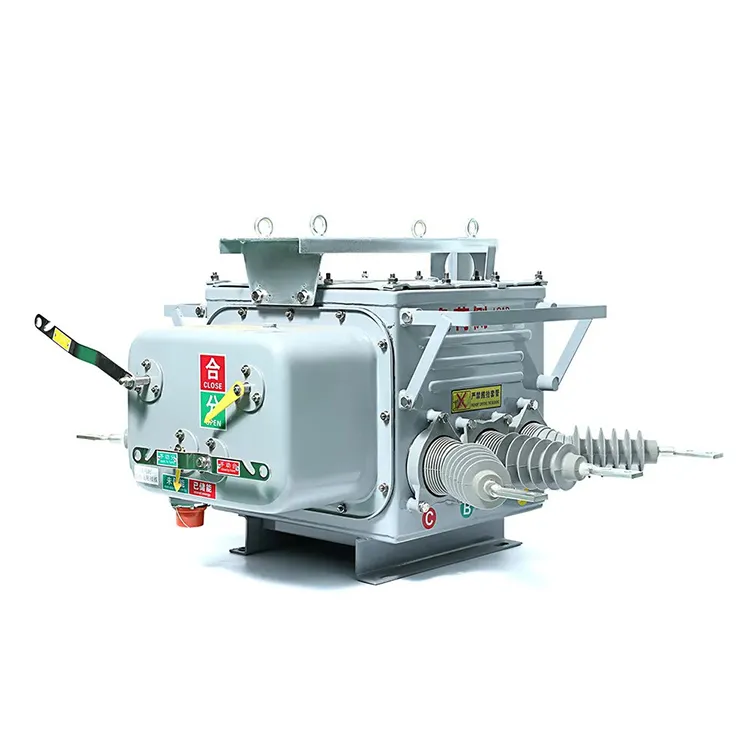
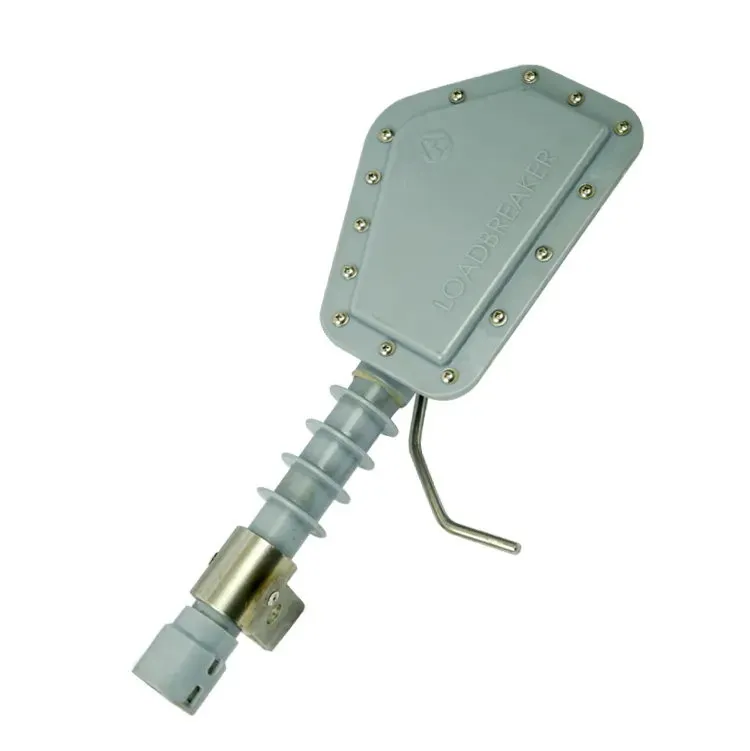
For buyers asking what is a recloser, it is a circuit-interrupting device designed to open on a detected fault, wait, close again, and either restore service or continue toward lockout. IEC 62271-111:2019 covers AC automatic circuit reclosers above 1 kV through 38 kV, including several overhead and enclosed installation types.
What Is the Practical Difference Between a Recloser and a Circuit Breaker?
“Breaker” describes an interrupting function, not a complete restoration philosophy. A breaker can reclose when relays, controls, power, interlocks, and rules provide that function; a recloser is packaged for automatic trip-and-close distribution duty. Comparing an automatic recloser circuit breaker therefore means evaluating the interrupter, controller, sensors, sequence, and coordination together.
| Factor de decisión | Automatic recloser | Circuit breaker | Procurement implication |
|---|---|---|---|
| Primary role | Fault interruption with programmed reclosing | Interruption within a wider protection scheme | Specify the complete function |
| Control arrangement | Integrated or closely paired control | Often separate relays and station logic | Review I/O, settings, and fail states |
| After a trip | May reclose, then lock out | Remains open or follows external logic | Document attempts and lockout |
| Typical application | Overhead or mixed feeders | Substations, switchgear, and industrial systems | Match all ratings |
| Coordination burden | Every programmed operation | Relay curves and control logic | Study all upstream and downstream devices |
| Lifecycle considerations | Controller, battery, mechanism, telecoms | Relay, mechanism, supply, station controls | Compare engineering, testing, spares, and outages |
El recloser vs circuit breaker choice has no universal winner. A breaker may suit a substation or plant; a recloser adds value when safe restoration after transient feeder faults is required. Related Disjuntor de circuito de vacío para exteriores guidance covers environmental and interface questions without implying every outdoor breaker is a recloser.
What Happens During a Recloser Trip-and-Reclose Sequence?
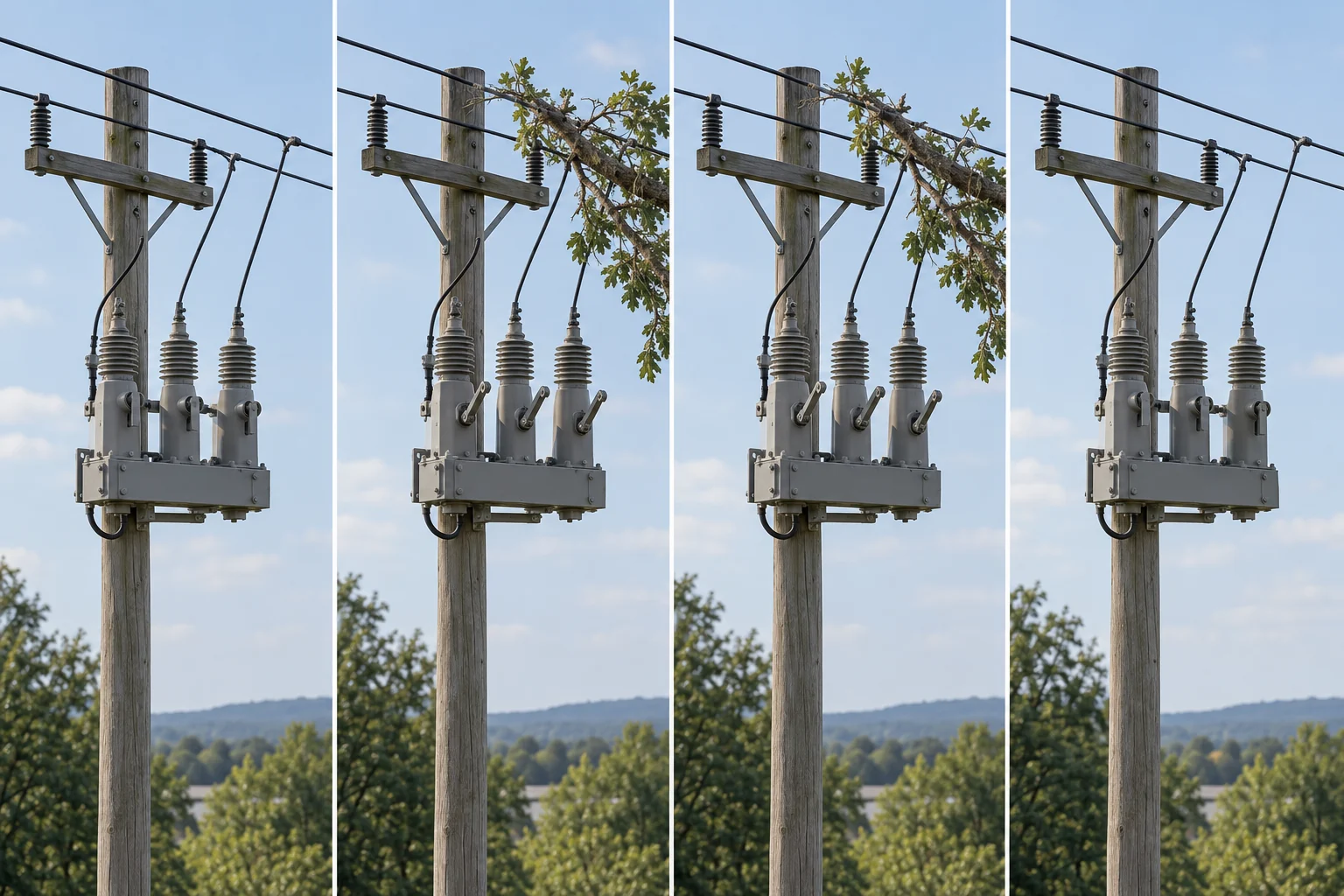
Sensors and the controller identify a condition that meets active protection logic. The interrupter clears fault current, waits through a programmed dead time, then closes if reclosing is enabled. A cleared transient fault lets the feeder remain energized; a persistent fault can cause another trip and eventual lockout. Operation counts, curves, dead times, and reset logic are project settings—not universal values.
How Do Transient and Permanent Faults Change the Reclose Outcome?
A transient fault disappears after de-energization, so a later close may hold. A permanent fault remains until failed equipment or an obstruction is isolated and repaired. The controller does not know the physical cause merely because current fell to zero; it applies measured quantities and programmed logic, so directional, ground-fault, and blocking functions must suit the network.
How Should a Recloser Coordinate with Breakers, Fuses and Sectionalizers?
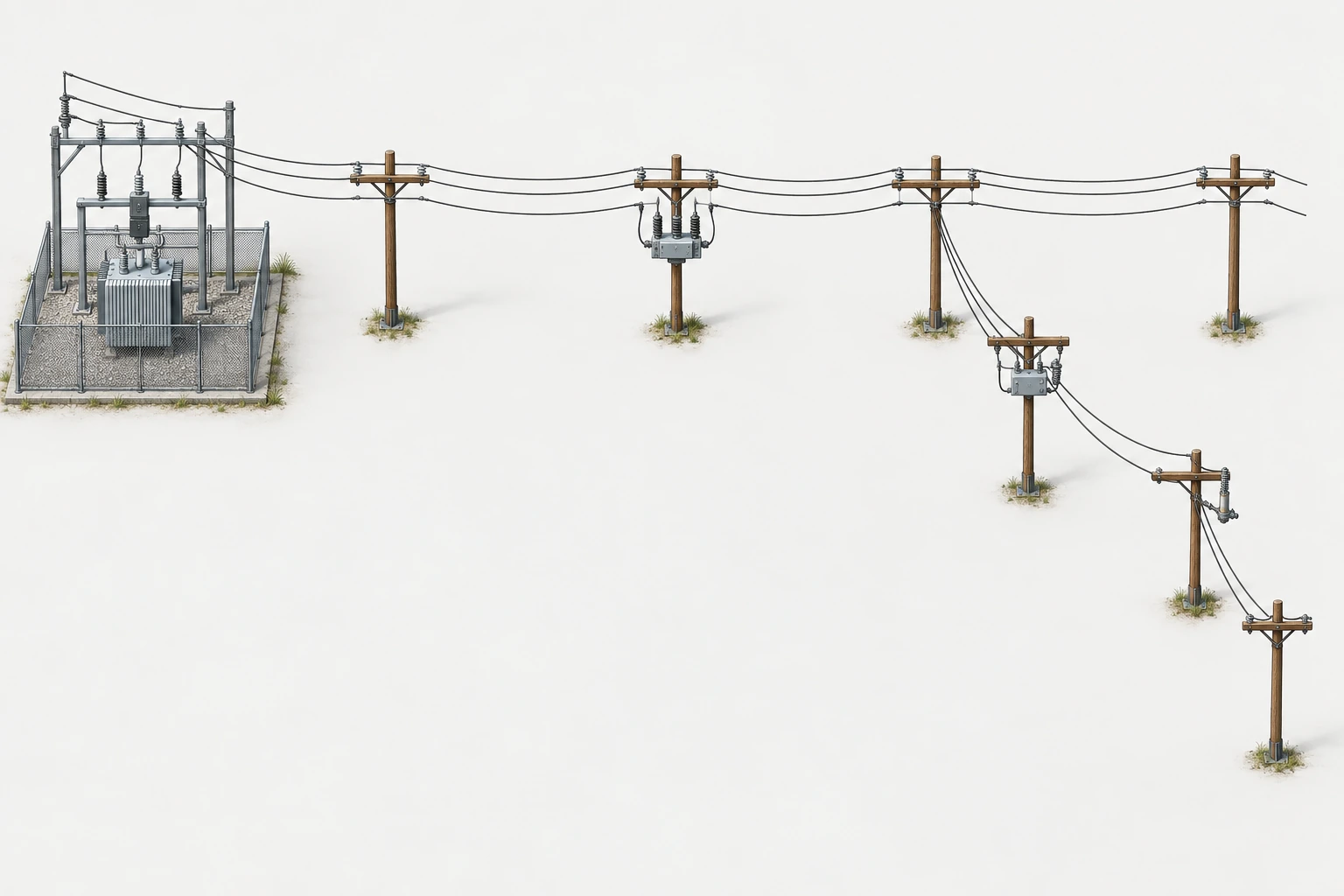
Coordination aims for the nearest suitable device to isolate the smallest practical section. Recloser curves, fast or delayed operations, inrush restraint, cold-load pickup, and lockout must be checked against the upstream relay and downstream fuses over credible fault currents. The guide to Especificaciones de la capacidad de desconexión del disyuntor de vacío explains why interrupting, making, and short-time duties are not one interchangeable kA value.
A sectionalizer counts upstream interruptions and normally opens while de-energized; it is not generally intended to interrupt fault current. Effective sectionalizer coordination depends on the recloser sequence, count and reset logic, fault-sensing current, and lockout plan. The linked article gives pole-mounted breaker context; it does not identify that product as a recloser.
Automatic Reclosing Decision Matrix for Feeder Conditions
| Feeder condition | Preferred starting point | Key study questions | Likely constraint |
|---|---|---|---|
| Overhead radial feeder | Evaluate reclosing | Can transient faults clear and all shots coordinate? | Fuses and line-work rules |
| Underground cable circuit | Restrict or block unless justified | Are faults likely permanent? | Owner policy and cable study |
| Transformer or process feeder | Assess case by case | Could closing cause stress or hazards? | Protection and plant procedures |
| Generation or motor contribution | Review directional logic | Could islanding, backfeed, or restart occur? | Synchronism and equipment limits |
| Sectionalizers and fused laterals | Model the full sequence | Will counters, curves, and lockout isolate correctly? | Fault current and interoperability |
When Should Automatic Reclosing Be Blocked for Safety or Equipment Protection?
Reclosing should be blocked whenever the approved state requires the circuit to remain de-energized. Examples include personnel work under clearance, live-line maintenance rules that prohibit automatic operation, temporary grounds, switching, testing, and a “do not reclose” control state. OSHA’s electrical resources reinforce hazard control; detailed switching, lockout/tagout, grounding, and re-energization procedures remain employer- and jurisdiction-specific.
Equipment conditions can also justify blocking or a modified sequence: certain cable faults, transformer protective operations, generator interconnections, motors vulnerable to restart, failed voltage or synchronism checks, security alarms, or protection trouble. These are not universal prohibitions; the owner should define them through engineering studies, instructions, interconnection rules, and approved policy.
Which Recloser Standards and Compliance Evidence Should Buyers Verify?
IEC 62271-111:2019 addresses AC automatic circuit reclosers above 1 kV through 38 kV, but an “IEC” label alone does not prove compliance. Buyers should verify the edition, ratings, duty cycle, type-test reports, routine tests, controls, environment, and national deviations. OSHA’s electrical pages are a US safety starting point, not product certification or a substitute for utility rules.
How Should Buyers Select and Document a Recloser Protection Architecture?
- Provide the one-line diagram, grounding, voltage, loads, fault levels, cable and transformer data, generation contribution, and existing settings.
- Define the required interruption, restoration, sectionalizing, remote-switching, and fault-location functions.
- Coordinate minimum and maximum faults through every operation, including fuses, relays, sectionalizer logic, cold-load pickup, and inrush.
- Document blocking, lockout, control authority, power or communications failure, event records, cybersecurity ownership, and return to service.
- Request drawings, manuals, settings, test evidence, FAT/SAT scope, spares, training, and maintenance instructions.
Fuerte supports B2B medium-voltage projects with breaker selection, documentation, and interface review. Its ZW32-12/630-20 vacuum circuit breaker is related breaker context only; verify whether any proposed configuration and controller meet the required recloser function.
Recloser, Circuit Breaker and IntelliRupter FAQs
What are the key differences between an IntelliRupter and a recloser?
“Recloser” is a generic device category, while IntelliRupter® PulseCloser® Fault Interrupter is an S&C Electric trademarked product family. S&C describes PulseClosing technology as testing for faults with 95% less energy than conventional reclosing; that is a manufacturer-stated functional distinction, not a general claim about every intellirupter vs recloser comparison. Compare ratings, protection elements, communications, controls, tested duties, and the owner’s approved scheme.
What is an IntelliRupter?
IntelliRupter® PulseCloser® Fault Interrupter is S&C Electric’s branded feeder-protection product family using its PulseClosing® technology. The term should not be used generically for all smart reclosers or fault interrupters.
What is the difference between a recloser and a sectionalizer?
A recloser interrupts fault current and may automatically close again. A sectionalizer typically detects or counts upstream fault-clearing operations, then opens during a de-energized interval to isolate a section; confirm the exact device rating and logic because designs vary.
How does an automatic recloser circuit breaker work?
It detects a qualifying fault, opens the circuit, waits for a programmed dead time, and closes again if reclosing is enabled. If the fault persists, the programmed sequence can trip again and ultimately lock out; the actual operations and timing come from the approved coordination study.
What are the key differences between a circuit breaker and an auto recloser?
A circuit breaker is primarily an interrupting and switching device whose protection and reclosing may be supplied by external relays and controls. An auto recloser packages automatic trip, reclose, reset, and lockout functions for distribution duty, although both can use similar interruption technologies.
Do automatic line reclosers open and close when a fault occurs?
They open when enabled protection detects a fault that meets its trip criteria, and they may close after a programmed delay. They will not necessarily reclose for every trip: blocking, lockout, maintenance state, failed checks, or the active protection element can require the device to remain open.
References for Recloser and Circuit Breaker Selection
- IEC 62271-111:2019, High-voltage switchgear and controlgear—Part 111
- Eaton, Fundamentals of Reclosers
- S&C Electric, IntelliRupter PulseCloser Fault Interrupter
- OSHA, Electrical Safety Overview
Conclusion: Match Automatic Reclosing to Feeder Risk
The best answer is not “recloser everywhere” or “breaker everywhere.” Automatic reclosing earns its place when the network has a credible transient-fault benefit, the interrupter and controller have the required ratings, and the full sequence coordinates with breakers, fuses, sectionalizers, loads, and generation. It should remain blocked when approved safety rules, work conditions, equipment protection, synchronism, or security states require the circuit to stay open. Specify the operating philosophy first, validate it with a fault and coordination study, then procure hardware and controls that can execute it with documented evidence. For a project-specific review of medium-voltage breaker interfaces, ratings, documentation, and sourcing, contact Fuerte with your one-line diagram and protection requirements.