
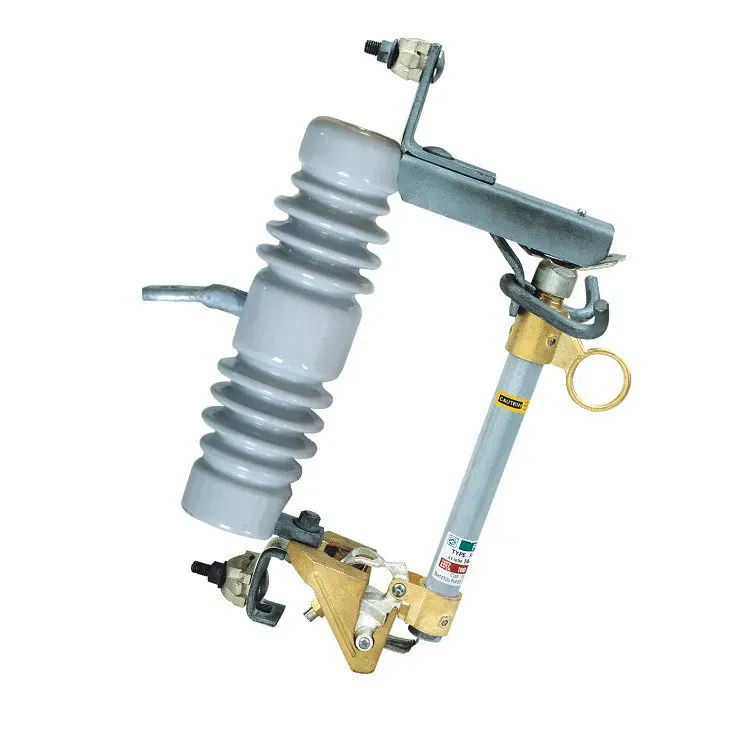
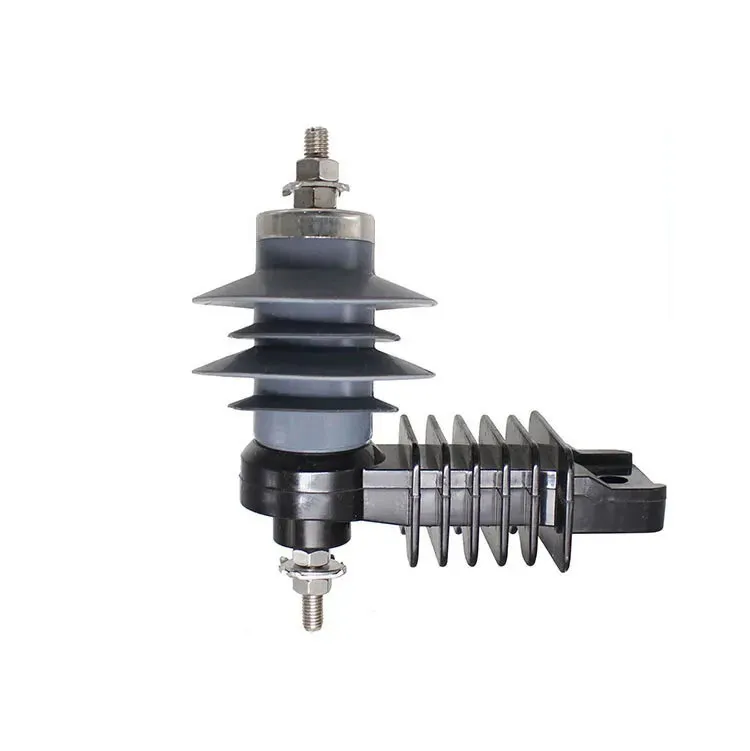
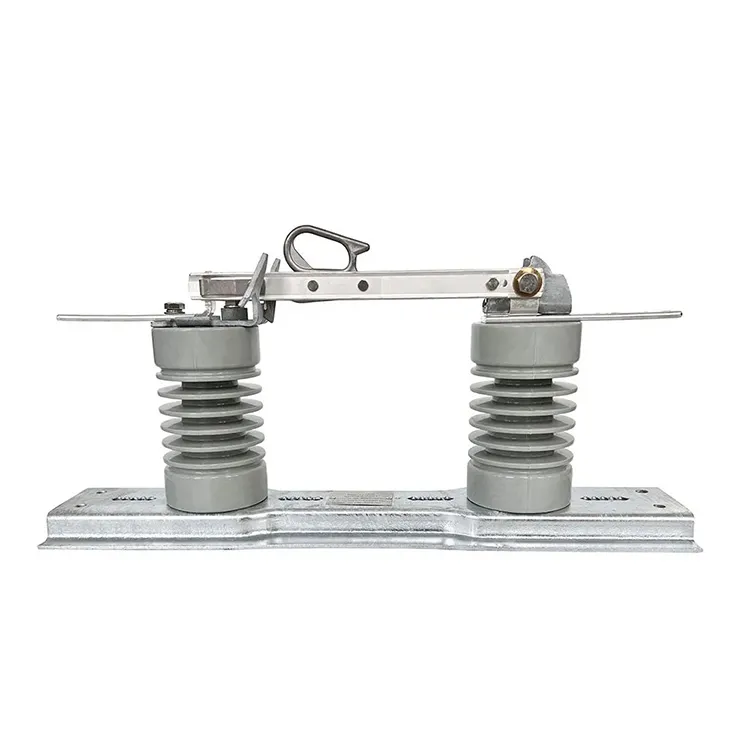
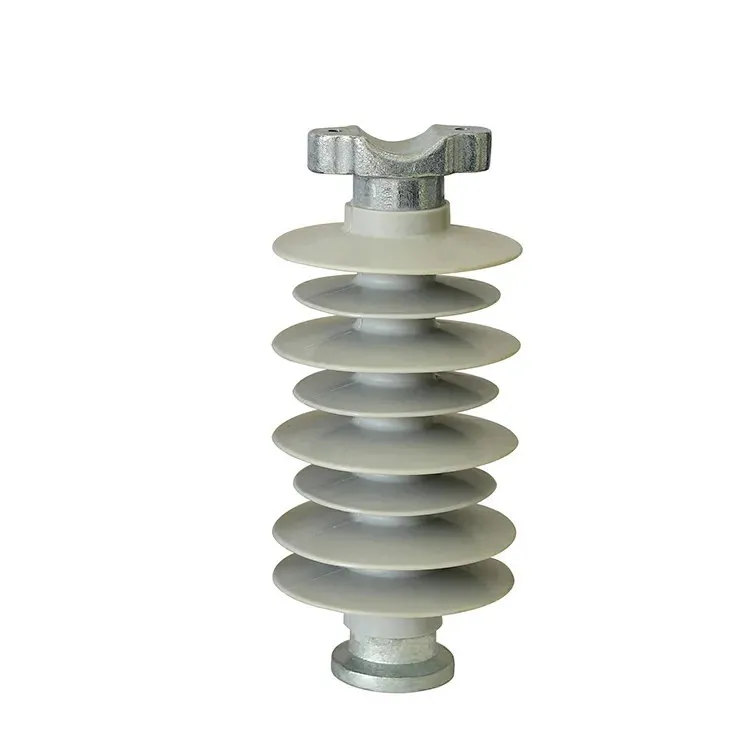


When a feeder experiences repeated trips during lightning, vegetation contact, or wildlife activity, the risky decision is not simply whether to install another switching device. The utility must decide whether faults are predominantly transient, where permanent faults should be isolated, and whether automatic reclosing will coordinate with fuses, downstream devices, distributed generation, and customer loads. A poor application can turn a momentary event into wider interruption, equipment stress, or an unsafe backfeed condition.
Quick Answer: Use a pole-mounted recloser where an overhead feeder has meaningful transient-fault exposure and the protection study shows that controlled trip–reclose–lockout logic can improve continuity without defeating coordination. IEC 62271-111:2019 covers qualifying automatic circuit reclosers above 1 kV through 38 kV; it does not make one sequence or setting correct for every feeder. Choose phase operation, ratings, curves, control power, communications, and installation details from the actual feeder model and utility practices.
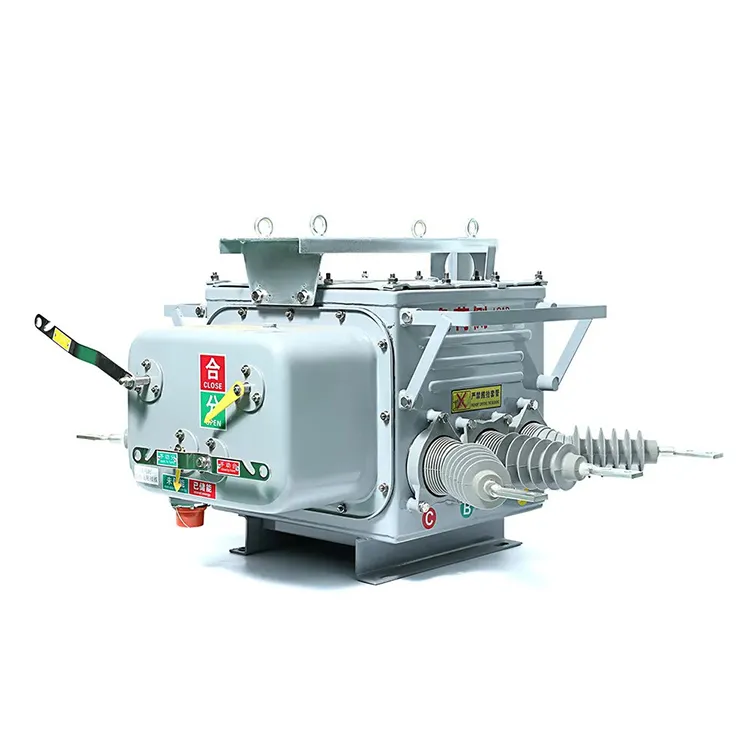
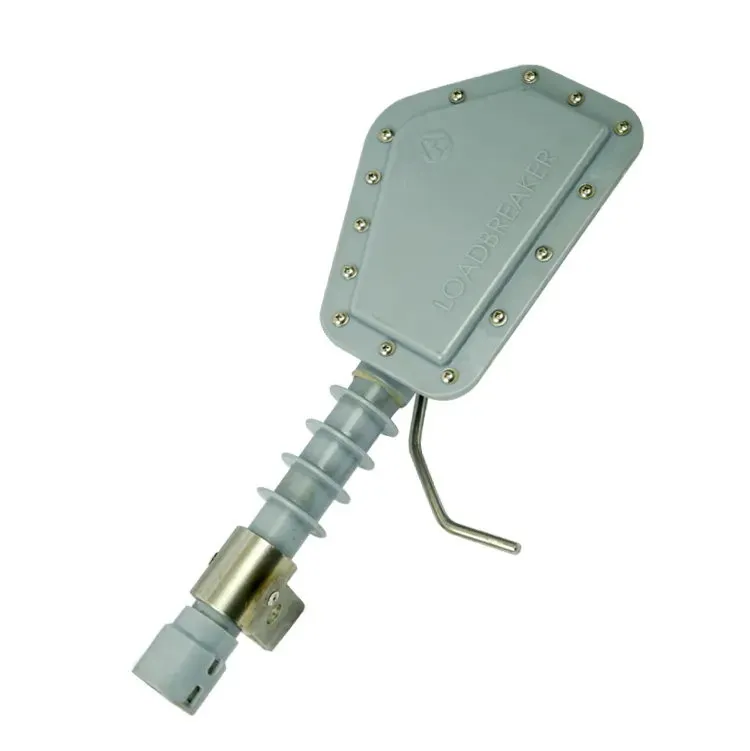
An automatic electrical recloser interrupts a detected fault, waits for a programmed dead time, closes again, and eventually locks out if the fault remains. A recloser on pole shares outdoor-installation issues with a pole-mounted vacuum circuit breaker, but breaker hardware alone is not a recloser; sensing, control logic, operating energy, and the automatic sequence are also required.
Which Feeder Conditions Justify Automatic Reclosing?
The strongest application is an exposed overhead main or lateral where transient faults are material. The unit should isolate a useful section while coordinating with the substation breaker, fuses, downstream reclosers, sectionalizers, and customer protection. A short underground circuit dominated by permanent cable faults may require a different strategy.
Topology matters as much as fault history. A loop may introduce an alternate source or transfer logic, so directional elements, voltage supervision, synchronism check, and revised fault-current assumptions may be needed. These are study outcomes, not universal features. SCADA can add visibility and control, but local protection must remain dependable without communications.
Lifecycle cost includes pole work, surge arresters, control power, batteries, communications, studies, commissioning, and maintenance—not purchase price alone. An overhead recloser arrangement must also address weather, pollution, clearances, and access; the linked guide covers shared environmental issues without implying that every outdoor breaker recloses.
When Should a Utility Use Single-Phase or Three-Phase Reclosing?
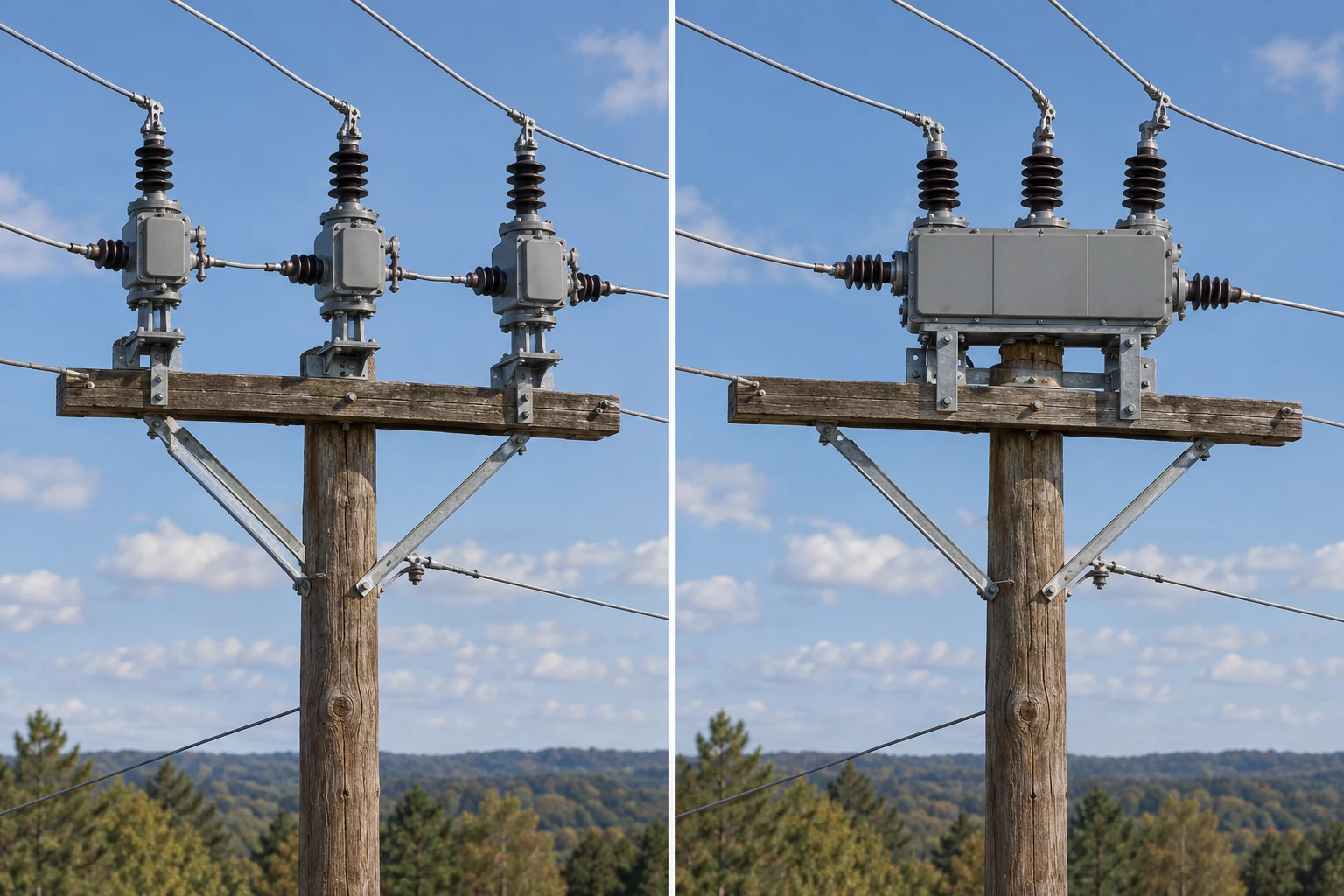
A single phase recloser may preserve service on healthy phases of an eligible multi-grounded feeder. Use it only where grounding, unbalance limits, transformer connections, loads, and protection permit independent-pole operation. Three-phase operation trips and recloses all poles together and often suits three-phase loads or rules that prohibit extended single-phasing.
| Factor de decisión | Single-phase operation | Three-phase operation |
|---|---|---|
| Fault isolation | May interrupt only the faulted phase for an eligible phase-to-ground event | Interrupts all phases for the operated protection function |
| Load continuity | Healthy phases may remain energized, subject to voltage-quality limits | All downstream phases experience the sequence |
| Best-fit feeder | Predominantly single-phase laterals or approved independent-pole schemes | Three-phase mains, motor-rich circuits, or utility rules requiring gang operation |
| Engineering checks | Grounding, neutral current, unbalance, transformer connections, pole logic | Simultaneous duty, three-phase coordination, transfer and backfeed logic |
| Control complexity | Per-phase sensing, records, and lockout behavior must be explicit | Gang logic is simpler, but feeder-wide interruption can be broader |
Construction does not determine logic: separate tanks may operate as a gang, while a suitable three-phase assembly may support independent poles. Specify trip, reclose, lockout, manual operation, and indication behavior explicitly.
Which Recloser Settings Control Trips, Shots and Lockout?
The study should define phase and ground pickup, curve family, time multiplier, high-current elements, shots, dead time, reset time, and final lockout. “Fast” and “slow” are relative; actual times and tolerances must coordinate across minimum and maximum fault current, fuse and relay curves, and equipment limits.
More shots are not automatically better. Cold-load pickup, transformer inrush, motor starting, thermal limits, and fuse-saving versus fuse-blowing policy all affect the sequence. Settings need version control, review, and traceability to the coordination study; factory defaults are not feeder settings.
Lockout stops automatic reclosing; it does not prove the line safe. Define reset authority, position indication, non-reclose modes, and manual-reset conditions. A vacuum circuit breaker recloser plan must test the controller, trip/close circuit, sequence, records, and lockout in addition to the underlying breaker tests covered by the linked guide.
What Installation and Commissioning Checks Are Required for a Pole-Mounted Recloser?
Verify pole loading, conductor forces, phase spacing, access, orientation, and required clearances. Bond the tank, cabinet, shields, arrester grounds, and neutral according to the engineered grounding design. Install surge protection with the reviewed lead routing; a long loop can undermine the intended protection.
| Stage | Checks | Acceptance evidence |
|---|---|---|
| Pre-installation | Nameplate ratings, drawings, shipping condition, sensors, control cable, firmware and settings file | Approved submittal, inspection record, configuration checksum or revision |
| Mechanical installation | Pole capacity, brackets, torque, orientation, conductor loads, operating access and clearances | As-built drawing, torque record, photographs and utility inspection |
| Primary and grounding | Phase identity, terminations, arrester placement, bonds, ground conductor and neutral interface | Continuity/grounding checks and signed installation checklist |
| Control power | Supply voltage, charger, battery condition, cabinet heater, trip/close energy and loss-of-power behavior | Measured values and alarm verification |
| Protection functions | Sensor polarity and ratio, secondary or primary injection, curves, shots, dead time, reset and lockout | Test set report matched to the approved settings revision |
| Optional communications | Point map, timestamps, controls, permissions, alarms, failover and loss-of-link behavior | End-to-end SCADA test record when remote functions are specified |
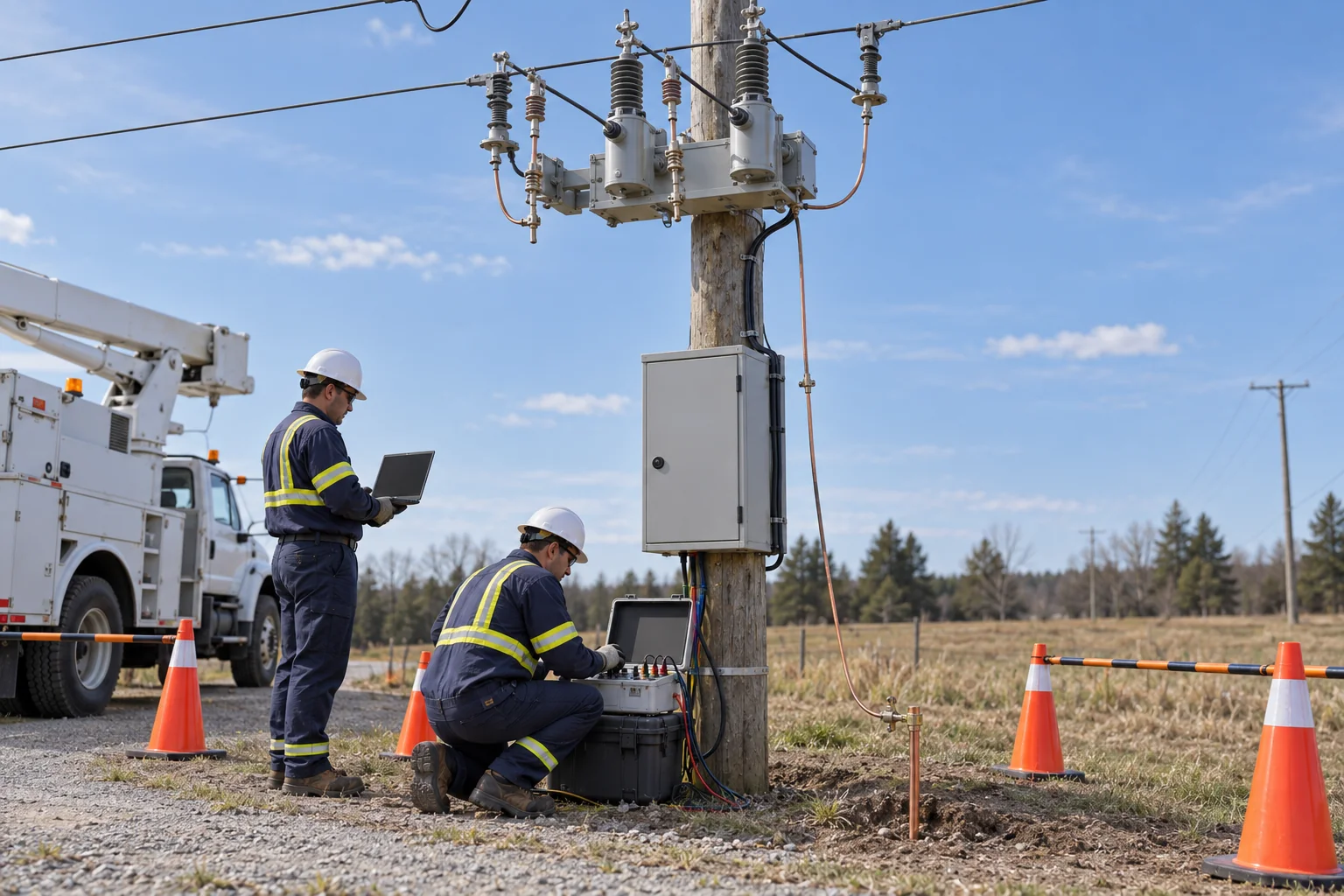
Prove local controls, non-reclose mode, counters, indication, alarms, timestamps, and the programmed sequence. If remote control is included, test required points end to end and close-command permissions. Follow owner procedures for isolation, lockout/tagout, voltage verification, and grounding; OSHA guidance is not a product certification or substitute for utility rules.
Which Standards and Test Records Should Buyers Request?
IEC 62271-111:2019 covers qualifying overhead, pad-mounted, dry-vault, and submersible automatic circuit reclosers above 1 kV through 38 kV; dependent-manual devices are outside its scope. It defines product requirements and tests, not installation certification or feeder settings.
Eaton and G&W Electric provide useful application context, but manufacturer guidance does not override standards, law, or owner specifications. Classifications vary: standards focus on scope and ratings, manufacturers on construction and platforms, and utilities on phase operation and feeder role.
What to Include in a Pole-Mounted Recloser RFQ
- Provide the one-line diagram, feeder topology, grounding method, normal and alternate sources, load profile, fault-current range, and coordination study.
- State maximum system voltage, continuous current, interrupting duty, insulation levels, operating sequence, environmental conditions, clearances, and pole/interface loads.
- Define single- or three-phase logic, local/manual modes, control-power source, battery autonomy, required records, cybersecurity ownership, and communications only where needed.
- Request model-specific type-test evidence, routine-test reports, drawings, manuals, settings templates, protocol documentation, and a factory/site acceptance plan.
- Compare deviations and lifecycle support, including spare controls, batteries, training, firmware management, and field-service access.
Fuerte is a China-based B2B manufacturer of medium-voltage distribution protection equipment. Buyers can ask Fuerte to map an approved specification to available configurations and documents, while the responsible engineer verifies ratings and acceptance. Do not infer automatic-reclosing capability from a ZW32-12 vacuum circuit breaker page unless the offered configuration and controller documents support it.
Frequently Asked Questions
What is a pole-mounted recloser?
It is an automatic medium-voltage protective device that can interrupt, wait, reclose, and lock out according to approved logic. The installation includes sensing, controls, insulation, operating energy, grounding, surge protection, and mounting hardware.
What is a SCADA recloser?
Its controller exchanges status, measurements, alarms, events, and permitted commands with a supervisory system. SCADA is optional; protection must remain dependable after communications loss, while remote closing requires authorization and interlocks.
What are the main types of reclosers?
Groupings include phase count, mounting, interrupting technology, insulation, and hydraulic, electronic, or digital control. Categories depend on the standard, manufacturer, and utility practice, so type names do not replace rated and functional requirements.
What operating modes are available for a three-phase recloser?
Modes may include three-phase trip/reclose, independent-pole operation, single-phase trip with three-phase lockout, local manual, non-reclose, and remote-supervised operation. Confirm product- and utility-specific behavior from logic diagrams and tested settings.
What is the difference between a recloser, a sectionalizer and a switch control?
A recloser interrupts fault current and recloses. A sectionalizer typically counts upstream interruptions and opens de-energized; a switch control commands compatible primary equipment. Designs vary, so verify interruption capability rather than relying on the name recloser switch.
How are automatic circuit reclosers classified?
Standards, suppliers, and utilities may group them by ratings, poles, mounting, insulation, interrupting medium, control, duty, or feeder role. Specify a utility recloser by standard edition, ratings, sequence, environment, controls, and interfaces.
Referencias
- International Electrotechnical Commission, IEC 62271-111:2019, Automatic circuit reclosers for alternating current systems up to and including 38 kV.
- Eaton, Fundamentals of Reclosers.
- G&W Electric, Recloser Fundamentals: Understanding Reclosers on Poles.
- US Occupational Safety and Health Administration, Electrical Safety.
Conclusion
A pole-mounted recloser is justified when feeder data, not fashion, shows that automatic interruption and controlled reclosing can reduce the effect of transient faults while preserving coordination and safety. The decision must connect topology, grounding, phase mode, fault-current range, curves, shot sequence, lockout policy, control power, communications, surge protection, clearances, and commissioning evidence. There is no universal setting set, number of shots, or requirement for SCADA. Treat the equipment, controller, pole structure, protection study, and operating procedure as one engineered system. For a project-specific review, send Fuerte the one-line diagram, fault and coordination study, site conditions, functional requirements, and applicable standard edition through the contact team.