

A report of buzzing near high-voltage equipment is a reason to investigate, but it is not a diagnosis. Noise, visible light and interference can have different sources, and the conditions when they appear matter. Calling every observation ‘corona’ can lead to replacing the wrong part or overlooking a different fault. The useful starting point is to establish where the activity occurs, whether it changes with weather or operating conditions, and what the equipment was designed to withstand. This article explains the distinction between localized discharge and flashover, then sets out the information a qualified inspection needs before choosing a corrective action.
Corona discharge is localized ionization of the gas around a conductor where the electric field becomes sufficiently intense. It does not necessarily bridge the full insulation gap, which distinguishes it from a flashover. Local geometry, applied voltage and surrounding conditions all matter, so there is no single onset voltage that applies to every piece of equipment. A sharp feature can concentrate the field more strongly than a smooth, broadly curved surface. Observations should be assessed against the actual assembly and its operating conditions; they are not a reason for an unqualified person to approach energized equipment.
What causes corona around a conductor?
Electric-field strength is not uniform around every surface. It can become concentrated near small-radius features and other geometric discontinuities. If the surrounding gas becomes locally ionized, a discharge can develop without a conductive path spanning the whole gap. The corona discharge overview describes this local ionization mechanism and the importance of conductor shape.
Corona discharge therefore cannot be predicted from system voltage alone. Geometry, adjacent objects and atmospheric conditions belong in the assessment. Nor should the visible length of an insulator be treated as a complete description of its electrical environment. The arrangement around its end fittings may be particularly relevant to an investigation.
How is corona different from flashover or surface tracking?
| Term | What it describes | What an observation alone cannot establish |
|---|---|---|
| Corona | Localized discharge in gas near a high-field region | Whether the equipment is within its applicable acceptance criteria |
| Flashover | A discharge that bridges an insulating gap or external insulation path | The initiating cause without an investigation |
| Surface tracking | Development of a conductive path associated with surface degradation | Its severity or remaining service suitability from a distant photograph |
| Noise or interference report | An observed symptom | The source or discharge mechanism |
These terms should not be used interchangeably. Corona can be relevant to insulation degradation, but an observed glow does not by itself establish a future failure date. Equally, the absence of visible light does not establish that the equipment is free from discharge activity. A diagnosis needs a method suited to the suspected mechanism. The function of electrical insulation provides the starting point for distinguishing local discharge from a loss of separation.
Why do edges and surface conditions matter?
Changes in local shape can affect the field. Water droplets, contamination and the condition of nearby surfaces may change where electrical stress or surface activity develops. A wet-weather observation should therefore be recorded as such, rather than compared without qualification with an observation made on a dry day.
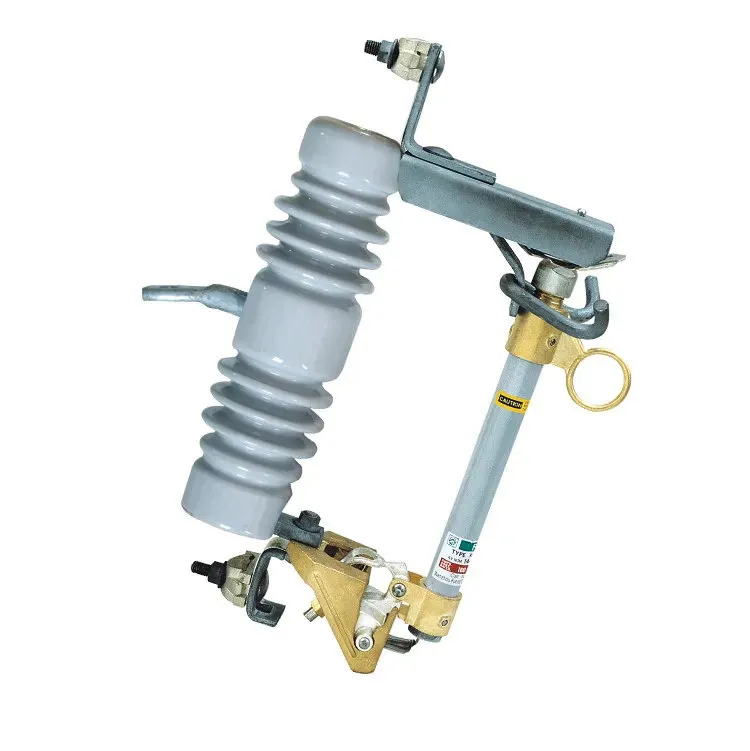
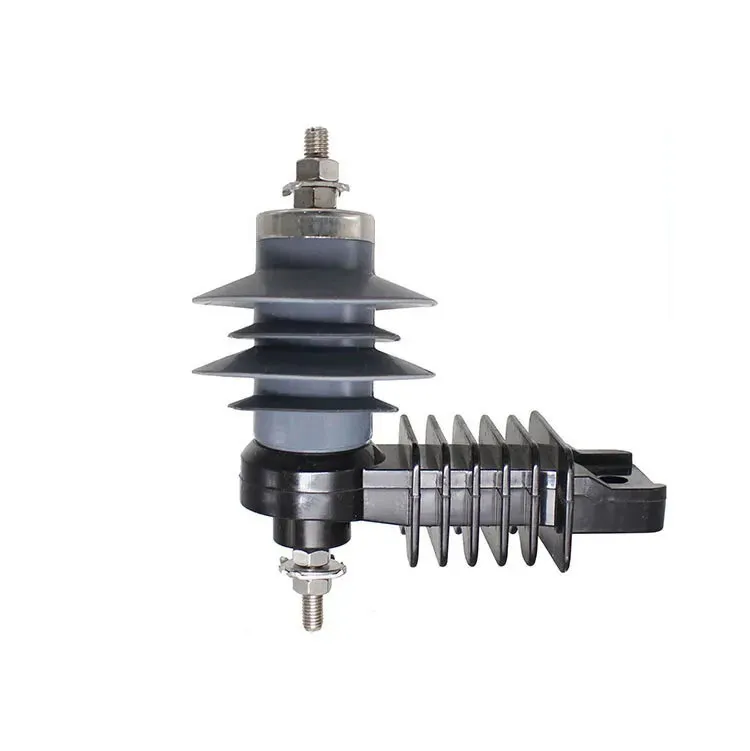
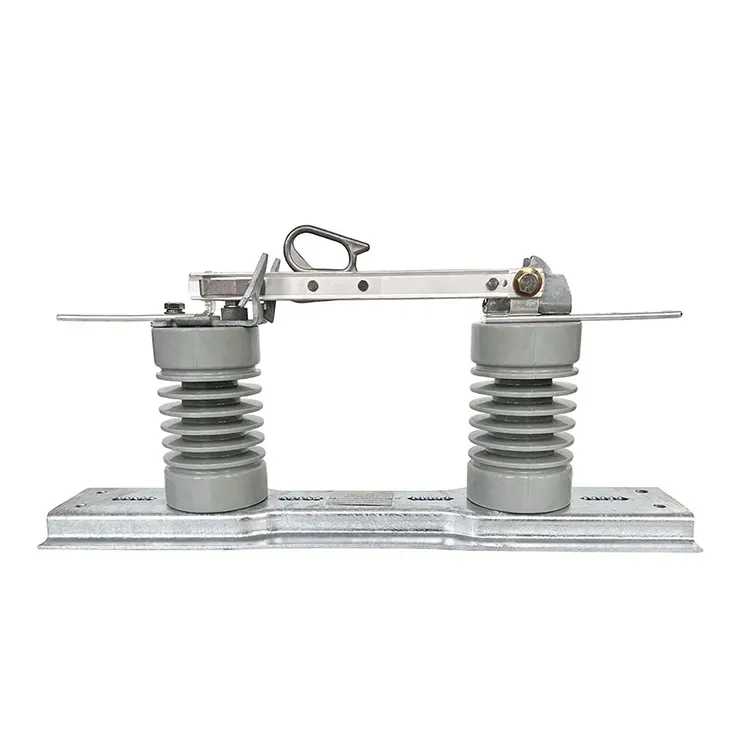
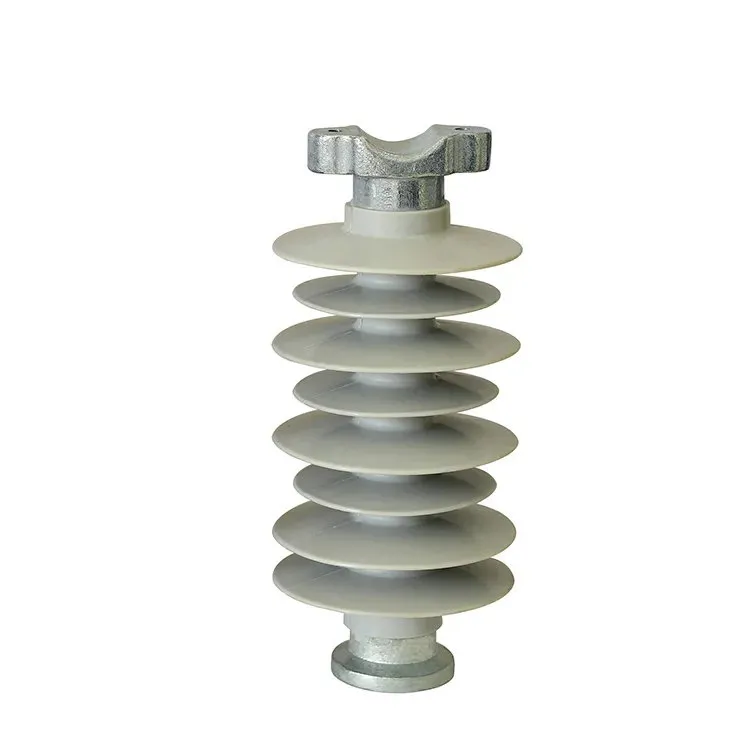
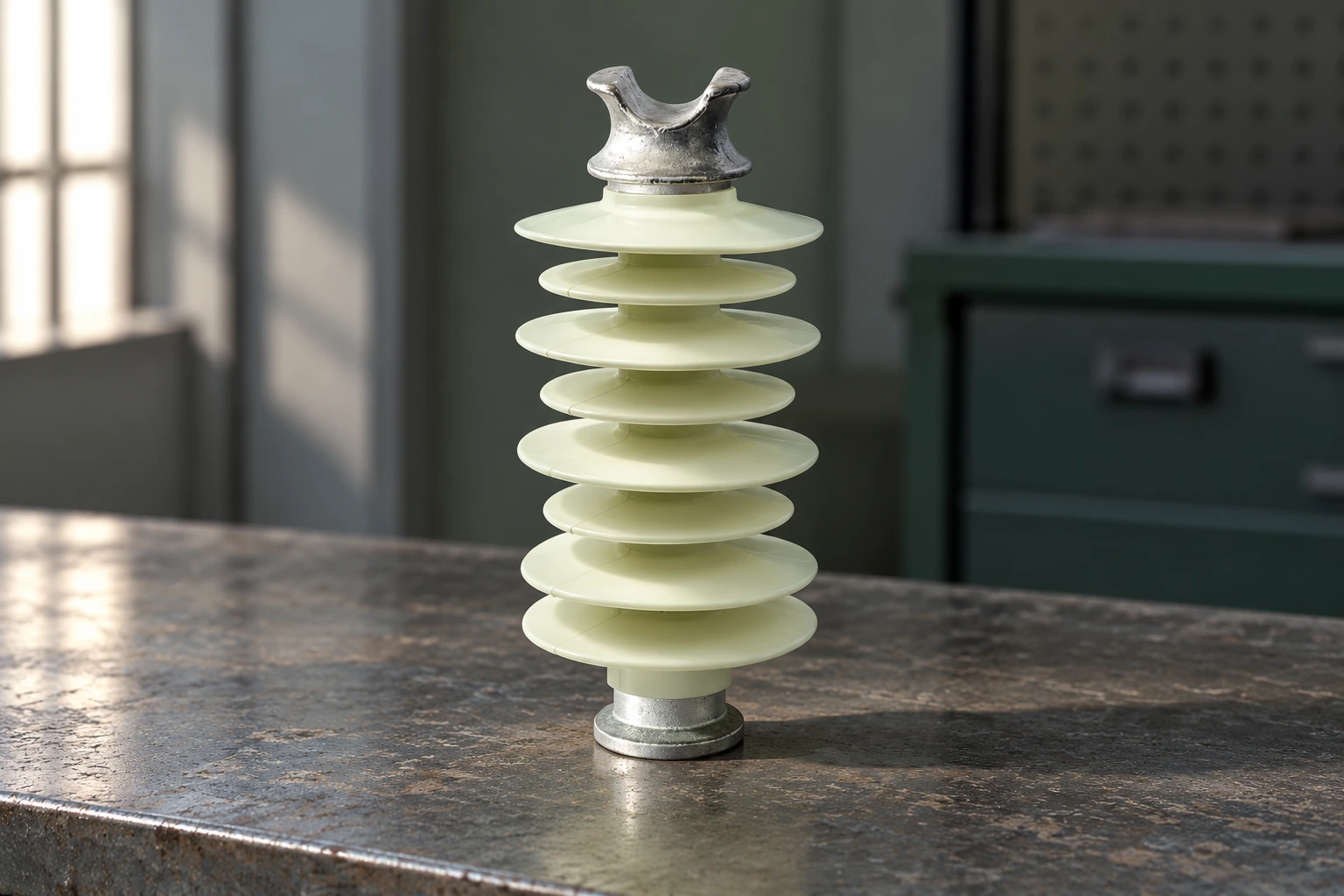
The visible outline discussed in a polymer insulator shed profile enquiry helps identify the part, but a shed photograph is not a field calculation. The same applies to the image below: it illustrates an intact component’s visible fitting and profile, not a measured discharge or a diagnosed defect.
Do not add a ring, change an end fitting, round a contact or alter a conductor arrangement because it appears to offer a simple cure. Such changes may affect the original design and other duties. Any proposed correction needs review by the responsible engineer or equipment manufacturer.
Which signs are useful, and which are easy to misread?
Corona can produce audible and radio-frequency noise, light emissions and ozone. Those effects explain why an inspection may combine observations with specialist optical or electrical measurements. They do not make sound, a photograph or odour a dependable standalone identification method. Deliberately approaching equipment to listen closely or smell for ozone is not an inspection procedure.
A useful report separates the symptom from the conclusion: ‘intermittent noise recorded near this equipment during wet conditions’ is more useful than an unsupported ‘failed insulator’ label. Record what was observed, how it was observed and from where. Instrument findings should include the method and settings, not just a cropped image with an unexplained intensity scale.
| Record | Why it matters | Interpretation limit |
|---|---|---|
| Equipment identity and location | Connects an observation to drawings and service history | Nearby equipment may also contribute to a signal |
| Weather and surface conditions | Helps compare repeated observations | Correlation with wet weather does not prove a root cause |
| Operating condition and time | Relates activity to the actual duty | A single observation may not represent normal operation |
| Method, settings and observation position | Makes later measurements interpretable | Different methods or settings may not be directly comparable |
| Relevant drawing and maintenance history | Identifies changes or known design features | A drawing must match the installed revision |
What should be recorded before a discharge diagnosis?
The responsible team should first establish a safe inspection scope. 29 CFR 1910.269 covers US electric-power work, including qualified-worker and approach requirements. Its scope is not a universal maintenance procedure, and local rules and the site’s electrical safety arrangements still apply.
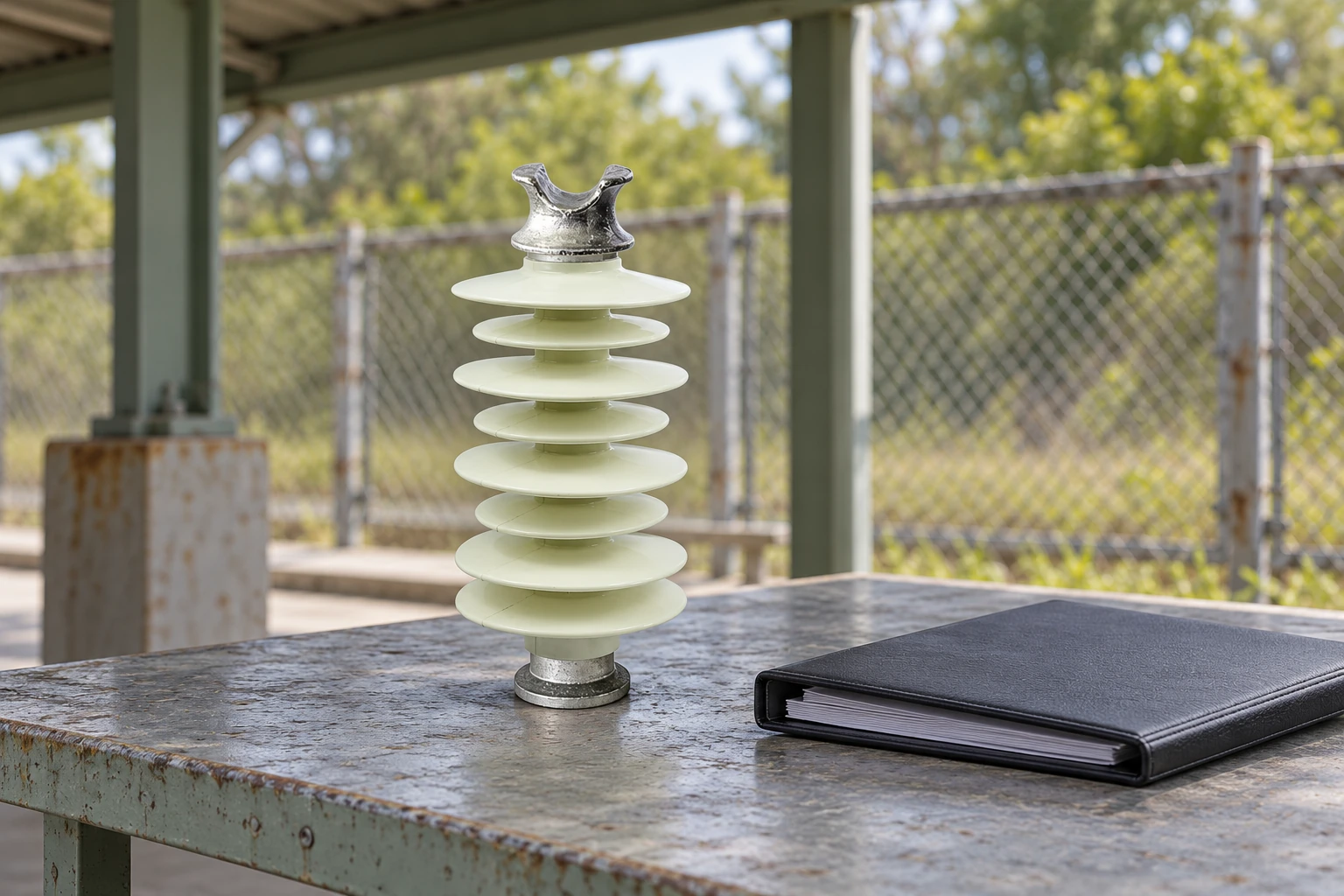
Once the source is localized, compare the actual assembly with the approved drawing, operating conditions and maintenance instructions. An insulator specification should distinguish electrical duty, mechanical load and environment. If a replacement is proposed, confirm the complete specification rather than choosing a visually similar part.
Frequently asked questions
What is corona discharge?
It is localized ionization of gas around a conductor in a sufficiently strong electric field. The discharge can remain local without bridging the entire insulation gap.
Where can corona occur on high-voltage equipment?
It can occur near conductors, fittings and other regions where the local field is concentrated. The exact location depends on the assembly geometry, applied voltage and surrounding conditions.
How is corona different from flashover?
Corona is localized; flashover bridges an insulating gap or external insulation path. They are different mechanisms, so a report should describe the evidence rather than treating the terms as synonyms.
How does surface shape affect the local electric field?
Small-radius or sharp features can concentrate the field. A field assessment must consider the full arrangement, including neighbouring parts, rather than one isolated edge in a photograph.
Can humidity and contamination affect corona?
They can affect the conditions around equipment and the behaviour of insulation surfaces. Record weather and contamination when comparing observations, but do not assume that every wet-weather symptom is corona.
What signs may indicate electrical discharge?
Possible indications include noise, light emissions and interference. They are clues rather than proof, and personnel should never approach energized equipment simply to listen for noise or detect an odour.
Which inspection methods can help locate discharge activity?
Qualified specialists may use optical or electrical diagnostic methods appropriate to the suspected source, supported by safe visual observations and equipment records. A method’s limits, instrument settings and operating conditions must be included when interpreting its findings.
Why should discharge observations be reviewed with equipment design information?
The drawing, rated duty, installation arrangement and approved maintenance information provide the context for deciding whether an observation requires action. A generic symptom or image cannot establish an equipment-specific acceptance limit.
References
Sources checked on 2 November 2026.
- Wikipedia — Corona discharge: mechanism and effects
- OpenStax, University Physics Volume 2, §5.2 — Conductors and Insulators
- 29 CFR 1910.269 — Electric power generation, transmission and distribution (Cornell LII)
Summary
A useful corona investigation begins by separating an observed symptom from a confirmed mechanism. Record the equipment, location, weather, operating condition and inspection method before deciding what the result means. Localized discharge, flashover and surface deterioration call for different interpretations, and none should be diagnosed from a generic product photograph. Compare the findings with the actual installation and approved equipment information, then let the responsible technical team determine the correction. Changes to fittings or surrounding geometry should never be improvised. Fuerte’s outdoor polymer insulators can be considered when a documented replacement requirement has been established; product selection still needs the electrical, mechanical and environmental conditions of that installation.