

For a related technical topic, see High Voltage Fuse Cutout for Power Utilities | Distribution Line Protection. For a related technical topic, see Lightning Surge Arrester for Power Systems Overvoltage Protection.
Industry Trends Driving Demand for Polymer Insulators
The global power sector is moving through a period of infrastructure renewal. Utilities are upgrading aging transmission and distribution assets, expanding medium-voltage networks, and connecting renewable energy projects to existing grids. These changes increase demand for outdoor insulation components that can perform reliably under varied environmental and mechanical conditions.
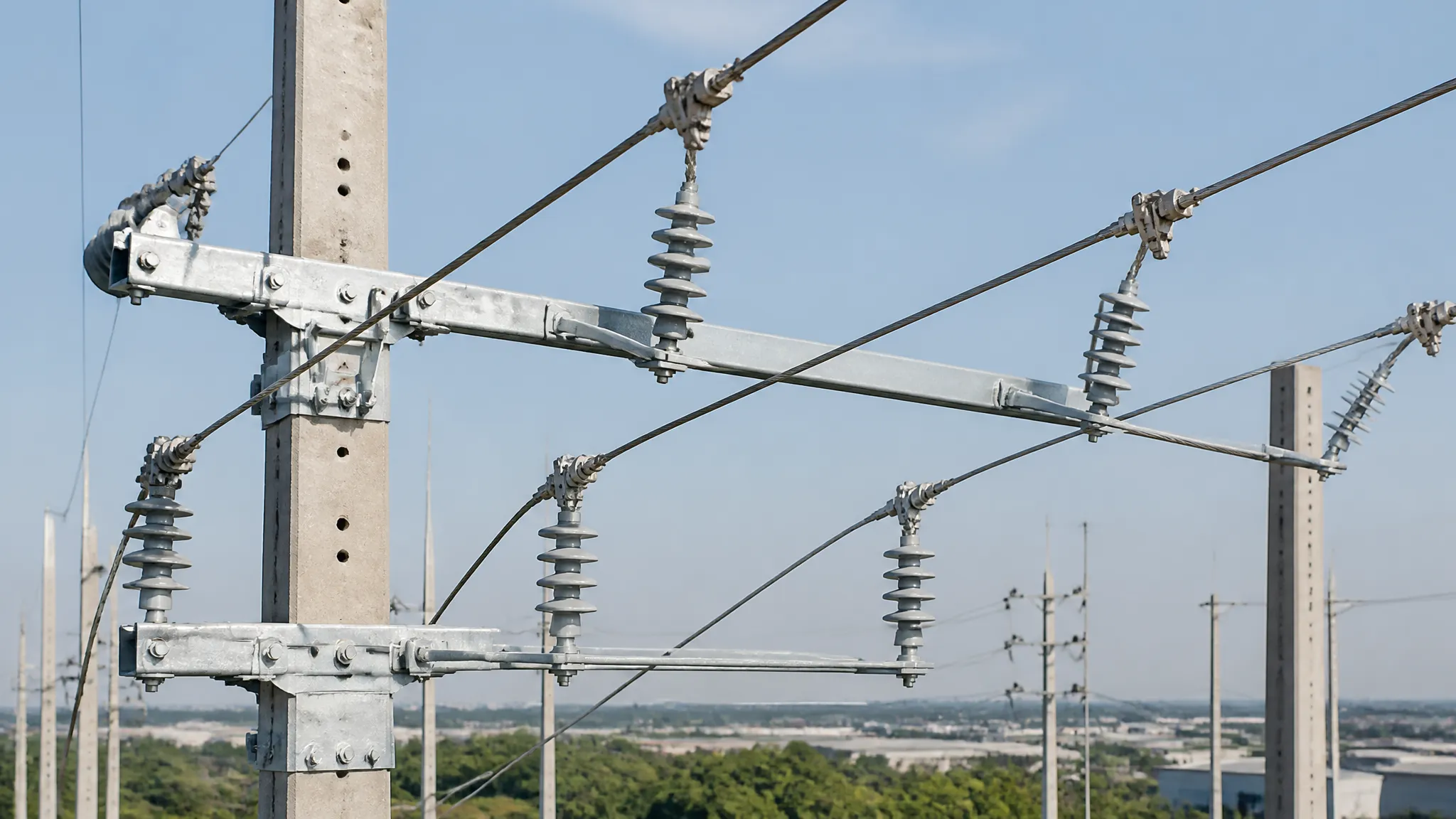
According to the International Energy Agency, investment in electricity grids is becoming increasingly important as countries work to improve grid reliability and support renewable energy integration. This trend affects not only large transmission projects but also local distribution networks, rural electrification programs, island grids, and industrial power systems. In these applications, insulation products must maintain electrical performance while also supporting the mechanical requirements of overhead line construction.
Polymer insulators are often considered where lightweight structure, pollution resistance, and easier handling are valued. Compared with traditional porcelain or glass insulators, composite polymer insulators can reduce installation weight and provide hydrophobic surface behavior through silicone rubber housing. This can be useful in coastal areas, industrial zones, dusty regions, and high-humidity environments where surface contamination may affect insulation performance.
Note: Insulator selection should always be based on actual project conditions, including voltage class, pollution severity, altitude, mechanical load, installation design, and local standards. A design that performs well in one region may require adjustment for another environment.
For many buyers, the challenge is not simply finding a polymer insulator supplier. The more important question is whether the supplier can provide consistent specifications, technical documents, appropriate testing support, export packaging, and stable repeat production. In power infrastructure procurement, long-term reliability often depends on details confirmed before mass production begins.
What Buyers Should Know About Polymer Insulator Structure and Materials
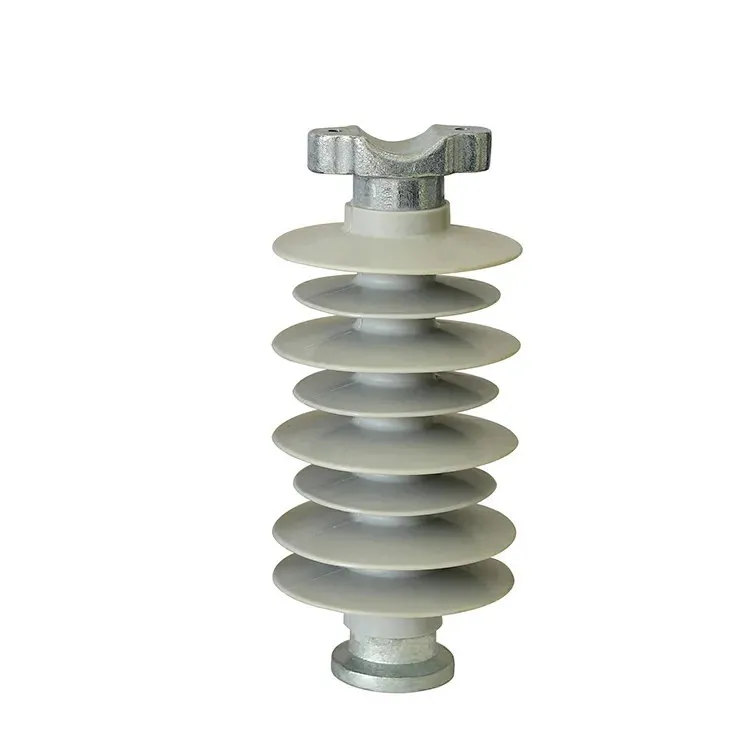
A polymer insulator is generally made of a fiberglass reinforced plastic core, silicone rubber housing, weather sheds, metal end fittings, and a sealing system. These parts work together to provide mechanical strength, electrical insulation, and outdoor weather resistance.
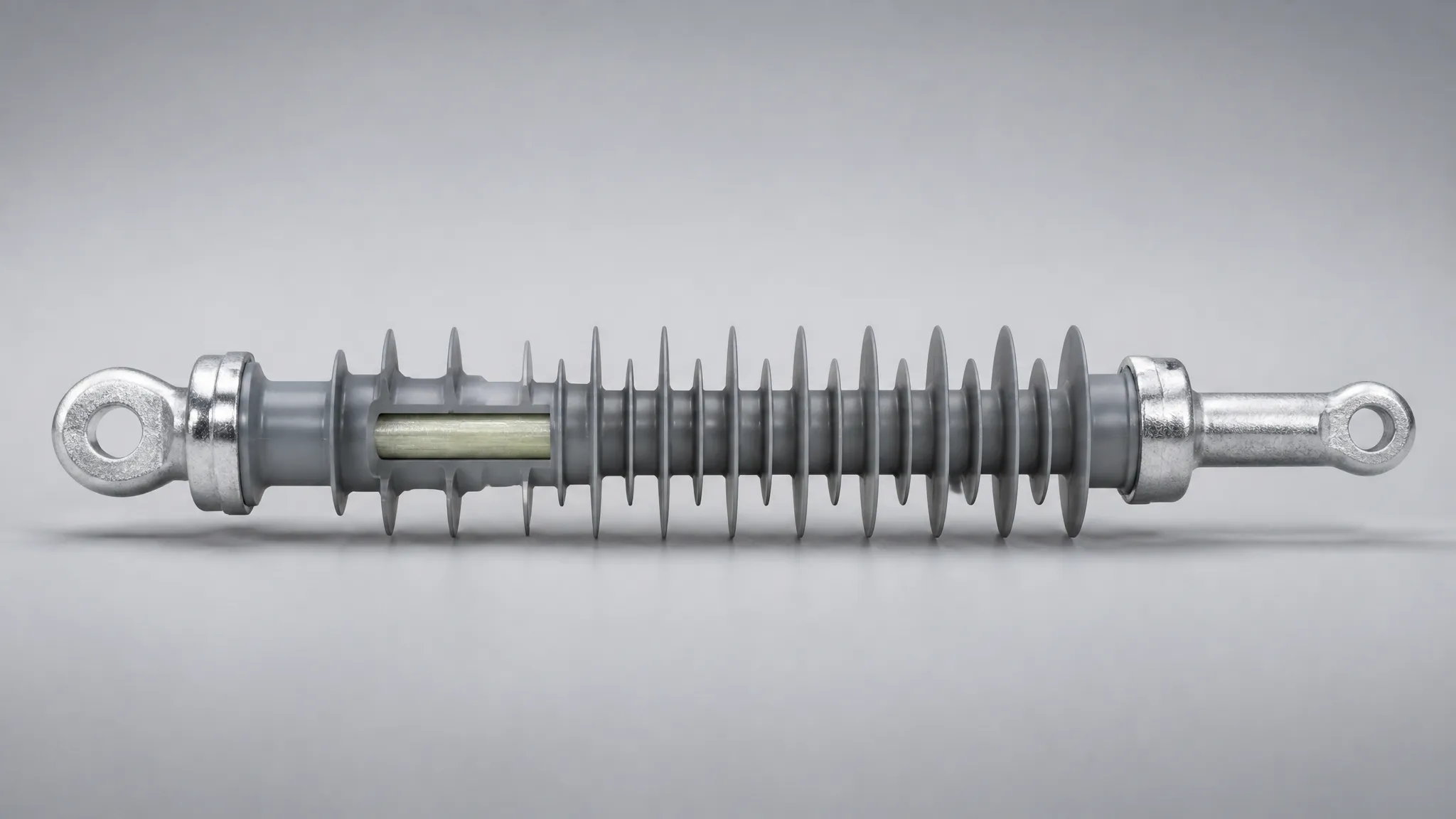
The FRP core is the load-bearing element. It must withstand tensile forces during installation and long-term line operation. The silicone rubber housing protects the core from environmental exposure and provides external insulation. Weather sheds increase creepage distance and help improve performance in polluted or wet environments. Metal end fittings connect the insulator to line hardware, crossarms, fuse cutouts, isolating switches, or other distribution system components depending on the application.
The sealing system is a critical but sometimes underestimated part of the design. Poor sealing can allow moisture to enter the interface between the housing, FRP core, and metal fittings. Over time, moisture ingress may reduce mechanical strength or create electrical performance risks. This is why experienced buyers often ask about sealing process, crimping control, and interface inspection rather than only checking external appearance.
| Component | Main Function | Buyer Consideration |
|---|---|---|
| FRP Core | Provides mechanical strength | Tensile load, water diffusion resistance, dimensional stability |
| Silicone Rubber Housing | Provides outdoor insulation protection | Hydrophobicity, UV resistance, tracking and erosion resistance |
| Weather Sheds | Increase creepage distance | Pollution level, shed profile, drainage behavior |
| Metal End Fittings | Connect the insulator to line hardware | Material, galvanization, fitting type, installation compatibility |
| Sealing System | Reduces moisture ingress risk | Sealing quality, aging resistance, process consistency |
For B2B buyers, material selection should be reviewed together with the final application. High voltage polymer insulators for transmission lines may require different mechanical ratings and creepage distances than distribution line insulators used in medium-voltage networks. A supplier should be able to explain how voltage rating, shed design, end fitting type, and installation environment affect product selection.
From Raw Materials to Assembly: Main Manufacturing Process
The production of composite polymer insulators begins with raw material verification. The FRP core, silicone rubber compound, metal fittings, and sealing materials should be checked before they enter production. Incoming inspection usually includes dimensional checks, surface condition review, material certificates, batch identification, and compatibility with the intended product design.
After raw material preparation, the silicone rubber housing and weather sheds are formed around the FRP core. Depending on the product design and production setup, manufacturers may use injection molding or compression molding. Process control during this stage is important because temperature, pressure, curing time, mold condition, and rubber flow can affect bonding quality, surface finish, shed consistency, and dimensional accuracy.
Once the housing is formed, the insulator is assembled with metal end fittings. Common fitting types may include tongue, clevis, ball, socket, pin, or custom project-specific structures. The fitting type must match the hardware used by the utility or contractor. During crimping, the manufacturer must control pressure carefully. Insufficient crimping may reduce mechanical connection strength, while excessive force may damage the FRP core.
Sealing is completed around the end fitting area to reduce moisture ingress risk. After assembly, semi-finished products are checked for surface defects, fitting alignment, marking accuracy, dimensions, and general appearance. For larger B2B orders, batch traceability is especially useful because it connects finished products with raw material batches, process records, and inspection results.
In many export projects, buyers first provide only a voltage rating or a reference photo. During technical confirmation, the manufacturer often needs to clarify creepage distance, end fitting dimensions, mechanical load, applicable standard, and packaging requirements before sample preparation. This early communication helps avoid repeated drawing revisions and reduces the risk of product mismatch during installation.
Note: For export projects, unit price is only one part of the sourcing decision. Batch consistency, test documentation, packaging strength, drawing confirmation, and communication efficiency can have a direct effect on project delivery.
A manufacturer with experience in power distribution protection equipment is often better positioned to understand how insulators work with related grid components. Zhejiang Fuerte Electrical Apparatus Co., Ltd. has long-term manufacturing experience in products such as fuse cutouts, surge arresters, isolating switches, polymer insulators, and vacuum circuit breakers. This broader product background can support technical coordination for buyers sourcing multiple distribution protection components.
Common Specifications, Ratings, and OEM Options for Buyers
When sourcing polymer insulators, buyers should confirm specifications before focusing on price. The key parameters usually include voltage rating, specified mechanical load, creepage distance, arcing distance, section length, shed profile, end fitting type, standard compliance, and installation environment.
Voltage rating determines where the product can be applied. Medium-voltage distribution systems often use 11kV, 15kV, 24kV, 33kV, or 36kV designs, while transmission projects may require 66kV, 110kV, 220kV, or higher voltage classes. Mechanical load is equally important because the insulator must support conductor tension, wind load, ice load, installation stress, and long-term line operation.
Creepage distance deserves special attention in polluted or humid regions. Coastal areas, industrial zones, mining regions, deserts, and tropical environments may require longer creepage distance or a specific shed profile. Buyers should avoid assuming that one standard model is suitable for all operating conditions.
| Specification | Why It Matters | Typical Buyer Question |
|---|---|---|
| Voltage Rating | Determines application range | Is it suitable for the project voltage level? |
| Mechanical Load | Affects line safety and installation reliability | What SML is required by the design? |
| Creepage Distance | Influences pollution performance | Is the design suitable for coastal or industrial areas? |
| End Fitting Type | Ensures installation compatibility | Can it match the existing line hardware? |
| Shed Profile | Supports outdoor insulation behavior | Is it suitable for rain, dust, salt fog, or pollution? |
| Standard Compliance | Supports project approval | Can the supplier provide IEC, ANSI, or related documents? |
OEM polymer insulators are commonly required by distributors, project contractors, and regional electrical brands. Customization may involve drawings, special end fittings, private label marking, product color, carton labels, pallet marks, project-based creepage distance, or buyer-specific documentation. In some cases, custom mold development may be needed if the requested dimensions or shed profile differ significantly from standard models.
For OEM projects, buyers should provide drawings, reference samples, installation photos, target market standards, and expected order quantities as early as possible. Sample approval is recommended before mass production. This process helps confirm dimensional compatibility, appearance requirements, marking details, and packaging expectations.
Quality Assurance and Testing Procedures Before Shipment
Quality assurance for polymer insulators should not be limited to final inspection. A reliable QA process starts from incoming materials and continues through molding, assembly, crimping, sealing, testing, packing, and shipment. For buyers, understanding this process helps reduce procurement risk and supports more predictable performance in the field.
Raw material inspection checks whether the FRP core, silicone rubber compound, metal fittings, and sealing materials meet internal requirements. During production, process control focuses on molding quality, crimping parameters, sealing condition, dimensional consistency, and surface appearance. After assembly, visual inspection is used to identify cracks, contamination, uneven sheds, poor marking, fitting damage, or other visible defects.
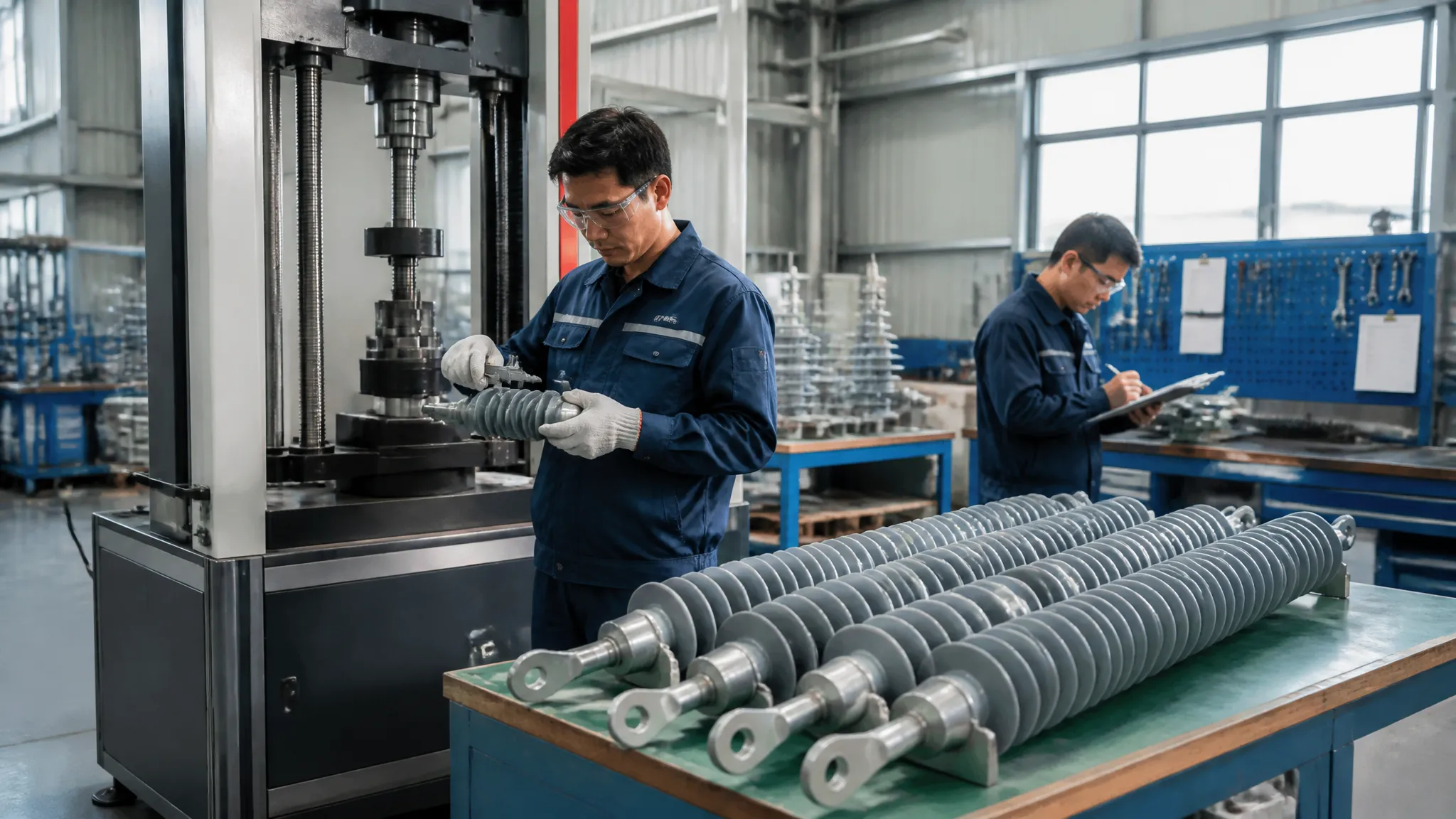
Electrical and mechanical testing provides further confirmation of product reliability. Depending on the product type and project requirement, buyers may request mechanical tensile tests, power frequency withstand tests, lightning impulse tests, tracking and erosion tests, water diffusion tests, thermal-mechanical tests, or routine inspection reports. These tests help verify whether the product design and manufacturing process can support expected operating conditions.
IEC 61109 and IEC 62217 are widely referenced international standards for composite insulators used in AC overhead lines and polymeric high-voltage insulators. They cover design tests, type tests, routine tests, and material-related performance requirements. ANSI and IEEE standards may also apply depending on the target market and project specification.
A documented quality system is especially important for international procurement. Buyers should ask whether technical datasheets, inspection records, test reports, packing photos, and shipment documents can be provided. For repeat orders, consistency between batches is often more valuable than a one-time low purchase price.
In this part of supplier evaluation, an export-oriented manufacturer can be easier to work with because the requirements are not limited to production. Overseas B2B customers often need document support, packaging confirmation, shipment coordination, and responsive technical communication. FUERTE’s positioning as a manufacturing partner for international power distribution buyers is relevant here, particularly for customers seeking stable cooperation rather than one-time spot purchasing.
How Utilities and EPC Contractors Can Evaluate a Polymer Insulator Manufacturer
Selecting a polymer insulator manufacturer requires both technical and commercial evaluation. Utilities and EPC contractors need products that meet project standards, but they also need suppliers who can respond clearly to drawings, technical questions, documentation requests, and delivery schedules.
A practical evaluation begins with product capability. Buyers should confirm whether the manufacturer can produce the required voltage rating, mechanical load, creepage distance, fitting type, and shed profile. If OEM customization is needed, the supplier should be able to review drawings, confirm feasibility, and provide samples before mass production.
The next consideration is process control. Polymer insulators are not only molded rubber products. Their reliability depends on the interaction between FRP core quality, silicone rubber performance, metal fitting design, crimping control, sealing integrity, and inspection consistency. A supplier that can explain these factors clearly is usually better prepared for project-based cooperation.
Export experience is also important. International buyers may require neutral packaging, private labels, palletized shipment, third-party inspection support, certificates of origin, packing lists, and other trade documents. Manufacturers familiar with overseas B2B requirements can help reduce communication delays and avoid shipment problems.
Zhejiang Fuerte Electrical Apparatus Co., Ltd., founded in 1985, is a Chinese manufacturer focusing on power distribution and electrical protection equipment. Its product scope includes fuse cutouts, surge arresters, isolating switches, polymer insulators, and vacuum circuit breakers. For buyers sourcing several grid protection components from related categories, working with a manufacturer that understands distribution system applications may simplify technical coordination and supplier management.
Even so, the final supplier decision should be based on technical fit, documentation quality, testing capability, lead time, communication efficiency, and repeat-order consistency. A trustworthy supplier should be willing to discuss project conditions rather than only quote a model number.
Practical Procurement Guidance for Polymer Insulators
Before requesting a quotation, buyers should prepare basic project information. This typically includes voltage rating, mechanical load, creepage distance, end fitting type, installation environment, applicable standard, quantity, delivery schedule, and packaging requirements. When OEM service is needed, marking, label, color, and documentation requirements should also be confirmed.
If drawings are available, they should be shared with the supplier. If the buyer is replacing an existing product, sample photos or a physical sample can help confirm dimensional compatibility. For new projects, the engineering team may need to review pollution level, altitude, wind conditions, conductor arrangement, and line hardware before the final insulator design is confirmed.
Buyers should also clarify whether the order is for trial purchase, regular distribution, tender submission, or direct project installation. Each situation may require different support. A distributor may focus more on packaging and branding, while an EPC contractor may need technical datasheets, test reports, compliance documents, and delivery coordination.
Price comparison is useful, but it should not be separated from specification comparison. Two polymer insulators with similar appearance may differ in silicone rubber quality, FRP core strength, galvanization thickness, creepage distance, end fitting material, sealing process, and test support. A lower initial price may lead to higher replacement cost if the design does not match the operating environment.
For long-term supply, communication efficiency is also part of procurement quality. Buyers should evaluate how quickly the supplier responds to technical questions, whether the quotation is based on complete specifications, and whether the manufacturer can support stable repeat production.
Building a More Reliable Supply Chain for Grid Insulation Components
Polymer insulators play a practical role in supporting outdoor electrical insulation and mechanical stability in power distribution and transmission systems. As grid projects become more demanding, buyers increasingly need products that are correctly specified, consistently manufactured, and supported with reliable documentation.
For power utilities, EPC contractors, distributors, and electrical contractors, supplier selection should include both product performance and cooperation capability. A suitable manufacturer should understand voltage classes, mechanical loads, pollution environments, testing requirements, packaging expectations, and international trade processes.
A more reliable procurement process begins with early technical communication. Buyers can share drawings, project standards, installation environments, target delivery schedules, and expected order quantities before confirming the final model. This allows the manufacturer to review OEM requirements, recommend suitable designs, and reduce the risk of specification mismatch.
For international buyers comparing polymer insulator suppliers, it is reasonable to request technical datasheets, sample evaluation, test documentation, packaging details, and quotation support based on project requirements. Manufacturers with long-term experience in power distribution equipment, such as FUERTE, can provide manufacturing support within a broader understanding of grid protection applications while keeping the focus on practical product fit, consistent production, and stable cooperation.
The standards baseline has moved forward: IEC 61109:2025 is now the current public reference for composite suspension and tension insulators for overhead lines, while IEC 62217:2025 provides common terminology and test context for polymeric insulation. That update is useful for procurement because it separates the product family from the line-specific design. The standard scope does not, by itself, select creepage distance, mechanical load, fittings or pollution class for a particular route.
For a 2026 utility or EPC enquiry, add the approved line profile, specified mechanical load or SML basis, end-fitting geometry, conductor and hardware interfaces, route pollution or altitude notes, inspection plan and the exact standard edition requested. Current selection discussions also focus on fittings and interface evidence rather than a generic “polymer insulator” label. Ask for drawings, material declarations and test evidence that match the offered configuration, and mark any route-specific value as pending owner approval.
FAQ
Q1: What are polymer insulators used for?
Polymer insulators are used in overhead transmission lines, distribution networks, substations, and railway electrification systems. They provide electrical insulation and mechanical support between energized conductors and grounded structures. Their lightweight structure and outdoor performance make them suitable for many grid applications.
Q2: What materials are commonly used in polymer insulators?
Most composite polymer insulators use an FRP core, silicone rubber housing, weather sheds, metal end fittings, and a sealing system. The FRP core provides mechanical strength, while silicone rubber supports outdoor insulation and hydrophobic surface behavior. End fittings connect the insulator to line hardware or related electrical equipment.
Q3: What voltage ratings are available for polymer insulators?
Polymer insulators are available for medium-voltage, high-voltage, and extra-high-voltage applications. Common project ratings may include 11kV, 24kV, 33kV, 36kV, 66kV, 110kV, 220kV, and higher designs. The final selection should be based on project drawings, electrical requirements, mechanical load, and applicable standards.
Q4: Can polymer insulators be customized for OEM projects?
Yes, OEM polymer insulators can be customized according to drawings, samples, end fitting types, creepage distance, shed profile, color, marking, and packaging requirements. Buyers should confirm technical details before mass production. For customized projects, sample approval is recommended.
Q5: What tests should buyers request before shipment?
Buyers may request dimensional inspection, visual inspection, mechanical tensile testing, power frequency withstand testing, and routine inspection reports. For project-based orders, type test reports or standard-related documentation may also be required. IEC 61109, IEC 62217, ANSI, or IEEE requirements can be considered depending on the target market.
Q6: How do buyers choose the right creepage distance?
Creepage distance should be selected according to voltage rating, pollution level, humidity, altitude, and installation environment. Coastal, industrial, desert, and high-pollution areas may require longer creepage distances. Buyers should follow project standards or consult engineering guidance before final selection.
Q7: What information is needed for a polymer insulator quotation?
A quotation usually requires voltage rating, mechanical load, creepage distance, end fitting type, quantity, drawing or reference model, applicable standard, and packaging requirement. If OEM service is needed, buyers should also provide logo, label, color, documentation, or private packaging requirements.
Q8: How should polymer insulators be packed for export?
Export packaging should protect the insulators from impact, moisture, deformation, and surface damage during transportation. Depending on order size, packaging may include cartons, wooden cases, pallets, or customized labels. For overseas B2B shipments, packing photos and shipping marks are often useful for inspection and customs clearance.
What changed for polymer-insulator buyers with IEC 61109:2025?
IEC 61109:2025 is the current public reference for composite suspension and tension insulators for overhead lines. It clarifies the product scope and test context, but it does not choose route-specific creepage, mechanical load, fittings or pollution assumptions. Buyers should state the requested edition and then match the offered drawing and test evidence to the approved line design.
Does a polymer-insulator standard determine the required creepage distance?
No. The standard provides product and test context; the required creepage and related design inputs depend on the owner’s voltage, pollution, altitude, environment and line arrangement. Record those inputs in the design basis and require the supplier to identify the creepage value and evidence for the offered configuration. Do not infer it from a generic product photograph.
Which documents should an EPC request with a suspension-insulator offer?
Request the dimensional drawing, end-fitting and hardware interface, declared mechanical load basis, material and test documentation, applicable standard edition, inspection plan and any deviations. The package should be traceable to the line profile and route conditions. If a value depends on the owner’s study, mark it pending rather than converting a catalogue statement into a project approval.
References
- IEC 61109:2025Official scope for composite suspension and tension insulators for overhead lines.
- IEC 62217:2025Common definitions and test context for polymeric insulators.
- IEA Electricity Grids and Secure Energy TransitionsCurrent grid-investment context; no product-specific performance claim.
- Composite suspension insulator selection guideCurrent SERP topic signal for SML, fittings and line interfaces.
About the Manufacturer
Zhejiang Fuerte Electrical Apparatus Co., Ltd. is a Chinese manufacturer founded in 1985, focusing on power distribution and electrical protection equipment. The company supplies products such as fuse cutouts, surge arresters, isolating switches, polymer insulators, and vacuum circuit breakers for overseas B2B customers. Its export-oriented production support is designed to help distributors, utilities, and project contractors with technical communication, OEM requirements, and long-term cooperation.