
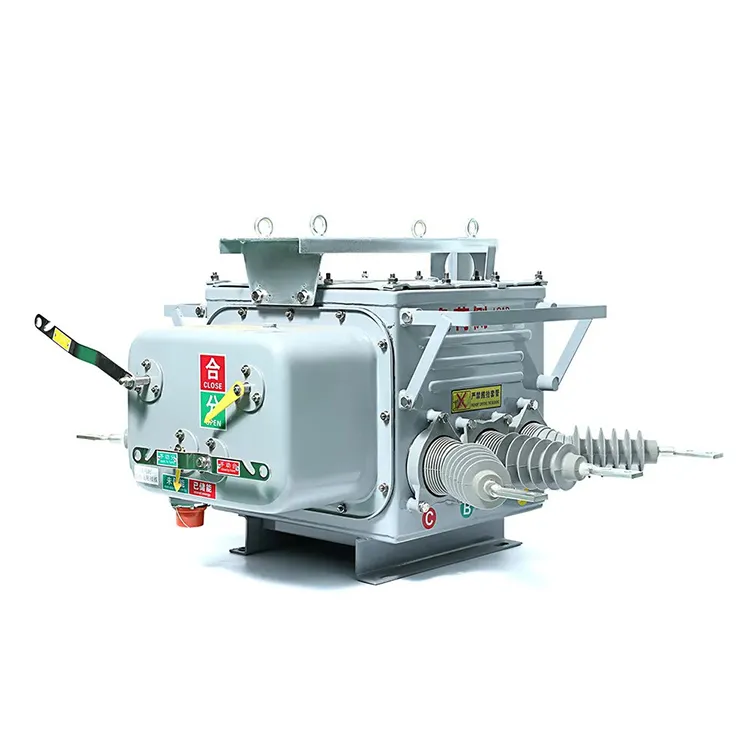
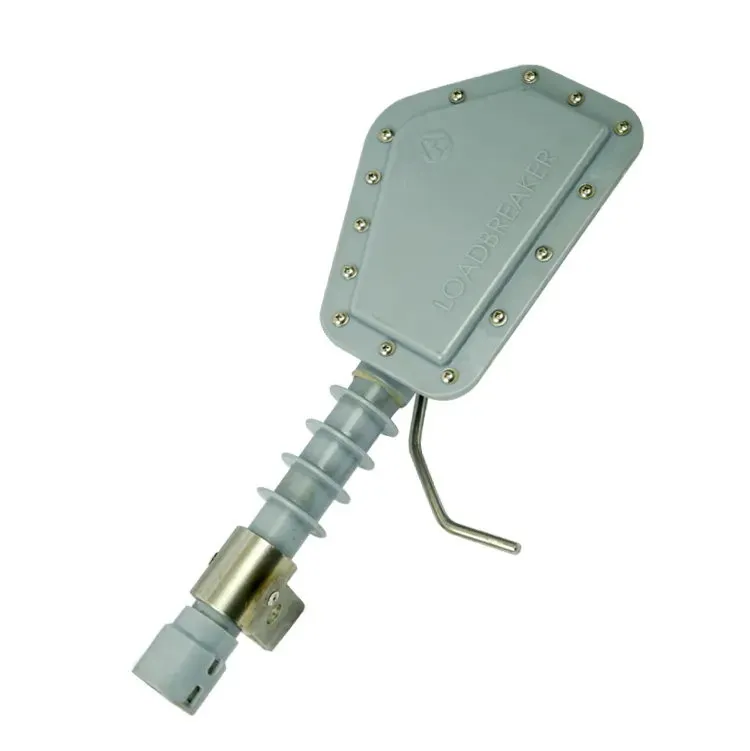


Резюме: A vacuum circuit breaker (VCB) does not have a universal field “vacuum gauge” threshold. Under IEC 62271-1 and IEC 62271-100 testing practice, vacuum interrupter integrity is assessed with an approved dielectric or vacuum-bottle test method, while contact wear and operating timing require separate measurements. Qualified personnel should apply isolation and lockout/tagout (LOTO), follow the manufacturer’s procedure, and treat one acceptable result as evidence for one condition only—not proof that the complete breaker is healthy.
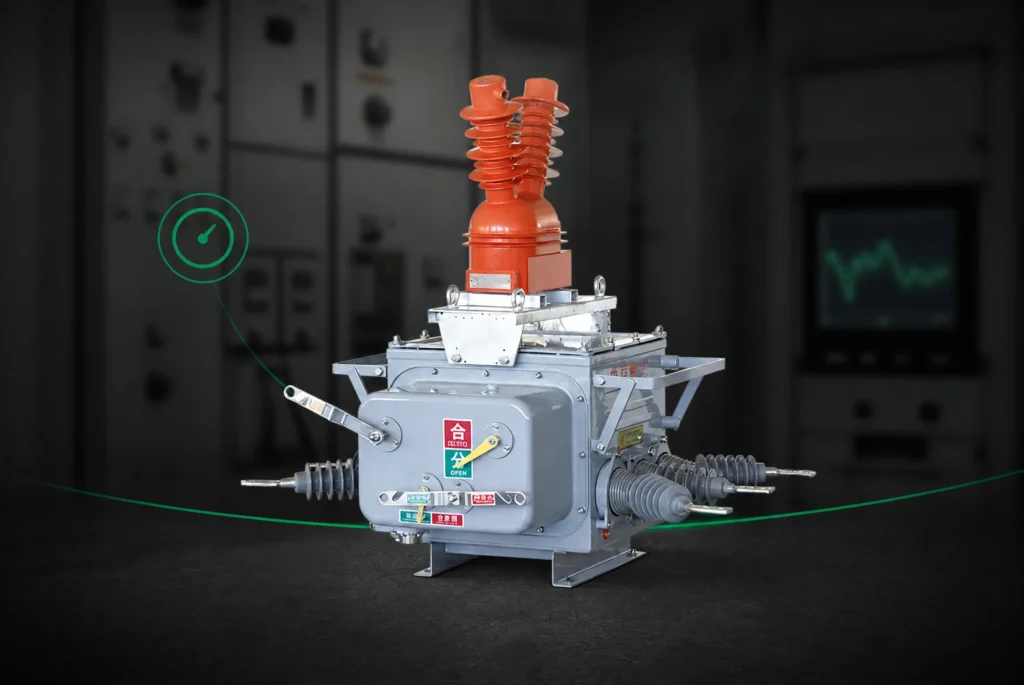
For background on interruption and contact movement, see how a vacuum circuit breaker works. A concise overview is also available in what a vacuum circuit breaker is.
What a vacuum-integrity test can—and cannot—tell you
A vacuum interrupter relies on a sealed bottle and its internal contacts to provide dielectric recovery after current interruption. In service, the internal pressure is normally not measured by attaching a general-purpose gauge: most sealed interrupters have no field service port, and opening or modifying the bottle would compromise it. A test therefore looks for the electrical behavior associated with adequate vacuum, using the OEM’s approved tester, connection points, and limits.
That result is narrower than a full condition assessment. A withstand or vacuum-bottle test can support an integrity decision, but it does not by itself establish contact erosion, contact resistance, travel, closing speed, opening speed, or mechanism health. IEC 62271-100 type and routine-test concepts should be read together with the breaker maker’s instructions and the switchgear assembly’s clearances.
Safe test sequence for qualified maintenance teams
Testing medium-voltage equipment is not a DIY task. A qualified electrical worker should identify the exact model and rating, isolate every source, apply LOTO, verify absence of voltage with an approved instrument, discharge stored energy, and apply protective earths as required by the site procedure. Keep people outside the approach boundary and use the manufacturer’s test drawing; never remove a sealed interrupter cover or improvise a test lead.
- Document the baseline. Record nameplate data, operating count, previous trip history, ambient conditions, and the reason for testing. Check that the test instrument is in calibration.
- Inspect without opening the bottle. Look for cracked insulation, contamination, loose connections, damaged bellows, abnormal tracking, and mechanism damage. An external defect may explain a failed insulation result even when the bottle remains intact.
- Perform the approved vacuum-bottle or dielectric test. Use only the OEM’s connection arrangement, ramp, duration, and acceptance rule. IEC 62271-100/1 provides the testing context; it does not create one universal voltage or pass/fail value for every VCB.
- Complete separate condition checks. Measure main-circuit resistance, verify contact stroke or wipe where specified, and record opening/closing timing and synchronization. These checks address contact wear and mechanism performance rather than vacuum alone.
- Return to service deliberately. Remove test equipment, restore barriers and interlocks, clear the work permit, and re-energize only after the authorized person confirms the system is ready.
How to interpret common evidence
| Evidence or test | Main condition assessed | What a result does not prove | Typical decision |
|---|---|---|---|
| OEM-approved vacuum-bottle/withstand test | Insulation behavior associated with interrupter integrity | Contact wear, mechanism timing, or external clearances | Pass: retain record and continue other checks; fail: stop and investigate |
| Main-circuit contact-resistance test | Conduction path and contact/joint condition | Vacuum tightness or interruption capability | Compare with OEM limit and historical trend |
| Travel, stroke, and timing analysis | Contact movement, pole simultaneity, and operating mechanism | Internal pressure or bottle sealing | Service, adjust, or refer to the OEM based on deviations |
| Visual and event-history review | External damage, contamination, fault exposure, and change over time | A quantitative vacuum value | Use as a trigger for a controlled diagnostic plan |
A single high-potential test can be influenced by surface contamination, humidity, test lead placement, and the surrounding switchgear. Conversely, a bottle that passes an integrity check can still have worn contacts or a slow mechanism. The honest conclusion is a condition report assembled from several compatible observations.
Symptoms, causes, and maintenance planning
Loss of vacuum may be suspected after an abnormal interruption event, a failed approved integrity test, visible bellows or ceramic damage, or a trend that changes from prior records. It should not be diagnosed solely from noise, a single resistance reading, or a generic pressure number. Contact erosion, loose primary connections, linkage wear, and control-circuit faults can create similar symptoms.
Plan the next inspection around the OEM manual, operating duty, fault history, environmental severity, and local maintenance rules. IEC 62271-1 and IEC 62271-100 define common and breaker-specific testing frameworks; they do not mandate a universal three-to-five-year interval for every installation. A risk-based schedule with documented trends is more defensible than a fixed interval copied from another design.
Technology and procurement considerations
Modern switchgear projects may add condition-monitoring sensors, digital event records, or portable analyzers, but these tools supplement—not replace—the approved test method. During procurement, ask for the applicable routine-test record, rated voltage and current, short-circuit duty, mechanical and electrical endurance information, and the exact field-test procedure. Confirm who is responsible for commissioning, calibration, and interpretation in the handover documents.
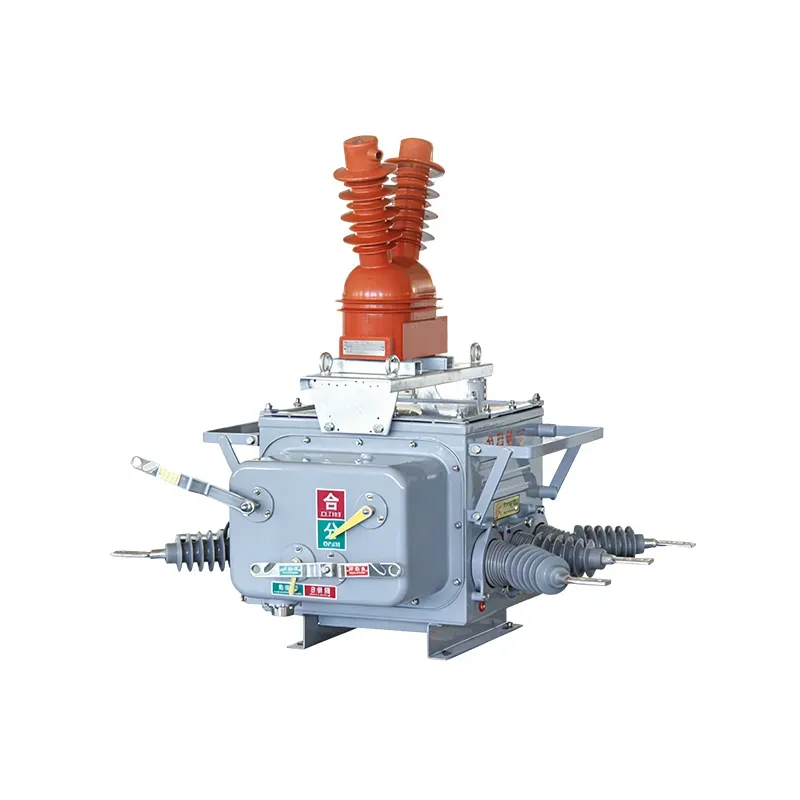
Test decision table for a service visit
| Question at the work order | First evidence to gather | Escalate when |
|---|---|---|
| Is the concern specifically vacuum integrity? | OEM test procedure, bottle identifier, prior integrity results | The unit has no approved field method or the setup cannot meet the procedure |
| Is the concern high resistance or heating? | Contact-resistance trend, torque records, thermal evidence | Resistance is outside the OEM limit or differs materially by pole |
| Is the concern slow or uneven operation? | Timing traces, travel data, control-voltage record | Poles are out of synchronization or mechanism movement is restricted |
| Was there a fault interruption or visible damage? | Protection record, inspection photographs, event history | Any crack, tracking, damaged bellows, or unexplained failed test is found |
Standards and compliance boundaries
- IEC 62271-1 sets common specifications and test concepts for high-voltage switchgear and controlgear; it is not a blanket product certification.
- IEC 62271-100 addresses high-voltage alternating-current circuit-breakers and their type/routine-test framework. The applicable edition and test level depend on the equipment and project.
- Site electrical-safety rules, including isolation, verification, earthing, approach boundaries, and LOTO, govern who may perform the work and how it is controlled.
Commercially, unsupported statements such as “tested vacuum,” “maintenance-free,” or “one test proves the breaker” can mislead a purchaser and create acceptance disputes. Tie every claim to the actual model, test report, destination-market requirements, and documented scope.
Practical selection and maintenance checklist
- Specify the system voltage, frequency, normal current, short-circuit duty, installation environment, and operating sequence before comparing offers.
- Request routine-test evidence and the exact OEM field procedure for vacuum integrity, contact resistance, timing, and mechanical checks.
- Check that test points, clearances, interlocks, and earthing arrangements support safe commissioning in the actual switchgear lineup.
- Set a risk-based review interval from duty and history; do not insert a fixed period or universal test voltage into a specification without evidence.
- Use a supplier able to provide traceable documentation and technical support. Buyers evaluating medium-voltage vacuum circuit breakers can ask for configuration and test-record guidance before placing an order.
Часто задаваемые вопросы
How do you check vacuum in a vacuum circuit breaker?
Use the manufacturer-approved vacuum-bottle or dielectric integrity test with the breaker isolated, verified dead, and earthed under the site safety procedure. Do not attach a generic gauge or open the sealed interrupter unless the OEM explicitly provides a controlled method.
Can a hi-pot test prove that the vacuum interrupter is good?
It can provide evidence about insulation behavior when the setup, level, and acceptance criteria are correct. It does not by itself prove contact wear, timing, mechanism condition, or every aspect of the switchgear’s external insulation.
What is the difference between vacuum integrity and contact wear?
Vacuum integrity concerns the sealed interrupter’s dielectric condition. Contact wear is evaluated with measurements such as contact resistance, contact wipe or stroke, and interruption history; a breaker can pass one category and need attention in another.
How often should vacuum integrity be tested?
There is no single IEC interval that applies to every VCB installation. Use the OEM manual, operating duty, fault history, environmental conditions, and site risk assessment to set a documented schedule.
What should you do if a vacuum test fails?
Keep the breaker out of service, preserve the test record, and have qualified personnel verify the setup and external insulation before repeating an approved test. If the failure is confirmed, follow the OEM replacement or repair route; do not return the unit to service on the basis of a different unapproved test.
Выводы
Checking a VCB is a chain of evidence, not a single magic number. Start with isolation and the correct OEM method, separate bottle integrity from contact wear and timing, and record every result against the equipment history. That discipline prevents a misleading pass from hiding a mechanism problem—and prevents an unsuitable test setup from condemning a sound interrupter. For projects that need documented configuration, routine-test records, and field-test guidance, review the available product options and contact Fuerte’s technical team before the purchase or commissioning decision.
References:
- IEC 62271-1, High-voltage switchgear and controlgear – Part 1: Common specifications, IEC Webstore: IEC 62271-1 search.
- IEC 62271-100, High-voltage alternating-current circuit-breakers, IEC standards page: IEC 62271-100.
- IEEE Standards Association, IEEE C37.09: Test Procedures for AC High-Voltage Circuit Breakers: IEEE standard information.