
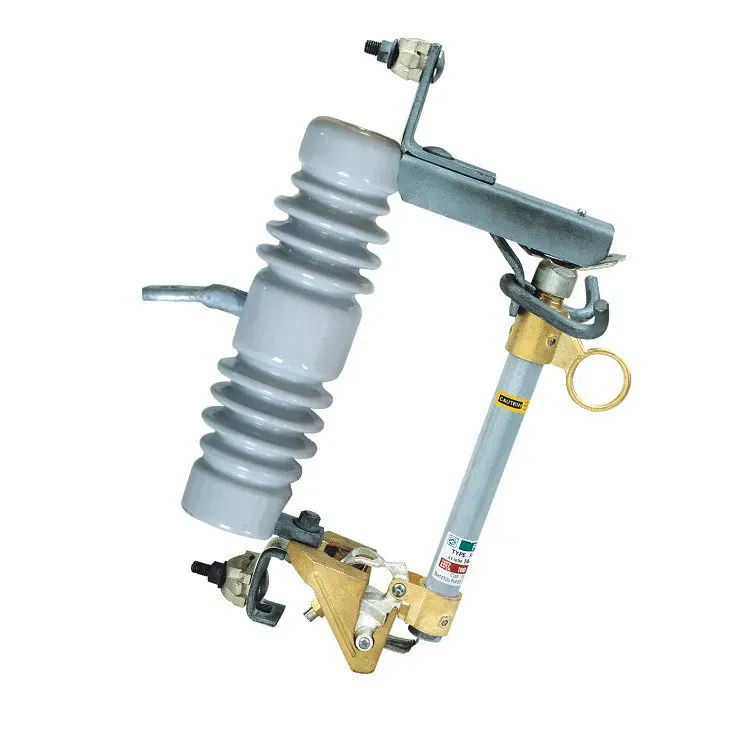
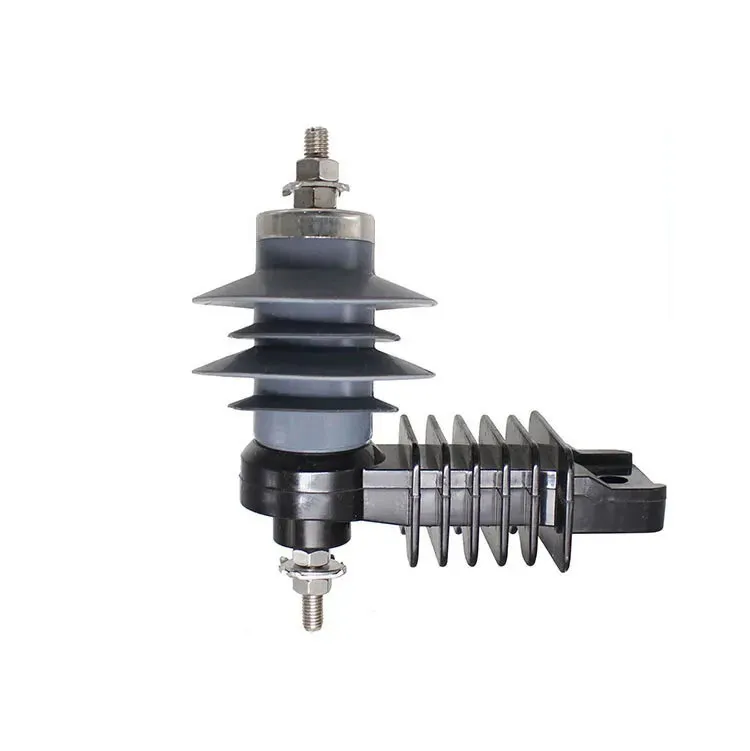
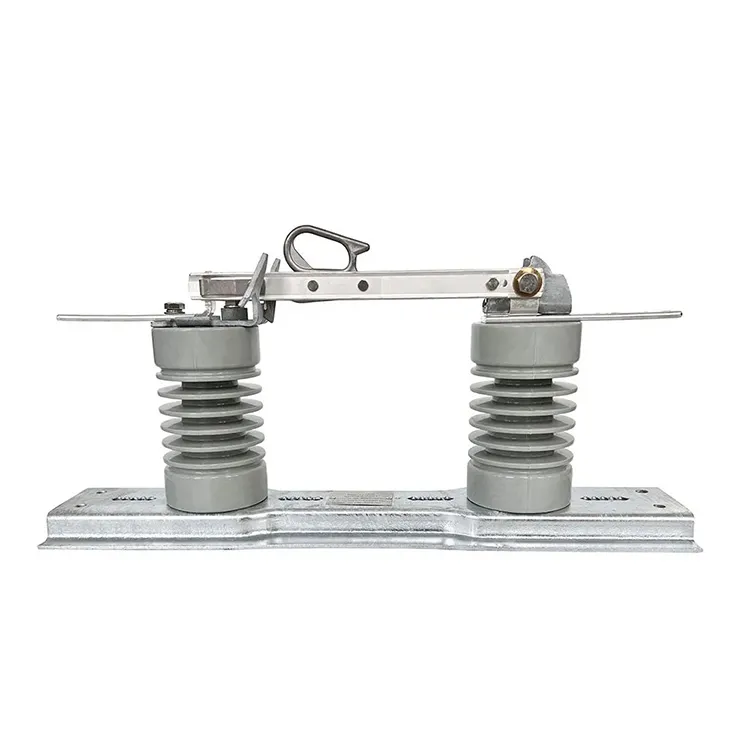
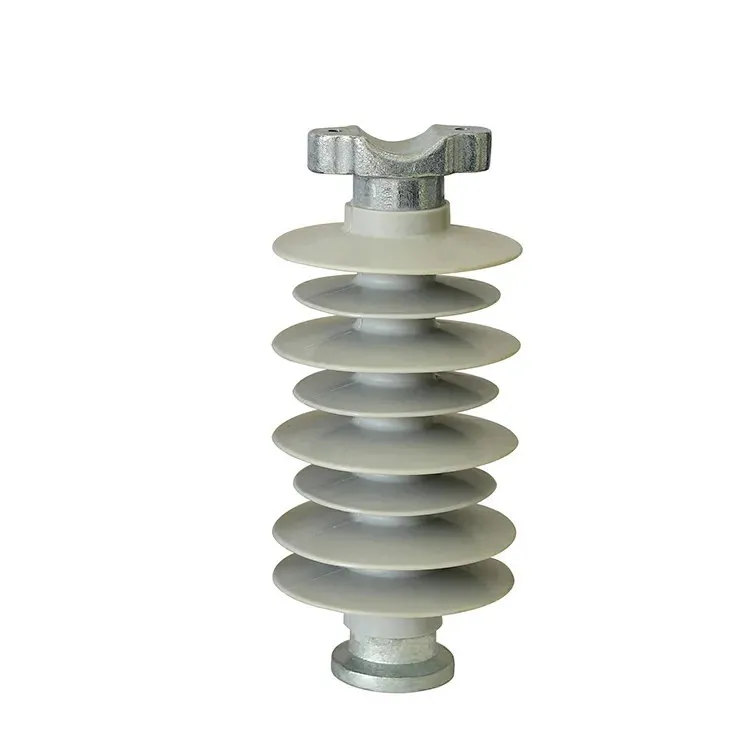


When a protection engineer checks an arrester schedule, the visible problem is often a mismatch between the system voltage and the label on the device. A catalog may show a voltage class, MCOV, a duty-cycle rating and a discharge-current class, yet those values do not answer the same question. Selecting by a familiar “11 kV” or “33 kV” name alone can leave temporary overvoltage, grounding, contamination and lead-length risks unresolved. The practical task is to connect the system’s phase-to-ground voltage, grounding method and insulation coordination study to the arrester’s tested characteristics. This guide explains that decision path using IEC 60099-4 and IEEE C62.11 terminology, while keeping manufacturer-specific ratings and grounding limits for the project documents.
Ringkasan: An arrester’s voltage class is not the same as its MCOV rating or duty-cycle rating. IEC 60099-4 covers metal-oxide surge arresters without gaps for AC systems, while IEEE C62.11 provides application and test terminology for station, intermediate and distribution arresters. For an 11 kV or 33 kV network, first confirm the highest continuous phase-to-ground voltage, system grounding and temporary-overvoltage profile; then compare the manufacturer’s MCOV, discharge capability, protective levels and installation instructions. Do not copy an exact rating or earthing resistance from a generic table: the network study, local rules and the selected product’s data sheet control.
Why does voltage class not identify the correct arrester by itself?
Voltage class is a system and equipment designation, not a complete arrester specification. An “11 kV lightning arrester” may be intended for a system whose highest continuous operating voltage is lower or higher than the nominal line-to-line value, depending on grounding and utility practice. The selection must account for phase-to-ground voltage, expected temporary overvoltages (TOV), insulation coordination and the protective level at the equipment terminals.
Catalog and search language varies: electrical arrester, lightning arresters, high voltage surge arrester, 11kV lightning arrester, 33kV surge arrester and metal oxide lightning arrester can all describe related equipment categories. Those labels help locate documents, but the technical schedule still needs the exact MCOV, duty-cycle, protective-level and environmental data for the offered design.
IEC 60099-4:2014 defines the requirements and tests for metal-oxide surge arresters without gaps for AC power systems. IEEE C62.11-2020 uses related terminology for distribution, intermediate and station-class arresters and describes tests such as discharge-current, TOV and energy-duty evaluations. These standards define test and application frameworks; they do not issue a universal “11 kV equals this MCOV” conversion for every network.
How do MCOV and duty-cycle ratings relate to system voltage?
Itu MCOV rating (maximum continuous operating voltage) is the highest specified RMS voltage that can be applied continuously across the arrester under its stated conditions. It must be high enough for the actual continuous phase-to-ground voltage, including the effect of system grounding and operating tolerances. A duty-cycle rating is a separate capability verified by a standardized sequence of voltage and current stresses; it addresses the arrester’s ability to withstand specified temporary overvoltage and energy duty, not its normal continuous voltage.
For an 11 kV or 33 kV system, the engineer should record nominal voltage, highest system voltage, grounding method, fault-clearing time and credible TOV sources before reviewing a data sheet. The correct relationship is therefore conditional: MCOV protects against continuous overstress, while duty-cycle and TOV characteristics address short-duration events. A larger nominal label does not automatically provide better coordination, and a higher MCOV can change the protective level available to the equipment.
What is a rating comparison engineers can use without inventing values?
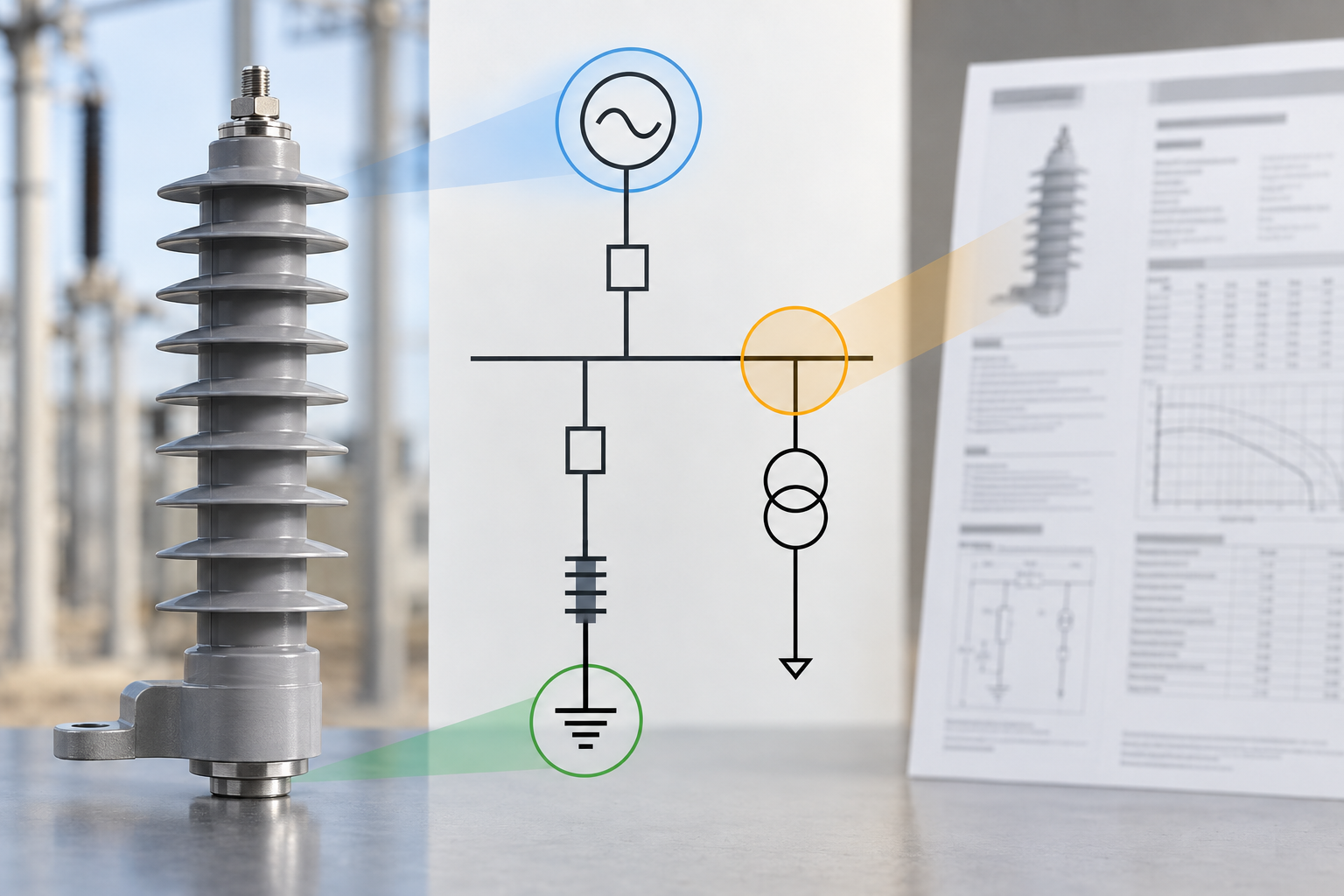
The table below compares rating terms by decision purpose. It intentionally avoids fixed product numbers because values vary with system grounding, standard edition and manufacturer design.
| Rating or term | Question it answers | Evidence to review | Common selection error |
|---|---|---|---|
| System voltage / voltage class | What network and insulation level is being protected? | Utility specification, highest system voltage and insulation-coordination study | Treating nominal line-to-line voltage as the arrester’s continuous voltage |
| MCOV (Uc) | What RMS voltage may remain across the arrester continuously? | Manufacturer data sheet and system phase-to-ground calculation | Choosing a value below credible continuous or grounding-shift voltage |
| Duty-cycle rating (Ur) | What standardized temporary-overvoltage and energy duty can the arrester withstand? | IEC 60099-4 or IEEE C62.11 test declaration and TOV curve | Using duty-cycle rating as if it were MCOV |
| Discharge current / protective level | How will surge current and residual voltage be evaluated? | Test class, residual-voltage data and insulation coordination | Comparing kA labels without checking wave shape or residual voltage |
| Grounding and lead layout | Will the installed arrester see the assumed voltage and inductive lead drop? | Grounding study, conductor arrangement and installation manual | Assuming a low earth resistance alone guarantees protection |
Why are gapless metal-oxide arresters used on medium-voltage systems?
A gapless metal oxide surge arrester uses zinc-oxide (metal-oxide) varistor blocks connected directly between line and earth, without a series air gap. The nonlinear blocks conduct little current at normal voltage and conduct substantially more during a surge, allowing the arrester to limit overvoltage. Because there is no gap to coordinate or extinguish, the design and its thermal stability, leakage-current behavior and TOV capability must be evaluated as a complete tested assembly.
“Gapless” describes construction, not a blanket performance guarantee. IEC 60099-4 tests include operating duty, residual voltage and stability-related evaluations, but the exact test class and pass criteria depend on the standard edition and arrester category. A station class surge arrester may use a different duty and energy design from a distribution arrester; buyers should compare the applicable test declarations rather than infer equivalence from the product name.
How do contamination and leakage current affect arrester inspection?
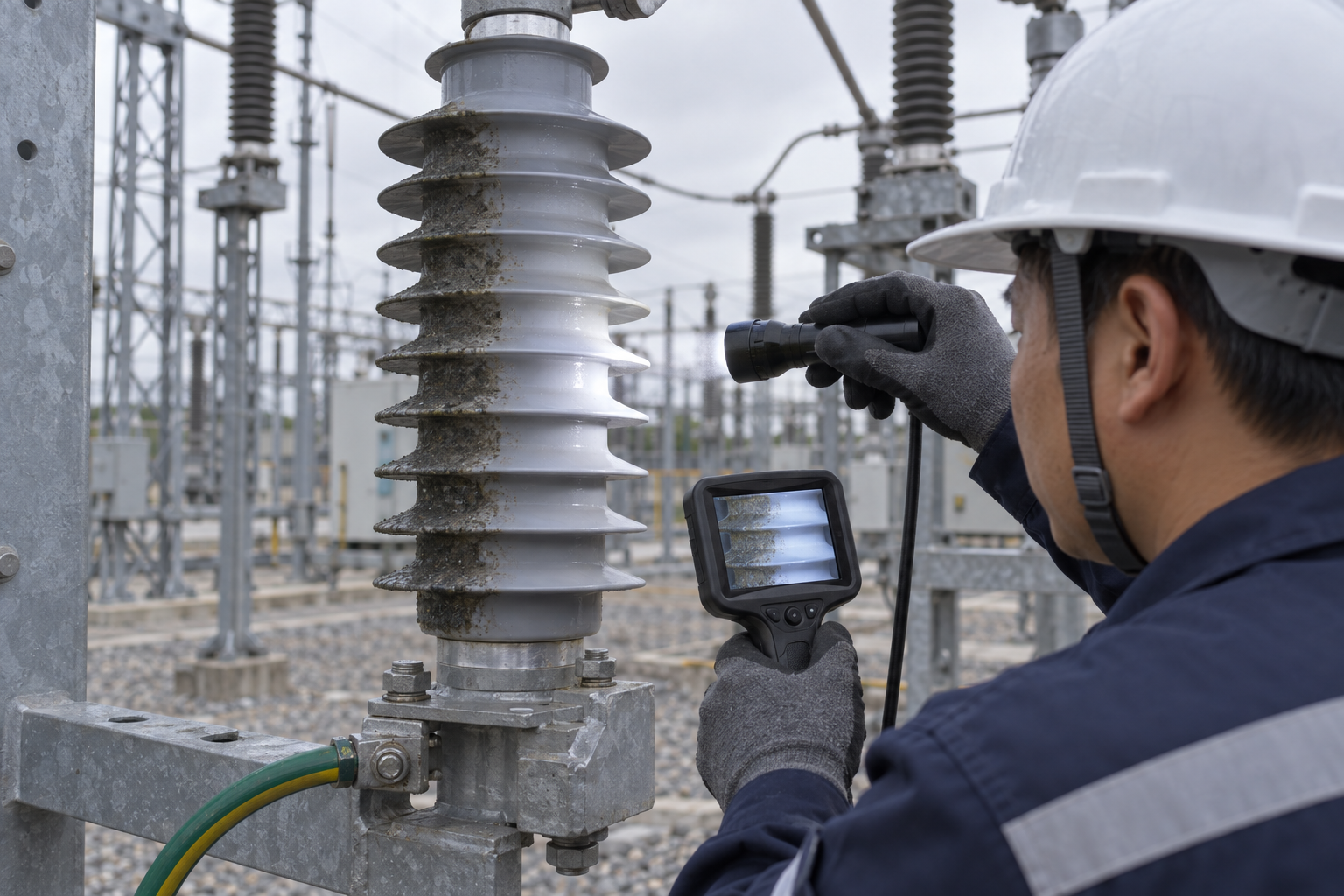
Outdoor housings can collect salt, dust, industrial deposits and moisture. Contamination changes surface electric stress and can increase leakage current, while thermal, mechanical or sealing problems may also affect current. A single field reading is not a universal pass/fail value: trend data, weather, the instrument method and the manufacturer’s limits matter. Inspection should follow the owner’s maintenance procedure and the arrester manual, with isolation and safe work controls.
Visual checks should look for cracked or damaged housing, tracking, seal deterioration, loose connections, corrosion, disconnected ground leads and evidence of discharge. Where online monitors or leakage-current instruments are used, record the method and environmental conditions so changes can be compared. IEC 60099-4 type tests do not replace site maintenance instructions, and a test result from one arrester design must not be transferred to another.
Which inspection and selection checks should be completed before purchase?
Procurement teams can use the following evidence checklist to keep the specification traceable from system study to installed device.
| Panggung | Periksa | Mengapa hal ini penting | Record to retain |
|---|---|---|---|
| System definition | Nominal and highest system voltage, phase arrangement and grounding method | Sets the continuous-voltage and TOV boundary | Single-line diagram and utility data |
| Coordination | Insulation withstand, arrester residual voltage and lead arrangement | Confirms protective margin at the equipment terminals | Insulation-coordination calculation |
| Product review | MCOV, duty-cycle/TOV curve, discharge-current tests and housing data | Links the offered design to IEC 60099-4 or IEEE C62.11 scope | Current data sheet, routine/type-test references and drawings |
| Grounding | Conductor routing, bonding, electrode arrangement and local earthing criteria | Controls voltage rise and inductive lead voltage during a surge | Grounding design and installation method statement |
| Pemeliharaan | Contamination class, inspection interval, monitor method and replacement trigger | Turns leakage-current and condition data into an action plan | Commissioning baseline and maintenance log |
What does grounding change in arrester selection?
Grounding affects both the normal phase-to-ground voltage and the temporary voltage that can appear on unfaulted phases during a ground fault. A grounded-neutral system, an impedance-grounded system and an isolated or resonant-grounded system can therefore require different MCOV and TOV checks at the same nominal line-to-line voltage. The arrester’s earth connection also needs a short, mechanically secure path; excessive conductor length adds inductive voltage during a fast front surge.
There is no universal recommended earthing resistance for every lightning arrester installation. The target depends on the utility or national code, soil and electrode arrangement, touch and step-voltage limits, fault current and the equipment protection study. A low resistance value by itself does not prove adequate surge coordination, and a higher measured value is not automatically unacceptable without the governing design criteria.
Which standards apply, and what do they not certify?
IEC 60099-4 is the primary IEC product standard for metal-oxide surge arresters without gaps on AC systems. IEEE C62.11 is an IEEE standard covering metal-oxide surge arresters for AC power circuits and associated test and application terminology. The standards define design, routine and type-test requirements within their scope; they are not a universal installation code, a grounding specification or an automatic certification mark. Contract documents should identify the edition, test reports and any national or utility additions.
Unsupported claims such as “certified for every 11 kV network” or “works with any earth resistance” can create technical and commercial exposure. The purchaser should require traceable test evidence, drawings, declared operating limits and a clear statement of which standard and edition were used. Local electrical codes and the destination market can add requirements beyond IEC or IEEE scope.
How can buyers specify an arrester without overclaiming?
- Write the system conditions first: nominal and highest voltage, grounding, fault duration, environment and altitude where relevant.
- Request MCOV, duty-cycle/TOV data, residual-voltage curves, discharge-current test information and dimensional drawings for the exact offered design.
- Check installation details, including phase and earth lead length, bonding, clearances, housing material and contamination exposure.
- Define acceptance and maintenance records: routine-test documentation, commissioning baseline, inspection method and replacement criteria.
- Compare total cost of ownership, including outage exposure, access for inspection and documentation quality, rather than comparing a single kA or voltage label.
Fuerte can be considered at the supplier-review stage when a buyer needs a brand-neutral discussion of medium-voltage protection equipment, supporting documents and configuration boundaries. Product selection should remain tied to the project’s verified system data and the offered unit’s current technical file.
What do related lightning arrester resources explain?
Readers who need application context can review the guide to lightning surge arresters and electrical-system protection. For a higher-voltage example, see the explanation of a 110 kV surge arrester for lightning protection. Buyers ready to compare available protection equipment can consult Fuerte’s other-products directory and then request the documentation needed for their system study.
What do buyers ask about lightning arrester ratings?
What is the recommended surge arrester rating for an 11 kV system?
There is no single rating that applies to every 11 kV system. Confirm the highest system voltage, phase-to-ground voltage, grounding method and TOV duty, then select an arrester whose MCOV, duty-cycle/TOV capability and protective level are documented for those conditions. The utility specification and the manufacturer’s current data sheet should control the final value.
What is a gapless surge arrester?
A gapless surge arrester uses nonlinear metal-oxide varistor blocks directly between the line and earth, without a series spark gap. It limits surge voltage through the varistor’s nonlinear current-voltage behavior. Its suitability still depends on tested thermal stability, TOV capability, protective level and the installation environment.
What is the recommended earthing resistance for a lightning arrester?
No universal resistance number applies. The acceptable value is set by the governing code or utility, soil and electrode design, fault and touch/step-voltage studies, and the equipment coordination requirements. Measure and document the installed grounding system using the project’s specified method; do not substitute a generic internet value.
What is the MCOV rating of a lightning arrester?
MCOV is the maximum continuous operating voltage that may be applied across the arrester under its specified conditions. It is normally compared with the system’s highest continuous phase-to-ground voltage and grounding-related shifts. It is not the same as nominal system voltage, discharge-current rating or duty-cycle rating.
What is an arrester duty-cycle rating?
An arrester duty-cycle rating describes a standardized ability to withstand specified temporary overvoltage and energy-duty sequences. It is evaluated separately from MCOV and is used with TOV curves and system fault-clearing assumptions. The applicable test sequence and terminology should be checked against the cited IEC 60099-4 or IEEE C62.11 edition.
What is a metal-oxide lightning arrester?
A metal-oxide lightning arrester is a surge arrester built with nonlinear zinc-oxide-based varistor blocks that conduct more current as voltage rises. Most modern medium-voltage gapless arresters use this principle. Product construction, housing, thermal design and tested limits must still be verified for the intended network and environment.
Referensi
- IEC 60099-4:2014, Surge arresters – Part 4: Metal-oxide surge arresters without gaps for AC systems (scope and test framework).
- IEEE Std C62.11-2020, IEEE Standard for Metal-Oxide Surge Arresters for AC Power Circuits (terminology, ratings and tests).
- IEEE Std C62.22-2016, IEEE Guide for the Application of Metal-Oxide Surge Arresters for Alternating-Current Systems (application guidance).
- IEC standards catalogue (edition and scope verification).
Kesimpulan
Lightning arrester ratings become useful only when each term is tied to a system condition. Voltage class identifies the network context; MCOV checks continuous phase-to-ground stress; duty-cycle and TOV data address temporary events; and discharge-current and residual-voltage values support insulation coordination. Grounding design and short, secure connections determine whether the installed arrester behaves like the tested arrangement, while contamination and leakage-current trends shape maintenance decisions. The practical sequence is to document the highest system voltage and grounding method, calculate credible TOV, review the exact manufacturer data, and then verify installation and inspection criteria. Do not copy a generic 11 kV, 33 kV or earthing-resistance number. Fuerte can support a documented supplier review, but the project’s utility requirements, applicable standard edition and approved technical file remain the final authority.
Decision principle: specify the system first, verify the arrester second, and record the installation conditions that make the rating valid.