


The phrase “composite insulator” and the phrase “polymer insulator” are often used as if they describe two competing products. In practice, they can describe different aspects of the same assembly. Composite usually describes a component made from more than one material—such as a fiberglass-reinforced core, metal fittings and an insulating housing—while polymer usually points to the insulating housing or material family. Understanding that distinction is more useful than asking which one is universally better. This guide compares the terms, identifies the evidence a buyer should request, and explains how voltage, contamination, mechanical loading and installation method affect the final choice.
For a related technical topic, see Apa itu isolator disk polimer 33KV?.
Composite and polymer: what do these terms mean?
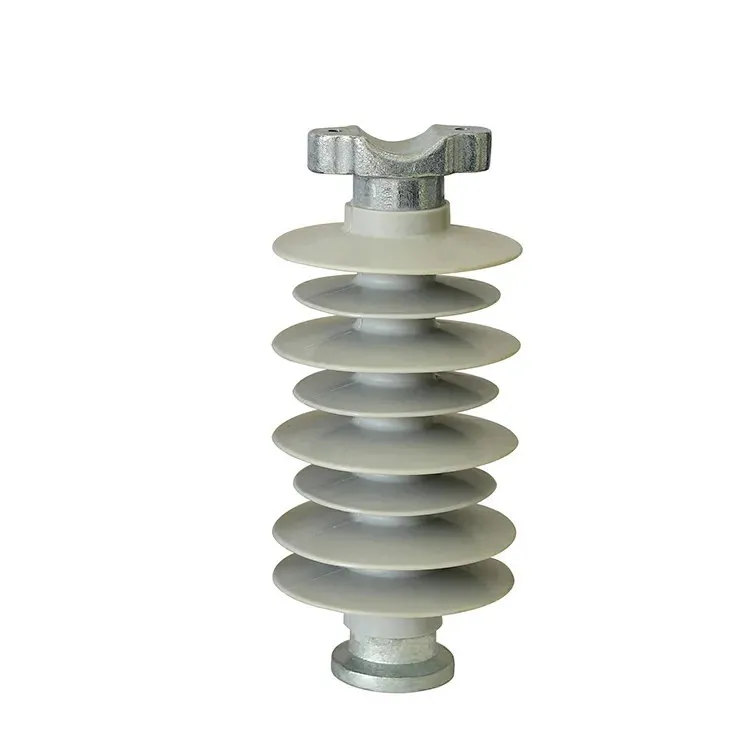
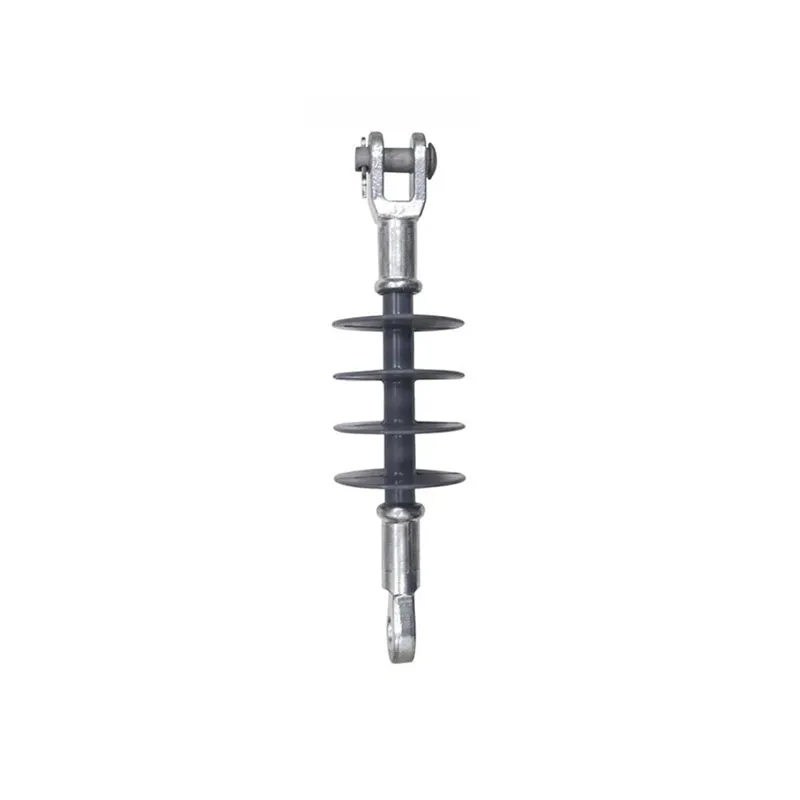
An outdoor line insulator commonly combines several materials. A typical long-rod design may have a fiberglass-reinforced insulating rod, a polymer weather shed and metal end fittings. Calling that assembly “composite” describes its multi-material construction; calling it “polymer” highlights the housing material that is exposed to rain, pollution and ultraviolet radiation. A product catalogue may therefore use both terms without describing two separate technologies.
The buyer should first define the product form: pin, line-post, long-rod or suspension assembly. Then confirm the housing material, core, fittings, interface dimensions and required tests. The
polymer insulator
category is useful for finding product families, but it should not replace a project-specific data sheet.
Compare the complete assembly, not just the material name
The following matrix separates characteristics that can be checked from claims that require project evidence.
| Question | What a composite assembly may include | What the purchaser should verify |
|---|---|---|
| Insulating path | Polymer sheds or housing over a reinforced core | Specified creepage distance, arcing distance and voltage application |
| Mechanical path | Fiberglass rod and metal fittings transfer the line load | Specified tensile, cantilever or bending rating and end-fitting design |
| Environmental exposure | Housing faces wetting, pollution, UV and temperature cycles | Material formulation, interface sealing and applicable pollution test plan |
| Installation interface | Pin, clevis, tongue, ball-and-socket or line-post connection | Dimensions, hardware, torque guidance and clearances in the approved drawing |
IEC 61109:2025 covers composite suspension and tension insulators for AC overhead lines, while IEC 62217:2025 provides common definitions and test principles for polymeric outdoor insulators. These standards are references for design and testing; mentioning them does not prove that a particular model has passed every test. The purchase specification should identify the edition, test scope and acceptance criteria.
What a polymer housing can and cannot tell you
Silicone-rubber housings are often selected for their water-repellent surface behaviour and low mass. Those properties can be valuable in contaminated or difficult-to-access locations, but the outcome depends on shed profile, material formulation, electric-field control, sealing and the local pollution regime. A polymer housing does not remove the need to check flashover clearances or fittings.

Conversely, a reinforced core can provide a defined mechanical load path, but the core-to-fitting interface and sealing details remain important. The phrase
composite insulator
should therefore be accompanied by a drawing and test schedule, not treated as a performance grade by itself.
How to select the right design for the project
Use the following sequence when comparing offers:
- Map the duty: record system voltage, line configuration, conductor load, wind or ice assumptions, altitude and accessibility.
- Describe contamination: identify coastal salt, industrial deposits, agricultural dust or clean inland conditions. IEC TS 60815-1:2025 and IEC TS 60815-3:2025 provide a framework for selecting and dimensioning outdoor insulation for AC systems and polymeric insulators.
- Check the interface: match the pin, clevis, ball, tongue or line-post connection to the pole hardware and conductor arrangement.
- Request evidence: ask for drawings, material and fitting details, routine-test records, type-test reports relevant to the design and batch traceability.
- Review maintainability: confirm inspection access, replacement procedure and storage requirements rather than assuming the product is maintenance-free.
Questions to ask before you buy
Instead of asking for the “best” material, put these questions in the RFQ:
| Pertanyaan terkait pengadaan | Mengapa hal ini penting |
|---|---|
| Which component is described as polymer, and which as composite? | Prevents the quotation from comparing different product forms under one label. |
| Which standard edition and tests apply? | Aligns the supplier’s evidence with the project’s voltage and environment. |
| What are the creepage, arcing and mechanical values on the approved drawing? | Separates design values from generic marketing language. |
| How are fittings, sealing and batch traceability controlled? | Interfaces and production variation can affect field reliability. |
For a product-specific discussion, buyers can review the
long-rod polymer insulator
format and then ask the supplier to confirm whether the proposed assembly matches the pole or tower hardware. A direct drawing review is more dependable than choosing by material name alone.
Pertanyaan yang sering diajukan
Are composite insulators and polymer insulators different products?
Not necessarily. “Composite” usually describes a multi-material assembly, while “polymer” often describes the housing or insulating material. A composite outdoor insulator can therefore contain a polymer weather shed.
Are polymer insulators suitable for contaminated areas?
They may be suitable, but suitability depends on pollution severity, shed geometry, creepage distance, electric-field control and the project test plan. Do not infer a universal pollution rating from the word polymer.
How do polymer and porcelain insulators compare?
Polymer designs are commonly lighter and can be easier to handle, while porcelain has a long history of use and different inspection and fracture behaviour. The correct comparison should use the same voltage, mechanical duty and environmental assumptions. See the
polymer-versus-porcelain comparison
for a broader material discussion.
What evidence should a manufacturer provide?
Request an approved drawing, material and fitting description, applicable type and routine test records, production traceability and clear change-control terms. A standard number alone is not a certificate for every model.
Can a composite insulator be recycled?
Recycling is more complicated than for a single-material product because the core, housing and fittings must be separated. Ask the manufacturer or project owner about the available end-of-life route rather than assuming a universal recycling method.
Kesimpulan
Composite and polymer are best treated as related descriptions, not as a simple winner-and-loser comparison. A buyer gets a more reliable answer by defining the product form, mechanical load path, polymer housing, fittings, pollution environment and applicable standards together. IEC 61109:2025, IEC 62217:2025 and the IEC TS 60815 series can help structure the specification, but the final acceptance still depends on project drawings and relevant test evidence. In an RFQ, ask suppliers to identify every material and interface, state the design values, and provide traceability for the quoted configuration. This approach avoids paying for an attractive label while overlooking the details that determine whether an outdoor insulator fits, can be tested and can be maintained in the intended network.