


Two industrial VCB suppliers can quote the same voltage and current while offering very different project outcomes. One quotation may include protection interfaces, commissioning support and spares; another may end at delivery of the breaker. Comparing only the equipment price hides those differences until the plant needs an outage plan or a failed trip must be investigated. The right supplier depends on what the installation actually requires and who will take responsibility for each interface. This guide provides a structured comparison for industrial buyers, with particular attention to unusual switching duties, service support and the records needed to keep equipment usable over time.
What should the buyer confirm first?
Evaluate industrial VCB suppliers in three stages: establish technical suitability, compare equal supply scope, and then assess service and lifecycle support. Voltage, current and fault ratings are only the starting point. Load type, switching frequency, protection, controls and existing switchgear interfaces can determine whether the proposed configuration is suitable. Dedicated generator, capacitor and arc-furnace breaker products in ABB’s portfolio show why industrial applications should not all be treated as ordinary feeder duty. Ask for evidence relevant to the offered application; do not transfer another manufacturer’s product capability or a general standard reference to the quotation.
Which industrial duty must the supplier understand?
State whether the breaker serves an incomer, transformer, motor, generator, capacitor bank or another load. Include normal operation, expected switching frequency and abnormal duty. A supplier should explain any application limits rather than treating every load as a continuous-current problem.

ABB’s primary vacuum breaker portfolio identifies dedicated capacitor, arc-furnace and generator products. That is evidence of application differentiation in ABB’s range, not a recommendation of a particular product for an unstudied site. Use the industrial VCB selection guide to assemble the initial duty statement.
What should pass technical review before price is compared?
Compare the electrical duty, service environment, mounting, primary connections and control functions. Identify the governing standards and any owner-specific requirements. A supplier should return a completed requirement schedule with deviations, rather than a catalogue marked simply compliant.
Separate a standalone breaker offer from a complete switchgear solution. IEC 62271-100 addresses the breaker within its scope, while IEC 62271-200 addresses metal-enclosed assemblies within its own scope. Responsibility for the receiving panel, interlocks and assembly evidence must be assigned when the supplier offers only part of the system.
How can buyers compare supplier responsibilities?
| Work package | Clarification to obtain | Evidence at handover |
|---|---|---|
| Application engineering | Who reviews the specified load and duty? | Approved data and accepted deviations |
| Protection and controls | Who supplies settings, wiring and trip-chain checks? | Schematics and test responsibilities |
| Mechanical integration | Who verifies the receiving equipment? | Interface drawings and fit acceptance |
| Commissioning | What assistance is included and where? | Agreed test plan and escalation contact |
| Service and spares | Which assemblies remain supported? | Part codes, supported revisions and supply terms |
This framework deliberately avoids an invented score or supplier league table. Disqualify unresolved technical mismatches first; use commercial weighting only among offers that meet the agreed technical basis.
How should lifecycle cost be estimated without guessing savings?
Build a project-specific cost model covering equipment, adapters, installation, training, tools, inspections, spares and outage work. Use supplier quotations and the owner’s maintenance plan as inputs. Include the cost of maintaining more than one breaker or mechanism revision where that affects the spare strategy.
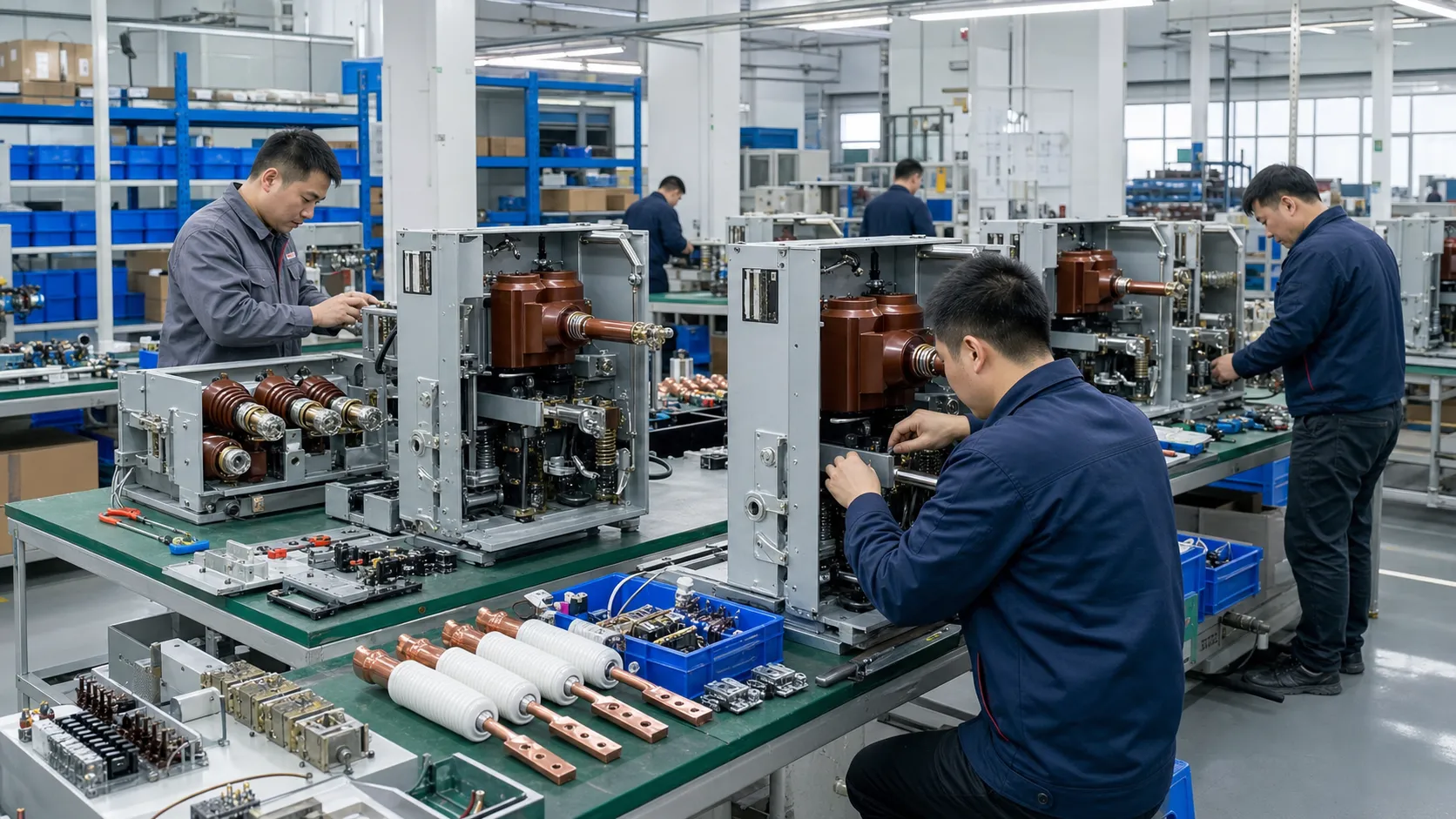
Treat downtime assumptions as scenarios, not measured supplier performance. A local contact may improve access to assistance, but response time and repair capability need written scope. The VCB lifecycle-cost guide explains why a cheaper purchase and a lower ownership cost are different conclusions.
What evidence should remain available after delivery?
Keep the approved drawings, test evidence, unit records, operating instructions, spare list and revision history in the owner’s equipment file. Identify who can authorize a substitution or clarify an unexpected test result. The most useful support commitment describes an action and a responsible party rather than promising lifetime service without terms.
For an existing plant, ask whether a replacement can be engineered for the installed cell. ABB’s retrofit description includes panel-matched bushings, trucks and fit-related testing. A supplier proposing an equivalent route should provide its own VCB retrofit compatibility evidence.
FAQ
Should the lowest-price technically compliant bid always win?
The buyer should first confirm equal scope. Installation, documentation, spares and support exclusions can change the commercial comparison even when headline ratings match.
Can one breaker specification cover every industrial load?
No. Switching frequency, fault duty and special load conditions must be reviewed for each application.
Does an overseas sales contact prove local repair capability?
No. Ask where service is performed, what parts are available and which response commitments are included in the contract.
What should remain with the owner after commissioning?
The approved configuration, drawings, test and commissioning records, operating instructions, spare references and a clear technical escalation route.
Résumé
Industrial supplier evaluation should end with a workable allocation of responsibility. Define the load and network duty, establish suitability, and compare the complete integration and service scope before ranking prices. Keep special switching requirements visible and retain the records needed for later maintenance or replacement. A general certificate, local office or attractive lifecycle claim cannot close those questions by itself. The comparison method above is synthesis from public technical sources checked on 15 October 2026, not a supplier performance study. FUERTE’s industrial vacuum circuit breakers can be considered through an application-specific enquiry that states the equipment boundary, evidence requirements and expected support.