

A transformer may draw a large current when first energized even though its load is small. If that event is treated as a fault without considering the transformer and protection scheme, the supply may trip unnecessarily. Simply increasing a fuse rating or delaying a relay can create a different problem by weakening the intended fault protection. Transformer selection and protection coordination therefore need a shared set of data. Capacity, voltage ratio, connections, impedance and energization behaviour all affect connected equipment. This guide explains which ratings serve which purpose and what should be supplied before a fuse or relay setting is proposed.
A substation transformer transfers power between voltage levels. Its kVA or MVA rating describes apparent-power capacity under specified conditions, while inrush is a transient magnetizing current associated with energization. Inrush differs from a fault, but magnitude alone is not a reliable way to distinguish them. The core’s magnetic state, switching conditions and system impedance affect the event. Protection must tolerate the intended energization conditions while retaining the required fault response. Use the transformer manufacturer’s data and a coordination study rather than applying one universal multiple of rated current to every installation.
Which transformer ratings must match the network?
El transformer reference explains the relationship between windings, magnetic flux and voltage transformation. A purchase enquiry needs more than a capacity value: rated voltages, frequency, connections, impedance, tap requirements and service conditions all have roles in the design.
| Item | Lo que establece | What it does not establish alone |
|---|---|---|
| kVA or MVA rating | Apparent-power capacity under stated conditions | Permitted loading in every ambient or enclosure |
| Voltage ratio and taps | Relationship between the connected voltage levels | All operating voltages without the network study |
| Impedance | An input to voltage and fault calculations | The whole network’s fault current |
| Connection and grounding | Winding arrangement and system interfaces | A complete protection scheme |
| Cooling arrangement | How the stated thermal duty is supported | A licence to block airflow or ignore ambient conditions |
For a balanced three-phase example, rated line current can be calculated from I = S/(√3 V), with S in VA and V as line-to-line voltage in volts. An illustrative 1 MVA, 11 kV winding gives about 52.5 A. That is a rated-current calculation, not the inrush current or a recommended fuse size.
Why does energization produce inrush current?
The inrush-current reference describes how transformer core saturation during energization can produce a transient current. Residual magnetic flux and the point on the voltage waveform at switching influence the event. Source conditions also matter, which is why a single current multiplier cannot represent every transformer.
Transformer inrush current should be treated as a coordination input. Its time behaviour and the relevant protection characteristics matter as well as its peak. Harmonic restraint or blocking may be part of a particular relay scheme, but the correct implementation depends on the protection design and the actual relay.
Which switching-device interfaces need confirmation?
A transformer feeder’s switching device needs the required continuous-current and interruption duties, together with the appropriate control and protection interfaces. US 29 CFR 1910.303 ties fault-interrupting equipment to the available current at its terminals. A transformer capacity value cannot establish that duty by itself.
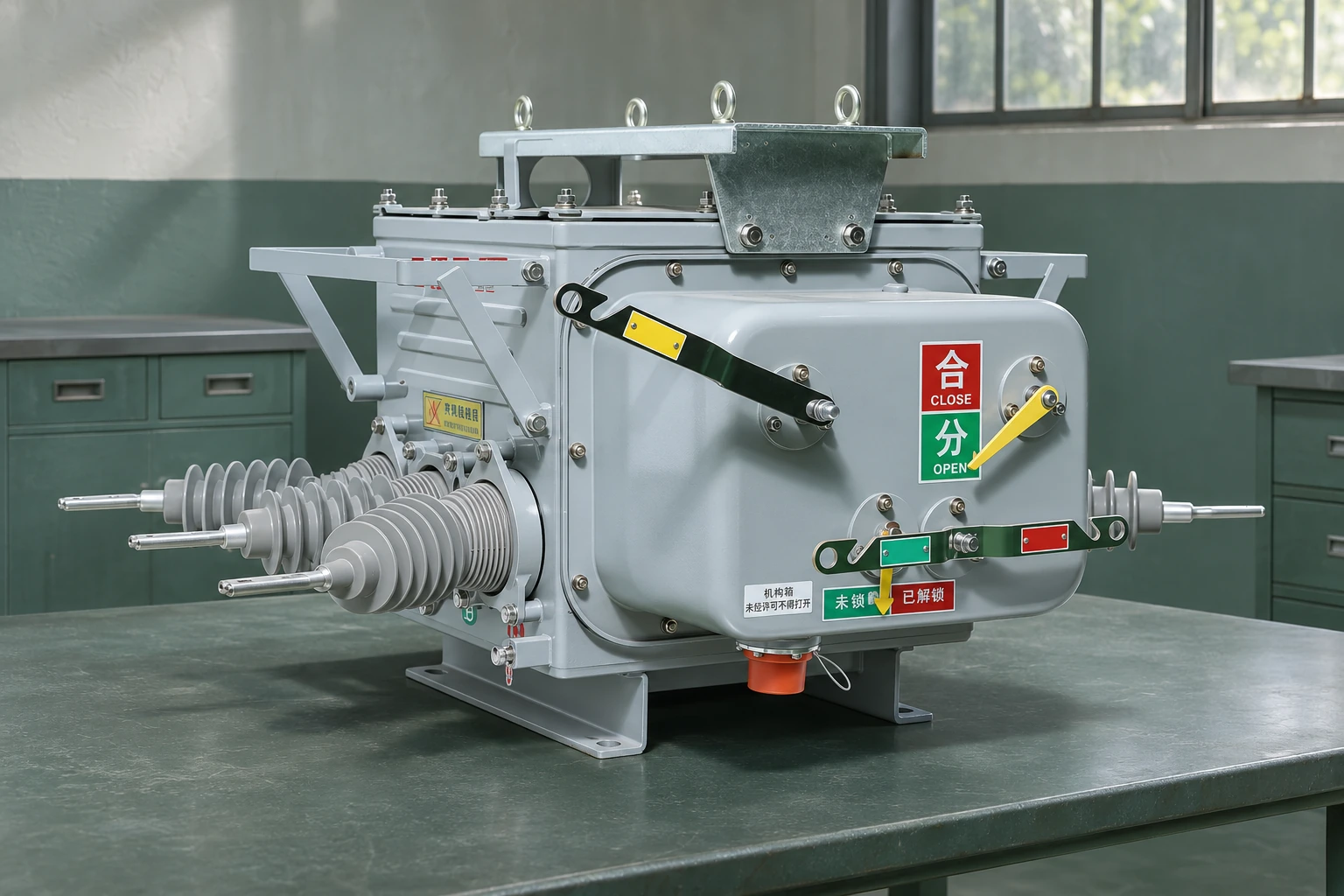
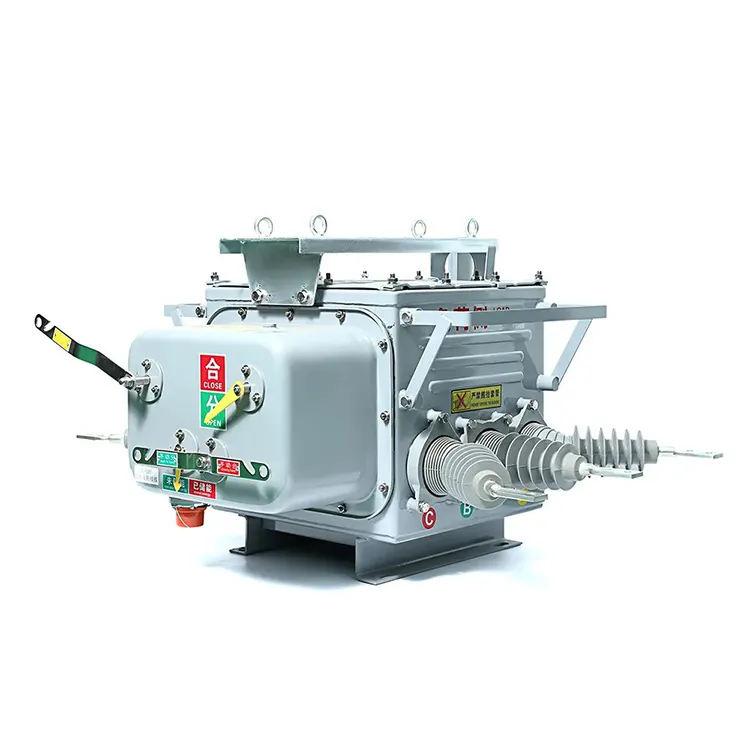
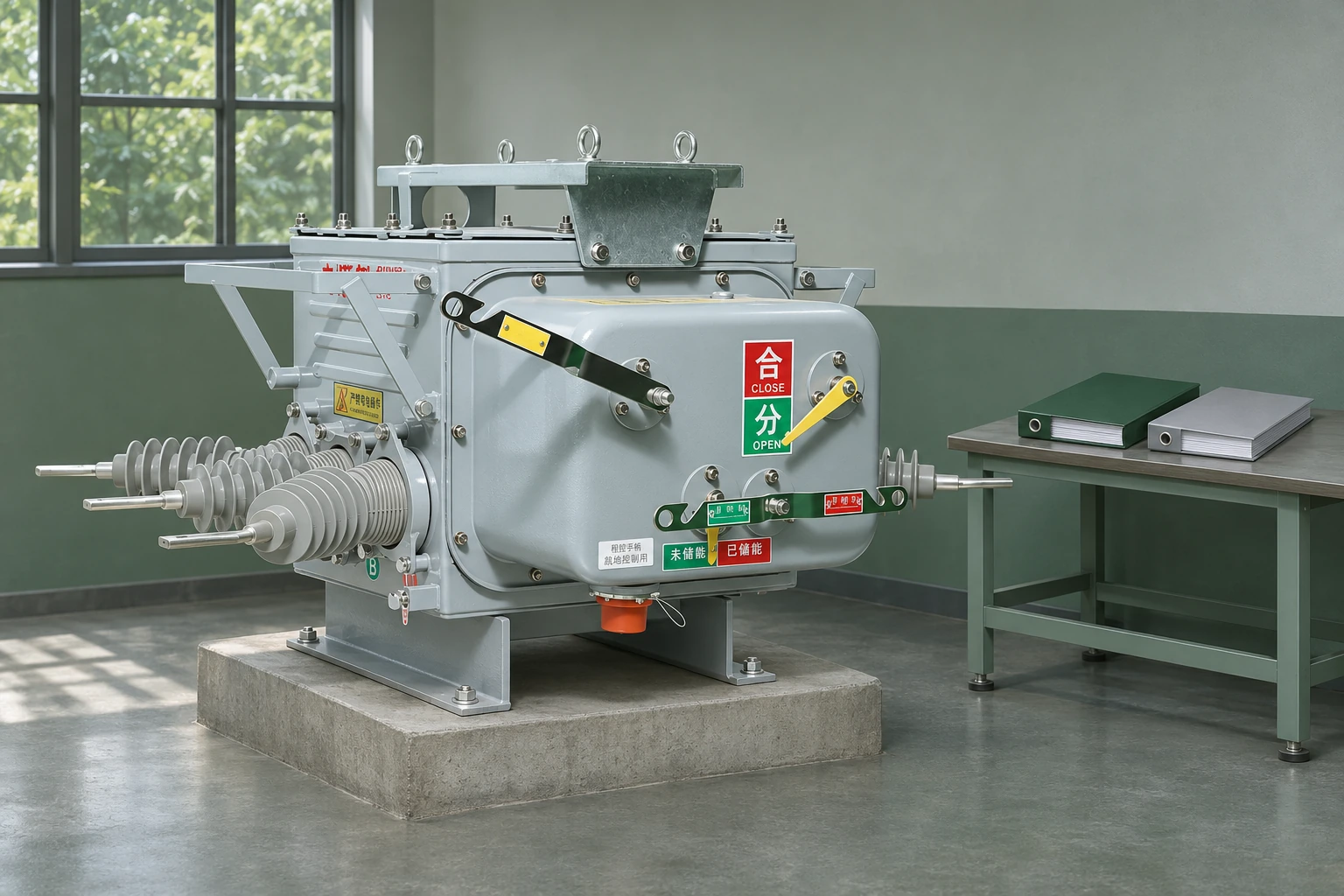
The depicted vacuum breaker represents connected medium-voltage equipment. It is not a transformer or evidence of a tested coordination scheme. Review the circuit breaker ratings against the actual system, and confirm the trip supply, indication contacts and interface drawings for the offered configuration.
What information belongs in the coordination study?
| Ingreso | Why it is needed |
|---|---|
| Transformer ratings, connections and impedance | Establishes the equipment and electrical model |
| Manufacturer’s energization and withstand information | Supports review of normal energization and damage limits |
| Relevant maximum and minimum fault conditions | Supports interruption and protection sensitivity checks |
| Fuse curves or relay characteristics and settings | Allows the intended response to be compared across devices |
| CT data and grounding arrangement | Defines protection measurement and earth-fault interfaces |
| Operating states and downstream protection | Supports selectivity for the actual network arrangement |
El transformer fuse protection guide addresses one part of this enquiry. A fuse link should not be selected from a transformer’s primary current alone; its characteristic must be reviewed with the energization, fault and downstream requirements.
Where relays are used, confirm the current transformer measurement duty and the approved protection scheme. Changes to the transformer connection or grounding must be reflected in the protection review rather than left as a purchasing-note revision.
How do cooling and installation affect usable capacity?
Ambient conditions, cooling arrangements and ventilation influence thermal performance. The manufacturer’s loading and installation information should identify the conditions behind the rating. A confined enclosure or obstructed cooling path can make a catalogue capacity an incomplete description of the installed duty.
Specify the expected demand profile and permitted operating states. If temporary overload is proposed, obtain the applicable manufacturer and engineering assessment instead of assuming that spare short-term capacity exists. The same discipline applies when a transformer is replaced with a unit carrying the same MVA rating but different impedance or connections.
Preguntas frecuentes
What does a substation transformer do?
It transfers electrical power between voltage levels within the network. Its connections, ratings and operating conditions must fit the wider system design.
How is transformer capacity selected?
Use the expected load profile, relevant contingencies, cooling conditions and approved development assumptions. A capacity figure needs its service conditions and loading requirements stated.
What causes transformer inrush current?
Energization can drive the magnetic core into saturation, producing a transient magnetizing current. Residual flux, switching conditions and source impedance influence the event.
How does inrush differ from a fault current?
Inrush is associated with energization rather than necessarily indicating an insulation or circuit fault. The protection scheme must distinguish the relevant conditions using its design and settings, not current magnitude alone.
Which ratings must match the connected network?
Check voltage ratio, frequency, capacity, connections, impedance, taps and the applicable insulation and service requirements. Confirm each item against the connected system.
How do transformer connections affect protection?
Winding connections and grounding affect the currents and phase relationships seen by protection. CT arrangements and relay configuration must be consistent with them.
What data are needed for fuse or relay coordination?
Supply the transformer data, energization information, relevant fault conditions, protective-device characteristics, CT data and downstream arrangement. The study should identify the operating configurations being assessed.
Which installation conditions affect cooling and loading?
Ambient temperature, ventilation, cooling provisions and the equipment enclosure can affect thermal duty. Apply the manufacturer’s installation and loading requirements for the actual conditions.
Referencias
Sources checked on 9 November 2026.
- Wikipedia — Transformer: operating principles and design
- Wikipedia — Inrush current: transformer and capacitor energization
- 29 CFR 1910.303 — Requisitos de instalación eléctrica (Cornell LII)
Resumen
Transformer capacity, energization behaviour and fault duty answer different questions. Establish the rated operating conditions first, then use the transformer’s connections, impedance and manufacturer data in the system and coordination studies. Check that the fuse or relay can accommodate the intended energization conditions while preserving fault protection, and confirm that the connected switching equipment has its own required duties. Cooling and installation conditions remain part of the capacity assessment. A matching MVA label is not enough to approve a replacement. Fuerte’s vacuum circuit breakers can be assessed as feeder switching equipment when the system data and protection interfaces are defined; suitability must be established for the offered model.