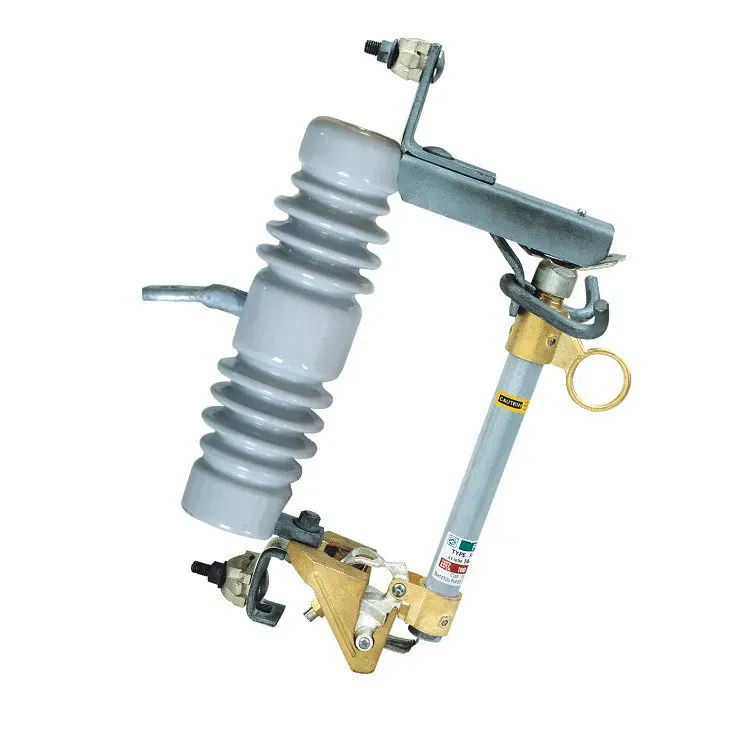
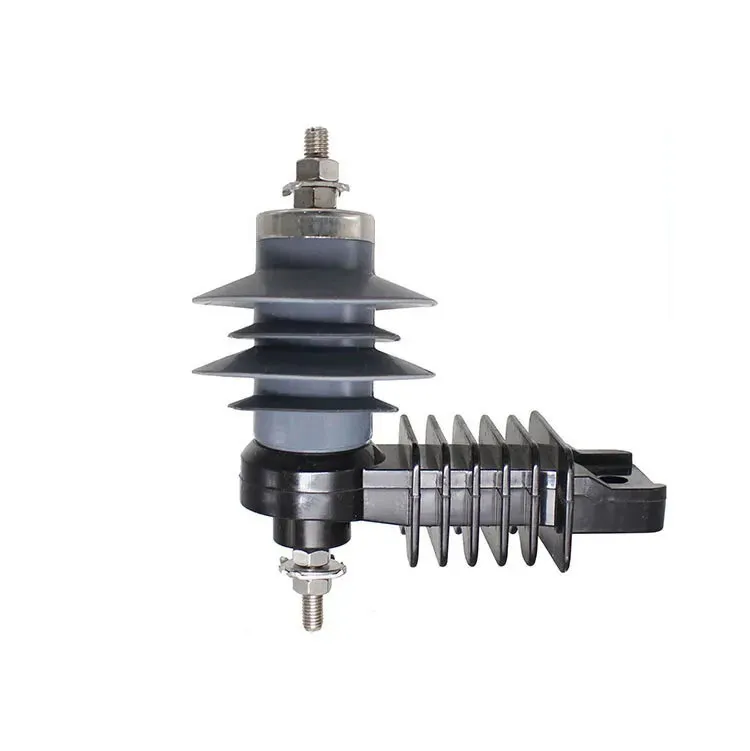
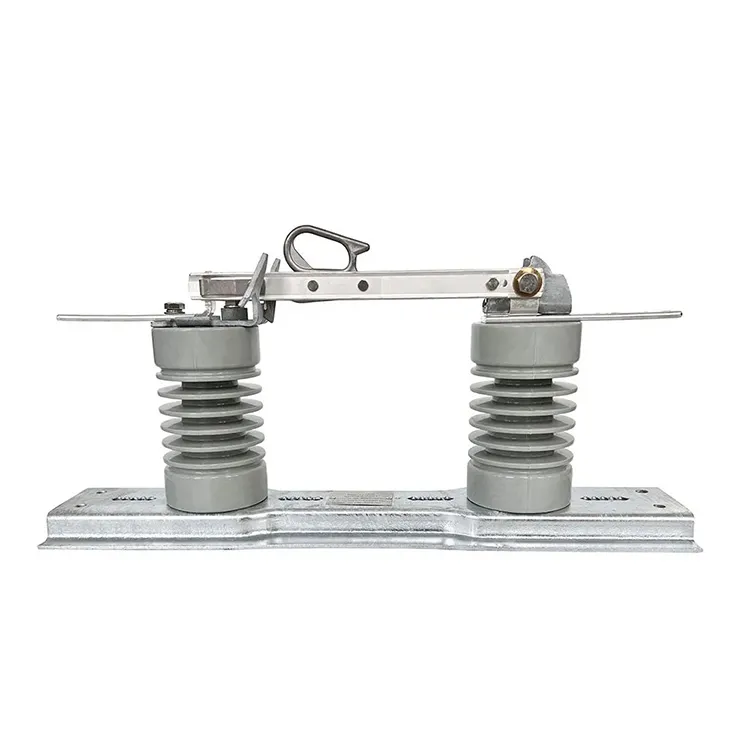
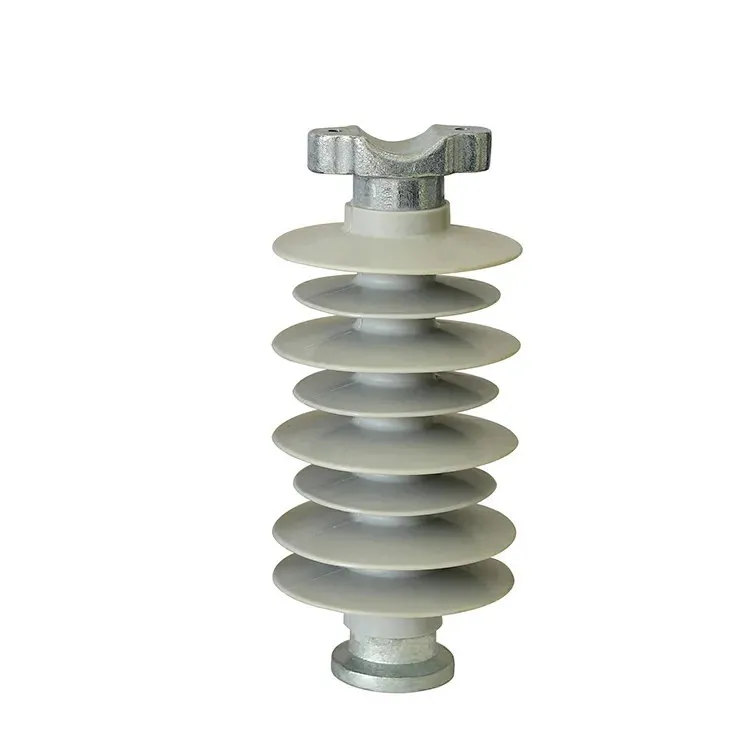
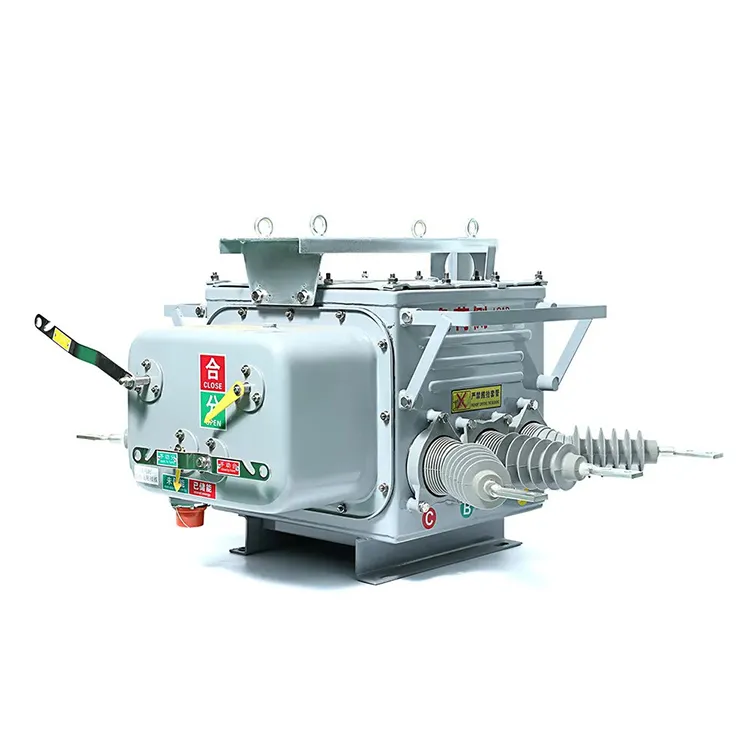
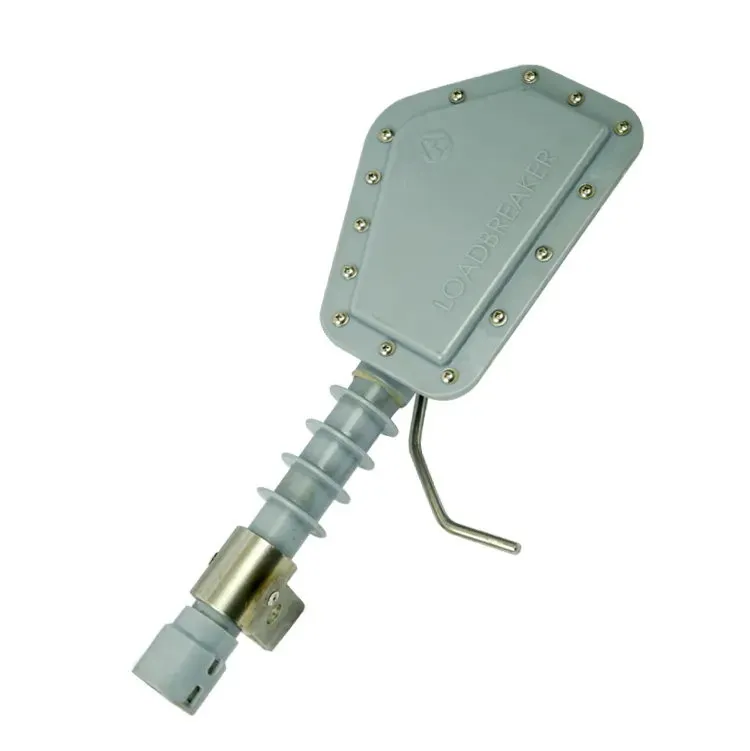


A polymer insulator uses one or more organic insulating materials in its insulating body. In overhead-line use, the most familiar design is a composite insulator: a load-bearing fibre-reinforced resin core, a polymeric housing and sheds, and metal end fittings that transfer mechanical load. It supports or separates energized conductors while resisting the electrical, mechanical and environmental stresses defined for the application.
a polymer insulator is not simply a lightweight substitute for porcelain. Its performance depends on the complete design—core, housing material, interfaces, end fittings, shed profile and electric-field control—and on whether the specified tests match the product function. Buyers should identify the insulator type and service conditions before comparing voltage labels or catalog dimensions.
How is a composite polymer insulator constructed?
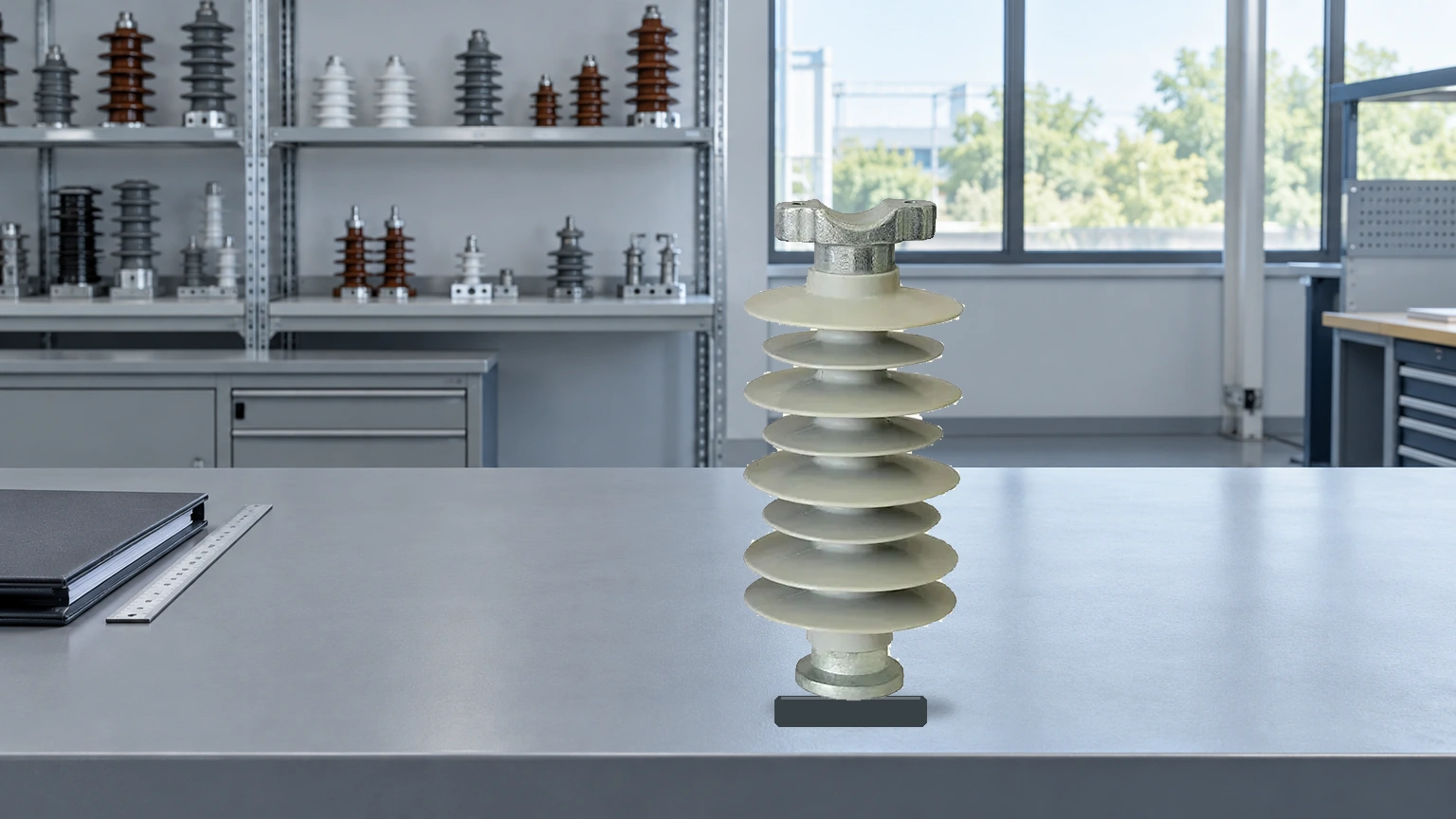
The core carries the principal mechanical load. In a common overhead-line composite design, glass fibres are embedded in a resin matrix to form a solid rod. The polymeric housing surrounds the core and provides the external insulating surface. Sheds increase leakage distance and shape the wet and polluted surface path. Metal fittings connect the insulator to the conductor, crossarm or supporting hardware.
The interfaces are as important as the visible materials. Moisture ingress at an end fitting, weak adhesion between housing and core, or damage to the housing can expose the core to service stresses it was not intended to face directly. The current standards therefore place more attention on interfaces, water diffusion, stress corrosion and adhesion rather than treating the unit as a collection of independent parts.
For buyers reviewing product families, the polymer insulator category is a starting point, not the final specification. The approved drawing and model-specific evidence should define the exact end fittings, dimensions, material system and ratings offered.
A product page such as the FPQ-24/6T polymer insulator can identify a candidate configuration, but every stated value still needs to be checked against the approved datasheet, drawing and project requirements.
What do the latest IEC editions cover?
IEC 62217:2025 gives general definitions, design-test methods and acceptance criteria for polymeric high-voltage insulators used indoors or outdoors. Its scope includes solid-core and hollow-core composite insulators, resin insulators and the polymeric housing of certain hybrid insulators. The 2025 edition distinguishes hydrophobicity-transfer materials (HTM) from non-HTM housing materials, revises water-diffusion testing, introduces stress-corrosion testing for core materials, summarizes interface and connection tests, and emphasizes electric-field control for AC applications.
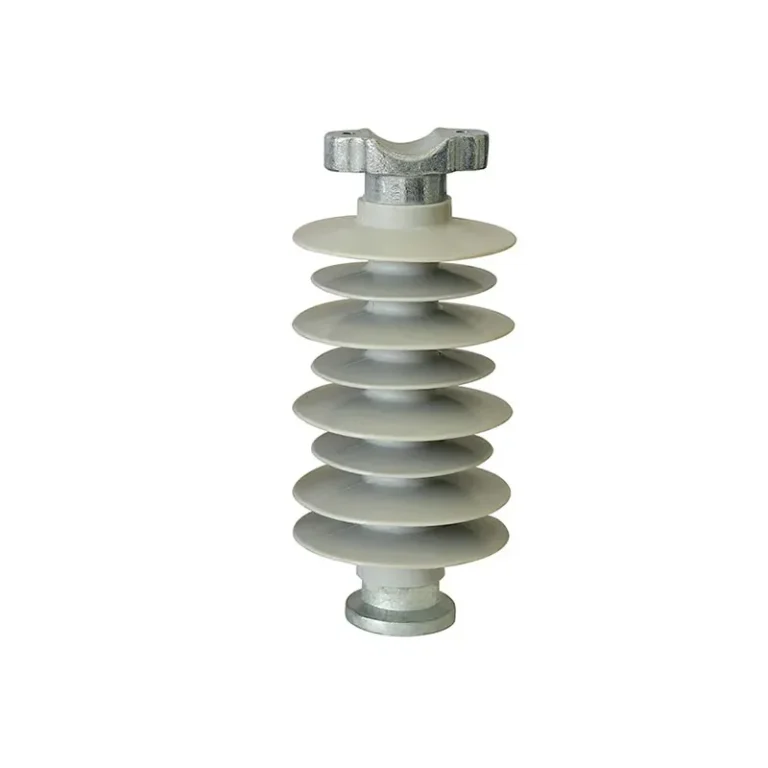
IEC 61109:2025 is the product standard for composite suspension and tension insulators used on overhead lines above 1,000 V AC and above 1,500 V DC. The third edition extends the scope to DC, revises electrical and mechanical testing, adds AC electric-field-control guidance, and adds evaluation of adhesion between the core and housing. The standard applies to the construction and functions in its scope; it should not be cited as proof for every product that happens to have a polymer surface.
Which polymer insulator types serve different functions?
| Función | Typical mechanical duty | Specification focus |
|---|---|---|
| Suspension or long-rod unit | Primarily tensile load while supporting a conductor | Specified mechanical load, length, fittings, electrical withstand, pollution design |
| Strain or dead-end unit | Tension at line terminations, angles or sections | Mechanical duty, hardware articulation, conductor arrangement and installation geometry |
| Line-post or pin-type unit | Conductor support with bending and cantilever effects | Cantilever strength, mounting base, conductor clamp, profile and clearances |
| Station-post or equipment insulator | Support within equipment or a substation assembly | Product-specific standard, bending/torsion, interfaces and equipment integration |
| Hollow-core composite insulator | Insulating enclosure around equipment internals | Pressure, sealing and equipment-specific requirements in addition to external insulation |
These forms are not interchangeable merely because nominal voltage and total length are similar. For example, a tension unit designed around axial load is not automatically suitable for a line-post application with substantial bending. Our pin-type versus suspension insulator guide explains the application difference in more detail.
Why does hydrophobicity matter—and where are its limits?
Hydrophobic surfaces tend to form separated water droplets instead of a continuous conductive film. Some housing materials can transfer hydrophobicity through a pollution layer; the latest IEC documents call these hydrophobicity-transfer materials. This can support pollution performance, but it is not a blanket claim that every polymer design needs no cleaning or will outperform every ceramic unit.
Pollution selection still requires the site pollution severity, pollution type, system voltage, altitude, profile, insulator position and material behaviour. IEC TS 60815-1:2025 defines a workflow from site pollution severity to reference and candidate creepage distance, including altitude, diameter, shed-profile and parallel-insulator corrections. IEC TS 60815-3:2025 applies that framework specifically to outdoor polymer insulators for AC systems. Neither document covers ice and snow effects, so projects with those conditions need additional engineering evidence. For a related technical topic, see Long Rod Polymer Insulator.
What failure modes should inspection and procurement address?
Housing cuts, erosion and tracking
Handling damage, severe discharge activity or unsuitable service conditions can cut, erode or track the polymer surface. Inspect the full visible housing and sheds rather than judging the unit only by contamination level. A damaged seal or exposed core requires the manufacturer’s disposition and the utility’s maintenance procedure.
End-fitting seal and interface problems
The junction between the fitting, housing and core is a critical barrier. Look for separation, cracking, displaced seals, corrosion products and evidence of moisture ingress. Procurement documents should identify the interface design and the design-test family that covers the offered configuration.
Core stress corrosion and brittle fracture
A fibre-reinforced core can be vulnerable if moisture and aggressive conditions reach stressed glass fibres. This is why the 2025 standards add or revise stress-corrosion and water-diffusion evaluation. It is not appropriate to assign a universal service life without the design, environment, handling history and inspection evidence.
Electric-field concentration
High local electric field can increase corona and stress near energized fittings. Field grading needs depend on voltage, geometry and application. The newest IEC editions explicitly add guidance or emphasis for AC electric-field control; buyers should require the supplier’s model-specific arrangement rather than copying grading hardware from another design.
How should a polymer insulator be specified?
- Define the function: suspension, tension, line post, pin type, station post, hollow core or another product form.
- Define the electrical system: nominal voltage, highest voltage for equipment, AC or DC, frequency, insulation levels, earthing and clearances.
- Define mechanical duties: tension, cantilever, torsion, compression, dynamic loads and applicable safety factors.
- Characterize the site: altitude, pollution type and severity, UV exposure, temperature, humidity, wind, salt, industrial contamination, ice or snow.
- Specify interfaces: fitting type and size, coupling designation, mounting geometry, conductor hardware and grading devices.
- Request evidence: drawing, materials declaration, applicable standard edition, design/type/sample/routine test scope, traceability and installation instructions.
A concise handoff can be built from our polymer-insulator RFQ checklist. Mark every assumed value so that suppliers do not silently substitute a different fitting, housing system or test family.
Preguntas frecuentes
Are all polymer insulators composite insulators?
No. “Polymeric insulator” is broader. IEC 62217 includes several forms, while a common composite overhead-line unit has a load-bearing fibre-resin core, polymeric housing and attached fittings.
Is silicone rubber always used for the housing?
Silicone rubber is common, but the material must be verified from the model documentation. Do not infer the formulation or hydrophobicity-transfer behaviour from color or appearance.
How long does a polymer insulator last?
There is no defensible universal number. Design, material system, electric field, pollution, UV, moisture, mechanical load, installation damage and maintenance all affect service condition. Use inspection findings and manufacturer or utility criteria for the specific design.
Can a polymer insulator be selected by voltage alone?
No. Electrical withstand, creepage design, mechanical duty, fittings, altitude, pollution, geometry and the correct product standard must all match.
Does compliance with IEC 62217 prove the complete product is suitable?
No. IEC 62217 provides common design tests and criteria. The relevant product standard and project-specific ratings still apply, and a standard reference alone does not prove that the offered model was tested within the claimed scope.
Does IEC 62217:2025 select a polymer insulator for a line?
No. It provides common definitions and test principles. The line function, mechanical loading, fittings, pollution and clearances still determine whether a particular construction is suitable.
What the 2025 polymer-insulator standards change
IEC 61109:2025 addresses composite suspension and tension insulators, while IEC 62217:2025 provides common polymeric-insulator definitions and test principles. The product heading alone does not identify the application; line-post, pin, suspension and tension units require separate mounting and load checks.
RFQ fields to record
| Review field | What the buyer should record |
|---|---|
| Product family | State whether the unit is suspension, tension, line-post or another verified construction. |
| Standard scope | Use the standard that matches the construction and test evidence being requested. |
| Application interface | Confirm loads, fittings, conductor position, pollution and clearances from the project. |
Resumen
A polymer insulator should be selected as a complete engineered assembly rather than by housing material or voltage label alone. The core, housing, end fittings, interfaces, mechanical duty, electric field and site pollution conditions all influence suitability. Using the current IEC product and pollution-selection standards—and requesting model-specific drawings and test evidence—gives buyers a much stronger basis for comparing offers and planning inspection.